Giants Stories for Kids: 7 Big Adventures
Exciting giants stories for kids — adventures, lessons, and imagination with your child's favorite characters.
✦ Key Takeaways
- •Children love giant characters because they make big feelings visible.
- •The best giants bedtime stories balance wonder with emotional safety.
- •The most effective giants stories for kids combine a strong visual idea with a simple emotional lesson.
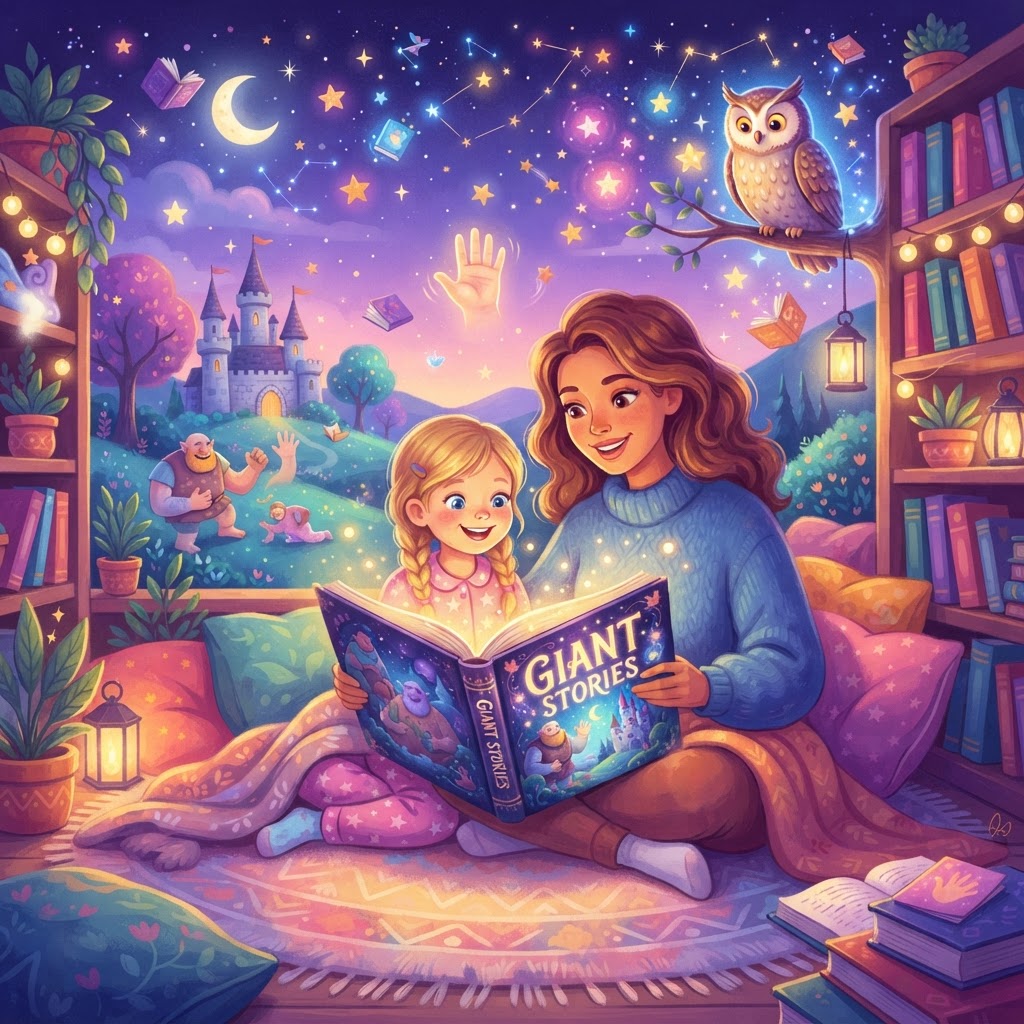
Few themes spark wonder like giants stories for kids. Giants feel larger than life, which makes every forest, castle, and cloud path seem more magical. When the story is warm, age-appropriate, and centered on problem-solving, stories about giants can help children explore bravery, kindness, and imagination right before bed.
Why do kids love giants stories so much?
Children love giant characters because they make big feelings visible. A giant can represent fear, power, loneliness, or protection in a way that children quickly understand.
Young children are naturally drawn to contrast: tiny and huge, quiet and loud, ordinary and magical. In giants tales children can picture themselves facing something enormous and still finding a clever, safe way through. That structure supports confidence.
There is also a strong developmental reason this theme works. Make-believe play helps children practice flexible thinking, language, and self-regulation, as explained by the National Association for the Education of Young Children. Research from the Harvard Center on the Developing Child also connects imaginative experiences with skills like attention, planning, and self-control.
For bedtime, giants are especially useful because they make emotions feel dramatic without being too realistic. A child may not meet a giant, but they do know what it feels like when a problem seems giant-sized.
What makes giants bedtime stories feel exciting but not scary?
The best giants bedtime stories balance wonder with emotional safety. They can include suspense, but the giant should not feel hopelessly threatening.
A simple rule helps: make the giant impressive, not terrifying. Children ages 1-10 respond best when the story clearly shows that adults, friends, or the child hero have choices and support.
Here are a few features that work well:
- A gentle emotional arc: Start with curiosity, add a challenge, and end with calm.
- A giant with feelings: A lonely, sleepy, shy, or helpful giant is often more engaging than a purely “bad” one.
- Clear cause and effect: Children relax when they can follow what happens and why.
- A comforting ending: Shared tea, a repaired bridge, a returned treasure, or a cozy goodbye works beautifully.
- Age-appropriate detail: Younger children usually prefer soft humor and repetition, while older children can handle more mystery and problem-solving.
If your child enjoys magical creatures, giant themes pair well with other favorites like dragon adventures for kids or talking animal story ideas. Mixing familiar themes can make bedtime stories feel fresh without becoming overwhelming.
Which giants stories for kids can you try tonight?
The most effective giants stories for kids combine a strong visual idea with a simple emotional lesson. Here are seven original story prompts you can use tonight.
The Giant Who Whispered to Flowers
A giant is so careful and soft-spoken that flowers bloom when he talks to them. A child discovers that the “scary” giant is actually protecting the village garden.
Lesson: Gentleness is a kind of strength.
The Lost Boot on Moon Hill
A giant loses one enormous boot, and the whole town treats it like a mystery. A clever child follows oversized footprints and helps return it before the giant misses a cloud parade.
Lesson: Observation and kindness solve problems.
The Giant Babysitter
A tired parent asks a friendly hill giant to watch over the village while everyone sleeps. The giant keeps babies calm by humming lullabies that sound like wind in the trees.
Lesson: Caregiving can come in many forms.
The Giant and the Tiny Bridge
A giant cannot cross a narrow bridge to visit his friend on the other side of the river. A child engineer designs a wider bridge with help from the town.
Lesson: Cooperation builds belonging.
The Cloud Giant’s Library
A giant who lives above the clouds collects stories instead of gold. When pages begin blowing away, a child helps sort them by memory, laughter, and courage.
Lesson: Stories preserve feelings and family traditions.
The Giant Who Was Afraid of Thunder
Everyone assumes giants are fearless, but one giant hides every time storms begin. A child teaches him calming breaths and counting games.
Lesson: Even strong people need emotional tools.
The Pancake Mountain Mix-Up
A hungry giant makes pancakes so large they slide down the hill into town. Instead of getting angry, the villagers turn the accident into a breakfast festival.
Lesson: Mistakes can become joyful solutions.
If your child likes action-packed quests, you can also borrow the adventure rhythm from pirate story ideas and simply swap the ship for a mountain path or giant castle.
How do stories about giants help children build character?
Stories about giants can support character development when adults use them intentionally. The giant becomes a safe symbol for big feelings, social problems, and moral choices.
This matters because children learn through repetition, narrative, and discussion. Shared reading is linked with language growth and social-emotional development, and trusted guidance from adults helps children make meaning from what they hear. The CDC developmental milestones remind us that children’s understanding grows in stages, so the same giant story can be adapted by age.
Here are practical ways to build character through giant tales:
- Teach empathy: Ask, “Why do you think the giant was upset?”
- Build courage: Let the child hero face a problem one step at a time.
- Practice problem-solving: Use bridges, maps, riddles, or teamwork instead of fighting.
- Support emotional literacy: Name feelings clearly—worried, lonely, proud, embarrassed.
- Model repair: If the giant breaks something, show how he apologizes and fixes it.
Character growth becomes even stronger when the giant is more than one trait. Instead of “big and angry,” try “big, clumsy, lonely, and eager to help.” That complexity teaches children that people are rarely just one thing.
A helpful framework is to give every main character:
- A want: The giant wants a friend, a home, or a lost object.
- A worry: He fears storms, rejection, or making mistakes.
- A choice: He can hide, ask for help, or help someone else.
That simple pattern creates richer giants tales children remember long after bedtime.
How can you create personalized giants adventures with InstaTales?
Personalized stories work especially well with giants because children love seeing themselves stand beside something huge and magical. When a child becomes the helper, explorer, or inventor in the story, engagement usually rises right away.
With InstaTales, you can create your own personalized bedtime story by choosing your child’s name, age, favorite setting, and emotional theme. A shy preschooler might meet a kind giant in a moonlit garden, while an older child might solve a mountain mystery with a giant mapmaker.
To make the story feel meaningful, try these prompts:
- Make the giant reflect a current challenge, like first-day nerves or sibling conflict.
- Choose a familiar setting, such as your child’s street, school, or grandparents’ house.
- Add one comfort detail: a favorite stuffed animal, snack, or bedtime phrase.
- Keep the ending soothing, especially for younger children.
If you want a quick starting point, browse giant-friendly story templates and adapt the tone from silly to adventurous to sleepy. After you generate a favorite, save it in your story library so your child can revisit the same story for comforting repetition.
Personalized giant stories can also work beyond bedtime. Teachers can use them for creative writing, oral storytelling, or social-emotional lessons through InstaTales for teachers. In class, students might compare a “helpful giant” story with a “misunderstood giant” story and discuss how perspective changes the plot.
Frequently Asked Questions
Are giants stories good for young children?
Yes, as long as the tone matches the child’s age and sensitivity. For toddlers and preschoolers, choose gentle giants, simple plots, and comforting endings.
What age is best for giants bedtime stories?
Children from about ages 3-10 often enjoy them most, but even younger children can like soft, rhythmic giant tales. The key is adjusting the level of suspense, vocabulary, and length.
How can I make a giant story less scary?
Give the giant understandable feelings and avoid graphic danger. Humor, repetition, and a calm ending also help children feel safe.
What lessons can stories about giants teach?
They can teach empathy, courage, problem-solving, and emotional regulation. Giants are useful story symbols because they make “big” problems visible and easier to talk about.
How do I personalize giants stories for kids?
Use your child’s name, favorite places, and real-life worries or interests. A personalized story feels more engaging when the child helps the giant solve a problem that matters to them.
Can giant stories be used in the classroom?
Absolutely. They work well for reading comprehension, character analysis, and social-emotional learning, especially when students compare different giant characters and their choices.
Ready to Create a Personalized Bedtime Story?
Use our free AI bedtime story generator to create a personalized illustrated story for your child in 30 seconds — no credit card needed.
Popular story types:
Maya Rodriguez
Lead Content Editor & Early Literacy Specialist
Maya is a former early childhood educator and literacy specialist with over a decade of experience helping children develop a love of reading. She leads content at InstaTales, where she writes about the science of storytelling, child development, and how families can use personalized AI stories to build literacy and emotional resilience.
instatales.ai