Talking Animals Stories for Kids: 7 Fun Ideas
Exciting talking animals stories for kids — adventures, lessons, and imagination with your child's favorite characters.
✦ Key Takeaways
- •Children love talking animals stories for kids because animals feel both safe and exciting.
- •Talking animals bedtime stories are effective because they feel soothing, playful, and emotionally safe.
- •The best talking animals tales children enjoy are simple, emotionally clear, and full of personality.
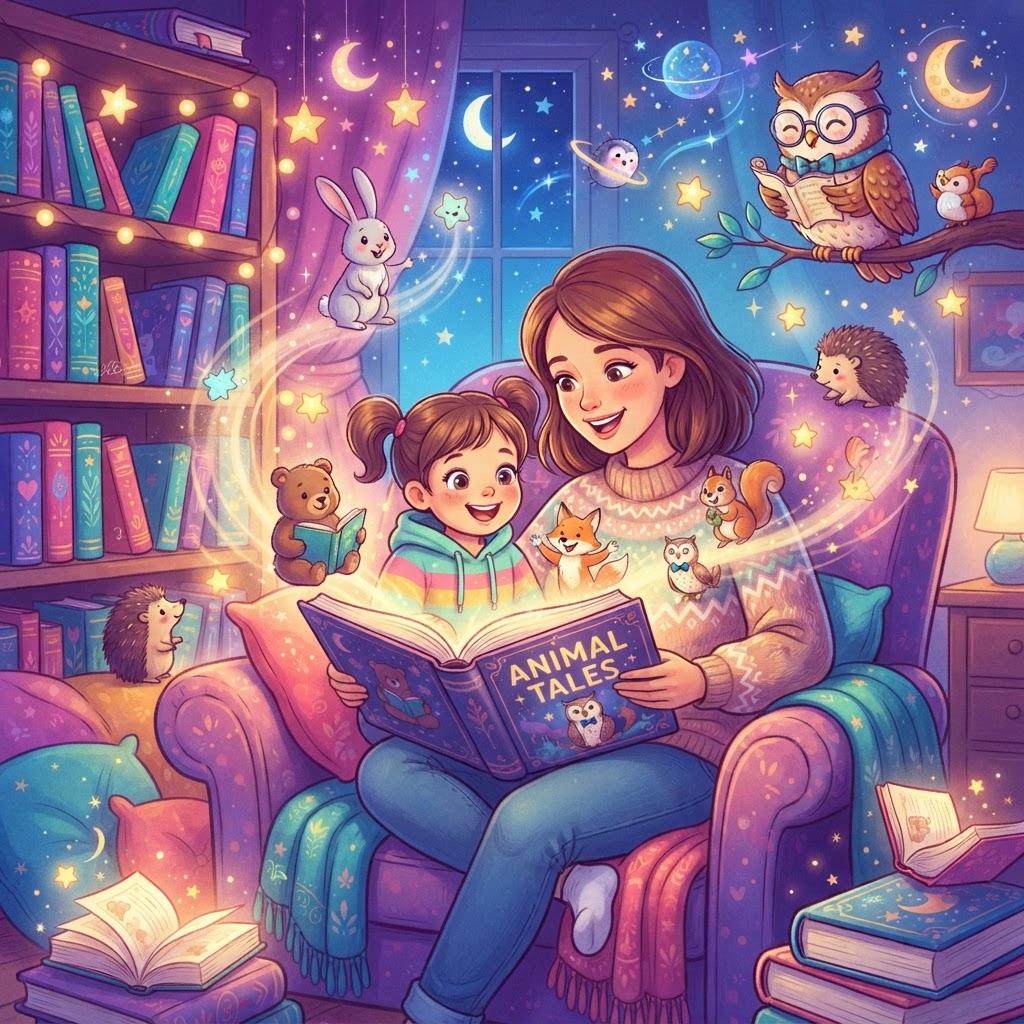
Few story themes work as well at bedtime as talking animals stories for kids. A bear who worries, a rabbit who solves problems, or a fox who learns to share can turn big feelings into gentle, memorable adventures. For parents, teachers, and caregivers, stories about talking animals are also a simple way to teach empathy, courage, and kindness without sounding like a lecture.
Whether you want fresh talking animals bedtime stories, new read-aloud ideas, or a way to create custom adventures for your child, this guide will help. Below, you’ll find why children connect so strongly with animal characters, practical storytelling tips, and seven creative talking animals tales children love.
Why do kids love talking animals stories?
Children love talking animals stories for kids because animals feel both safe and exciting. They let children explore emotions, friendships, and challenges at a comfortable distance.
When a shy owl or a brave little mouse faces a problem, children often see their own feelings more clearly. This kind of symbolic play matters. Research from the Harvard Center on the Developing Child shows that imaginative experiences help support social, emotional, and language development.
Talking animal stories also work well because they combine the familiar and the fantastic. Most children already know what a dog, turtle, or bird is like. Giving that animal a voice adds wonder without making the story too complex.
These stories are especially helpful for ages 1-10 because they can be adapted easily:
- Toddlers enjoy simple sounds, repetition, and clear emotions
- Preschoolers love silly animal personalities and gentle lessons
- Early readers connect with adventure, teamwork, and problem-solving
- Older children enjoy character growth, humor, and moral choices
That’s one reason stories about talking animals remain a classic choice for bedtime, classrooms, and family reading time.
What makes talking animals bedtime stories especially effective?
Talking animals bedtime stories are effective because they feel soothing, playful, and emotionally safe. They help children wind down while still giving them something meaningful to think about.
At bedtime, children do best with stories that are predictable but not boring. The American Academy of Pediatrics emphasizes the value of shared reading for language growth, bonding, and routines, especially when it feels warm and interactive (AAP guidance).
A strong bedtime animal story usually includes:
- One clear main character
- A small, age-appropriate problem
- Reassuring emotional stakes
- A gentle ending with safety and comfort
- Repetition or familiar phrases for younger children
For example, a hedgehog who cannot sleep because the forest sounds too loud is a better bedtime lead than a lion in a fast-paced chase scene. Calm pacing matters.
If your child already enjoys magical themes, you can also mix animal characters with ideas from dragon adventures for kids or wizard story ideas. Blending favorite themes often makes bedtime stories even more engaging.
Which talking animals story ideas work best for children?
The best talking animals tales children enjoy are simple, emotionally clear, and full of personality. Stories work best when the animal’s traits connect naturally to the lesson or adventure.
Here are seven reliable story ideas you can use at home, in class, or as inspiration for personalized storytelling.
1. The worried rabbit who learns bravery
A small rabbit hears strange noises near the garden and assumes something scary is coming. By investigating with a friend, the rabbit learns that courage is not about never feeling afraid.
2. The owl who helps everyone listen
An owl notices that the forest friends keep interrupting one another. The story teaches turn-taking, communication, and respect in a gentle, funny way.
3. The fox who must tell the truth
A clever fox exaggerates every story and eventually loses others’ trust. This idea works well for teaching honesty without sounding preachy.
4. The turtle who wins by staying steady
A turtle wants to join a big forest event but feels too slow compared with faster animals. The message focuses on patience, persistence, and self-confidence.
5. The bear who forgets how to share
A bear finds a patch of sweet berries and wants them all. Over the course of the story, the bear discovers that sharing creates friendship and joy.
6. The squirrel on a treasure hunt
A squirrel searches for a “treasure” and learns that the best prize is helping friends along the way. This is a great bridge into adventure themes like pirate story fun for kids.
7. The little duck who wants to be different
A duck wishes it could roar like a lion or fly like an eagle. The story supports identity, self-acceptance, and appreciation for individual strengths.
These stories about talking animals can be funny, cozy, adventurous, or reflective. The key is matching the plot to your child’s age, temperament, and current interests.
How can you build strong character development into talking animal tales?
Strong character development in animal stories comes from giving each character a clear want, a believable flaw, and a small chance to grow. Children remember the lesson better when they see it through action.
A useful structure is simple:
- Goal: What does the animal want?
- Obstacle: What gets in the way?
- Feeling: How does the animal react?
- Choice: What does the animal decide to do?
- Growth: What changes by the end?
For example, if a beaver wants to build the biggest dam in the river, the flaw might be stubbornness. The obstacle could be needing help from others. By the ending, the beaver learns cooperation.
This matters for child development. Organizations like Reading Rockets highlight how discussion during reading supports vocabulary, comprehension, and deeper thinking. When you pause and ask, “Why do you think the fox said that?” or “How did the turtle feel then?” you help children practice empathy and perspective-taking.
To make characters feel vivid, try these educator-tested tips:
- Match the animal to the trait: owls for wisdom, mice for timidity, dogs for loyalty
- Give each animal a distinct speaking style
- Use one memorable habit, such as a penguin who hums when nervous
- Let the character make a mistake before learning
- Keep growth realistic and age-appropriate
That’s what turns a simple animal plot into one of the talking animals stories for kids children ask to hear again.
How can you create personalized talking animals adventures with InstaTales?
Personalized animal stories work beautifully because children connect more deeply when the story includes their name, interests, and favorite creatures. A custom tale can turn a good bedtime story into a meaningful routine.
With InstaTales, you can create your own personalized bedtime story in minutes using prompts your child already loves. If your child is fascinated by pandas, forest trails, rainbows, or jungle rescue missions, you can build a story around those details instead of relying on generic plots.
Here are easy ways to personalize talking animals bedtime stories:
- Use your child’s first name as the helper, explorer, or friend
- Choose a favorite animal as the main character
- Add familiar places, like grandma’s garden or a nearby park
- Include a specific skill your child is working on, such as sharing or trying new foods
- Keep the tone cozy, silly, or adventurous based on bedtime needs
If you want a quick starting point, browse the story templates for ready-made formats. After you create a few favorites, save them in your story library so children can revisit the same comforting stories again and again.
For families who enjoy theme nights, you can also pair talking animal stories with other favorites from princess story ideas or brave quests inspired by knight adventures for children.
How can parents and teachers use stories about talking animals for learning?
Parents and teachers can use stories about talking animals to teach emotional literacy, language, and early comprehension skills. Because the characters feel playful, children often engage more openly than they would with direct instruction.
At home, try reading one short animal story and then asking two simple questions:
- “What was the problem?”
- “What did the animal learn?”
That quick discussion builds recall and reasoning. For younger children, you can also ask them to copy animal sounds, predict what happens next, or act out the ending.
In classrooms, talking animal stories are excellent for:
- Social-emotional learning lessons
- Vocabulary building
- Sequencing activities
- Creative writing prompts
- Partner retelling exercises
Teachers can use InstaTales for teachers to create class-friendly prompts, differentiated reading activities, or character-based writing starters. If you want more themed literacy ideas, the InstaTales blog is a helpful place to explore related resources.
The biggest benefit is flexibility. A single talking animal story can support bedtime bonding at home and meaningful discussion in a classroom the next day.
Frequently Asked Questions
What age are talking animals stories best for?
Talking animal stories can work well for ages 1-10 when the language and plot match the child’s stage. Younger children do best with short, repetitive tales, while older children enjoy deeper adventures and character growth.
Why are talking animals so common in children’s stories?
Talking animals make emotions easier to understand without feeling too personal or intense. They also add playfulness and imagination, which helps children stay engaged.
How long should talking animals bedtime stories be?
For bedtime, shorter is usually better. Aim for 3-5 minutes for toddlers, 5-8 minutes for preschoolers, and 8-12 minutes for older children, depending on energy level and routine.
Can talking animal stories teach real-life lessons?
Yes, they are excellent for teaching kindness, honesty, sharing, bravery, and self-control. Children often absorb these lessons more naturally when they are woven into a story instead of explained directly.
How can I make a talking animal story feel personal?
Add your child’s name, favorite animal, preferred setting, and a small challenge they relate to. Personalized details make the story feel special and increase emotional connection.
Is InstaTales useful for creating talking animals stories for kids?
Yes, InstaTales makes it easy to create personalized animal adventures based on your child’s interests and reading needs. You can customize characters, themes, and lessons, then save favorites for future bedtime reading.
Get a new bedtime story every week
Free, personalized, and delivered to your inbox. No spam, ever.
Ready to Create a Personalized Bedtime Story?
Use our free AI bedtime story generator to create a personalized illustrated story for your child in 30 seconds — no credit card needed.
Popular story types:
Maya Rodriguez
Lead Content Editor & Early Literacy Specialist
Maya is a former early childhood educator and literacy specialist with over a decade of experience helping children develop a love of reading. She leads content at InstaTales, where she writes about the science of storytelling, child development, and how families can use personalized AI stories to build literacy and emotional resilience.
instatales.ai