Halloween Stories for Kids: Fun, Not Scary
Celebrate Halloween with these magical stories for kids — festive, fun, and perfect for the season.
✦ Key Takeaways
- •Halloween stories work so well for children because they let kids explore “spooky” ideas in a safe, playful way.
- •Halloween is best explained to children as a fun fall tradition about costumes, community, and imagination.
- •The best Halloween stories for kids mix seasonal fun with kindness, curiosity, and a reassuring ending.
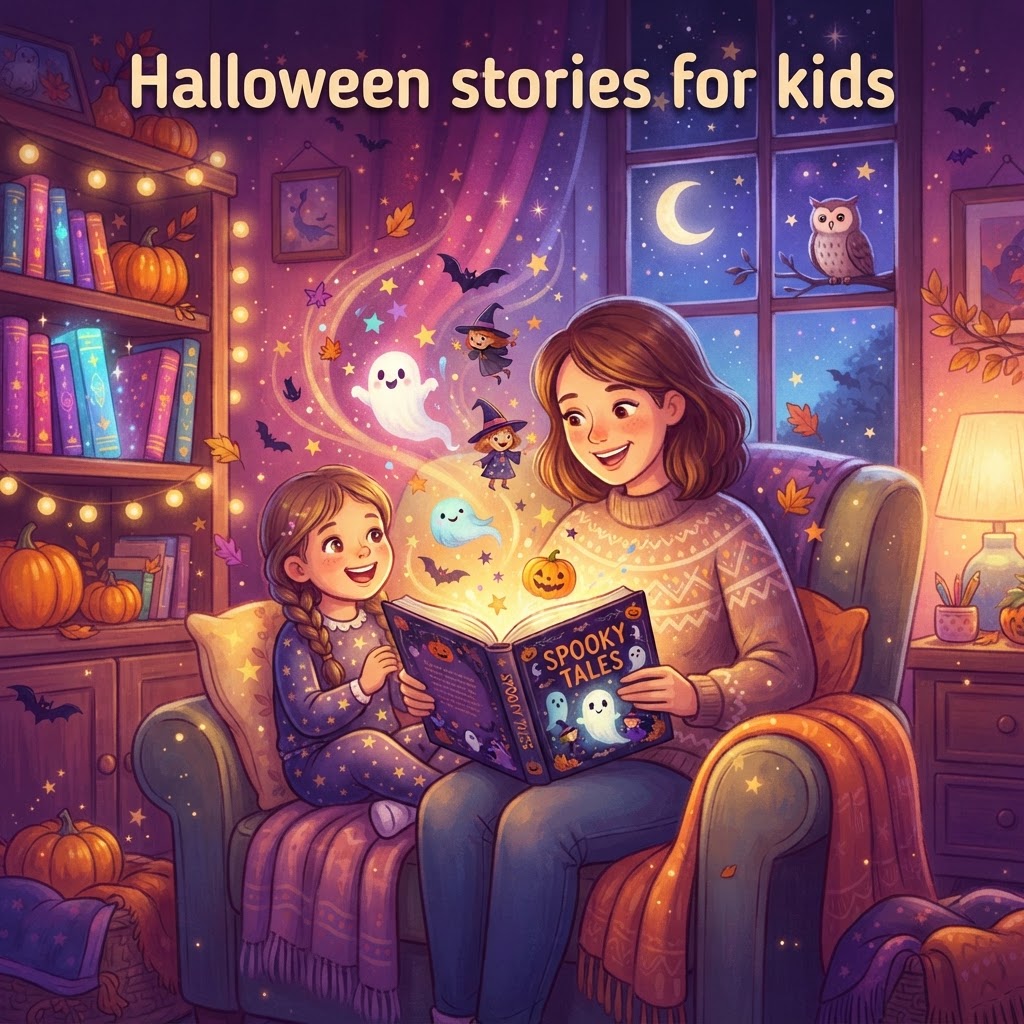
Halloween stories for kids can be magical, silly, cozy, and just a little bit mysterious. For many children, Halloween is less about fear and more about pumpkins, costumes, glowing lanterns, friendly ghosts, and the fun of pretending.
That is why the best Halloween bedtime stories do two jobs at once: they celebrate the season, and they help children feel safe. Below, you’ll find simple ways to explain Halloween, a collection of story ideas, and tips for creating personalized kids Halloween tales with InstaTales.
Why are Halloween stories for kids so appealing?
Halloween stories work so well for children because they let kids explore “spooky” ideas in a safe, playful way. A gentle story gives children a small thrill, then brings them back to comfort, laughter, and a happy ending.
From a child development perspective, pretend play helps children make sense of big feelings. When a pumpkin talks or a ghost gets stage fright, children can practice bravery, empathy, and problem-solving from a safe distance. Back-and-forth storytelling also supports language growth, much like the “serve and return” interactions described by the Center on the Developing Child at Harvard University.
In practice, the most successful Halloween stories children ask for again and again usually include:
- familiar seasonal images like leaves, moons, pumpkins, and costumes
- a small mystery instead of true danger
- repetition children can join in with
- a warm ending that restores calm before sleep
What does Halloween mean in a child-friendly way?
Halloween is best explained to children as a fun fall tradition about costumes, community, and imagination. In simple terms, it is a time when people dress up, decorate with pumpkins, share treats, and enjoy playful stories.
Historically, Halloween has roots in old harvest-time traditions and in All Hallows’ Eve, the night before All Saints’ Day. The Library of Congress offers a helpful overview, but for young children, you only need the child-sized version: Halloween is a special autumn celebration where people enjoy dressing up and pretending.
A good age-appropriate explanation might sound like this:
- Ages 1-3: “Halloween is a fun fall day with costumes, pumpkins, and lights.”
- Ages 4-6: “Halloween is a time for dressing up, trick-or-treating, and telling silly, spooky stories.”
- Ages 7-10: “Halloween comes from old traditions and is now mostly a community celebration with costumes, decorations, and stories.”
Keeping the meaning light helps children enjoy the season without becoming overwhelmed.
What are the best Halloween story ideas for kids?
The best Halloween stories for kids mix seasonal fun with kindness, curiosity, and a reassuring ending. They feel festive rather than frightening, which makes them perfect for bedtime or classroom read-alouds.
Here are six story starters you can use at home or turn into personalized tales:
-
The Pumpkin Who Was Afraid of the Dark
A glowing jack-o’-lantern worries that nighttime is too scary, until fireflies show him how beautiful the dark can be. -
The Little Ghost Who Couldn’t Say Boo
A friendly ghost keeps sneezing instead of saying “boo,” and accidentally becomes the funniest host at the Halloween party. -
The Witch’s Lost Broomstick
A young witch must ask forest animals for help when her broom goes missing on the busiest night of the year. -
The Costume Parade Mystery
A child notices that all the costumes in town are sparkling with magical moon dust and sets out to discover why. -
The Sleepy Skeleton Band
A group of skeleton musicians is too tired to perform, so a clever child helps them create the coziest Halloween concert ever. -
The Candy Map Adventure
After finding a map hidden inside a treat bucket, two friends follow clues through pumpkin patches and lantern-lit streets to uncover a kindness treasure instead of candy.
These kids Halloween tales work especially well when they include a child hero, a clear goal, and a gentle twist. If your child loves seasonal stories all year, you can also bookmark these festive Christmas story ideas for later in the winter.
How can adults keep Halloween bedtime stories gentle and fun?
The easiest way to keep Halloween bedtime stories child-friendly is to make the unknown feel manageable. Use cozy details, silly characters, and predictable endings so children feel curious rather than scared.
A helpful rule is to match the story to your child’s age and temperament. The CDC’s developmental milestones remind us that children process emotion and imagination differently at different ages, so a five-year-old’s “fun spooky” may feel very different from an eight-year-old’s.
Try these simple guidelines:
- keep the “scary” element brief and mild
- make monsters clumsy, shy, or kind
- avoid threat, chase scenes, or graphic details before bed
- let your child help choose the costume, creature, or setting
- end with safety, warmth, and connection
Research on interactive reading, including dialogic reading studies by Grover Whitehurst and colleagues, shows that children learn more when adults pause, ask questions, and respond to their ideas. So if your child says, “I want the ghost to be friendly,” follow that lead.
How can you make personalized Halloween stories with InstaTales?
Personalized stories are powerful because children pay closer attention when the adventure feels like it belongs to them. Turning your child into the helper, detective, or pumpkin-patch hero can make Halloween stories children feel even more memorable.
With InstaTales, you can create your own personalized bedtime story in minutes. Start with your child’s name, age, favorite costume, and comfort level with spooky themes, then choose a gentle Halloween setting.
A few easy personalization ideas include:
- your child becomes the star of the trick-or-treat parade
- their favorite toy joins the adventure
- the family pet helps solve the mystery
- the story takes place on your street, in a pumpkin patch, or at grandma’s house
- the ending includes a calming bedtime routine
If you want a faster start, browse the ready-made story templates. And if your child asks for the same tale night after night, you can save it in your story library for easy re-reading.
What does a personalized Halloween bedtime story sound like?
A personalized story should sound familiar, comforting, and just magical enough to hold attention. The best sample stories use the child’s name, favorite details, and a calm ending.
Here is a short example:
On Halloween night, Maya zipped up her silver star costume and peeked outside. The moon looked like a smiling cookie, and tiny lanterns glowed along the path.
“I think the pumpkins are whispering,” Maya said.
Her orange cat, Pickles, twitched his tail. Together they tiptoed to the biggest pumpkin in the yard. Inside, they found not a monster, but a folded note written in glittery ink: Dear Maya, the fireflies are late for the lantern parade. Will you help?
Maya carried the pumpkin lantern to the garden gate and hummed a soft song. One by one, the fireflies blinked awake and floated into the sky like tiny stars.
“You saved Halloween,” whispered Pickles.
Maya smiled, snuggled under her blanket, and watched the last golden light drift past her window before sleep.
How can Halloween stories children love support literacy?
Halloween stories can absolutely support literacy when they are used interactively. Seasonal stories build vocabulary, sequencing, prediction, and oral language because children are motivated to join in.
At home, ask simple questions like “What do you think is inside the pumpkin?” or “How did the ghost solve the problem?” In classrooms, teachers can use themed storytelling for writing prompts, retelling practice, and vocabulary work. If you’re planning fall literacy activities, InstaTales for teachers can help with classroom-friendly story creation and differentiation.
This kind of shared reading matters. Organizations such as the American Academy of Pediatrics and the National Association for the Education of Young Children consistently emphasize that warm, responsive reading routines support both language and relationships. For more seasonal inspiration, story prompts, and family reading ideas, explore more resources as the holidays change.
Frequently Asked Questions
What age are Halloween stories best for?
Halloween stories can work for children from toddlers through age 10, as long as the tone matches the child. Younger children usually do best with silly, cozy stories, while older children may enjoy a little more mystery.
Are Halloween bedtime stories too exciting before sleep?
Not if they are written with bedtime in mind. Choose gentle plots, friendly characters, and a calm ending so the story feels festive without overstimulating your child.
How do I know if a Halloween story is too scary?
Watch your child’s cues during and after the story. If they become quiet, clingy, or ask repeated safety questions, scale back the spooky parts and choose more playful themes.
Can personalized Halloween stories help reluctant readers?
Yes. Personalization often boosts engagement because children are naturally more interested when they see their own name, interests, and favorite characters in the story.
How can teachers use Halloween stories in the classroom?
Teachers can use them for read-alouds, sequencing activities, vocabulary practice, and creative writing prompts. Short themed tales are also useful for speaking and listening exercises during October literacy units.
Ready to Create a Personalized Bedtime Story?
Use our free AI bedtime story generator to create a personalized illustrated story for your child in 30 seconds — no credit card needed.
Popular story types:
Maya Rodriguez
Lead Content Editor & Early Literacy Specialist
Maya is a former early childhood educator and literacy specialist with over a decade of experience helping children develop a love of reading. She leads content at InstaTales, where she writes about the science of storytelling, child development, and how families can use personalized AI stories to build literacy and emotional resilience.
instatales.ai