Halloween Stories for Kids: 6 Fun Activities
Make Halloween fun with these story-based activities for kids — costume stories, pumpkin tales, and Halloween adventures.
✦ Key Takeaways
- •Halloween story activities are engaging because they blend pretend play, repetition, and safe suspense.
- •A costume story game is one of the easiest Halloween story activities because children already love dressing up.
- •A pumpkin tale is ideal for preschoolers because it uses familiar objects and a clear story structure.
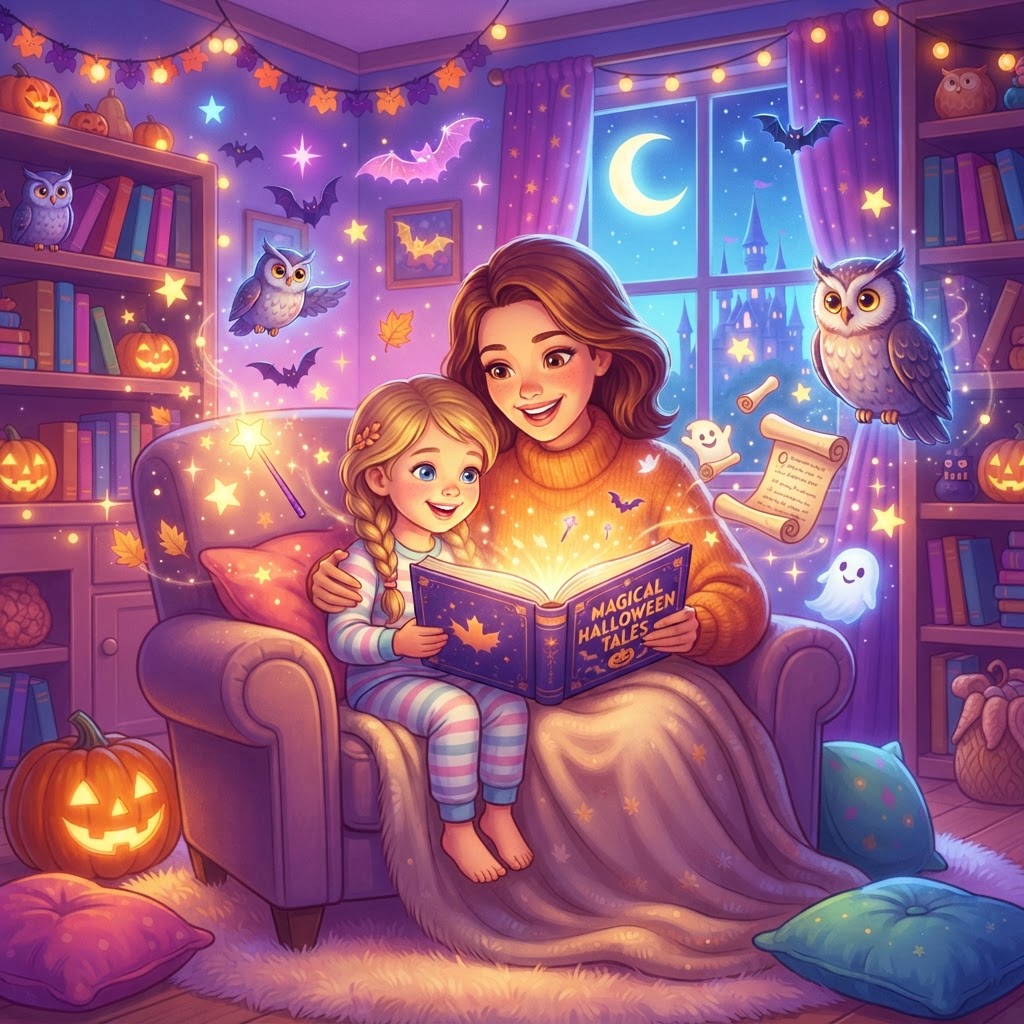
Halloween can be magical without being too scary. When you pair costumes, pumpkins, and pretend play with storytelling, children build language, sequencing, and emotional skills while having seasonal fun. These Halloween stories for kids are designed for ages 1-10, with simple ways to make each activity gentler for toddlers or more detailed for older children.
Story-based play works especially well in autumn because children are already noticing costumes, changing weather, and holiday traditions. If your family enjoys seasonal reading, you may also like these fall story play ideas for the weeks leading up to Halloween.
Why are Halloween story activities so engaging for kids?
Halloween story activities are engaging because they blend pretend play, repetition, and safe suspense. That combination helps children practice language, memory, and emotional regulation while staying in control of the story.
Early childhood experts at NAEYC note that play supports social, emotional, and cognitive growth. Shared reading conversations also matter. Techniques like dialogic reading, highlighted by Reading Rockets, help children develop vocabulary by talking about the story instead of only listening.
For Halloween, the key is to keep things spooky, not frightening. For toddlers and preschoolers, use friendly ghosts, giggling pumpkins, and kind monsters. For older children, add clues, mysteries, and adventure.
How can you turn costumes into a Halloween story game?
A costume story game is one of the easiest Halloween story activities because children already love dressing up. It turns a costume into a character, and a character naturally leads to a plot.
Story prompt
“On Halloween night, a tiny witch/superhero/dinosaur heard a mysterious sound near the pumpkin patch. What happened next?”
Materials
- Costumes or simple dress-up items
- A mirror
- 3-5 picture cards or objects for story ideas
- Optional: phone camera for photos
Instructions
- Ask your child to choose a costume and name their character.
- Show a few objects, such as a pumpkin, broom, flashlight, or candy bucket.
- Invite your child to build a story using three steps: Who am I? What do I want? What problem appears?
- Take turns adding one sentence each.
- For younger children, keep it oral and short. For older children, write the story down.
This activity is great for siblings because each child can play a different role. In classrooms, it also works well for oral language practice and simple sequencing.
What is a simple pumpkin tale activity for preschoolers?
A pumpkin tale is ideal for preschoolers because it uses familiar objects and a clear story structure. Children can touch, sort, and describe while telling a beginning-middle-end story.
Story prompt
“A little pumpkin rolled away from the patch and went looking for the perfect Halloween porch.”
Materials
- One real mini pumpkin or paper pumpkin cutouts
- Crayons or markers
- Tape or floor spots to mark different “places”
- Optional: basket or wagon
Instructions
- Create three story stops: the pumpkin patch, a windy path, and a front porch.
- Move the pumpkin from place to place as your child narrates what happens.
- Ask simple language prompts: “Who did the pumpkin meet?” “How did it feel?” “Where did it go next?”
- Let your child draw the final scene.
This is especially helpful for children ages 2-5 because it supports vocabulary and sequencing without needing strong writing skills. If you want a fast starting point, InstaTales also offers story templates that can be adapted into a pumpkin adventure.
How can kids build a not-too-spooky haunted house story?
A not-too-spooky haunted house story helps children explore suspense in a safe, playful way. The trick is to make the house mysterious but friendly.
Story prompt
“Inside the old house lived a shy ghost who only wanted help decorating for Halloween.”
Materials
- Blanket fort, cardboard box, or pillow fort
- Flashlight
- Paper decorations
- Stuffed animals
Instructions
- Build a small “haunted house” space together.
- Place 3-4 clues inside, such as a paper bat, toy key, or tiny ghost drawing.
- Read the prompt aloud, then ask your child to enter and discover what the ghost needs.
- Help them solve the story problem: decorate the house, find a lost pumpkin, or invite ghost friends to a party.
For children who are sensitive to scary themes, replace “haunted” with “mysterious.” According to the CDC’s developmental guidance, young children vary widely in how they process emotion and imagination, so it helps to follow your child’s cues and keep the tone reassuring.
What makes a trick-or-treat story walk so effective?
A trick-or-treat story walk is effective because it combines movement with storytelling. Children remember stories better when they can act them out with their bodies.
Story prompt
“Your candy bucket is empty, but the moon gives you a map to five special Halloween stops.”
Materials
- Paper signs or pictures for 4-5 story stations
- Small basket or bucket
- Optional: pretend treats, stickers, or leaves
Instructions
- Set up a path through your home, yard, or classroom.
- At each stop, place a picture and one short prompt, such as “Meet a black cat,” “Cross a crunchy leaf bridge,” or “Help a mummy find its shoe.”
- Have your child walk to each station and add one event to the story.
- At the end, retell the full adventure together.
This activity supports comprehension because children are sequencing events in order. It also works beautifully as a group activity. Teachers can adapt it for centers or hallway movement breaks through InstaTales for teachers.
How can shadow puppets inspire spooky themed stories?
Shadow puppets are excellent for spooky themed stories because they feel magical without showing intense visuals. Children can create suspense while staying emotionally safe.
Story prompt
“On Halloween evening, three tiny shadows danced across the wall looking for a missing moonbeam.”
Materials
- Flashlight
- Plain wall or sheet
- Paper puppets on sticks, or just hands
- Tape
Instructions
- Darken the room slightly and shine a flashlight toward the wall.
- Make simple shapes: a bat, cat, owl, or ghost.
- Begin the story with one line, then let your child move the puppet as they add the next event.
- End with a comforting resolution, such as a moonbeam found or a sleepy parade home.
This is a strong bedtime activity because it slows the pace and encourages calm storytelling. For ages 6-10, invite children to create a “director’s plan” before the show with characters, setting, and problem.
What is a monster feelings jar activity?
A monster feelings jar turns Halloween fun into emotional learning. Children often find it easier to talk about feelings when they project them onto a silly character.
Story prompt
“A fuzzy little monster woke up on Halloween with a very mixed-up heart. Could its friends help name each feeling?”
Materials
- Jar or bowl
- Slips of paper
- Crayons
- Optional: monster stickers or pom-poms
Instructions
- Write or draw simple feelings on slips: happy, nervous, excited, shy, proud, scared.
- Let your child pull one slip from the jar.
- Ask them to add that feeling into the monster’s story.
- Build a short tale about what caused the feeling and what helped.
This activity is especially useful around Halloween because excitement and fear can overlap. When children label emotions in stories, they practice self-awareness and empathy in a very accessible way.
How can families use InstaTales for Halloween stories for kids?
InstaTales makes Halloween storytelling easier by turning your child’s interests into personalized bedtime stories in minutes. Instead of searching for the perfect book, you can create a gentle Halloween adventure that fits your child’s age, comfort level, and favorite themes.
Here is a simple way to use it:
- Choose a Halloween theme such as pumpkins, costumes, black cats, or friendly ghosts.
- Add your child’s name, age, and favorite character type.
- Set the tone as “playful,” “cozy spooky,” or “not scary.”
- Include a simple goal, like finding lost candy, helping a ghost decorate, or rescuing a runaway pumpkin.
You can create your own personalized bedtime story for one night, then save favorites in your story library to re-read all season. This is helpful because repetition builds confidence and comprehension, especially for younger children. Many families find that a personalized story also reduces bedtime resistance because the child feels part of the adventure.
If you want to extend the story into play, generate the tale first and then use it as the script for one of the activities above. A pumpkin story can become a story walk. A costume story can become a puppet show. That flexibility is what makes AI-generated Halloween stories for kids so practical for busy parents and educators.
Frequently Asked Questions
Are Halloween story activities good for toddlers?
Yes, as long as the tone stays gentle and predictable. Use friendly characters, short stories, and lots of reassurance for children under 4.
How scary should Halloween stories be for kids?
Most young children do best with “spooky light” stories, not frightening ones. If your child seems uneasy, switch to silly monsters, kind ghosts, and happy endings.
Can I use these Halloween story activities in a classroom?
Absolutely. Several of these ideas work well for centers, circle time, and movement breaks. Costume stories, story walks, and puppet play are especially classroom-friendly.
How long should a Halloween story activity last?
For toddlers and preschoolers, 5-10 minutes is often enough. Older children may enjoy 15-20 minutes, especially if they are drawing, writing, or acting out the story.
What makes personalized Halloween stories so effective?
Personalized stories increase engagement because children recognize their own name, interests, and experiences. That familiarity can support attention, language use, and positive bedtime routines.
Explore More Stories
Ready for more? - free AI bedtime story generator
Get a new bedtime story every week
Free, personalized, and delivered to your inbox. No spam, ever.
Ready to Create a Personalized Bedtime Story?
Use our free AI bedtime story generator to create a personalized illustrated story for your child in 30 seconds — no credit card needed.
Popular story types:
Maya Rodriguez
Lead Content Editor & Early Literacy Specialist
Maya is a former early childhood educator and literacy specialist with over a decade of experience helping children develop a love of reading. She leads content at InstaTales, where she writes about the science of storytelling, child development, and how families can use personalized AI stories to build literacy and emotional resilience.
instatales.ai