How Long Should a Bedtime Story Be? A Guide by Age (1–10)
Not sure how long a bedtime story should be? This age-by-age guide covers ideal story length for toddlers through older kids — with tips for keeping them engaged.
✦ Key Takeaways
- •For children aged 1–2, the ideal bedtime story runs 3–5 minutes, or roughly 100–200 words.
- •Preschoolers aged 3–4 can comfortably engage with 5–8 minutes of bedtime reading, or stories around 300–500 words.
- •Early school-age children (5–6) are ready for 8–12 minutes of bedtime reading, or 500–800 words.
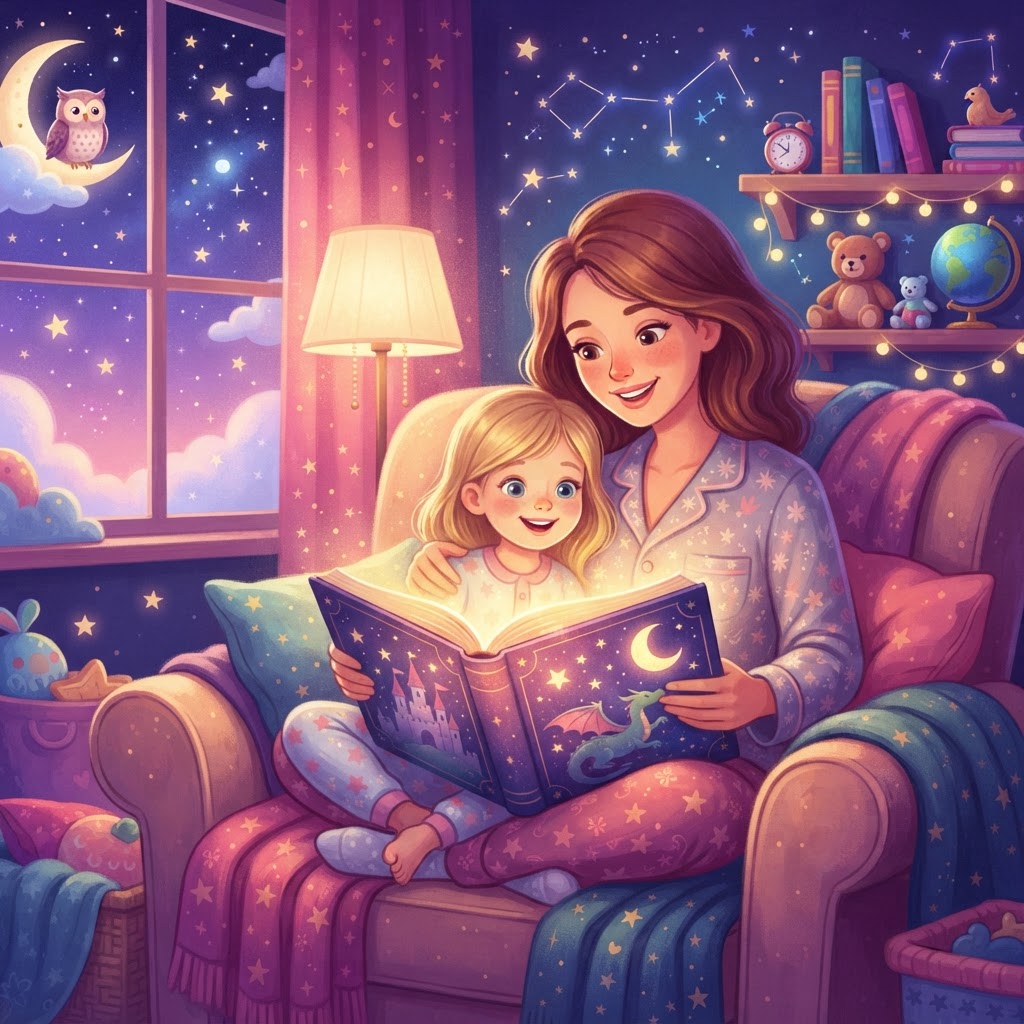
Every parent has been there: you're halfway through a story, your toddler has wriggled off your lap, or your eight-year-old is begging for just one more chapter. Getting bedtime story length right isn't just about keeping the peace — it genuinely affects how well your child winds down, how much they absorb, and how meaningful the ritual becomes. This guide breaks down exactly how long a bedtime story should be by age, grounded in what we know about children's attention spans and sleep readiness.
How Long Should a Bedtime Story Be for Toddlers Aged 1–2?
For children aged 1–2, the ideal bedtime story runs 3–5 minutes, or roughly 100–200 words. At this age, attention spans are still developing rapidly, and toddlers engage most with rhythm, sound, and repetition rather than plot.
What works best:
- Simple rhyming texts or board book-style stories
- Repetitive phrases and predictable patterns (think "Goodnight Moon" pacing)
- Rich, colourful descriptions they can absorb even without fully understanding every word
According to the American Academy of Pediatrics, reading aloud from infancy builds early language pathways, even before comprehension kicks in. At this stage, your calm voice is the story.
Signs your 1–2 year old is ready for slightly longer stories: They begin pointing at pictures, making sounds in response to familiar phrases, or staying still for longer stretches at bedtime.
What Story Length Works Best for Children Aged 3–4?
Preschoolers aged 3–4 can comfortably engage with 5–8 minutes of bedtime reading, or stories around 300–500 words. Their attention spans have grown, and they're now genuinely following simple storylines.
What works best:
- Stories with a clear beginning, middle, and end
- Familiar settings — home, animals, bedtime routines
- Light problem-solving or gentle emotional themes (feeling scared of the dark, missing a friend)
Research from the Harvard Center on the Developing Child highlights that ages 3–5 represent a critical window for language and narrative comprehension. A well-paced 5-minute story can meaningfully expand vocabulary and story-sequencing skills.
This is also the age where personalised stories start to shine. When a child hears their own name, their pet's name, or their favourite toy in a story, engagement jumps noticeably. InstaTales' Short story setting (around 300–500 words) is designed precisely for this age group — short enough to hold attention, long enough to feel complete.
How Long Should You Read to Children Aged 5–6?
Early school-age children (5–6) are ready for 8–12 minutes of bedtime reading, or 500–800 words. They're beginning to decode words themselves, which means bedtime stories can become more layered and interesting.
What works best:
- Stories with simple character development
- Mild adventure or fantasy elements
- Gentle humour and wordplay
At this age, children may start asking questions mid-story or wanting to predict what happens next — both excellent signs of active comprehension. Let them. These interruptions aren't derailing the story; they are the story.
Signs they're ready for longer stories: They resist stopping at the end, ask follow-up questions about characters the next day, or start "reading along" with familiar texts.
Is There a Right Reading Duration for 7–8 Year Olds?
Yes — and it's longer than many parents expect. Children aged 7–8 can sustain 12–15 minutes of bedtime story time, covering 800–1,200 words. At this stage, they're capable readers themselves, but being read to remains deeply valuable.
What works best:
- Chapter book excerpts or multi-night stories
- Stories with moral complexity or characters facing real dilemmas
- Humour, adventure, and age-appropriate suspense
A 2019 review published by the National Literacy Trust found that children who are read to regularly at this age show stronger reading motivation and wider vocabulary than peers who only read independently. Co-reading keeps the ritual alive even as children grow more capable.
InstaTales' Long story setting (800–1,200 words) maps well here — detailed enough to satisfy curious minds, structured to end satisfyingly without running over bedtime.
How Should Bedtime Reading Change for Children Aged 9–10?
By ages 9–10, children can engage with 15–20 minutes of reading time, or stories of 1,200–1,800 words. Many kids this age are voracious readers, so the question shifts slightly: it's less about can they sustain attention, and more about choosing content that still feels like a treat rather than homework.
What works best:
- Serialised adventure or mystery stories read across multiple nights
- Stories that reflect their real interests — space, sport, mythology, animals
- Content that invites discussion, not just passive listening
This is a great age to mix bedtime reading with brief conversation: "What do you think happens next?" or "Would you have made the same choice?" These moments build critical thinking alongside the wind-down ritual.
InstaTales' Epic story setting suits this group perfectly — longer narratives with richer detail, personalised to your child's specific interests.
Quick-Reference: Bedtime Story Length by Age
| Age Group | Duration | Word Count | Best Story Format |
|---|---|---|---|
| 1–2 years | 3–5 min | 100–200 words | Rhyming, repetitive |
| 3–4 years | 5–8 min | 300–500 words | Simple plot, familiar settings |
| 5–6 years | 8–12 min | 500–800 words | Character + light adventure |
| 7–8 years | 12–15 min | 800–1,200 words | Chapter-style, moral themes |
| 9–10 years | 15–20 min | 1,200–1,800 words | Serialised, interest-led |
What Are the Signs a Child Is Ready for Longer Stories?
Regardless of age, certain behaviours signal that your child's reading attention span is expanding. Watch for:
- Resisting bedtime story endings ("just one more page!")
- Asking questions about character motivations or story outcomes
- Remembering plot details from the night before
- Decreased fidgeting and longer periods of focused listening
- Requesting the same story repeatedly (comprehension deepening)
If you're seeing these signs regularly, it's a good cue to gently increase story length or complexity — even if your child is on the younger end of an age bracket.
Frequently Asked Questions
Is it okay to read shorter stories than recommended for my child's age?
Absolutely. The guidelines above are averages, not rules. A tired child, a disrupted routine, or simply a shorter attention span on a given night all call for a shorter story. A 3-minute story read warmly beats a 10-minute story read through gritted teeth.
Can bedtime stories be too long?
Yes — especially for younger children. Overly long stories can overstimulate rather than settle, making it harder for children to fall asleep. If your child becomes restless, wiggly, or distracted before the story ends, that's a signal to wrap up sooner next time.
How does personalisation affect how long a child stays engaged?
Research consistently shows that children pay attention longer to stories featuring familiar names, places, and interests. Personalised storytelling — like what InstaTales generates — can meaningfully extend engagement even within the same recommended time window.
Should I always finish the story before lights out?
Not necessarily. With older children (7+), ending a chapter at a suspenseful moment can actually build positive associations with bedtime — they look forward to the next instalment. For younger children, a complete story with a calm, satisfying ending tends to work better for sleep transition.
At what age can children start reading their own bedtime stories?
Many children aged 6–7 can read simple books independently, but that doesn't mean parent-led reading should stop. The bonding, shared experience, and richer vocabulary exposure of being read to remain valuable well into the primary school years — and beyond.
How many stories should I read per night?
For toddlers and preschoolers, 1–2 short stories is typical. For school-age children, one well-chosen story of appropriate length is usually ideal. The number matters less than the consistency — a nightly reading ritual, whatever its shape, is what builds lasting literacy habits.
Finding the right story length is one of those small parenting adjustments that makes a surprisingly big difference. When the story fits your child's attention span and the mood of the evening, bedtime genuinely becomes something everyone looks forward to.
If you're looking for a simple way to get story length right every night — without hunting for the perfect book — try InstaTales and let it generate a personalised story in exactly the right length for your child's age. Short, Long, or Epic: the choice is yours, and the story is theirs.
Ready to Create a Personalized Bedtime Story?
Use our free AI bedtime story generator to create a personalized illustrated story for your child in 30 seconds — no credit card needed.
Popular story types:
Maya Rodriguez
Lead Content Editor & Early Literacy Specialist
Maya is a former early childhood educator and literacy specialist with over a decade of experience helping children develop a love of reading. She leads content at InstaTales, where she writes about the science of storytelling, child development, and how families can use personalized AI stories to build literacy and emotional resilience.
instatales.ai