Confidence Development Stories for Kids
Want to help your child develop confidence? Discover how stories naturally build this skill — and how to maximize the benefit.
✦ Key Takeaways
- •Stories help children build confidence because they let kids rehearse courage in a low-stakes way.
- •Research suggests that stories support the building blocks of confidence, even when studies do not always use the word “confidence” directly.
- •Stories can be especially helpful for children who hang back, worry about failure, or want to get everything “just right.” They create emotional distance, which makes hard feelings easier to explore. A child may resist direct advice like “Just be brave.” But that same child may listen closely to a story about a rabbit who worries before school or a child who keeps practicing until they improve.
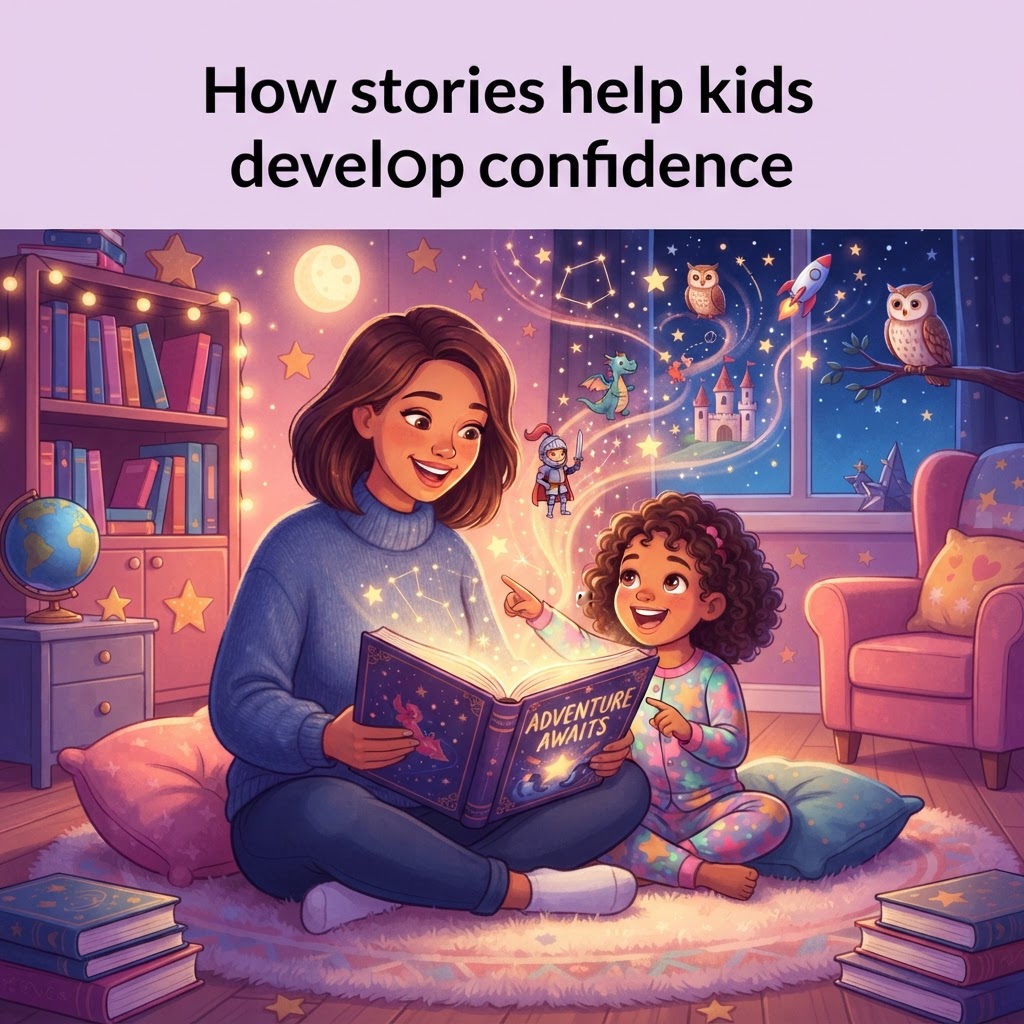
Confidence does not appear overnight. It grows when children feel safe, capable, and able to handle small challenges — and stories can help with all three. The best confidence development stories give children a chance to see brave choices, practice problem-solving, name big feelings, and imagine themselves succeeding. When adults use stories for confidence intentionally, bedtime reading becomes more than a calming routine; it becomes a gentle tool for emotional growth.
Why do stories help children build confidence?
Stories help children build confidence because they let kids rehearse courage in a low-stakes way. Through a character’s journey, children can watch someone face fear, make mistakes, recover, and keep going.
This matters because confidence is not the same as constant success. In child development, confidence is closer to self-efficacy: the belief that “I can try, learn, and cope.” Psychologist Albert Bandura’s classic 1977 research on self-efficacy showed that children build this belief partly through vicarious experience — seeing someone similar to them succeed.
That is where confidence and storytelling connect so naturally. When a child hears about a nervous dragon who still speaks up, or a shy child who makes a new friend, the story gives them a mental script for handling their own real-life moments.
Stories also support confidence by helping children:
- Name emotions such as worry, embarrassment, or frustration
- Predict solutions before problems feel overwhelming
- See mistakes as part of learning
- Practice identity by imagining, “What would I do?”
- Strengthen language, which makes self-expression easier
This is one reason shared reading is recommended by child development experts such as Zero to Three. Children who can understand feelings, talk about experiences, and imagine positive outcomes often find it easier to act with confidence.
What does research say about confidence and storytelling?
Research suggests that stories support the building blocks of confidence, even when studies do not always use the word “confidence” directly. The evidence is strongest around self-efficacy, language growth, emotional understanding, and social problem-solving.
Bandura’s work on self-efficacy remains foundational: children become more willing to try when they see models of coping and success. Story characters can act as those models, especially when children relate to them.
Other studies show that the act of reading and telling stories strengthens skills that make children feel more capable. For example:
- Whitehurst et al. (1988) found that dialogic reading — where adults ask questions and invite children to participate — improves expressive language. Children who can explain ideas and answer questions often feel more secure speaking up.
- Isbell et al. (2004) found that storytelling supports oral language development and story comprehension in young children. Better language skills can translate into more classroom participation and stronger self-belief.
- A meta-analysis by Dowdall et al. (2020) found that shared book reading benefits not only language but also socio-cognitive development, including skills linked to understanding others and navigating social situations.
Put simply, stories help children practice the mental moves behind confidence: understanding a challenge, imagining a response, and believing effort can lead to growth.
For families wanting a trusted literacy overview, Harvard’s Graduate School of Education offers practical guidance on supporting literacy at home. Literacy and confidence often grow together because reading gives children more tools to think, speak, and connect.
How do stories support shy, anxious, or perfectionist children?
Stories can be especially helpful for children who hang back, worry about failure, or want to get everything “just right.” They create emotional distance, which makes hard feelings easier to explore.
A child may resist direct advice like “Just be brave.” But that same child may listen closely to a story about a rabbit who worries before school or a child who keeps practicing until they improve. That distance lowers defensiveness and opens the door to reflection.
For these children, the most helpful stories for confidence usually include:
- A relatable fear or struggle
- A warm, realistic challenge
- Small steps instead of instant transformation
- Supportive adults or friends
- An ending that shows progress, not perfection
This is also why stories often pair well with skills like problem-solving, critical thinking, and listening. Confidence grows when children feel they can think, understand, and respond — not just when they hear praise.
How can parents use stories to build confidence every day?
Parents can use stories to build confidence by making reading active, personal, and repeatable. The goal is not to lecture through a book, but to help children connect the story to their own abilities.
Here are 5 practical strategies that work well:
1. Choose characters who mirror your child’s real challenges
Pick stories about first-day nerves, friendship worries, trying new things, or bouncing back after mistakes. Children are more likely to absorb a message when the problem feels familiar.
2. Pause and ask confidence-building questions
During reading, ask simple questions such as:
- “What is the character worried about?”
- “What helped them keep going?”
- “What could they try next?”
- “Have you ever felt like that?”
This kind of conversation turns passive listening into self-reflection.
3. Focus on effort, strategy, and recovery
When talking about the story, highlight what the character did, not just the happy ending. Say things like, “She kept practicing,” or “He asked for help,” so your child learns that confidence comes from action.
4. Re-read favorite confidence development stories
Repetition is powerful. Children often need to hear the same emotional lesson many times before it becomes part of their own inner voice.
You can save favorites in your story library so your child can revisit the stories that help them most. Re-reading is especially useful before stressful moments like school events, doctor visits, or new activities.
5. Invite your child to retell or change the story
Ask your child to retell the story in their own words or invent a new ending where the character solves the problem differently. This strengthens agency and expressive language — two important parts of feeling capable.
If you want more skill-building ideas, the InstaTales blog also includes articles on storytelling for creativity, imagination, and emotional growth.
How can you use InstaTales to create personalized stories for confidence?
Personalized stories can make confidence lessons stick faster because the child sees themselves in the narrative. When a story uses a child’s name, interests, and real-life challenge, it becomes easier for them to picture success.
With InstaTales, you can create your own personalized bedtime story around the exact moment your child is facing: joining soccer, speaking in class, sleeping alone, making friends, or trying again after a mistake. That personal relevance is one of the biggest strengths of AI-supported storytelling.
A simple formula works well:
- Make your child the main character
- Give them one clear challenge
- Add a helpful guide, friend, or strategy
- Show a small brave action
- End with progress and pride, not perfection
You can also use story templates if you want a quick starting point, then adjust the details to fit your child’s age and temperament. For teachers or school counselors, InstaTales for teachers can support classroom discussions about resilience, participation, and speaking up.
The key is to keep the tone gentle and realistic. Personalized stories for confidence work best when they say, “You can take one brave step,” not “You should never feel afraid.”
What should a strong confidence-building story include?
A strong confidence-building story should include a relatable challenge, emotional honesty, and a believable win. Children trust stories more when bravery looks doable.
Look for these ingredients:
- A child-like main character your child can identify with
- A manageable problem, such as answering in class or trying a new skill
- Feelings named clearly, including fear, frustration, or embarrassment
- A coping strategy, like practice, asking for help, or taking a breath
- A growth ending that shows improvement rather than instant mastery
This approach aligns with guidance from organizations such as the CDC, which emphasizes watching how children develop communication, social, and emotional skills over time. Confidence develops gradually, and stories are most effective when they reflect that truth.
Frequently Asked Questions
Can stories really improve a child’s confidence?
Yes, stories can support confidence by building self-efficacy, emotional understanding, and problem-solving. They are especially effective when adults talk about the story and connect it to real life.
What age are confidence development stories best for?
They can help from toddlerhood through the primary school years, but the style should change with age. Younger children benefit from simple, repetitive stories, while older children can handle more complex emotions and character growth.
How often should I read stories for confidence?
A few times a week is enough to make a difference, especially if you revisit the same themes. Consistency matters more than length.
What if my child does not relate to traditional storybooks?
Try personalized storytelling instead. A custom story that includes your child’s name, favorite interests, and current challenge often feels more engaging and meaningful.
Are personalized AI stories safe to use at bedtime?
They can be, especially when an adult guides the experience and chooses age-appropriate themes. Keep stories calm, hopeful, and emotionally clear so bedtime remains reassuring.
Should confidence stories always have a happy ending?
They should have a hopeful ending, but not necessarily a perfect one. The most helpful stories show progress, effort, and courage — not instant success.
Explore More Stories
Ready for more? - free AI bedtime story generator
Get a new bedtime story every week
Free, personalized, and delivered to your inbox. No spam, ever.
Ready to Create a Personalized Bedtime Story?
Use our free AI bedtime story generator to create a personalized illustrated story for your child in 30 seconds — no credit card needed.
Popular story types:
Maya Rodriguez
Lead Content Editor & Early Literacy Specialist
Maya is a former early childhood educator and literacy specialist with over a decade of experience helping children develop a love of reading. She leads content at InstaTales, where she writes about the science of storytelling, child development, and how families can use personalized AI stories to build literacy and emotional resilience.
instatales.ai