Bedtime Story Routine for Toddlers: Simple Steps
Want to create a bedtime story routine for your toddler? Here's a step-by-step guide to making story time a calming nightly ritual.
✦ Key Takeaways
- •A bedtime story routine helps toddlers sleep because it creates predictability, and predictability lowers stress.
- •An ideal toddler bedtime routine is short, calm, and mostly the same every night.
- •Toddler story time works best near the end of the bedtime routine, after active care tasks and just before lights out.
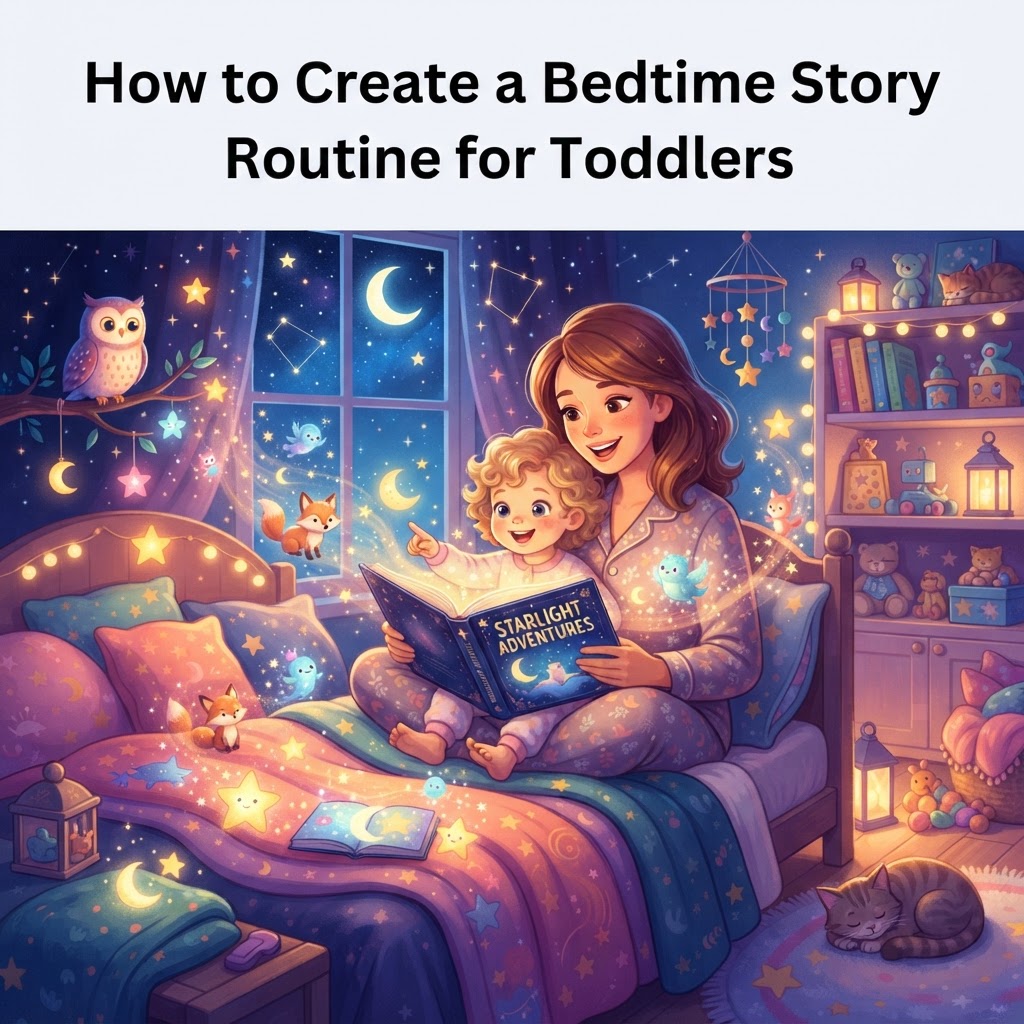
A bedtime story routine for toddlers can do much more than fill a few quiet minutes before sleep. When story time happens at the same point each night, it becomes a clear signal: the day is ending, your child is safe, and rest is next.
For many families, the best toddler bedtime routine is simple, repeatable, and calm. Add a short story, a predictable sequence, and a loving goodnight, and you have a ritual that supports sleep, language, and connection all at once.
Why does a bedtime story routine help toddlers sleep?
A bedtime story routine helps toddlers sleep because it creates predictability, and predictability lowers stress. When the same steps happen in the same order each night, your toddler’s body and brain start to expect sleep.
This matters because toddlers do best with routines that are steady and easy to recognize. Research by sleep expert Jodi Mindell and colleagues has found that consistent bedtime routines are linked with better sleep outcomes in young children, including easier bedtimes and fewer night wakings.
Sleep timing matters too. The American Academy of Sleep Medicine recommends 11-14 hours of sleep per 24 hours for children ages 1-2 and 10-13 hours for ages 3-5, including naps. A calm toddler story time can help children settle into those healthy sleep patterns.
Stories also support attachment. Sitting close, hearing your voice, and sharing a book tells your toddler, “You are with me, and you are safe.” That feeling of safety is often what helps children let go of the day and drift off more easily.
What does an ideal toddler bedtime routine look like?
An ideal toddler bedtime routine is short, calm, and mostly the same every night. For most toddlers, a routine of 20 to 40 minutes works well.
A practical routine often looks like this:
- Bath or quick wash
- Pajamas and diaper or toilet
- Brush teeth
- Dim lights
- One or two books
- Cuddle, song, or short goodnight phrase
- Into bed awake but sleepy
The key is not making the routine long. It is making it predictable. If the sequence changes every night, your toddler has to keep figuring out what comes next. If it stays steady, bedtime feels easier.
Try to keep the hour before bed low-stimulation. The CDC’s sleep guidance recommends healthy sleep habits like regular schedules and calming pre-sleep routines. That means less rough play, less bright light, and no rushed transitions if you can help it.
If you are starting from scratch, begin with just three anchor steps: pajamas, story, bed. You can always build from there.
When should toddler story time happen in the routine?
Toddler story time works best near the end of the bedtime routine, after active care tasks and just before lights out. That placement helps stories act as a bridge between the busy day and sleep.
For most families, the sweet spot is after bath and brushing teeth, when your child is already clean, dressed, and physically comfortable. If you read too early, you may lose the calming effect once more stimulating steps follow.
A good guideline is:
- Ages 1-2: 5-10 minutes of reading
- Ages 2-3: 10-15 minutes
- Ages 3-4: 10-20 minutes, depending on attention span
Watch your child, not just the clock. If your toddler gets silly, hyper, or tearful during books, bedtime may be starting too late. Overtired children often resist the very routine they need.
One helpful tip: start story time before your child is exhausted. A toddler who is already past their limit may not enjoy books, even if they usually love them.
How do you choose the best books for toddler story time?
The best bedtime books for toddlers are short, soothing, and easy to follow. Choose stories with gentle rhythm, simple plots, and familiar emotional tone.
Look for these features:
- Repetition and predictable phrases
- Soft illustrations, not overly busy pages
- Themes of home, bedtime, animals, family, or comfort
- Limited conflict or suspense
- A length you can finish without rushing
Toddlers often want the same book over and over. That is normal and helpful. Repetition supports language learning, memory, and emotional security.
Personalized stories can also work well when they stay calm and age-appropriate. If your child engages more when they hear their own name, you can create your own personalized bedtime story and keep it gentle, simple, and short. If you want an easy starting point, pre-made story templates can help you build routines without extra effort. And if your toddler loves hearing the same favorites again, saving them in your story library makes re-reading easy.
If you are choosing between educational and calming, choose calming at bedtime. Learning still happens during relaxed reading, but sleep is the main goal here.
How can you make bedtime stories calming instead of exciting?
You can make bedtime stories calming by lowering the energy of the whole reading experience. The same book can feel soothing or stimulating depending on how you read it.
Try these calming reading habits:
- Dim the lights before you begin
- Sit in the same cozy spot each night
- Use a slower, softer voice
- Pause between pages instead of rushing
- Avoid dramatic sound effects close to sleep
- Keep your phone out of sight
- End with the same final line, such as “Now it’s time for sleep”
This is also where environment matters. The nonprofit Zero to Three notes that young children benefit from bedtime routines that feel safe, regular, and emotionally supportive.
If your toddler loves active books, save those for earlier in the day. Bedtime is usually better for lullaby-style books, quiet family stories, or simple tales about winding down.
What should you do if your toddler resists story time or asks for “just one more”?
If your toddler resists story time or demands endless books, the best response is a warm, firm limit. Toddlers do well when they get empathy and consistency at the same time.
Here are common problems and what to try:
“My toddler won’t sit still.”
That is common. Let your child hold a stuffed animal, turn pages, or listen while lying down. Some toddlers do better with a very short book than a long cuddle session.
“My toddler wants five more books.”
Set the limit before you start: “Tonight we read two books.” Visual cues help. You might place two books in a basket and let your child choose from those.
“My toddler only wants the same book every night.”
That is usually fine. Re-reading favorite stories is developmentally normal and often comforting.
“My toddler gets wild during books.”
Move bedtime earlier by 15-20 minutes for a week. Overtired toddlers often look energetic, but that “second wind” can make the toddler bedtime routine much harder.
Stories can also support behavior in gentle ways. If bedtime struggles are linked to impulsiveness or difficulty waiting, these stories about self-control can give you ideas for calm, low-pressure teaching through reading.
How can bedtime stories support your toddler’s development too?
Bedtime stories support development by building language, attention, emotional understanding, and parent-child connection. Even a short nightly story can have a meaningful effect over time.
When toddlers hear repeated words and phrases, they build vocabulary. When they watch characters solve simple problems, they begin to understand feelings and social cues. When they cuddle close and listen, they practice attention in a safe, supported way.
You do not need a “lesson” every night. But over time, gentle themes can shape how children see the world. If you want to broaden what your child hears in stories, you might explore bedtime stories that model inclusion or stories that show teamwork and kindness on the InstaTales blog.
The most important thing is the relationship, not the performance. Your toddler will not remember every title. They will remember the pattern: closeness, calm, words, and rest.
A successful bedtime story routine for toddlers is not fancy. It is simply one your family can repeat, night after night, with enough consistency that it becomes a cue for comfort and sleep.
Frequently Asked Questions
How long should toddler story time be?
For most toddlers, 5-15 minutes is enough. The goal is not a long reading session but a calm, predictable ending to the day.
What if my toddler wants the same book every night?
That is completely normal. Repetition helps toddlers feel secure and supports language learning, so it is usually a helpful part of a toddler bedtime routine.
Should stories come before or after brushing teeth?
Stories usually work best after brushing teeth and putting on pajamas. That way, reading is one of the final calming steps before bed.
Is it okay to use digital or AI-generated bedtime stories for toddlers?
Yes, if the story is short, gentle, and used with an adult reading aloud or listening together. Keep screens dim or off when possible, and focus on the calm connection rather than extra stimulation.
What if my toddler is too tired for books?
If your child melts down during story time, bedtime may be too late. Try starting the routine 15-20 minutes earlier and choosing one very short, soothing book.
Can bedtime stories help with behavior and emotions?
Yes, bedtime stories can gently reinforce skills like patience, empathy, and emotional regulation. They work best when the message is simple, repeated over time, and never forced.
Ready to Create a Personalized Bedtime Story?
Use our free AI bedtime story generator to create a personalized illustrated story for your child in 30 seconds — no credit card needed.
Popular story types:
Maya Rodriguez
Lead Content Editor & Early Literacy Specialist
Maya is a former early childhood educator and literacy specialist with over a decade of experience helping children develop a love of reading. She leads content at InstaTales, where she writes about the science of storytelling, child development, and how families can use personalized AI stories to build literacy and emotional resilience.
instatales.ai