Reading to Pre-Readers: How to Make It Count
Reading to a child who can't read yet is one of the most important things you can do. Here's how to make it count.
✦ Key Takeaways
- •Reading aloud matters because it builds the foundation for later reading long before a child decodes a single word.
- •The best books for pre-readers are simple, engaging, and easy to revisit.
- •The most effective way to read to pre-readers is interactively, not perfectly.
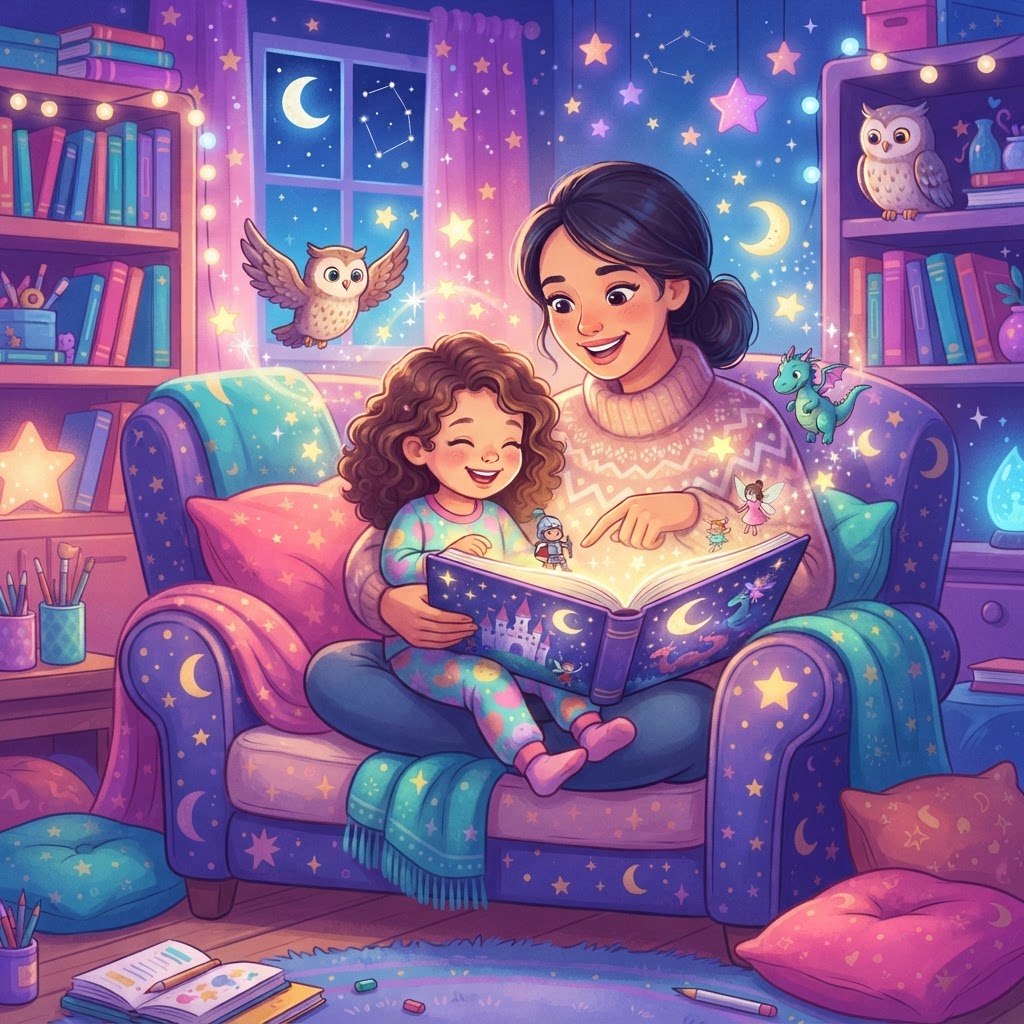
Reading to a child who cannot read yet is not “practice for later.” It is one of the main ways children build the language, attention, and confidence they need to become readers. For babies, toddlers, and preschoolers, story time for young children is less about sounding out words and more about learning how books work, how language sounds, and how stories feel.
That is why reading to pre-readers matters so much. A warm lap, a familiar book, and a few minutes of shared attention can support vocabulary, listening, memory, and early literacy. If you are reading to non-readers, the goal is simple: make books enjoyable, interactive, and part of everyday life.
Why does reading to a child who can’t read yet matter?
Reading aloud matters because it builds the foundation for later reading long before a child decodes a single word. It strengthens language, attention, print awareness, and the emotional bond between child and adult.
The American Academy of Pediatrics recommends reading aloud from infancy because shared reading supports healthy brain and language development. Children learn new words from books, but they also learn something just as important: that reading is comforting, interesting, and worth coming back to.
Research in early literacy also points to several strong predictors of later reading success. The National Early Literacy Panel and the National Center on Improving Literacy both highlight oral language, phonological awareness, print knowledge, and narrative skills as key early building blocks. Read-alouds support all of them.
When parents are reading to pre-readers, they are helping children:
- hear richer vocabulary than everyday conversation often provides
- notice rhyme, rhythm, and repeated sounds
- understand that print carries meaning
- learn how stories have a beginning, middle, and end
- practice attention, turn-taking, and listening
- connect reading with warmth and closeness
In other words, reading aloud is not extra. It is early literacy work in its most child-friendly form.
How do you choose the right books for pre-readers?
The best books for pre-readers are simple, engaging, and easy to revisit. Choose books that match your child’s attention span, interests, and developmental stage rather than aiming for what seems “advanced.”
For babies and young toddlers, look for sturdy board books with clear pictures, faces, and everyday objects. For older toddlers and preschoolers, choose stories with rhythm, repetition, predictable patterns, and strong illustrations. Repetition is not boring for young children; it helps them anticipate language and join in.
Good choices often include:
- books with repeating phrases
- rhyme and song-like language
- picture books with large, uncluttered illustrations
- stories about routines, feelings, animals, and family life
- interactive books with flaps, textures, or simple prompts
- books connected to your child’s current interests
If your child wants the same theme every night, that is normal. Interest-led reading keeps motivation high. If you are deep in a dinosaur phase or a superhero obsession, use that enthusiasm as a doorway into literacy rather than a problem to solve.
One more tip: do not avoid a book just because it seems “too easy.” Familiar, predictable books are often perfect for reading to non-readers because they invite participation. A child who finishes a line, points to a picture, or retells a page is already doing important pre-reading work.
How should you read to pre-readers so they stay engaged?
The most effective way to read to pre-readers is interactively, not perfectly. Your child does not need a polished performance; they need a responsive adult who notices what interests them and invites them into the story.
This approach is often called dialogic reading. Research by Grover Whitehurst and colleagues found that children benefit more when adults ask simple questions, pause for responses, and encourage children to talk about the book. Even babies benefit from the back-and-forth rhythm of shared attention and language.
Try these practical strategies during story time for young children:
- Follow your child’s focus. If they want to look at one page for two minutes, that is fine.
- Talk about the pictures. “Where is the dog?” “He looks surprised.”
- Use simple questions. Ask “what,” “where,” and “who” before harder “why” questions.
- Pause often. Give your child time to point, babble, label, or answer.
- Repeat key phrases. Repetition supports memory and participation.
- Add expression. Change your voice, but keep the pace calm and clear.
- Point occasionally to print. Show that words go left to right and match the spoken story.
- Let movement happen. Some children listen better while wiggling, holding a toy, or turning pages.
You also do not have to finish every book. A good read-aloud is one where the child stays connected, not one where every page gets covered.
For families who like variety, it can help to create your own personalized bedtime story around a child’s name, favorite animal, or current interest. Personalized stories can increase attention, especially for reluctant listeners, as long as the reading experience stays shared and age-appropriate.
What pre-reading skills can story time build?
Story time builds real pre-reading skills, even when a child seems to be “just listening.” Shared reading strengthens the exact abilities that later support independent reading.
Here are some of the biggest skills children develop when adults are reading to pre-readers:
Vocabulary and oral language
Books expose children to words they may not hear in daily conversation, such as “enormous,” “whisper,” or “curious.” Hearing these words in context helps children understand and eventually use them.
Phonological awareness
Songs, rhymes, alliteration, and repeated sounds help children notice how language sounds. That matters because later reading depends partly on hearing and manipulating sounds in words.
Print awareness
Children learn that books have covers, pages, titles, and text. They begin to notice that print moves in a consistent direction and that the marks on the page represent spoken words.
Narrative skills
When children hear stories often, they begin to understand sequence, character, problem, and resolution. This helps with later reading comprehension as well as speaking and writing.
Motivation and identity
Perhaps most importantly, children start to see themselves as book people. They learn that stories are for them, that their ideas matter, and that reading is something they can grow into.
If you want to reinforce these skills gently, try re-reading favorites and keeping them accessible in a basket or low shelf. Saving familiar stories in your story library can also make it easier to revisit the books your child already loves, which is often where the best learning happens.
How can you make story time for young children a daily habit?
The easiest way to make reading stick is to keep it short, predictable, and pleasant. Daily reading does not need to be long to be effective; even 5 to 10 minutes counts when it happens consistently.
Build reading into moments that already exist:
- before naps or bedtime
- after breakfast
- while waiting for dinner
- during school pickup or travel
- as part of a calm-down routine
A few habits make reading to non-readers easier:
- keep books where children can reach them
- let your child choose between two or three options
- re-read favorites without apologizing for it
- use home language, English, or both
- match book length to your child’s energy level
- stop while it is still enjoyable
If you are reading to siblings together, choose one simple anchor book and then add a few questions for the older child. This helps everyone stay included. If that balance feels tricky, our guide to reading two kids of different ages can help.
You can also add playful structure with weekly reading challenges, such as “read outside,” “find a rhyming book,” or “retell a story using toys.” The goal is not pressure. The goal is to make books feel woven into family life.
When should you worry about speech, language, or reading readiness?
Most variation in early reading behavior is normal. Some children sit still for books at 18 months; others become deeply interested closer to age 4. Not reading independently yet is not a red flag by itself.
Still, it is worth speaking with your pediatrician or a speech-language professional if your child shows persistent signs such as:
- very limited eye contact or shared attention during books
- little response to sounds or spoken language
- a noticeable loss of language skills
- very few words by expected developmental stages
- extreme frustration with communication
- ongoing difficulty understanding simple directions
The CDC developmental milestones can offer a helpful starting point, but they are not a diagnosis. If you are worried, trust your instincts and ask. Early support is useful, and asking questions does not mean something is wrong.
For most children, though, the answer is wonderfully ordinary: keep reading, keep talking, and keep making books a safe, joyful part of the day.
Frequently Asked Questions
At what age should I start reading to my child?
You can start from birth. Babies benefit from hearing your voice, seeing faces and pictures, and building a comforting reading routine even before they understand the words.
How long should story time be for pre-readers?
Short is fine. For many babies and toddlers, 5 to 10 minutes is enough, while preschoolers may enjoy longer sessions if the book and timing are right.
What if my child will not sit still for a book?
That is very common. Let them wiggle, hold a toy, turn pages, or move nearby while you read; many young children listen well even when their bodies are busy.
Should I point to the words while I read?
Yes, sometimes. Pointing occasionally helps children notice that print carries meaning, but it should feel natural and not interrupt the flow of the story.
Is it okay to read the same book every night?
Absolutely. Repetition helps young children learn vocabulary, predict story structure, and join in with familiar phrases, which makes reading to pre-readers more active and effective.
Can personalized or AI-generated stories help pre-readers?
They can, especially when the story includes familiar names, interests, or routines that boost attention. The key is to use them as part of shared reading with an adult, not as a replacement for interaction.
Ready to Create a Personalized Bedtime Story?
Use our free AI bedtime story generator to create a personalized illustrated story for your child in 30 seconds — no credit card needed.
Popular story types:
Maya Rodriguez
Lead Content Editor & Early Literacy Specialist
Maya is a former early childhood educator and literacy specialist with over a decade of experience helping children develop a love of reading. She leads content at InstaTales, where she writes about the science of storytelling, child development, and how families can use personalized AI stories to build literacy and emotional resilience.
instatales.ai