Child Wants Dinosaur Stories? Reading Tips
Does your child only want dinosaur stories? Here's how to embrace their preference and gently expand their reading horizons.
✦ Key Takeaways
- •Yes, it is normal for a child to want the same topic again and again.
- •You should usually lean into the interest first, not fight it.
- •Dinosaur stories are a powerful literacy tool because they naturally invite talk, repetition, and curiosity.
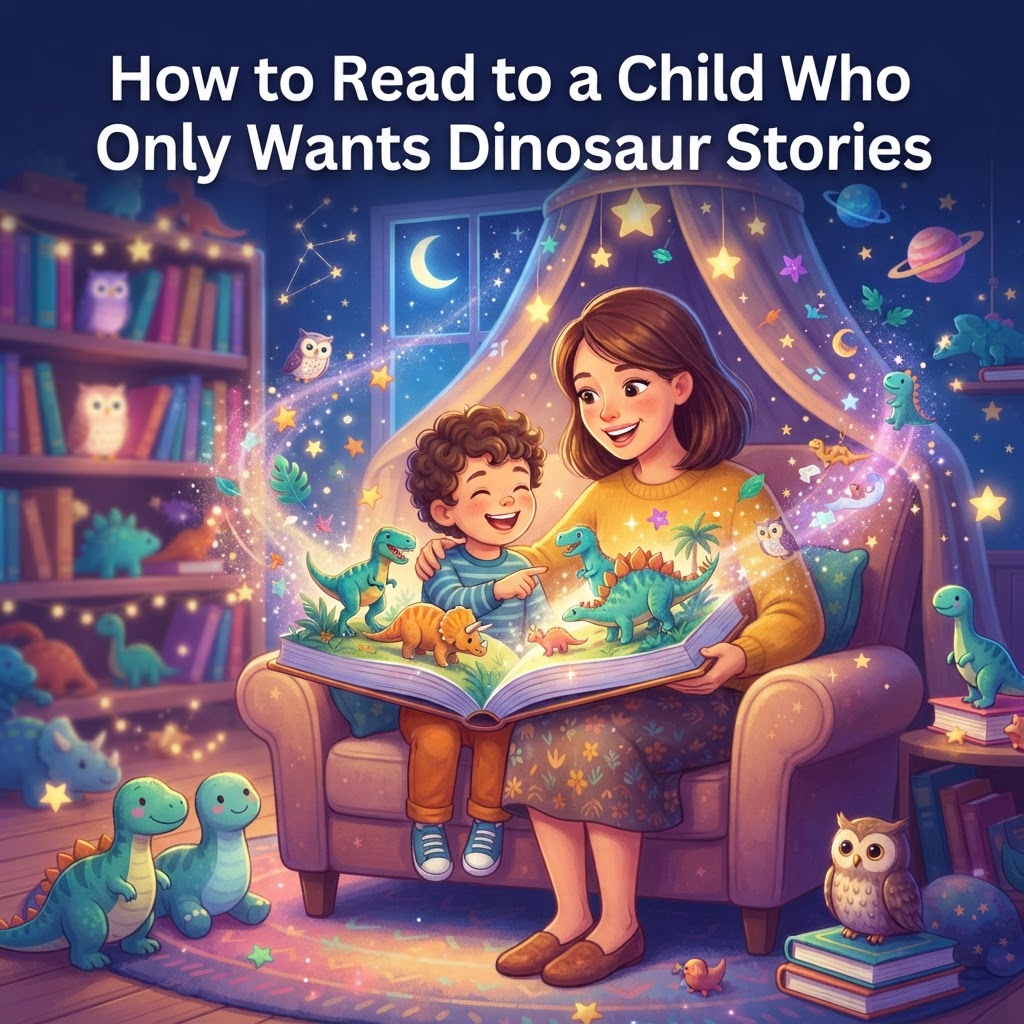
If your child wants dinosaur stories every single night, you are not doing anything wrong. In fact, a strong story preference is common in early childhood, and it can be a great starting point for language, bonding, and literacy. The goal is not to “break” the dinosaur phase. The goal is to use it well, then gently widen your child’s reading world over time.
Many children go through intense interests: trains, princesses, trucks, animals, superheroes, or dinosaurs. These focused reading preferences often help kids feel confident and engaged. When adults follow that spark, children are usually more willing to listen, talk, and eventually explore new books too.
Why does a child want dinosaur stories so much?
Yes, it is normal for a child to want the same topic again and again. Dinosaur stories for kids combine excitement, predictability, and big imagination, which makes them especially appealing.
Dinosaurs are naturally magnetic to young children. They are huge, dramatic, a little mysterious, and easy to sort into favorites. Kids also love mastering facts like names, sizes, and sounds. That sense of expertise feels good.
There is also a developmental reason. Young children often learn through repetition and focused interests. Organizations like Zero to Three and Reading Rockets have long noted that repeated reading and child-led book choice support language growth, memory, and confidence.
A dinosaur obsession may be driven by:
- Predictability: Your child knows what kind of story world to expect.
- Control: Choosing the topic gives them a sense of agency.
- Mastery: They can remember names, compare species, and feel knowledgeable.
- Emotion: Dinosaurs can feel thrilling without being too real.
- Identity: “I’m the kid who loves dinosaurs” becomes part of how they see themselves.
So if your child only wants dinosaur stories, the preference is usually a strength to work with, not a problem to fix.
Should you lean into dinosaur stories or limit them?
You should usually lean into the interest first, not fight it. Following a child’s enthusiasm is one of the easiest ways to build positive reading habits.
When parents worry about “too many dinosaur books,” they sometimes create an unnecessary power struggle. If reading starts to feel like correction instead of connection, children may resist story time altogether. The American Academy of Pediatrics, through HealthyChildren.org, emphasizes that warm, responsive reading interactions matter as much as the book itself.
A better approach is “yes, and.”
- Yes to dinosaur stories for kids.
- And include different moods, formats, and themes within that interest.
For example, you can rotate:
- funny dinosaur books
- gentle bedtime dinosaur tales
- dinosaur fact books
- dinosaur friendship stories
- dinosaur books with counting, colors, or problem-solving
This is how you respect the preference while still creating variety. If your child later shifts from prehistoric creatures to other favorites, it can help to explore similar guides on animal-story preferences or funny story phases.
How can you use dinosaur stories for kids to build reading skills?
Dinosaur stories are a powerful literacy tool because they naturally invite talk, repetition, and curiosity. You can use them to build vocabulary, comprehension, and early critical thinking without making reading feel like a lesson.
Children learn more from read-alouds when adults pause, ask simple questions, and connect the story to the child’s ideas. Early childhood groups like the NAEYC and dialogic reading research both support this interactive style.
Try these practical strategies:
Build vocabulary in context
Dinosaur books are full of rich words: gigantic, stomped, fossil, herd, spike, hatchling. Pick one or two interesting words per reading and use them naturally later.
For example:
- “That tower is gigantic, just like the dinosaur in our book.”
- “Your toy is tiny, but the T. rex was enormous.”
Encourage prediction
Pause and ask:
- “What do you think the triceratops will do next?”
- “Which dinosaur looks friendly? Which looks nervous?”
Prediction supports comprehension and helps children notice story structure.
Compare fiction and facts
Read one storybook and one simple nonfiction book about dinosaurs. Then ask what was pretend and what was real. This builds early media literacy and flexible thinking.
Use favorite books for repeated reading
Repeated reading is not “less educational.” It often increases language learning because children notice new details each time. Save favorite versions in your story library so your child can revisit the ones they love most.
How do you introduce new kinds of stories without a battle?
The best way to introduce variety is to bridge from the child’s interest, not replace it suddenly. Children accept new books more easily when the new choice feels connected to something they already love.
If your child wants dinosaur stories every night, try a gradual shift:
- Change one element at a time. Keep dinosaurs, but switch the setting to space, school, the beach, or a birthday party.
- Pair books. Read one dinosaur story and one different story in the same routine.
- Follow themes, not just characters. If your child likes “big exciting creatures,” monster or animal books may work next.
- Offer limited choices. “Do you want silly dinosaurs or dinosaurs and dragons?”
- Use familiar structure. A child who loves repetition may accept a new topic if the rhythm and length feel similar.
A simple “story ladder” can help:
- Classic dinosaur bedtime story
- Dinosaur story with a new emotion, like shyness or jealousy
- Another creature story, such as animals or dragons
- A fully new topic with a playful tone
This method respects strong reading preferences while expanding them. If you want more transition ideas, the InstaTales blog has related articles for other popular story fixations.
Can AI help when your child wants dinosaur stories every night?
Yes, AI can be genuinely useful when your child wants dinosaur stories constantly. The key is to use AI to create variety within the interest, not endless copies of the same plot.
This is where personalized storytelling shines. You can create your own personalized bedtime story with dinosaur themes while changing the learning goal, setting, tone, or social skill. That keeps the topic engaging without making story time repetitive for the adult.
AI can help you generate dinosaur stories that include:
- different bedtime moods, from calming to adventurous
- your child’s name, age, or favorite dinosaur
- specific values like sharing, bravery, patience, or trying new things
- gentle exposure to new topics, such as oceans, friendship, or outer space
For example, instead of “another T. rex chase story,” you might create:
- a sleepy stegosaurus bedtime routine
- a dinosaur who learns to welcome a new friend
- a fossil dig story that introduces science vocabulary
- a funny dinosaur picnic that leads into humor books
To use AI well, keep a few guardrails:
- Preview the story first to make sure tone and content fit your child.
- Match the child’s age and sensitivity level.
- Balance fantasy and facts if your child is very fact-focused.
- Use it as a shared reading tool, not a replacement for connection.
You can also turn it into a habit-building activity with weekly reading challenges, such as “one dinosaur story, one new theme” each week.
What signs tell you a reading preference is healthy or needs support?
Most single-topic preferences are completely healthy. You only need extra support if the interest causes major distress, blocks daily life, or prevents any flexibility over time.
A healthy dinosaur phase usually looks like:
- joy and excitement during reading
- repeated requests for favorite books
- interest in facts, pretend play, or drawing dinosaurs
- gradual openness when adults introduce small variations
You may want to look more closely if:
- your child becomes extremely upset by any tiny change every time
- all reading topics apart from dinosaurs are refused for many months with no flexibility
- the interest is tied to high anxiety, sleep disruption, or social conflict
- language, attention, or play skills seem delayed in other areas too
Even then, the answer is not to remove the interest. Start by observing patterns, softening pressure, and talking with your pediatrician or an early childhood professional if needed. Focused interests can coexist with healthy development, and they are often a bridge into learning, not a barrier.
The big picture is simple: if your child only wants dinosaur stories, meet them there first. Connection opens the door to growth far better than correction does.
Frequently Asked Questions
Is it bad if my child only wants dinosaur stories?
Usually, no. Strong topic preferences are common in young children and often support motivation, vocabulary, and confidence during reading time.
How long do dinosaur phases usually last?
It varies. Some children stay interested for a few weeks, while others love dinosaurs for months or even years, especially if the interest keeps evolving.
How can I add variety without upsetting my child?
Start with small changes inside the dinosaur theme, such as a new setting, emotion, or type of plot. Pair one familiar dinosaur story with one new book so the routine still feels safe.
Are dinosaur stories for kids good for learning?
Yes. They can support vocabulary, sequencing, prediction, listening, and early science interest when adults read interactively and talk about the story.
Can AI stories help picky readers?
They can, especially when a child wants highly specific themes. Personalized AI stories can keep the preferred topic while gently adding new characters, feelings, and ideas.
When should I worry about a narrow reading preference?
Pay attention if the preference causes intense distress, affects sleep or daily routines, or comes with broader concerns about language, play, or flexibility. In that case, talk with a pediatrician or child development professional.
Ready to Create a Personalized Bedtime Story?
Use our free AI bedtime story generator to create a personalized illustrated story for your child in 30 seconds — no credit card needed.
Popular story types:
Maya Rodriguez
Lead Content Editor & Early Literacy Specialist
Maya is a former early childhood educator and literacy specialist with over a decade of experience helping children develop a love of reading. She leads content at InstaTales, where she writes about the science of storytelling, child development, and how families can use personalized AI stories to build literacy and emotional resilience.
instatales.ai