Child Wants Animal Stories? Read With Variety
Does your child only want animal stories? Here's how to embrace their preference and gently expand their reading horizons.
✦ Key Takeaways
- •Children often love animal stories because animals feel both familiar and magical.
- •Start by saying yes to the preference.
- •The easiest way to expand reading tastes is to stay connected to the animal theme while changing one element at a time.
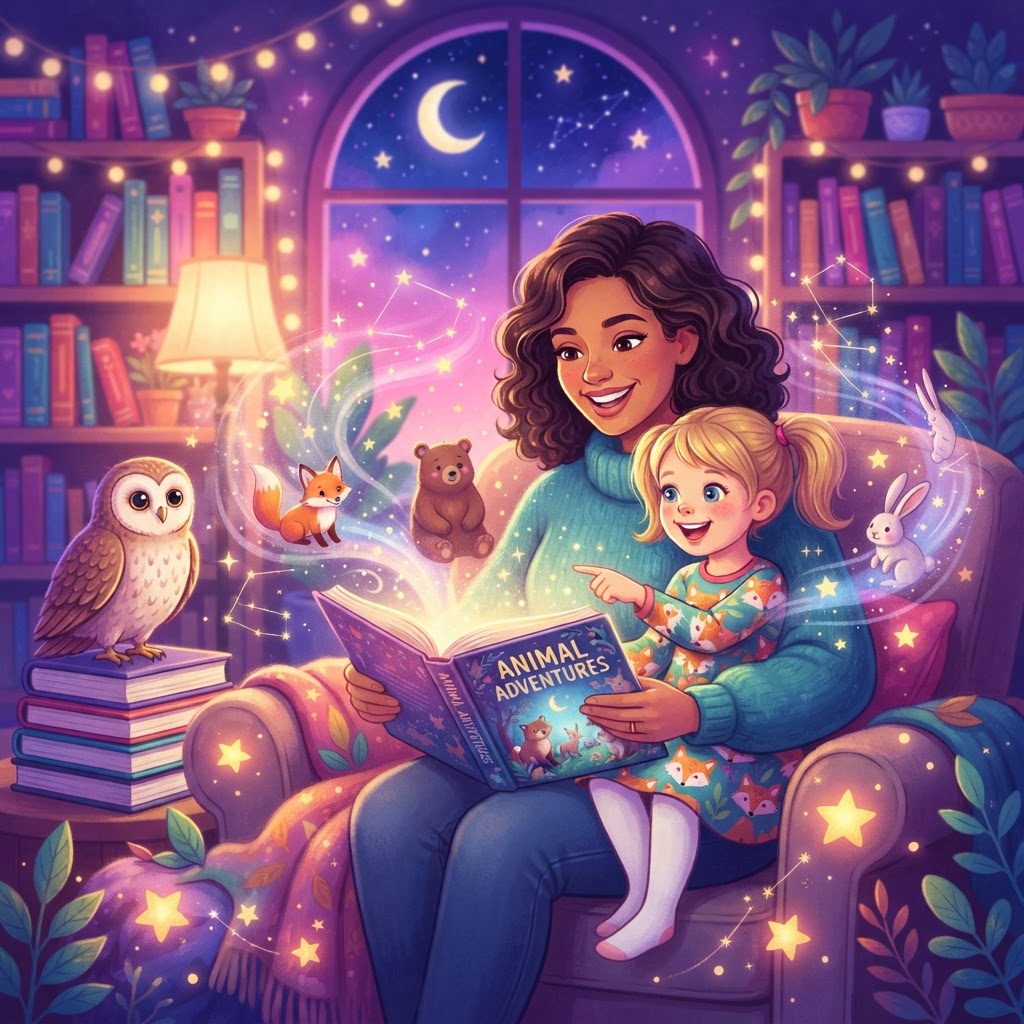
If your child wants animal stories every night, that is usually a strength, not a problem. A strong reading preference gives you a clear way in: you already know what captures your child’s attention, sparks conversation, and makes read-aloud time feel safe and enjoyable.
The goal is not to “break” the animal habit. The goal is to use animal stories for kids as a bridge to richer language, broader ideas, and a wider range of books over time. With a few simple strategies, you can respect your child’s reading preferences while still helping them grow.
Why do so many children love animal stories?
Children often love animal stories because animals feel both familiar and magical. They give children a safe way to explore big emotions, relationships, and adventures without the pressure of human realism.
Animal characters are easy for young children to connect with. A shy rabbit, brave lion, or silly penguin lets a child understand feelings at a comfortable distance. This matters because young readers often process emotions more easily when they are projected onto animals.
Animal stories also match how children learn. Repetition, pattern, and clear character traits make it easier to follow a plot and remember language. Organizations like the Harvard Center on the Developing Child emphasize that warm back-and-forth interactions build language and thinking skills, and animal books often invite exactly that kind of talk: “Why is the bear sad?” “What will the fox do next?”
There is also strong support for shared reading in child development research. The American Academy of Pediatrics has long encouraged reading aloud from infancy because it supports language, attention, and parent-child connection.
So if your child keeps choosing the owl, dog, or dinosaur story, it usually means they have found a format that feels rewarding and understandable.
How should you respond when your child only wants animal stories?
Start by saying yes to the preference. When a child only wants animal stories, the best first step is to embrace that interest rather than turning reading into a power struggle.
Children read more willingly when they feel understood. If bedtime becomes a debate about “real books” versus “animal books,” you risk making story time feel tense. Instead, follow your child’s lead and use their favorite theme as your starting point.
Here are a few practical ways to do that:
- Let your child pick the animal, but you choose from two or three strong options.
- Rotate between silly, cozy, adventurous, and calming animal stories.
- Ask simple questions: “Which animal was kind?” “Which one solved a problem?”
- Re-read favorites without guilt. Repetition supports vocabulary and comprehension.
Repeated reading is especially helpful in early childhood. Research used in dialogic reading approaches, including the work of Grover Whitehurst, shows that interactive book sharing supports language growth. Familiar stories make that interaction easier because children can predict, join in, and retell.
If your child is also asking for the exact same title every night, you may find helpful ideas in this guide on when your child wants the same book every night.
How can you gently introduce variety without causing a battle?
The easiest way to expand reading tastes is to stay connected to the animal theme while changing one element at a time. In other words, do not jump from “bunnies in the forest” straight to a complex chapter book about historical events.
Try a bridge strategy instead:
- Animal fiction to animal nonfiction: If your child loves bears in stories, try a simple photo book about real bears.
- Animal humor to human humor: Pair a funny monkey story with a funny school story.
- Animal adventure to fantasy adventure: Move from a fox on a quest to a child on a quest.
- Animal feelings to social stories: “This puppy felt left out. Here’s a story about a child feeling the same way.”
A simple rule many parents find useful is the 80/20 approach:
- 80% familiar preference
- 20% gentle stretch
That might mean reading one beloved animal story and then one “animal-adjacent” story. Over time, those small stretches add up.
You can also invite choice without overwhelming your child:
- “Do you want a jungle animal story or an ocean animal story?”
- “Do you want a story about animals being funny or animals being brave?”
- “Should our second book also have an animal, or should it be about a child who visits a farm?”
This keeps your child in control while broadening what counts as appealing.
If your child accepts only high-energy books, this article on when a child loses interest in stories can help you build stamina for different kinds of reading.
What kinds of animal stories for kids support real learning?
The best animal stories for kids do more than entertain. They build vocabulary, emotional understanding, curiosity, and background knowledge.
Look for animal stories that include:
- Rich language: vivid verbs, sound words, and descriptive phrases
- Emotional themes: friendship, courage, jealousy, patience, kindness
- Problem-solving: a challenge the characters must work through
- Accurate details when relevant: real habitats, behaviors, or facts
- Variety in tone: cozy bedtime stories, funny stories, adventure stories, and informational stories
A strong mix matters. If every animal story is only silly, your child misses opportunities to hear other kinds of language. If every book is only sweet and quiet, your child may miss excitement and suspense.
The National Association for the Education of Young Children notes that high-quality read-alouds support vocabulary, comprehension, and social-emotional learning. Animal stories are a great vehicle for that because children often discuss animal motives and feelings very naturally.
For teachers or homeschoolers, animal themes can also support cross-curricular learning. A story about migration can connect to science, seasons, geography, and empathy. If you use themed stories in group settings, InstaTales for teachers can help organize reading around classroom topics.
How can AI help when your child only wants animal stories?
AI can be very useful when your child wants animal stories because it lets you keep the preferred theme while changing the plot, setting, reading level, or lesson. That means you can offer novelty without losing what your child loves.
For example, instead of reading five near-identical rabbit stories, you can create:
- a rabbit story about sharing
- a rabbit mystery
- a rabbit bedtime story set in space
- a rabbit story that introduces counting, feelings, or new vocabulary
This is where personalization becomes genuinely helpful. You can create your own personalized bedtime story based on your child’s favorite animal, mood, and age, then adjust the story to gently widen their interests. A child who loves tigers might enjoy a tiger story set at school, on a camping trip, or in a magical library.
A few best practices make AI story use stronger:
- Keep stories age-appropriate and short enough for attention span.
- Read together rather than handing stories over passively.
- Use AI to expand themes, not to flood your child with endless content.
- Save the stories that work so you can re-read them later in your story library.
If you want a quick starting point, using story templates can make it easier to build variety without starting from scratch.
When should you worry about narrow reading preferences?
Most of the time, narrow reading preferences are normal. Young children often build confidence by sticking with the familiar, especially during busy, emotional, or rapidly changing stages of development.
You may want to look more closely if your child:
- becomes extremely distressed by any small variation
- rejects all books except one narrow type for a long time
- seems unable to follow stories outside a very specific pattern
- shows broader concerns with language, attention, or flexibility
Even then, the answer is rarely “stop reading animal stories.” Instead, keep the preferred stories while talking with a teacher, librarian, speech-language professional, or pediatrician if you have concerns.
Also pay attention to emotional tone. Some children love animal stories because human-centered stories feel too intense. If that sounds familiar, this article on reading to a child who gets scared by stories may help.
The big picture is reassuring: preference is often the doorway to growth. If your child loves animal stories, you already have a wonderful way to build language, connection, and a lifelong reading habit.
Frequently Asked Questions
Is it bad if my child only wants animal stories?
No, this is usually developmentally normal. Many children use familiar themes to build confidence, comprehension, and comfort during read-aloud time.
How do I expand beyond animal stories without upsetting my child?
Use bridge books and small changes. Keep one familiar element, like humor or adventure, while gradually introducing new settings, characters, or topics.
Are animal stories for kids good for learning?
Yes. Good animal stories can support vocabulary, empathy, memory, and early comprehension, especially when adults pause to talk about what is happening in the story.
Can AI stories help picky readers?
Yes, if used thoughtfully. AI can personalize stories around a child’s favorite animal while introducing new plots, emotions, and learning themes in a gentle way.
What if my child wants only one animal book every night?
That is common, especially in toddlers and preschoolers. Repetition helps children master language and predict events, though you can slowly add a second short book for variety.
Should I choose fiction or nonfiction animal books?
Both are valuable. Fiction builds imagination and emotional understanding, while nonfiction builds background knowledge and curiosity about the real world.
Ready to Create a Personalized Bedtime Story?
Use our free AI bedtime story generator to create a personalized illustrated story for your child in 30 seconds — no credit card needed.
Popular story types:
Maya Rodriguez
Lead Content Editor & Early Literacy Specialist
Maya is a former early childhood educator and literacy specialist with over a decade of experience helping children develop a love of reading. She leads content at InstaTales, where she writes about the science of storytelling, child development, and how families can use personalized AI stories to build literacy and emotional resilience.
instatales.ai