How to Read to a Child Scared of Stories
Does your child get scared during stories? Here's how to choose appropriate stories and handle fears when they arise.
✦ Key Takeaways
- •Yes, it is very common for children to feel frightened by stories, even gentle ones.
- •What scares children changes with age, and knowing that helps you choose better books.
- •The best stories for a fearful child are emotionally safe, predictable, and reassuring without being boring.
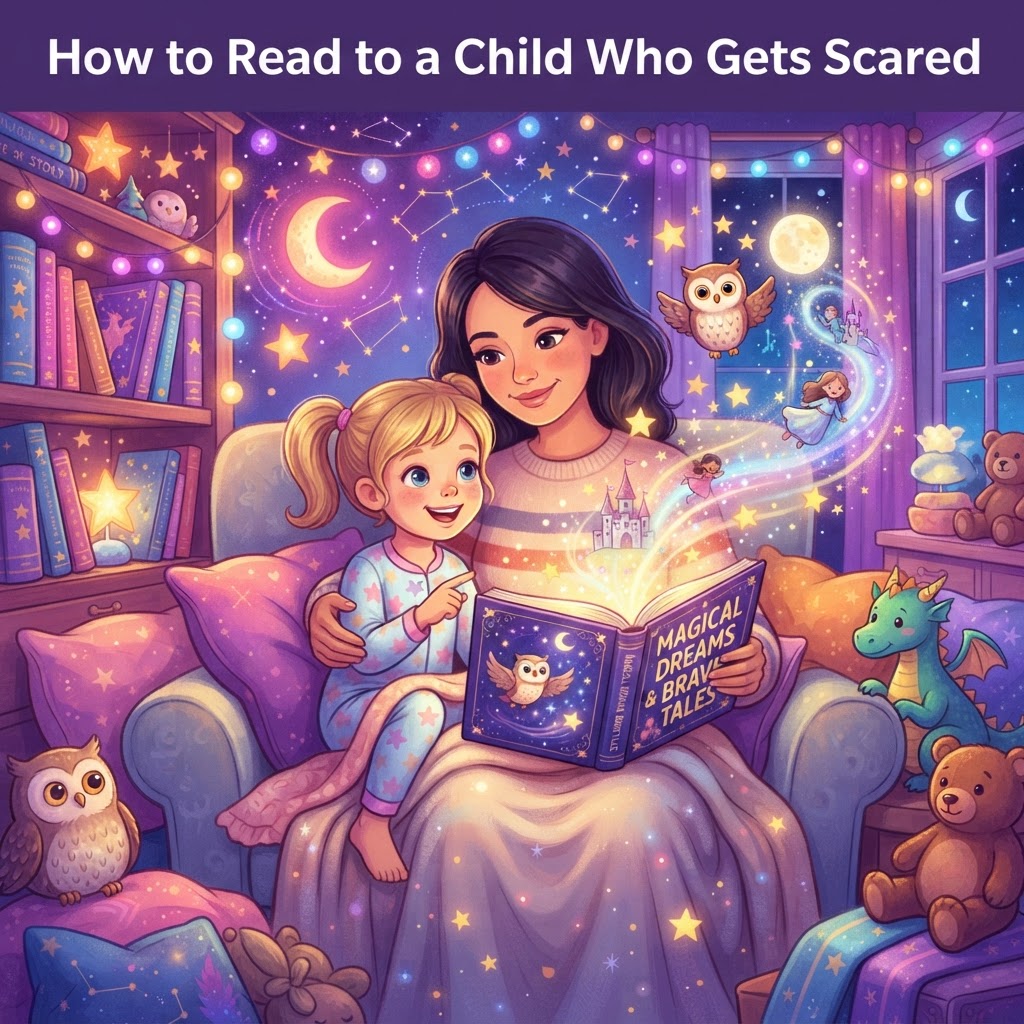
If your child is scared of stories, you are not doing anything wrong—and neither are they. Many children love books and still feel overwhelmed by a sudden wolf, dark forest, loud noise, or character getting lost. The goal is not to push through fear. It is to help your child feel safe, understood, and gradually more confident with stories.
A sensitive reading approach can protect bedtime, build trust, and even help children practice bravery in small, manageable ways. Research in child development shows that fears often follow age-related patterns, and children cope best when adults stay calm, responsive, and predictable. Here is how to choose non-scary stories, respond when fears pop up, and use books to support emotional growth.
Why do some children get scared by stories?
Yes, it is very common for children to feel frightened by stories, even gentle ones. Young children experience stories with their whole body and imagination, so what seems mild to an adult can feel very real to them.
Children do not always separate fiction from possibility. A shadowy page, a character in danger, or even suspenseful music during read-aloud time can trigger a fear response. This is especially true at bedtime, when children are tired and less able to regulate big feelings.
Developmental researchers have long found that childhood fears are both common and predictable. Psychologist Thomas Ollendick’s work on childhood fears showed that many fears cluster around certain stages of development. Organizations like the American Academy of Pediatrics also note that fears are a normal part of growing up.
A child may be more likely to react strongly to a story if they are:
- tired, sick, or overstimulated
- naturally sensitive or highly imaginative
- going through a change like starting school or moving
- dealing with a real-life fear, such as the dark, separation, or loud noises
What tends to scare kids at different ages?
What scares children changes with age, and knowing that helps you choose better books. In general, younger children fear sensory or separation themes, while older children may worry more about danger, embarrassment, or realistic harm.
For babies and toddlers, fear often comes from sound, facial expression, and sudden change. A loud animal, a shouting character, or a page with big angry eyes may be enough. At this stage, simple and predictable books work best.
For preschoolers, imagination grows quickly. They may be frightened by:
- monsters, witches, or “bad guys”
- darkness and shadows
- getting lost
- characters being left alone
- transformation scenes, like someone turning into an animal
For early elementary children, fears can become more realistic. A 6- to 8-year-old may worry about injury, disasters, burglars, or something bad happening to a parent. Even so-called scary stories for kids can hit too hard if the child is already carrying a related fear.
By around ages 8 to 10, children often understand story structure better and may enjoy mild suspense. But personality still matters more than age alone. A cautious 9-year-old may need softer material than a thrill-seeking 6-year-old.
If you are unsure what is typical, the CDC developmental guidance and early childhood organizations like Zero to Three offer helpful context on emotional development and regulation.
How can you choose stories that feel safe?
The best stories for a fearful child are emotionally safe, predictable, and reassuring without being boring. Choose books with warm illustrations, clear resolutions, and low-stakes tension.
Before reading a new book, preview it yourself. Look for pages with darkness, peril, villains, teasing, or separation. Sometimes the words are fine, but the pictures are intense. Trust the images as much as the text.
Helpful features in non-scary stories include:
- gentle humor
- repetition and rhythm
- familiar routines like bedtime, family, or animals
- kind problem-solving
- happy or clearly comforting endings
You can also tailor stories to your child’s needs. If your child is sensitive, it may help to create your own personalized bedtime story with familiar settings, comforting characters, and themes you know feel safe. Pre-screening matters just as much with personalized stories as it does with print books.
If your child asks for the same “safe” book every night, that is often a coping strategy, not a problem. Re-reading builds predictability and control. This is similar to what we see in children who prefer routine in other parts of reading life, including kids who want the same book every night.
A simple rule helps: avoid surprise fear at bedtime. Save more adventurous material for daytime, when your child has more emotional bandwidth.
What should you do if fear shows up in the middle of a story?
If your child gets scared during a story, pause right away and respond calmly. The goal is to regulate first, then decide whether to continue, change, or stop.
Start with a simple acknowledgment: “That part felt scary.” Avoid saying, “It’s not scary,” because that can make children feel misunderstood. Instead, name what happened and offer choice.
In the moment, you can:
- close the book for a minute
- put your hand on the page and summarize what happens next
- skip the upsetting page
- remind your child the character becomes safe
- switch to a familiar favorite
- end reading and move to a calming routine
Many children calm faster when they know they are in control. You might ask, “Do you want me to keep going, skip this part, or pick another book?” That small choice can lower stress quickly.
It also helps to watch the body, not just the words. A child who starts wiggling, interrupting, hiding, or talking over you may not be “misbehaving.” They may be dysregulated. If that pattern sounds familiar, support strategies used for reading to an active child or reading when a child loses interest can also help.
How can stories help children work through fears?
Yes, stories can help children overcome fears—but only when used gently. The most effective approach is gradual exposure paired with comfort, not forcing a child through distress.
Books can help because they give children emotional distance. A rabbit who fears thunder or a child who worries about the dark can model coping without making your child feel singled out. This is one reason bibliotherapy, or using books to support emotional understanding, is widely used in education and counseling.
To use stories therapeutically:
- start with a fear that is similar, not identical
- keep the tone warm and hopeful
- show coping tools, like deep breaths or asking for help
- choose stories where the child character ends safe and supported
- revisit the story more than once
For example, if your child fears the dark, begin with a story where nighttime is cozy, not threatening. Then later, try a story with a brief moment of uncertainty followed by reassurance and success.
This is also where personalized storytelling can be powerful. A child may feel braver hearing about a character who shares their name, favorite stuffed animal, and bedtime routine. You can save these comfort reads in your story library and return to them when the same fear resurfaces.
When is story fear a sign of something bigger?
Most story-related fear is normal, temporary, and manageable. But if fears are intense, persistent, or spilling into daily life, it may point to broader anxiety.
Pay closer attention if your child:
- cannot sleep after mild stories
- has repeated nightmares tied to story themes
- avoids books altogether
- becomes distressed by many ordinary situations
- asks for constant reassurance during the day
- shows physical symptoms like stomachaches or panic
The National Institute of Mental Health recommends seeking support when worries interfere with daily functioning. A pediatrician, school counselor, or child therapist can help you sort out normal developmental fear from anxiety that needs extra care.
Meanwhile, keep reading gentle and low-pressure. Bedtime stories should feel like connection, not a test of bravery. If you want more support with reading challenges, the InstaTales blog has practical guides for common bedtime struggles.
How can you build a safer, more confident story routine over time?
A calm story routine helps fearful children feel secure before a book even begins. Consistency lowers stress because your child knows what to expect.
Try a predictable sequence like this:
- choose the book together
- preview anything new
- keep lights warm and comforting
- sit close
- pause for questions
- end with a reassuring phrase, song, or cuddle
Over time, children build tolerance when they feel safe, heard, and respected. The long-term goal is not to eliminate every spooky feeling. It is to teach your child, “I can feel a little scared and still be okay.”
That is what handling story fears really looks like: not pushing, not avoiding everything forever, but matching the story to the child and the moment.
Frequently Asked Questions
Is it normal for a child to be scared of stories?
Yes. Many children are sensitive to suspense, danger, loud events, or upsetting pictures, especially at bedtime. Fear of stories is often developmentally normal and tends to change with age.
Should I avoid all scary stories for kids?
Not necessarily, but timing and temperament matter. If your child is easily overwhelmed, choose gentle books first and introduce mild suspense slowly, preferably during the day rather than right before sleep.
What if my child wants to stop the story halfway through?
That is okay. Pausing or stopping shows your child that reading is a safe, responsive experience, and you can always return later or choose a different book.
Can stories actually help children overcome fears?
Yes, when used carefully. Stories can model coping, bravery, and safe endings, which helps children process fears in a contained and supportive way.
How do I know if story fear is really anxiety?
Look at how much it affects daily life. If your child has ongoing sleep problems, avoids many normal activities, or seems distressed far beyond story time, talk with a pediatrician or mental health professional.
Ready to Create a Personalized Bedtime Story?
Use our free AI bedtime story generator to create a personalized illustrated story for your child in 30 seconds — no credit card needed.
Popular story types:
Maya Rodriguez
Lead Content Editor & Early Literacy Specialist
Maya is a former early childhood educator and literacy specialist with over a decade of experience helping children develop a love of reading. She leads content at InstaTales, where she writes about the science of storytelling, child development, and how families can use personalized AI stories to build literacy and emotional resilience.
instatales.ai