Child Wants Funny Stories? Read With Variety
Does your child only want funny stories? Here's how to embrace humor and still provide variety in story time.
✦ Key Takeaways
- •Many children prefer funny stories because humor feels safe, rewarding, and easy to revisit.
- •The best approach is to lean into the humor while still reading with intention.
- •Funny stories can support literacy because they make children pay attention to sounds, patterns, and meaning.
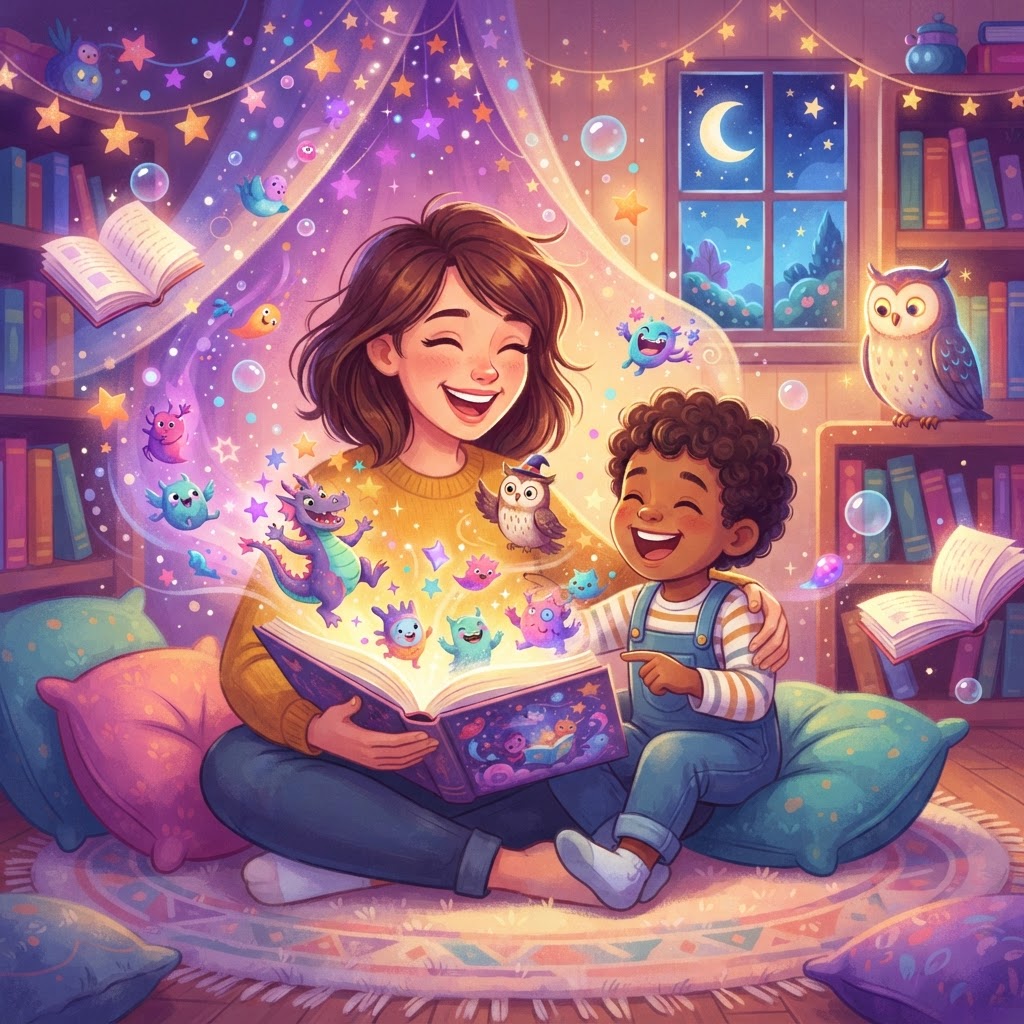
If your child wants funny stories at every bedtime, you are not doing anything wrong. In fact, a love of silly books, ridiculous characters, and laugh-out-loud endings can be a powerful doorway into language, attention, and family connection.
The goal is not to “fix” your child’s taste. The goal is to use humor in reading as a strength, then gently widen what story time can include. With the right approach, funny stories for kids can become the bridge to richer vocabulary, more emotional range, and better reading habits.
Why does a child only want funny stories?
Many children prefer funny stories because humor feels safe, rewarding, and easy to revisit. Laughter lowers pressure, grabs attention, and makes reading feel like play instead of work.
From a child development perspective, this makes sense. Young children are drawn to surprise, repetition, exaggeration, bathroom jokes, mixed-up rules, and visual silliness because these match how their brains learn patterns. Developmental humor researcher Paul McGhee described children’s humor as something that grows alongside language, imagination, and social understanding.
Humor also helps with connection. Shared laughter during read-aloud time builds warmth and responsiveness, which supports learning. Organizations such as the Harvard Center on the Developing Child and Reach Out and Read both emphasize that warm, back-and-forth interactions matter deeply for early development.
So if your child begs for the silliest book on the shelf, that preference may reflect:
- A need for predictability with a fun payoff
- Strong interest in sound play and nonsense words
- A desire for emotional release at the end of the day
- A love of connection and attention during reading
- A stage of development, not a limitation
Funny stories are not “less educational.” They are often one of the most effective ways to keep children engaged with books.
How can parents embrace humor without losing the value of story time?
The best approach is to lean into the humor while still reading with intention. You do not need to choose between laughter and learning.
Start by reading funny books as if they matter, because they do. Pause for prediction, ask simple questions, and notice word choices. A silly story can still build vocabulary, sequencing, listening, and comprehension.
Try these simple habits:
- Read with expression. Change your voice, pause before the punchline, and let your child anticipate what happens next.
- Name what is funny. Say, “That’s funny because the dog is acting like a teacher,” or “That word sounds silly because it rhymes.”
- Follow your child’s laugh. If they want to repeat the funny page, repeat it. Repetition is part of learning.
- Keep it interactive. Let your child act out a scene, make the sound effect, or retell the joke.
If your child also interrupts constantly to add their own jokes, this is common and workable. Our guide to reading with a talkative child can help you keep the fun without losing the flow.
One more key point: humor can be a regulation tool. Bedtime is a transition, and many children use laughter to release tension. That is one reason funny stories for kids often become a bedtime favorite.
How can funny stories help with reading and language development?
Funny stories can support literacy because they make children pay attention to sounds, patterns, and meaning. When a child laughs, it is often because they noticed something unexpected in the language or plot.
Humor in reading supports several skills at once:
- Vocabulary: Children remember unusual or vivid words more easily.
- Phonological awareness: Rhymes, alliteration, and playful sounds stand out in humorous books.
- Comprehension: To “get” a joke, a child often has to understand context, character, or contradiction.
- Inference: Many jokes depend on noticing what is implied, not just what is said.
- Narrative memory: A funny twist is easier to remember than a flat event.
Research on humor and learning has found that appropriately used humor can increase attention and engagement, especially when it supports the content rather than distracts from it. That matters for read-aloud time. If a silly story keeps your child listening, joining in, and asking questions, it is doing important work.
This is especially helpful if your child sometimes loses interest in stories. Humor can be the hook that keeps reading going.
How do you add variety when your child wants funny stories every night?
You can expand story time without taking humor away. The easiest method is to keep the funny tone but change one element at a time.
Think of it as “same appeal, new layer.” If your child loves a silly animal story, try another silly animal story that also introduces feelings, friendship, or problem-solving. If they love wild nonsense, choose a funny story with richer vocabulary or a calmer ending.
Here are practical ways to sneak in variety:
Mix funny with one new ingredient
Add just one stretch element at a time:
- Humor + feelings
- Humor + facts
- Humor + adventure
- Humor + bedtime calm
- Humor + a new setting or culture
Use the two-book pattern
Read one guaranteed funny favorite, then one related book with a slightly different flavor. This lowers resistance because your child knows they still get the laughter they want.
Offer choices within boundaries
Instead of asking, “What do you want to read?” try:
- “Do you want a silly animal story or a funny school story?”
- “Do you want the super goofy one or the one with a surprise ending?”
Keep familiar structure, change content
Children often want the same rhythm more than the exact same plot. If your child asks for the same book every night, look for stories with similar pacing, repetition, or joke style.
Pair movement with reading
Some children seek humor because it feels active and stimulating. If your child struggles to stay still, combine silly books with actions, sound effects, or short acting breaks. Our tips for reading to an active child who won’t sit still can make this much easier.
What kinds of variety work best for children who love funny stories?
The best variety still respects what your child enjoys. Do not jump from outrageous silliness to a long, serious chapter story and expect it to land.
Instead, broaden story time in child-friendly ways:
- Funny bedtime stories: still silly, but calmer and shorter
- Humorous nonfiction: animal facts, body facts, or surprising nature books
- Emotion-rich funny stories: books where characters feel shy, jealous, proud, or brave
- Problem-solving stories: funny plots with a challenge to solve
- Folktales with playful elements: trickster tales often work well
- Personalized stories: familiar names and favorite themes increase buy-in
You can also create mini reading routines, such as:
- Monday: silly animals
- Tuesday: funny school stories
- Wednesday: jokes and rhymes
- Thursday: funny adventure
- Friday: child chooses any favorite
This kind of structure helps children accept variety because the pattern feels predictable.
How can AI help when a child wants funny stories but needs variety?
AI can be a useful tool when you want more story choices without losing your child’s favorite kind of humor. The key is to use it intentionally, not endlessly.
With AI, you can create your own personalized bedtime story that keeps the funny tone your child loves while adding new themes, settings, or skills. For example, you might generate a silly dinosaur story that also teaches taking turns, or a goofy space adventure with a calming bedtime ending.
AI works especially well for:
- Matching your child’s exact humor style
- Swapping in favorite animals, names, or interests
- Adjusting length for bedtime attention span
- Creating “funny but different” stories night after night
- Testing new themes with a familiar tone
To keep AI story use healthy and educational:
- Preview the story first. Make sure the humor fits your child’s age.
- Choose one goal. Maybe tonight’s funny story also includes kindness, patience, or a new word set.
- Reread good ones. Save favorites in your story library so your child gets the benefit of repetition.
- Use support tools. Starting with story templates can help you shape better prompts and more balanced stories.
For families and teachers, AI can also help create differentiated story options around the same theme. That can be useful for children with very different humor preferences or reading readiness.
When should parents worry if a child only wants funny stories?
Usually, there is no reason to worry if a child prefers humor. A strong preference for funny stories is common and often developmentally healthy.
Pay closer attention only if the preference comes with broader concerns, such as:
- Extreme distress when any routine changes
- No interest in any new story, even with support
- Very limited pretend play or language growth
- Ongoing difficulty understanding simple plots
- Significant sensory or emotional dysregulation around reading
In those cases, think of the funny-story preference as information, not a problem. It may tell you your child needs more predictability, shorter stories, movement, or extra support with language and transitions. If you have wider concerns, talk with your pediatrician, teacher, or a speech-language professional.
For most families, though, the answer is simple: start where your child is. Then build outward with warmth and patience.
Frequently Asked Questions
Is it bad if my child only wants funny stories?
No. Many children are naturally drawn to humor because it feels playful, predictable, and rewarding. Funny books can support language, attention, and connection just as much as more serious stories.
How do I introduce new books to a child who wants funny stories?
Start with books that keep the humor but add one new element, such as feelings, facts, or adventure. Reading one favorite funny book first can also make your child more open to a second, slightly different choice.
Can funny stories still help with learning?
Yes. Humor in reading can strengthen vocabulary, comprehension, memory, and sound awareness. Children often remember funny language and surprising story events very well.
Should I let my child reread the same funny book every night?
Usually, yes, at least for a while. Repetition builds confidence and comprehension, though it helps to slowly introduce similar books so your child can expand their range over time.
Can AI generate funny stories for kids safely?
It can, as long as adults guide the process. Preview stories, keep them age-appropriate, and use AI as a tool to create variety rather than replace shared read-aloud time.
What if my child gets too silly at bedtime?
That is common, especially if laughter is helping them unwind. Keep the first story extra funny, then shift to a shorter, calmer one so story time still ends in a restful mood.
Ready to Create a Personalized Bedtime Story?
Use our free AI bedtime story generator to create a personalized illustrated story for your child in 30 seconds — no credit card needed.
Popular story types:
Maya Rodriguez
Lead Content Editor & Early Literacy Specialist
Maya is a former early childhood educator and literacy specialist with over a decade of experience helping children develop a love of reading. She leads content at InstaTales, where she writes about the science of storytelling, child development, and how families can use personalized AI stories to build literacy and emotional resilience.
instatales.ai