Reading to Independent Readers Still Matters
Your child can read on their own — should you still read to them? Yes! Here's why and how to continue reading aloud.
✦ Key Takeaways
- •Yes, reading to fluent readers still matters because listening and reading are not the same skill.
- •Research strongly supports continuing to read aloud beyond the early years.
- •Choose books that are a good fit for your child’s interests, emotional maturity, and listening level.
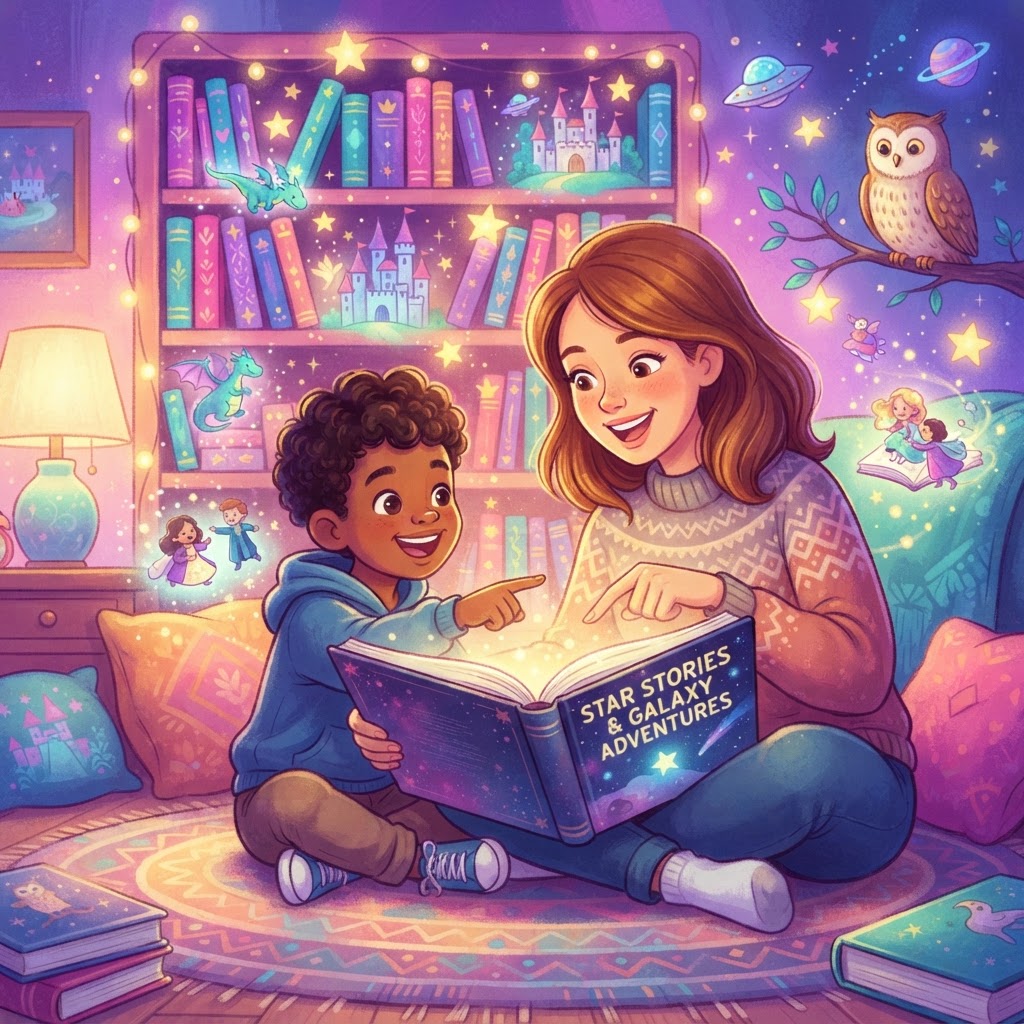
Your child can read on their own now, so it is natural to wonder whether read-aloud time should end. The short answer is no. Reading to independent readers still offers big benefits for language, comprehension, emotional connection, and a lasting love of books.
Many children who read fluently still love being read to. In fact, story time for older kids often becomes richer, not less important, because you can explore deeper ideas, bigger vocabulary, and more meaningful conversations together.
Why does reading to independent readers still matter?
Yes, reading to fluent readers still matters because listening and reading are not the same skill. A child may decode words well but still gain more from hearing complex stories read aloud.
When you read to your child, you remove the workload of decoding. That frees up brain space for understanding character motives, noticing humor, following plot twists, and enjoying language. Many children can understand more advanced ideas through listening than they can access alone in print.
Read-aloud time also supports things that silent reading cannot always give:
- Stronger vocabulary through exposure to richer language
- Better comprehension through shared discussion
- More background knowledge about the world
- Greater empathy as children hear different perspectives
- A sense of connection through shared attention and routine
This matters even more as children grow. Once school reading becomes more task-focused, family read-alouds can protect the joy of reading. They remind children that stories are not just assignments. They are experiences.
What does reading research say about story time for older kids?
Research strongly supports continuing to read aloud beyond the early years. Shared reading helps with language, motivation, and understanding, even after a child can read independently.
The American Academy of Pediatrics has long emphasized reading aloud as part of healthy child development. Reading researchers also note that listening comprehension often develops ahead of independent reading ability, which is one reason older children benefit from hearing more advanced texts.
Organizations such as Reading Rockets highlight that reading aloud builds vocabulary, comprehension, and knowledge. The National Literacy Trust has also reported links between being read to and children’s enjoyment of reading, which matters because reading motivation predicts long-term reading habits.
A classic body of research on dialogic reading, led by Grover Whitehurst and colleagues, showed that children learn more when adults make reading interactive. That does not mean turning every chapter into a quiz. It means inviting talk:
- “Why do you think she did that?”
- “What do you think will happen next?”
- “Does this remind you of anything?”
- “Which part felt surprising?”
For older children, that back-and-forth is where much of the value lies. Story time for older kids is not babyish. It is a powerful comprehension and relationship tool.
How should you choose books for a child who can already read alone?
Choose books that are a good fit for your child’s interests, emotional maturity, and listening level. The best read-aloud books for independent readers are often a little more complex than what they can comfortably read alone.
That “stretch” is one of the biggest benefits of reading aloud. You can introduce longer chapters, richer vocabulary, layered themes, and more sophisticated humor without making reading feel hard.
A few simple guidelines help:
- Pick books above independent reading level but still age-appropriate in content.
- Let your child’s interests guide at least part of the choice.
- Mix fun reads with books that broaden horizons.
- Look for strong read-aloud qualities: voice, suspense, warmth, rhythm, or humor.
- Do not avoid nonfiction, poetry, folktales, or memoir-style books.
If your child reads far beyond typical grade expectations, you may need extra help balancing challenge with emotional fit. Our guide for children who read ahead can help you choose wisely.
If your child gets stuck on one topic, use that interest as a doorway rather than a battle. For example, a dinosaur phase can still support variety if you branch into facts, humor, adventure, or historical fiction. This guide on a dinosaur-only phase offers practical ideas.
A good rule is this: let your child choose some books, and you choose some too. That keeps read-aloud time both comforting and expanding.
How can you make reading to fluent readers feel enjoyable instead of babyish?
Make it collaborative, relaxed, and age-respectful. Older kids usually resist read-alouds when the experience feels controlling or too young for them, not because they have outgrown stories.
A few shifts make a big difference:
Offer choice and shared control
Let your child choose between two or three options. You can also try:
- alternating who picks the next book
- reading the first chapter together before deciding
- letting your child veto a book after a fair try
Keep the conversation natural
You do not need to stop every page. Instead, pause at moments that naturally invite talk. A short comment or prediction is often enough.
Try “buddy reading”
For some independent readers, it helps to share the text:
- you read one chapter, they read one
- you narrate, they do character voices
- they read dialogue, you read the rest
This keeps them engaged without turning story time into work.
Protect the cozy feeling
Even older children like rituals. A blanket, a couch, a bedtime slot, or a chapter-after-dinner routine helps the habit stick. Ten to fifteen minutes is enough on busy days.
If you are juggling siblings, it can feel tricky to keep everyone engaged. Our tips for reading to two kids of different ages can help you build a routine that works for the whole family.
How can AI help with age-appropriate stories and safe read-alouds?
AI can be a helpful tool for read-alouds when you use it intentionally. It works best as a way to create personalized, age-appropriate stories that match your child’s interests, attention span, and emotional needs.
For example, AI can help when your child wants a very specific kind of story that is hard to find in a library stack. Maybe they want a bedtime story about a shy dragon, a nervous first day of school, or a child who misses a grandparent. In those moments, you can create your own personalized bedtime story and tailor the tone, length, and theme.
To use AI well:
- Set the child’s age and developmental stage
- Choose themes that feel safe and relevant
- Preview the story before reading aloud
- Edit any wording that feels off or too mature
- Use AI to complement, not replace, print books and library books
AI can also help with re-reading, which children often love. If your child finds a favorite, save it in your story library so you can revisit it later, just like a cherished book on the shelf.
For teachers or homeschoolers, AI stories can also support differentiated reading and class themes, especially when children need the same topic presented at different levels.
What should you do if your child says they do not want story time anymore?
Do not panic, and do not force it. A child who says no to reading aloud may still want connection, choice, or a different format.
Start by getting curious. Are they tired? Do they want more independence? Has the book become too easy, too long, or not interesting enough? Small changes often help.
Try one of these resets:
- switch to a higher-interest book
- shorten the session to one chapter or ten minutes
- read at a different time of day
- let them draw or build while they listen
- invite them to pick a “family read” for the week
Sometimes older kids say they are “too old” for being read to, then happily listen once the story pulls them in. The goal is not to win an argument. It is to keep stories and connection available.
Frequently Asked Questions
Up to what age should I keep reading aloud to my child?
There is no cutoff age. Many children enjoy being read to well into the tween years, especially when the books are engaging and age-respectful.
How long should story time for older kids last?
Even 10 to 15 minutes can be meaningful. On quieter days, you might read longer, but consistency matters more than length.
Is it okay if my child reads alone instead of listening to me?
Yes, independent reading is wonderful, but it does not replace the benefits of shared reading. Listening to you read exposes your child to richer language and creates space for connection.
Should I stop and ask questions during every read-aloud?
No. Too many interruptions can make reading feel like a lesson. Aim for a few natural comments or questions that deepen enjoyment and understanding.
Are AI-generated stories good for independent readers?
They can be, especially when you want a story matched to your child’s age, interests, or current challenge. Just review the story first and use AI as one part of a balanced reading life.
What if my child only wants the same kind of story again and again?
That is normal. Repetition and strong preferences often help children feel confident, and you can slowly widen their reading world by keeping a familiar theme while changing the style, setting, or format.
Ready to Create a Personalized Bedtime Story?
Use our free AI bedtime story generator to create a personalized illustrated story for your child in 30 seconds — no credit card needed.
Popular story types:
Maya Rodriguez
Lead Content Editor & Early Literacy Specialist
Maya is a former early childhood educator and literacy specialist with over a decade of experience helping children develop a love of reading. She leads content at InstaTales, where she writes about the science of storytelling, child development, and how families can use personalized AI stories to build literacy and emotional resilience.
instatales.ai