How Diversity Stories for Kids Build Empathy
Stories are a powerful way to teach children about diversity and inclusion. Here's how to use them to raise empathetic, open-minded kids.
✦ Key Takeaways
- •Diversity stories are effective because children learn best through emotion, repetition, and relationships.
- •Choose stories that show many kinds of people living full, joyful, specific lives.
- •The best way to discuss differences is to be calm, honest, and concrete.
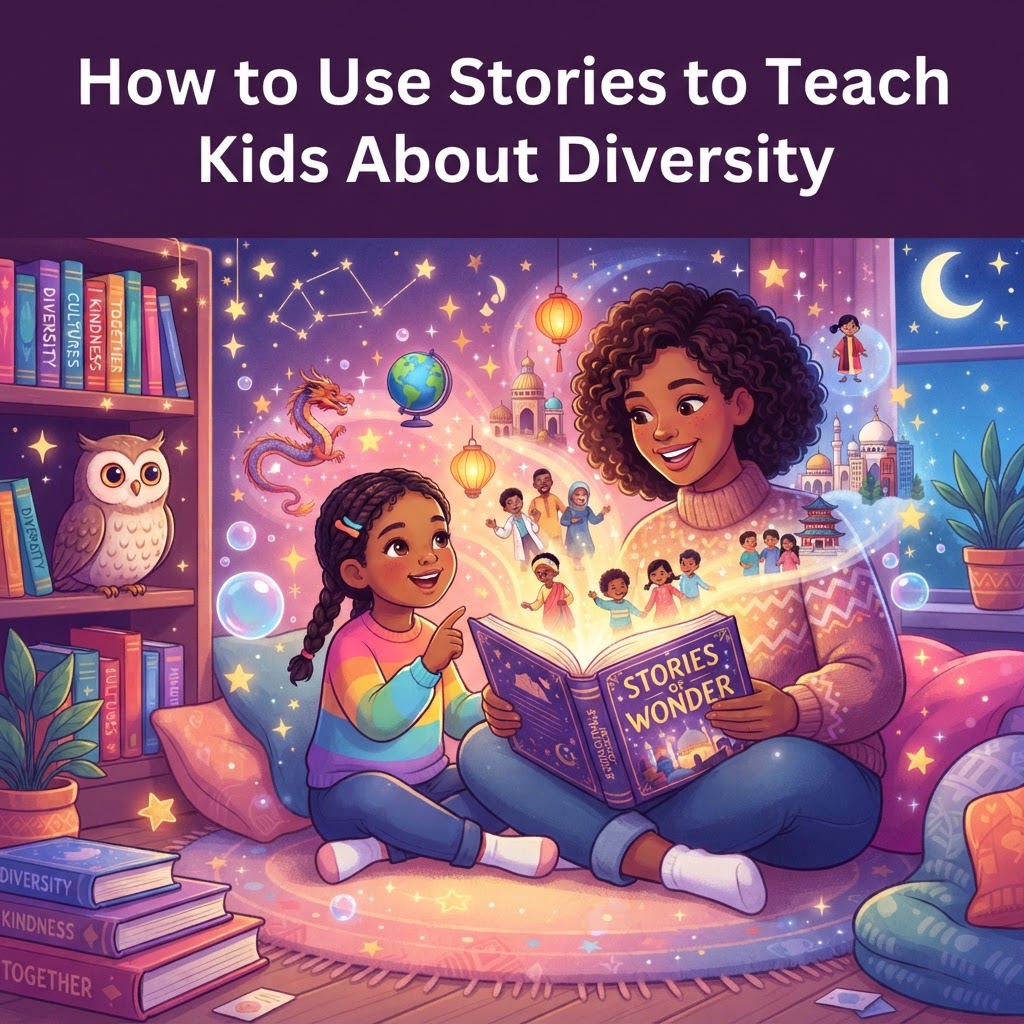
Stories help children understand people, feelings, and experiences beyond their own daily life. That is why diversity stories for kids can be such a powerful tool: they give children a safe, loving way to notice differences, ask questions, and practice empathy. Whether you are reading picture books, telling family stories, or using AI to create your own personalized bedtime story, teaching diversity through stories works best when it is thoughtful, specific, and part of everyday conversation.
Why are diversity stories for kids so effective?
Diversity stories are effective because children learn best through emotion, repetition, and relationships. When a child cares about a character, lessons about fairness, belonging, and respect feel real instead of abstract.
Research in child development shows that children notice race, language, ability, and other social differences early. As the Harvard Graduate School of Education notes, children are not “colorblind,” so avoiding the topic does not prevent bias. Instead, it can leave children to make sense of differences on their own.
Stories also support what educator Rudine Sims Bishop famously called “windows, mirrors, and sliding glass doors.” Some stories act as mirrors, helping children see themselves represented. Others act as windows, letting them understand lives different from their own. Both matter for healthy identity development and empathy.
Multicultural education scholar James A. Banks has long argued that children benefit when learning includes many cultures, voices, and perspectives. In practice, that means inclusive storytelling is not an extra lesson. It is part of raising children who can live kindly in a diverse world.
How can parents and teachers choose truly diverse stories?
Choose stories that show many kinds of people living full, joyful, specific lives. The best books and stories do more than “include difference”; they treat characters from different backgrounds as complete human beings.
Look for stories that include diversity across:
- Race and ethnicity
- Language and culture
- Religion and traditions
- Disability and neurodiversity
- Family structure
- Gender expression
- Socioeconomic background
Try to choose stories where difference is not always the “problem” of the plot. Children also need stories about a Muslim child baking with Grandma, a wheelchair user going on an adventure, or a bilingual family getting ready for bed. Everyday representation matters just as much as stories about overcoming bias.
A few simple filters can help:
- Prefer stories with specific cultural details, not vague “international” themes.
- Look for books created by authors or illustrators with lived experience when possible.
- Avoid stories that reduce a group to one trait, costume, accent, or lesson.
- Make sure your child’s bookshelf includes both similarity and difference.
If you want to make story selection part of your family routine, pairing diverse books with a story journal can help you notice which themes, cultures, and characters you have explored—and which voices are still missing.
How should adults talk about differences respectfully?
The best way to discuss differences is to be calm, honest, and concrete. Children do not need long lectures; they need clear language, respectful modeling, and room to ask questions.
If a child notices a difference, avoid shushing them or saying, “We don’t talk about that.” That can teach shame instead of respect. A better response is simple and factual: “Yes, people have different skin colors,” or “Some people communicate in different ways.”
The National Association for the Education of Young Children recommends direct, developmentally appropriate conversations about identity and bias. That means you can:
- Name what your child notices without judgment
- Use respectful words for identities and differences
- Connect difference to shared humanity
- Gently correct stereotypes or misinformation
- Ask open questions like, “What do you think?” or “How do you think that character felt?”
When reading, pause to discuss moments of exclusion or belonging. For example:
- “Why do you think the character felt left out?”
- “What helped them feel welcome?”
- “What would kindness look like here?”
- “How are their family traditions similar to ours? How are they different?”
These short conversations often feel especially natural at bedtime, when children are relaxed and connected. If you want more ideas for making story time emotionally safe and meaningful, this guide on how bedtime stories can deepen connection is a helpful next step.
How can you prompt AI for inclusive storytelling?
You can prompt AI for inclusive storytelling by being specific about identity, context, and values while avoiding tokenism. A strong prompt helps the story reflect real diversity with warmth and respect.
When using AI, do not stop at “write a diverse story.” Give the model meaningful details. Include the child’s age, the main character’s background, the setting, the kind of conflict, and the tone you want. You can also say what to avoid, such as stereotypes, trauma-heavy plots, or “teaching” language that feels preachy.
A useful prompt formula is:
- Who is the child or main character?
- What culture, family, language, or ability should be represented?
- What everyday setting should the story use?
- What value should the story model?
- What style or mood should it have?
- What stereotypes or clichés should it avoid?
For example:
“Write a gentle bedtime story for a 6-year-old about a bilingual child and their new neighbor learning to share holiday traditions. Use warm, simple language. Show curiosity and respect. Avoid stereotypes and make both families feel equally important.”
This kind of structure leads to stronger teaching diversity through stories because it focuses on humanity, not just labels. For classroom projects or guided literacy activities, InstaTales for teachers can also help educators generate age-appropriate examples around empathy, inclusion, and community.
What are five diversity story prompts you can try tonight?
The easiest way to begin is with prompts that center friendship, fairness, and everyday life. These prompts are designed to create diversity stories for kids that feel warm, relatable, and inclusive.
-
The lunchbox exchange
“Write a bedtime story about two classmates who are curious about each other’s lunches and learn about each other’s family traditions with kindness and excitement.” -
The neighborhood celebration
“Create a story where children from different cultures help plan one neighborhood festival, each bringing music, food, or decorations from home.” -
The new communication buddy
“Write a gentle story about a child who makes a new friend who uses a communication device, and show how they play, joke, and solve a problem together.” -
The many kinds of families picnic
“Tell a story about a school picnic where children notice many different family structures and learn that love and care can look different in every home.” -
The library passport adventure
“Create a bedtime story where a child visits a magical library and each book introduces a different language, tradition, or daily routine from around the world.”
If your child connects with one of these themes, you can revisit it with sequels, drawings, or role-play. This is also a great way to support a hesitant reader, because children are often more motivated when they feel seen in the story world.
How can you make diversity stories part of everyday learning?
Make diversity stories a habit, not a one-time lesson. Children learn inclusion best when they see it woven into regular reading, conversation, and play.
A simple rhythm works well:
- Read one diverse story each week
- Re-read favorites so ideas have time to sink in
- Connect the story to real life: food, music, maps, family stories, or community events
- Ask one reflection question after reading
- Notice who is represented in your child’s story routine—and who is not
You do not need to turn every book into a formal lesson. Sometimes the goal is just familiarity: seeing many kinds of people as part of normal life. Over time, that consistency helps children build empathy, reduce fear of difference, and develop a broader sense of belonging.
For older children, you can extend the learning with writing prompts, drawings, or compare-and-contrast activities. You can also mix diversity themes into other subjects, much like story-based approaches can support learning across the curriculum, including story-led homeschool lessons.
Above all, remember that children learn as much from how you read as from what you read. Your tone, your curiosity, and your willingness to talk openly are what turn a simple book into a lasting lesson in respect.
Frequently Asked Questions
At what age should I start using diversity stories?
You can start in toddlerhood. Even very young children notice differences, so simple, warm books that show many kinds of people and families are appropriate from the earliest years.
What makes a story truly inclusive?
An inclusive story shows characters from different backgrounds as full people, not stereotypes or side characters. It includes specific details, respectful language, and a sense of dignity, joy, and agency.
Can AI-generated stories support diversity learning?
Yes, if they are prompted carefully and reviewed by an adult. The strongest AI stories use specific cultural or identity details, avoid clichés, and focus on empathy, everyday life, and respectful representation.
What should I do if my child asks an uncomfortable question?
Answer calmly and simply. Children usually need honest, age-appropriate information, not embarrassment or silence, so use respectful words and invite follow-up questions.
How often should we read diversity stories?
Regular exposure works better than occasional “special topic” reading. A weekly rhythm, plus naturally diverse books in everyday story time, helps children see inclusion as normal and meaningful.
Ready to Create a Personalized Bedtime Story?
Use our free AI bedtime story generator to create a personalized illustrated story for your child in 30 seconds — no credit card needed.
Popular story types:
Maya Rodriguez
Lead Content Editor & Early Literacy Specialist
Maya is a former early childhood educator and literacy specialist with over a decade of experience helping children develop a love of reading. She leads content at InstaTales, where she writes about the science of storytelling, child development, and how families can use personalized AI stories to build literacy and emotional resilience.
instatales.ai