Healthy Eating Stories for Kids: Parent Guide
Healthy eating is easier when it's part of a story! Here's how to use storytelling to teach kids about nutritious food choices.
✦ Key Takeaways
- •Stories help because they lower resistance and increase attention.
- •Stories make healthy food appealing by linking it to curiosity, senses, and choice.
- •The best healthy eating stories for kids are simple, sensory, and emotionally safe.
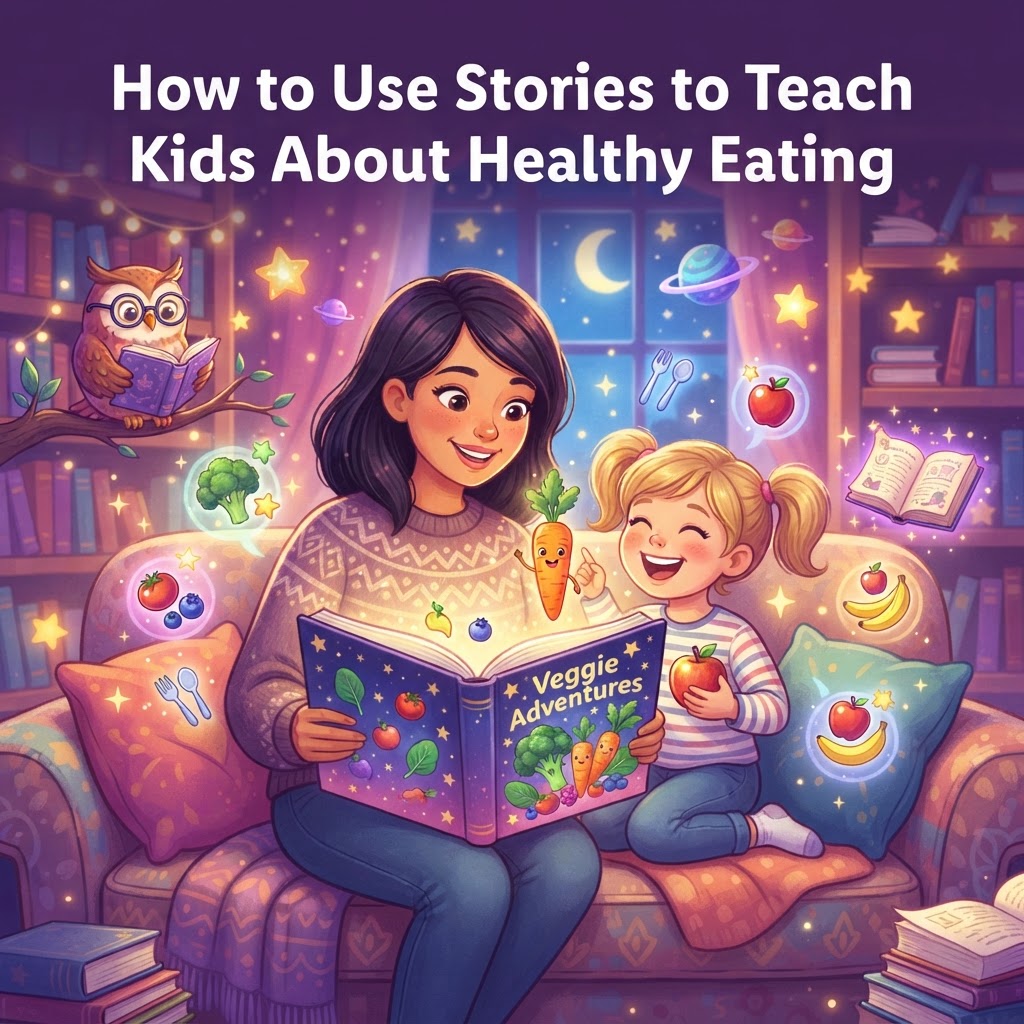
Healthy eating is much easier to teach when it feels like an adventure instead of a lecture. Healthy eating stories for kids give parents and teachers a simple way to make fruits, vegetables, and balanced meals feel familiar, exciting, and safe to explore.
For young children, stories turn abstract nutrition ideas into concrete moments: a brave carrot explorer, a sleepy dragon who needs breakfast, or a lunchbox hero choosing colorful foods for energy. That matters because children learn best through play, repetition, and emotional connection. If you want food stories for kids that actually influence habits, storytelling is one of the gentlest and most effective tools you can use.
Why do stories help children learn about healthy eating?
Stories help because they lower resistance and increase attention. A child who ignores “Eat your peas” may happily follow a bunny who crunches peas to hop faster across the meadow.
This works for solid developmental reasons. Young children learn through imitation, repetition, and narrative meaning. Research in child development and nutrition education consistently shows that positive exposure and role modeling help children become more open to new foods. Organizations like HealthyChildren.org from the American Academy of Pediatrics and USDA MyPlate both emphasize routine, variety, and pressure-free food experiences.
Stories also support memory. When a child hears that “red strawberries help Ruby Rabbit feel ready for her race,” the idea sticks better than a list of vitamins. That is why nutrition stories for children can be more effective than direct instruction alone, especially for ages 1-10.
How can stories make nutritious foods feel fun instead of forced?
Stories make healthy food appealing by linking it to curiosity, senses, and choice. Instead of treating food as a battle, they invite children to notice color, texture, smell, and how food helps characters feel.
A good story does not say, “Junk food is bad, so never eat it.” It says, “Mina needed slow, steady energy for her forest hike, so she packed yogurt, berries, and crunchy cucumber moons.” That shift matters. Children respond better to invitation than pressure.
Here are a few reasons this approach works:
- It removes power struggles. The lesson belongs to the character, not the parent.
- It creates positive associations. Broccoli becomes a tiny tree in a dinosaur forest.
- It builds familiarity. Repeated, relaxed exposure helps children accept new foods over time.
- It supports balanced thinking. Foods are presented as helpful, tasty, and varied, not moralized as “good” or “bad.”
That balanced approach matches guidance from experts. Harvard T.H. Chan School of Public Health’s Kids Healthy Eating Plate encourages variety, whole foods, and simple meal patterns families can actually use.
What should a healthy eating story for kids include?
The best healthy eating stories for kids are simple, sensory, and emotionally safe. A strong story includes one relatable challenge, one or two food ideas, and a satisfying resolution.
If you are creating your own story, include these elements:
- A child-friendly goal: more energy, helping a friend, preparing for a picnic, or growing a garden
- A relatable character: a child, animal, superhero, or magical creature
- Sensory food language: crunchy, juicy, warm, sweet, smooth, colorful
- Gentle nutrition messages: “foods help us grow, think, play, and rest”
- No shame or fear: avoid making children feel bad for preferences or appetite
- A repeatable phrase: “color on the plate helps power the day”
The strongest food stories for kids stay practical. They focus on everyday moments like breakfast, snack time, lunchboxes, shopping, or helping in the kitchen. That makes the lesson easier to carry into real life.
If your child already enjoys stories that teach life skills, you may notice a similar effect when building a growth mindset through stories. The same emotional learning principles apply.
Which healthy eating story prompts work best?
The best prompts are playful, specific, and connected to your child’s world. A clear prompt gives the story direction while keeping the nutrition lesson natural.
Try these five prompts for bedtime, quiet time, or classroom reading:
-
The Rainbow Picnic Adventure
A child packs a picnic by finding five different colors of food before the butterflies arrive. -
Captain Crunch and the Veggie Planet
A space explorer lands on a planet where each vegetable gives a different skill, like night vision, jumping, or puzzle power. -
The Sleepy Dragon’s Breakfast Quest
A dragon keeps losing steam until friends help him discover a breakfast that gives steady energy for flying school. -
The Lunchbox Rescue Mission
A child builds the perfect lunchbox to help a nervous classmate feel brave, focused, and ready to learn. -
The Garden That Grew a Feast
Seeds turn into talking fruits and vegetables that explain how sunshine, water, and patience help both gardens and children grow.
To make these prompts even more effective:
- Use your child’s name
- Add a favorite animal or toy
- Include one familiar food and one less familiar food
- End with a small action, like tasting, choosing, or helping prepare food
Parents often search for nutrition stories children will actually enjoy, and these kinds of adventure-based prompts work well because they teach without sounding like a lesson.
How can parents use InstaTales to create food adventure stories?
Parents can use InstaTales to turn nutrition goals into personalized story moments in just a few minutes. The easiest approach is to choose one food theme, one favorite character, and one real-life situation your child recognizes.
For example, you might create a story about your toddler learning to try orange foods, or your school-age child building a lunch for soccer practice. You can create your own personalized bedtime story around that exact moment, which makes the message feel personal and relevant.
A simple process looks like this:
- Pick a nutrition theme: variety, breakfast, trying a new vegetable, hydration, or balanced snacks
- Add your child’s interests: dinosaurs, unicorns, trucks, mermaids, or outer space
- Use a gentle goal: tasting, noticing, choosing, helping, or learning
- Keep the tone warm and playful
- Re-read the story several times during the week
If you want a quick start, browse story templates and adapt one into a food adventure. Once you find stories your child loves, save them in your story library so you can revisit favorite characters and reinforce the same food message over time.
For classrooms, small groups, or nutrition units, InstaTales for teachers can help educators create themed read-alouds and writing prompts around healthy habits.
How can families talk about food without creating pressure?
Families can teach healthy eating best by staying calm, curious, and consistent. The goal is to build trust around food, not force immediate results.
In practice, that means avoiding bribes, shame, and labels like “You’re picky” or “That food is bad.” Instead, try language such as:
- “This food helps our bodies grow.”
- “Would you like to smell it or lick it first?”
- “You don’t have to eat it, but it can stay on your plate.”
- “Let’s see what colors we have today.”
This approach is supported by pediatric feeding guidance and by decades of research on repeated exposure. Many children need to see a food multiple times before trying it. Stories help because they make that repetition feel comforting, not stressful.
You can also extend the lesson beyond the table. Read a story before grocery shopping, before lunch prep, or at bedtime after trying a new food. Linking story and routine helps children make sense of what they are seeing in daily life.
How can teachers use nutrition stories children will remember?
Teachers can use nutrition stories effectively by connecting them to classroom routines, sensory learning, and discussion. The most memorable stories are short, interactive, and tied to something children can do right away.
A classroom-friendly format might include:
- A read-aloud about a character choosing foods for energy
- A sorting activity by color or food group
- A drawing prompt: “What would you pack for a forest adventure?”
- A tasting or observation activity, if appropriate
- A simple reflection: “Which food helped the character, and why?”
For younger students, repetition works especially well. For older children, problem-solving and storytelling choices are powerful: Which snack should the character bring? What helps them focus? What can they grow in a school garden?
If you want more ideas for using stories as teaching tools, the InstaTales blog includes practical guides for parents and educators across many learning themes.
Frequently Asked Questions
Can stories really help picky eaters?
Stories can help, especially when they reduce pressure and build familiarity. They are not a magic fix, but they often make new foods feel safer and more interesting over time.
What age are healthy eating stories for kids best for?
They work well from toddlerhood through early elementary years. Younger children enjoy simple repetition and sensory language, while older children respond to adventure, humor, and problem-solving.
How often should I read food stories for kids?
Re-reading is useful. Reading the same story a few times a week can reinforce language, normalize foods, and help children connect the story to real meals and snacks.
Should healthy eating stories focus on “good” and “bad” foods?
No. It is usually better to talk about balance, variety, and how foods help us play, think, grow, and rest, rather than attaching shame or fear to eating.
Can I use personalized stories in the classroom?
Yes, as long as the stories are age-appropriate and inclusive. Personalized or class-themed stories can boost engagement because children feel represented in the learning experience.
What is the best healthy eating message to start with?
Start small: color, variety, and energy are excellent first themes. A child does not need a full nutrition lesson at bedtime; one simple, positive idea is enough.
Explore More Stories
Ready for more? - free AI bedtime story generator
Get a new bedtime story every week
Free, personalized, and delivered to your inbox. No spam, ever.
Ready to Create a Personalized Bedtime Story?
Use our free AI bedtime story generator to create a personalized illustrated story for your child in 30 seconds — no credit card needed.
Popular story types:
Maya Rodriguez
Lead Content Editor & Early Literacy Specialist
Maya is a former early childhood educator and literacy specialist with over a decade of experience helping children develop a love of reading. She leads content at InstaTales, where she writes about the science of storytelling, child development, and how families can use personalized AI stories to build literacy and emotional resilience.
instatales.ai