Weather Stories for Kids: A Fun Teaching Guide
Weather is fascinating to kids. Here's how to use stories to teach them about rain, snow, storms, and sunshine in a fun way.
✦ Key Takeaways
- •Stories work well because they make science concrete, emotional, and memorable.
- •Children can learn a surprising amount of meteorology through simple stories.
- •The key is simple: lead with the story, then tuck the science inside it.
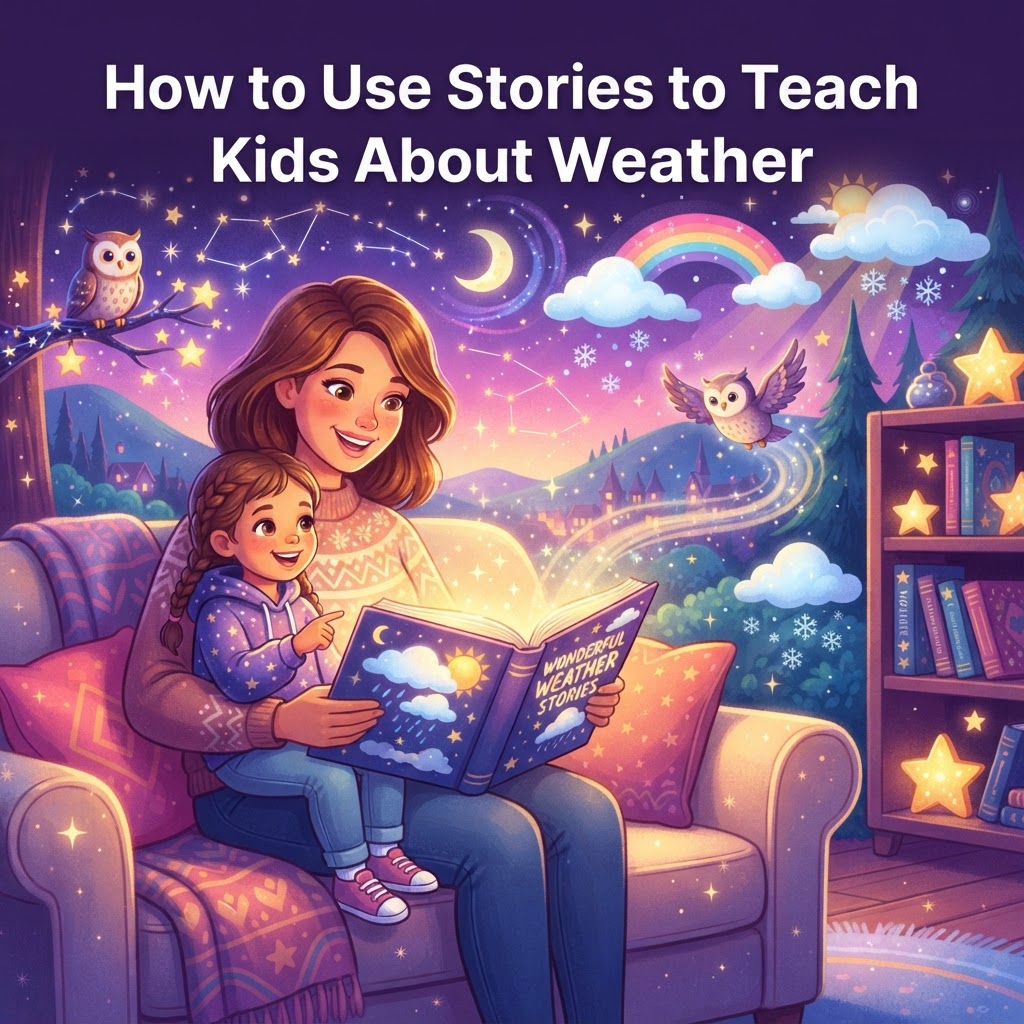
Weather is naturally exciting to young children. They can see dark clouds, hear thunder, feel wind, and jump in puddles—so it makes sense to use stories to turn those everyday moments into learning. When you use weather stories for kids, you help children connect science to feelings, observations, and imagination, which makes the ideas easier to remember.
Stories are especially useful because weather can feel big and abstract. A tale about a rain drop traveling through the sky, or a nervous little cloud learning how storms work, gives children a clear mental picture. That is the heart of teaching weather through stories: pairing real facts with characters, rhythm, and wonder.
Why are stories such a powerful way to teach kids about weather?
Stories work well because they make science concrete, emotional, and memorable. Instead of simply telling a child that warm air rises or that clouds hold water droplets, a story lets them follow a character through the process step by step.
This approach is backed by child development research. The American Academy of Pediatrics encourages shared reading from infancy because it supports language, attention, and relationship-building. Research on dialogic reading by Dr. Grover Whitehurst and colleagues also shows that children learn more when adults ask questions and invite participation during a story.
For weather learning, stories help children:
- Build vocabulary like forecast, drizzle, lightning, and temperature
- Understand sequences, such as “clouds form, rain falls, puddles dry”
- Feel less scared of weather events by learning what they are
- Practice observation by linking story events to real skies outside
For example, if a child hears a story about a brave umbrella on a windy day, you can pause and ask, “What is the wind doing?” That simple question turns reading time into an early science conversation.
What weather concepts can children learn through stories?
Children can learn a surprising amount of meteorology through simple stories. Even very young kids can grasp basic weather patterns when the ideas are presented through familiar characters and repeated language.
You do not need to teach a full science lesson at bedtime. Start with a few age-appropriate concepts:
For ages 1-3
- Sunny, rainy, windy, cloudy, snowy
- Hot and cold
- Clothing choices for weather
- Daily routines like boots, hats, or sunscreen
For ages 4-6
- Seasons and weather changes
- Rain coming from clouds
- Wind moving leaves and kites
- Thunderstorms as loud but temporary events
For ages 7-10
- The water cycle
- Basic forecasting
- How snow forms
- Why thunder follows lightning
- Severe weather safety
If you want child-friendly factual support, the National Weather Service and NOAA JetStream weather school offer reliable explanations for families and educators. For younger learners, NASA Climate Kids is also excellent for simple, visual science content.
The best meteorology stories children enjoy are not overloaded with facts. One clear idea per story usually works best.
How can you weave real weather facts into a story without losing the magic?
The key is simple: lead with the story, then tuck the science inside it. Children stay engaged when the facts feel like part of the adventure rather than a lecture.
A good weather story usually includes three parts:
- A relatable character: a raindrop, a cloud, a child, an animal, even a kite
- A weather problem or question: “Where does snow come from?” or “Why is the sky so dark?”
- A factual resolution: the answer appears naturally as the plot unfolds
Here are a few practical ways to do it:
Use sensory details
Weather is physical, so describe what it feels and sounds like.
- “The wind whooshed against Mia’s coat.”
- “The thunder rumbled like a giant drum.”
- “Tiny snowflakes landed softly on Papa Bear’s nose.”
Add one true fact at a time
Too many facts can flatten the story. Instead, choose one main teaching point:
- Rain forms when water in clouds becomes heavy
- Wind is moving air
- Lightning happens before thunder reaches our ears
Make the child part of the discovery
Ask simple questions during the story:
- “What do you think will happen when the cloud gets full?”
- “Can you hear the wind outside like the wind in the story?”
- “What would you wear on this kind of day?”
This kind of interactive reading supports learning. It also matches what educators know about active comprehension: children understand more when adults help them connect the story to real life.
What are five weather story prompts you can use tonight?
The easiest way to start is with a clear, playful prompt. These weather stories for kids are designed to teach a weather concept while still feeling warm and imaginative.
1. The Little Raindrop’s Big Journey
A tiny raindrop named Ripple rises into the sky, becomes part of a cloud, falls to Earth, and returns to the air again.
Teaches: the water cycle, evaporation, clouds, rain
2. Why Did the Wind Steal the Hat?
A curious breeze carries Leo’s hat across the neighborhood, past trees, kites, and spinning pinwheels.
Teaches: wind as moving air, force, observation
3. The Cloud Who Was Afraid to Thunder
A gray cloud worries that thunder is too loud and scary, until an older cloud explains what storms are and how families stay safe.
Teaches: thunderstorms, storm safety, emotional regulation
4. Sunny the Sun and the Sleepy Snowman
A cheerful winter sun wonders why Sam the Snowman looks smaller every afternoon.
Teaches: warmth, melting, temperature change, seasons
5. The Weather Station on Maple Street
Two siblings create a backyard weather station and try to predict tomorrow’s weather before checking the official forecast.
Teaches: forecasting, temperature, observation, weather tools
If your child also enjoys stories that teach everyday life skills, you might like this guide to teaching time through stories or this article on using stories to teach safety.
How can parents and teachers use InstaTales for weather-themed educational stories?
AI can make weather storytelling faster, more personal, and easier to repeat. With the right prompt, you can create a weather story that matches your child’s age, interests, and learning goal in minutes.
For example, you might ask InstaTales to create a story about:
- a 3-year-old who loves rain boots and needs simple rainy-day words
- a 6-year-old who is nervous about thunder
- an 8-year-old who wants to understand clouds and forecasts
A strong prompt includes:
- your child’s age
- the specific weather topic
- the tone you want
- one or two factual learning goals
You can create your own personalized bedtime story for a stormy evening, use story templates for a quick start, and save favorite weather tales in your story library to revisit them across the seasons. For classroom use, InstaTales for teachers can help generate differentiated reading content for science corners, weather units, or writing warm-ups.
This is especially helpful because repetition matters. Children often learn science vocabulary best when they hear it multiple times in slightly different contexts. A custom story about rain today can become a wind story next week and a snow story in December.
How can you turn one weather story into a full learning activity?
A single story can become a rich mini-lesson with almost no extra prep. The most effective follow-up activities help children observe, talk, draw, and compare what they learned to the real world.
Try these simple extensions:
- Weather check-in: Ask, “What is the weather like today? Is it like the story?”
- Prediction game: “Do you think it will rain later? Why?”
- Drawing activity: Have your child draw the cloud, storm, or sun from the story
- Dress-for-the-weather challenge: Let younger kids choose clothes for the story character
- Science journal: Older kids can track temperature, clouds, and wind for a week
For teachers, weather stories also fit nicely into seasonal reading plans or cross-curricular units. You can pair them with art, early writing, graphing, or calendar work. If you enjoy using stories to teach practical concepts, the InstaTales blog includes more ideas for everyday learning, and this post on money-themed stories for kids shows how the same approach works beyond science.
The real goal is not to make every story feel like a worksheet. It is to help children notice the world, ask questions, and feel confident about what they see outside their window.
What should you remember when teaching weather through stories?
Keep it simple, accurate, and responsive to your child. The best meteorology stories children love are the ones that match their age, answer real questions, and leave room for wonder.
If your child is fascinated by rainbows, start there. If they are worried about storms, use stories to explain what happens and how adults keep them safe. When you focus on one weather idea at a time, teaching weather through stories feels natural rather than forced.
Most of all, let weather become part of your family’s storytelling rhythm. A windy walk, a rainy afternoon, or the first snowy morning can all become the spark for a meaningful, memorable story.
Frequently Asked Questions
What age are weather stories best for?
Weather stories can work for children ages 1-10 when the language and science level are adjusted. Toddlers do well with basic weather words, while older kids can handle concepts like the water cycle and forecasting.
How accurate should educational weather stories be?
They should be simple but factually correct. It is fine to personify a cloud or raindrop as long as the science underneath is true and easy for children to understand.
Can stories help children who are afraid of thunder or storms?
Yes, stories can reduce fear by explaining what storms are in calm, predictable language. They also give children a safe way to ask questions and learn safety routines.
How long should a weather story be?
For toddlers, 3-5 minutes is often enough. For school-age children, 5-10 minutes works well, especially if you pause for questions and discussion.
How can teachers use weather stories in class?
Teachers can use them as read-alouds, science lesson starters, or writing prompts. They also work well in weather units, seasonal themes, and mixed-age literacy centers.
Explore More Stories
Ready for more? - free AI bedtime story generator
Get a new bedtime story every week
Free, personalized, and delivered to your inbox. No spam, ever.
Ready to Create a Personalized Bedtime Story?
Use our free AI bedtime story generator to create a personalized illustrated story for your child in 30 seconds — no credit card needed.
Popular story types:
Maya Rodriguez
Lead Content Editor & Early Literacy Specialist
Maya is a former early childhood educator and literacy specialist with over a decade of experience helping children develop a love of reading. She leads content at InstaTales, where she writes about the science of storytelling, child development, and how families can use personalized AI stories to build literacy and emotional resilience.
instatales.ai