Time Stories for Kids: How to Teach Time
Time is an abstract concept that's hard for kids to grasp. Stories can make it concrete and fun. Here's how.
✦ Key Takeaways
- •Time is hard for kids because it is an abstract concept.
- •Stories make time easier because they give children a visible sequence of events.
- •Children should learn time concepts in the order they experience them.
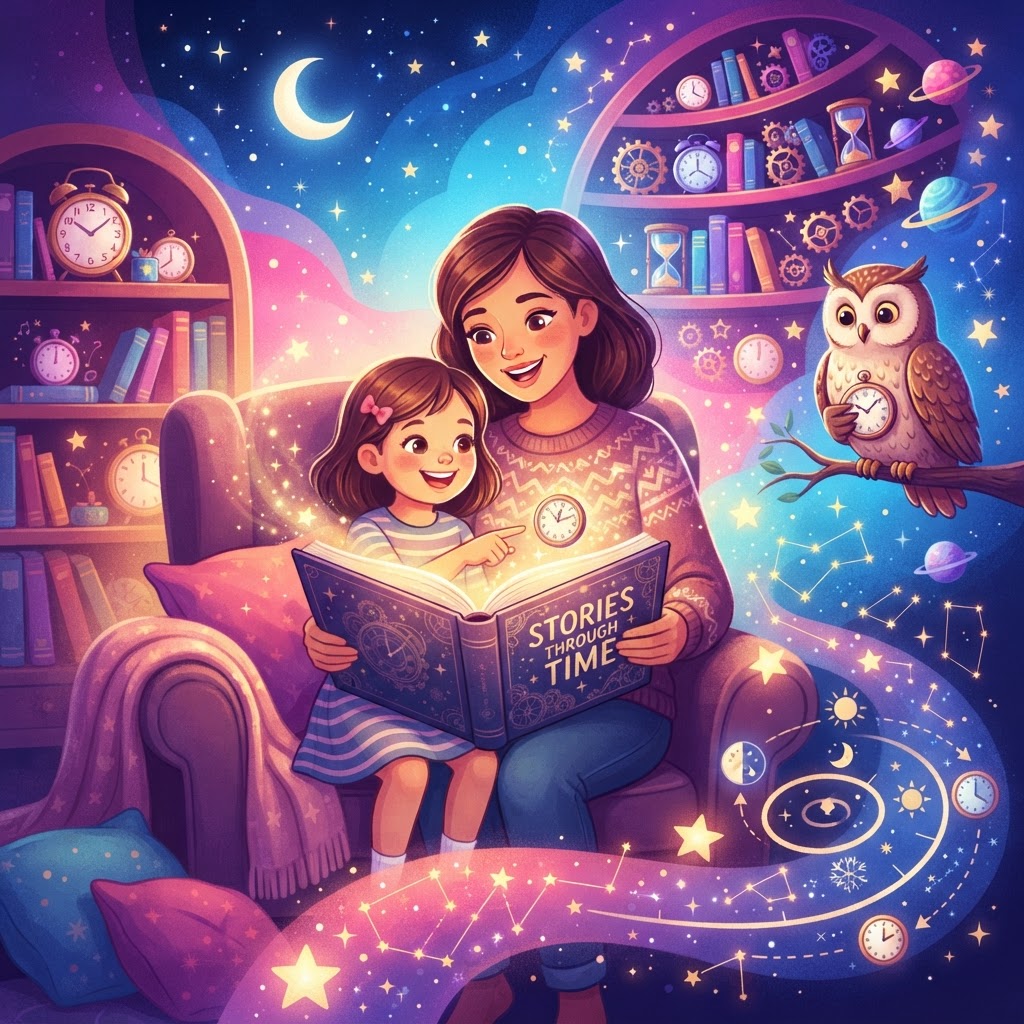
Time can feel invisible to children. They cannot hold an hour, see next Tuesday, or compare “last year” to “tomorrow” in the same way adults do. That is why time stories for kids work so well: stories turn abstract ideas into characters, routines, seasons, and events children can picture.
For parents and teachers, teaching time through stories is both practical and research-backed. Young children learn best through concrete experiences, repetition, and meaningful language. When a story shows a bunny waking up in the morning, waiting for lunch, or watching leaves change in autumn, children begin to connect time words to real life.
Why is time so hard for kids to understand?
Time is hard for kids because it is an abstract concept. Most children understand time first through routines and sequences, not through clocks or calendars.
Developmental research has long shown that young children think in concrete ways before they can handle more abstract ideas. In practice, that means “after snack” makes more sense than “in 20 minutes.” The CDC’s developmental milestones also remind us that children’s thinking skills build gradually, which is why time language needs to be introduced in small, familiar steps.
Children usually learn time in layers:
- First: before/after, now/later, day/night
- Next: yesterday/today/tomorrow, morning/afternoon/evening
- Later: days of the week, seasons, birthdays, holidays
- Finally: clock time, elapsed time, history, timelines
This gradual path matters. If a child cannot yet picture sequence, “quarter past three” will feel confusing. But if they can follow a story from breakfast to bedtime, they already have the foundation for later clock skills.
How do stories make time concepts easier to understand?
Stories make time easier because they give children a visible sequence of events. A story has a beginning, middle, and end, which naturally mirrors how time works.
When children hear a story, they track what happened first, what happened next, and what happened last. That sequence builds the same mental skills they need for understanding routines, calendars, and clocks. Research from Harvard’s Center on the Developing Child highlights how memory, attention, and cognitive flexibility support learning; stories gently exercise all three.
Stories also help because they attach time to emotion and meaning. A child may forget “Wednesday,” but remember that “Wednesday is the day Mia visits Grandma in the story.” That emotional hook makes learning stick.
A few features make clock stories children respond to especially effective:
- Repetition: “Every morning, the rooster crows at seven.”
- Clear order: wake up, eat, play, rest, sleep
- Visual cues: sun rising, shadows moving, leaves changing
- Personal relevance: school days, birthdays, bedtime
- Problem and solution: “How long until the cake is ready?”
If you want stories to work even better, pair them with a cozy story time space at home. Calm, repeated reading routines help children connect story language with everyday time patterns.
Which time concepts should children learn first?
Children should learn time concepts in the order they experience them. Start with daily routines and simple sequence words before moving to calendars, seasons, and clocks.
A helpful rule is to begin with what a child can feel and see. That means using meals, naps, school, sunsets, and weekly activities as anchors. Only after those ideas feel solid should you introduce more formal time tools.
Ages 1-3: Build routine language
At this stage, focus on:
- day and night
- now and later
- first and next
- wake-up and bedtime
Simple bedtime stories are perfect here. “First we brush teeth, then we read, then we sleep” teaches sequence in a natural way.
Ages 4-6: Add day, week, and seasonal patterns
Children in this age range can often start to grasp:
- yesterday, today, tomorrow
- morning, afternoon, evening
- days of the week
- simple seasonal changes
This is also a great age for stories linked to emotions and routines. For example, a story about feeling nervous on Monday morning can connect time and emotional awareness, much like feelings-focused stories do.
Ages 7-10: Introduce clocks, calendars, and history
Older children are more ready for:
- reading analog and digital clocks
- elapsed time
- months and yearly cycles
- timelines and “long ago” history
At this stage, stories can stretch beyond one day and explore bigger ideas like how a town changes across seasons or how people lived in the past.
What are five story prompts that teach kids about time?
The best story prompts teach one time idea at a time. Keep the plot simple, tie it to a child’s world, and repeat the key time words throughout the story.
Here are five prompts you can use right away for teaching time through stories:
1. A day from sunrise to bedtime
Prompt: Tell a story about a child and their puppy from morning to night, showing what happens before breakfast, after lunch, and at bedtime.
What it teaches:
- sequence
- daily routine
- morning/afternoon/evening
2. The missing day of the week
Prompt: Write a story where Tuesday goes missing, and the characters must figure out what usually happens on each day to bring it back.
What it teaches:
- days of the week
- order
- weekly patterns
This works especially well if you connect each day to something familiar like library day, soccer day, or baking day.
3. The squirrel who followed the seasons
Prompt: Create a story about a squirrel who hides acorns, sees flowers bloom, swims in summer, and watches snow fall, learning what changes in each season.
What it teaches:
- seasons
- yearly cycles
- nature clues
For more seasonal inspiration, pair this with nature-based stories for kids, which help children notice patterns in the world around them.
4. The talking clock in the kitchen
Prompt: Write a story about a friendly clock that helps a child get ready for school by explaining what each hand means.
What it teaches:
- analog clocks
- hour and minute hands
- matching routine to clock time
For younger children, keep it simple: “When the big hand points here, it is snack time.” For older children, add half hours and quarter hours.
5. The child who visited “long ago”
Prompt: Tell a gentle time-travel story where a child visits a village from long ago and notices how people cooked, traveled, and played differently.
What it teaches:
- past and present
- history
- timelines and change over time
This kind of story introduces “history” without turning it into a lecture. PBS Parents also emphasizes that children learn time best when it is connected to real-life contexts and clear examples.
How can parents and teachers use InstaTales for time-themed stories?
InstaTales makes time learning easier by letting you create stories that match a child’s age, interests, and current skill level. Personalized stories feel more meaningful, which increases attention and recall.
You can create your own personalized bedtime story around one specific goal, such as “learning yesterday, today, and tomorrow” or “understanding the hour hand.” If a child loves dinosaurs, mermaids, trucks, or ballet, build the time lesson into that world instead of forcing a generic worksheet.
A simple formula works well:
- choose one time concept
- add a favorite character or theme
- include three repeated time words
- end with a small problem solved by understanding time
For example:
- “A firefighter learns what happens before the alarm rings.”
- “A unicorn follows clues from winter to spring.”
- “A space explorer must return home by 3 o’clock.”
Teachers can also adapt these stories for group reading, circle time, or writing extension activities. If you are planning story-based lessons in class, InstaTales for teachers can support themed reading and differentiated prompts for different ages.
What simple habits help time stories stick?
Time stories work best when children hear them often and connect them to real life. Reading alone helps, but reading plus action helps even more.
Try these simple habits:
- Read the same time story for several nights.
- Pause and ask, “What happened first?”
- Point to the real clock when a clock appears in the story.
- Match story events to your family routine.
- Use props like picture schedules, toy clocks, or seasonal objects.
You can also extend the story after reading:
- draw the events in order
- act out morning, afternoon, and evening
- make a “story week” chart
- compare the story season to the weather outside
Re-reading matters. Children often need many exposures before time words become meaningful. That is one reason story-based learning is so effective: it is gentle, repetitive, and enjoyable instead of pressured.
Frequently Asked Questions
What age can kids start learning about time through stories?
Children can start hearing simple time language as toddlers. Concepts like day/night, first/next, and bedtime routines are easier than clock time and fit naturally into early stories.
Are stories better than worksheets for teaching time?
Stories are often better for introducing time because they make abstract ideas concrete and meaningful. Worksheets can help later, but stories usually build understanding first.
How do I teach clocks to a child who keeps getting confused?
Start with daily routine stories tied to one or two specific times, like wake-up time or lunch time. Then use simple clock stories children can follow, focusing on the hour hand before adding more detail.
Can personalized stories really help children learn faster?
Yes, because children pay more attention to stories that reflect their interests, names, and routines. Personal relevance improves engagement, which makes new vocabulary and concepts easier to remember.
How often should I read time stories for kids?
A few times a week is enough to make progress, especially if you repeat favorite stories. Consistency matters more than length, so even a short bedtime story can help.
What if my child understands routines but not “yesterday” and “tomorrow”?
That is very common. Keep using stories that compare events across days, and link the words to real experiences like “Yesterday we went swimming; tomorrow we will visit Grandma.”
Ready to Create a Personalized Bedtime Story?
Use our free AI bedtime story generator to create a personalized illustrated story for your child in 30 seconds — no credit card needed.
Popular story types:
Maya Rodriguez
Lead Content Editor & Early Literacy Specialist
Maya is a former early childhood educator and literacy specialist with over a decade of experience helping children develop a love of reading. She leads content at InstaTales, where she writes about the science of storytelling, child development, and how families can use personalized AI stories to build literacy and emotional resilience.
instatales.ai