Create a Cozy Story Time Space at Home
A dedicated story time space makes reading feel special. Here's how to create a cozy reading nook your child will love.
✦ Key Takeaways
- •Yes, a dedicated reading area can encourage more frequent and more enjoyable reading.
- •The best location is a quiet, comfortable spot with low distraction and easy access to books.
- •The best seating is comfortable, stable, and easy for your child to use without help.
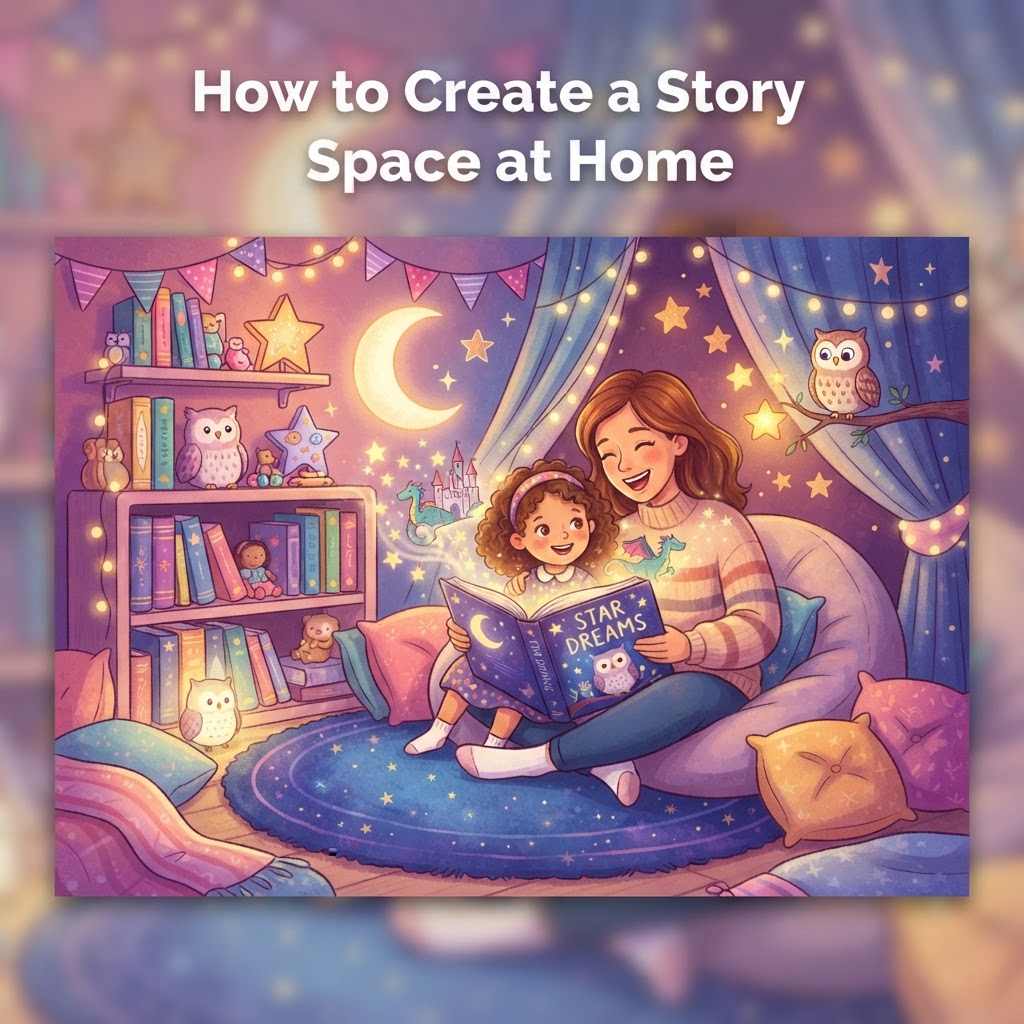
A dedicated story time space can make reading feel less like another task and more like a daily ritual your child looks forward to. Whether you have a full playroom or one open corner in the living room, a simple, inviting setup can help children settle, listen, imagine, and connect with you.
That matters more than many parents realize. The American Academy of Pediatrics recommends reading aloud from infancy because it supports language, relationships, and early brain development. Research and practice from Reach Out and Read also show that children benefit when books are part of everyday family life. A warm, predictable reading environment helps make that happen.
Why does a dedicated story time space help children read more?
Yes, a dedicated reading area can encourage more frequent and more enjoyable reading. Children respond well to routines and clear cues, and a special space tells them, “This is where we slow down and enjoy stories.”
A consistent cozy reading corner also reduces friction. When books, blankets, and seating are already set up, it takes less effort to begin. That matters on busy evenings when attention spans are short.
There is also a relationship benefit. Shared reading is a classic “serve and return” activity, where children and adults respond to each other through words, expressions, and questions, a pattern highlighted by the Harvard Center on the Developing Child. In simple terms: the right space supports the right kind of interaction.
Where should you put a story time space at home?
The best location is a quiet, comfortable spot with low distraction and easy access to books. It does not need to be large, but it should feel different from the busy parts of the home.
Look for a space with these features:
- Away from the TV or loud play areas
- Close to natural light or a lamp
- Safe for climbing, sitting, and turning pages
- Easy for your child to reach on their own
- Simple to tidy and reset each day
Good options include a bedroom corner, the end of a hallway, a landing, space under a loft bed, or one side of the living room. For babies and toddlers, choose a spot where you can sit comfortably together. For older children, independence matters more, so keep the area visible but child-led.
If you like making stories part of your evening routine, it can also help to place the nook near bedtime spaces. That makes it easier to move from reading into sleep without a big shift in energy.
What kind of seating works best in a reading nook for kids?
The best seating is comfortable, stable, and easy for your child to use without help. A reading nook for kids should invite the body to relax, not wobble, slide, or fight for balance.
For different ages, try:
- Babies and toddlers: a floor mat, rug, or padded cushion where you can sit together
- Preschoolers: beanbags, foam chairs, floor pillows, or a small armchair
- School-age children: a reading chair, oversized cushion, window seat, or soft pouf
You do not need expensive furniture. A folded duvet, two large pillows, and a washable rug can work beautifully. What matters most is that your child can settle in for 10 to 20 minutes without discomfort.
If possible, include room for an adult too. Children often stay longer when a parent or caregiver can join them easily. That shared comfort can turn reading into a relationship-building habit, not just a literacy activity.
How should you light a cozy reading corner?
Use soft overall light with enough brightness to see pictures and words clearly. Good lighting makes a cozy reading corner feel calm while still protecting tired eyes.
Natural light is ideal during the day, so a spot near a window works well. For evening reading, add a warm lamp with a shade that reduces glare. Clip-on lights, wall sconces, or a small floor lamp can all work in tight spaces.
A few helpful lighting tips:
- Choose warm white light for a calm feel
- Avoid harsh overhead bulbs when possible
- Make sure pages are bright enough for easy reading
- Keep cords secured and out of reach
- Skip flashing or color-changing lights at bedtime
If your child loves twinkle lights, use them as decoration rather than the main source of light. They can add charm, but they usually do not give enough brightness for reading.
How can you store books so children actually want to use them?
Store books where children can see them, reach them, and choose them independently. Face-out displays and low bins work better than overstuffed shelves because they reduce overwhelm and invite browsing.
Try a mix of:
- A low front-facing bookshelf
- Small baskets by theme or age
- A rotating selection of 8 to 15 books
- One special spot for current favorites
Rotation is especially helpful. Too many books at once can make the space feel cluttered, while a smaller selection keeps interest fresh. You can swap in seasonal stories, calming bedtime books, or titles that match your child’s current interests.
This is also a great place to mix formats. Printed books should stay at the heart of the space, but you can also create your own personalized bedtime story for a new family reading tradition, then save favorites in your story library for easy re-reading.
What makes a story time space feel cozy and inviting?
A story time space feels inviting when it is soft, personal, and easy to use. Children are more likely to return to a space that feels warm and emotionally safe, not overly styled or crowded.
A few comfort items go a long way:
- A soft rug or play mat
- One or two washable blankets
- Cushions or stuffed animals
- A basket for comfort objects
- A family photo or simple art print
- A small sign, canopy, or curtain to define the area
Personal touches help too. You might display your child’s current favorite book, a flashlight for “special” reading time, or a tiny basket of puppets for retelling stories. If your child connects deeply with familiar characters or themes, include books that support emotional growth, such as confidence-building stories or diversity stories.
Try not to overfill the nook. Cozy does not mean crowded. Children often regulate better in spaces that feel calm and visually simple.
How can you create a reading nook for kids in a small home or on a budget?
You can absolutely create a lovely reading nook with very little space or money. A story time space does not need custom carpentry or expensive décor; it just needs comfort, access to books, and a sense of intention.
Here are easy low-cost ideas:
- Put a floor pillow beside a book basket
- Use a laundry basket or wooden crate as book storage
- Repurpose a bedside lamp for reading light
- Add a blanket over two chairs to create a “reading tent”
- Use removable wall decals instead of new furniture
- Check thrift stores for rugs, cushions, and baskets
Small-space options work well too:
- A bedroom corner beside the bed
- The space under a table or loft bed
- A hallway end with wall-mounted book ledges
- A closet converted into a mini reading den
- One side of a bunk bed with a clip light and pillow
If cost is a concern, remember that libraries do a lot of the heavy lifting. You do not need dozens of books at home if you rotate borrowed titles regularly. What your child will remember most is the feeling of closeness and consistency.
How can you keep your cozy reading corner interesting over time?
Keep the space active by changing the books, following your child’s interests, and using the nook for more than passive listening. A reading area stays meaningful when it grows with your child.
You can refresh the space by:
- Rotating books every one to two weeks
- Creating mini themes like animals, feelings, or space
- Adding simple props for retelling
- Letting your child choose the “featured” book
- Using post-reading activities like drawing or acting out scenes
For older children, a story time space can support comprehension as well as comfort. After reading, you might sketch a character, map the plot, or talk about feelings and choices. If you want practical follow-up ideas, these story maps are a simple next step.
Most of all, use the nook consistently. Five to fifteen minutes a day is enough to build a strong reading habit. The goal is not a picture-perfect corner. The goal is a space your child associates with stories, connection, and calm.
Frequently Asked Questions
What age should a story time space start?
You can start in infancy. Even babies benefit from a quiet, predictable reading spot where they hear language, see faces, and cuddle close.
How many books should I keep in a reading nook for kids?
For most children, 8 to 15 books at a time is plenty. A smaller, rotated selection feels fresh and helps children choose without getting overwhelmed.
Does a reading nook for kids need a separate room?
No, not at all. A corner of a bedroom, hallway, or living room can work beautifully if it feels comfortable, calm, and easy to access.
What if my child will not sit still during story time?
That is very common, especially for toddlers and preschoolers. Try shorter books, more interactive reading, and flexible seating like floor cushions so movement feels allowed rather than disruptive.
How can I make a cozy reading corner feel special without spending much?
Focus on texture, lighting, and book access. A soft blanket, a pillow, a warm lamp, and a small basket of books can be enough to make reading feel meaningful.
Should I include digital stories in a story time space?
Yes, if you use them thoughtfully. Printed books are still ideal for most shared reading, but digital or personalized stories can add variety, especially when they are re-read together and discussed afterward.
Ready to Create a Personalized Bedtime Story?
Use our free AI bedtime story generator to create a personalized illustrated story for your child in 30 seconds — no credit card needed.
Popular story types:
Maya Rodriguez
Lead Content Editor & Early Literacy Specialist
Maya is a former early childhood educator and literacy specialist with over a decade of experience helping children develop a love of reading. She leads content at InstaTales, where she writes about the science of storytelling, child development, and how families can use personalized AI stories to build literacy and emotional resilience.
instatales.ai