Korean Stories for Kids: Benefits, Ideas & Tips
Delightful Korean stories for kids — perfect for bilingual families, language learners, and heritage language preservation.
✦ Key Takeaways
- •Korean stories for kids are valuable because they support language development, cultural connection, and thinking skills at the same time.
- •Korean bedtime stories work well because repetition, routine, and emotional safety help children learn language more easily.
- •The best Korean children stories are simple, rhythmic, and close to a child’s world.
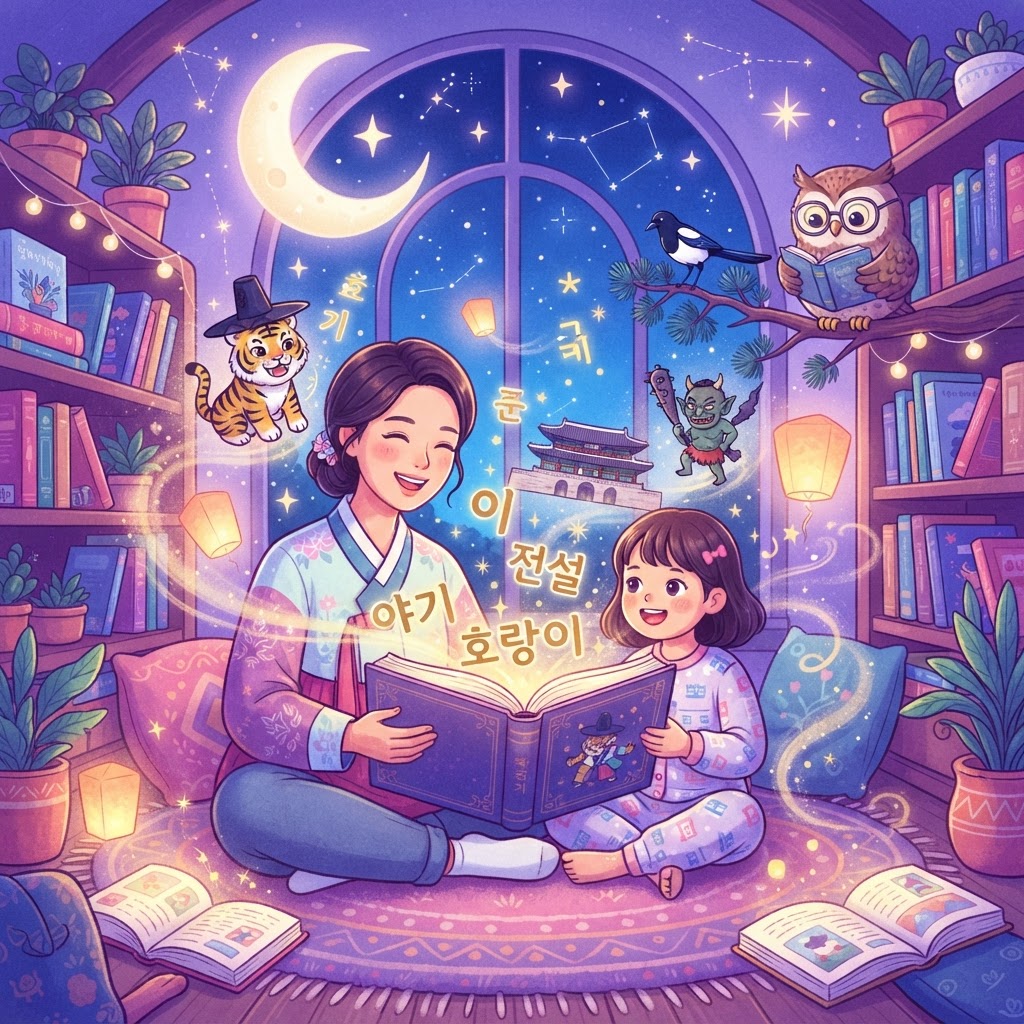
Korean stories for kids can do much more than fill a bedtime routine. They help children hear natural Korean, build emotional bonds with family, and stay connected to culture through characters, songs, food, values, and everyday language. For bilingual families, heritage speakers, and curious language learners, stories in Korean offer a gentle, joyful way to learn.
The good news is that you do not need to be a perfect speaker to make Korean bedtime stories meaningful. With the right routines, simple story choices, and personalized tools, even a few minutes a day can support vocabulary, listening, and cultural identity. Below, you’ll find the benefits of Korean children stories, five story ideas, and practical ways to use InstaTales’ Korean language support at home or in class.
Why are Korean stories for kids so valuable?
Korean stories for kids are valuable because they support language development, cultural connection, and thinking skills at the same time. When children hear stories regularly, they absorb sounds, rhythm, sentence patterns, and everyday words in a natural context.
For bilingual and heritage language families, stories are especially powerful. A child may not always want a vocabulary drill, but they will often lean into a cozy story about a brave rabbit, a trip to 할머니’s house, or a magical Seoul night market. That emotional connection matters.
Research also supports the value of bilingual exposure. The American Speech-Language-Hearing Association notes that learning more than one language does not confuse children and can be part of healthy language development. Reviews of bilingualism research published through the U.S. National Library of Medicine suggest bilingual experience may support skills like attention control and metalinguistic awareness.
Just as important, Korean stories help children build identity. Hearing family terms, foods, places, and traditions in Korean tells a child, “This language belongs to you.” That message can be deeply protective for confidence and belonging.
What makes Korean bedtime stories especially effective for language learning?
Korean bedtime stories work well because repetition, routine, and emotional safety help children learn language more easily. A calm story before sleep lowers pressure and gives kids repeated exposure to familiar words and phrases.
Young children learn through patterns. If they hear phrases like “잘 자요,” “옛날 옛적에,” or “달이 떴어요” across many nights, those expressions start to stick. Repetition is not boring for children; it is how they learn.
Shared reading also works best when it is interactive. Reading Rockets highlights the value of dialogic reading, where adults pause, ask questions, and invite children to join in. With stories in Korean, that can look like:
- Pointing to pictures and naming objects in Korean
- Asking simple questions like “토끼가 어디 있어?”
- Repeating key phrases together
- Connecting the story to real life: “We ate 김밥 too, remember?”
Bedtime adds one more benefit: consistency. Even 10 minutes of Korean input each night can be easier to maintain than longer, less frequent lessons.
Which Korean children stories work well for ages 1-10?
The best Korean children stories are simple, rhythmic, and close to a child’s world. Stories about family, animals, food, feelings, and everyday adventures are often more effective than complicated plots.
Here are five strong story ideas for Korean stories for kids:
1. A visit to grandmother’s house in Korea
A child travels to see 할머니 or 할아버지 and helps cook, garden, or shop at a local market. This kind of story introduces family vocabulary, food words, and cultural routines in a warm, familiar way.
2. A brave tiger and a clever rabbit
Animal tales are classic for a reason. A tiger, rabbit, bear, or magpie can carry simple lessons about kindness, patience, courage, or problem-solving while keeping the language playful.
3. A bedtime walk under the Seoul sky
A child notices city lights, the moon, late-night snacks, and quiet sounds before bed. This is ideal for Korean bedtime stories because it uses soothing vocabulary and a gentle pace.
4. A magical story about Hangul coming alive
Letters dance off the page and help a child solve a problem. This is a fun option for early readers learning Korean sounds and symbols, especially when parents want to build excitement around literacy.
5. A child’s first holiday celebration
Stories about Seollal, Chuseok, or a family birthday can introduce traditions naturally. Children learn words through actions such as bowing, sharing food, wearing 한복, or playing games.
If your family is exploring more than one heritage language, it can also help to compare approaches across cultures. You might enjoy our guides to Mandarin stories for kids or Hindi stories for kids for more multilingual reading ideas.
How can parents use stories in Korean if they are not fluent?
Parents do not need native-level Korean to make stories in Korean useful. What matters most is warmth, consistency, and a willingness to learn alongside your child.
Try these practical strategies:
- Start small. Read mostly in English if needed, but add key Korean words, greetings, sound effects, or repeated lines.
- Choose predictable stories. Familiar routines help you read with confidence.
- Use bilingual storytelling. You can narrate in English and switch to Korean for family words, colors, foods, or emotional phrases.
- Repeat one story for a week. Re-reading builds confidence for both adult and child.
- Model curiosity. If you forget a word, say, “Let’s learn it together.”
This matters for heritage language preservation. Children often need many meaningful exposures to keep using a family language, especially if the community language is different. A few intentional minutes each day can keep Korean active and emotionally positive.
If you enjoy building a home language routine, you may also like ideas from our guides to Arabic stories for kids and Portuguese stories for kids.
How can you create personalized Korean bedtime stories with InstaTales?
InstaTales makes it easier to create Korean bedtime stories that match your child’s age, interests, and language level. Personalized stories are often more engaging because children hear their own name, favorite themes, and familiar routines inside the story.
A good place to start is to create your own personalized bedtime story using a simple prompt such as:
- “A gentle Korean bedtime story for a 4-year-old about a child visiting 할머니”
- “A bilingual Korean-English story about a tiger who learns to share”
- “A short story in Korean for beginners with repeated bedtime phrases”
You can also use story templates if you want a quick structure. Templates are helpful when you know the theme you want, but need help shaping the plot, tone, or age level.
Once you find stories your child loves, save them in your story library. Re-reading favorite stories is one of the best ways to reinforce new language, and a saved library makes it easy to revisit the same phrases across many nights.
For educators, Korean story generation can support bilingual centers, heritage language enrichment, or simple take-home reading practice. InstaTales for teachers can be useful for classroom routines, small-group reading, or custom homework that reflects students’ family languages.
What are the best ways to make Korean story time more interactive?
The best Korean story times feel like conversations, not performances. Children learn more when they can point, predict, repeat, and connect the story to their own lives.
A few easy ways to do that:
- Ask “what happens next?” questions
- Pause for children to fill in a repeated phrase
- Act out animal sounds or motions
- Link new Korean words to objects in the room
- Re-tell the story during the day in one or two sentences
You can also turn story time into a weekly habit with a theme, such as food week, animal week, or family week. Children often respond well when stories are connected to songs, pretend play, or a simple reading routine.
Frequently Asked Questions
What age are Korean stories for kids best for?
Korean stories for kids can work from toddlerhood through age 10 and beyond. Younger children usually do best with short, repetitive stories, while older children can handle richer plots, humor, and cultural details.
Can children learn Korean just from bedtime stories?
Bedtime stories alone will not create full fluency, but they are an excellent foundation. They build listening skills, vocabulary, sound awareness, and positive feelings about the language.
Should Korean bedtime stories be fully in Korean or bilingual?
Both approaches can work well. Fully Korean stories provide stronger immersion, while bilingual stories can reduce frustration and help children understand meaning more easily.
What if my child resists stories in Korean?
Start with topics your child already loves, such as animals, trucks, princesses, or space. Keep the story short, playful, and low-pressure, and use repeated words rather than long explanations.
Are personalized Korean children stories better than traditional ones?
They serve different purposes. Traditional tales carry cultural heritage, while personalized Korean children stories can boost motivation by reflecting a child’s own name, interests, and daily life.
Can teachers use stories in Korean in mixed-language classrooms?
Yes, especially for inclusion and cultural representation. Short Korean stories, bilingual read-alouds, and personalized take-home reading can help multilingual students feel seen while benefiting the whole class.
Ready to Create a Personalized Bedtime Story?
Use our free AI bedtime story generator to create a personalized illustrated story for your child in 30 seconds — no credit card needed.
Popular story types:
Maya Rodriguez
Lead Content Editor & Early Literacy Specialist
Maya is a former early childhood educator and literacy specialist with over a decade of experience helping children develop a love of reading. She leads content at InstaTales, where she writes about the science of storytelling, child development, and how families can use personalized AI stories to build literacy and emotional resilience.
instatales.ai