Hindi Stories for Kids: Benefits, Ideas & Tips
Delightful Hindi stories for kids — perfect for bilingual families, language learners, and heritage language preservation.
✦ Key Takeaways
- •Hindi stories for kids are valuable because they build language, relationships, and routine at the same time.
- •Stories in Hindi support language learning by giving children repeated, meaningful exposure to sounds, grammar, and vocabulary.
- •Hindi children stories strengthen cultural connection because they carry family values, humor, traditions, and ways of speaking that children may not hear elsewhere.
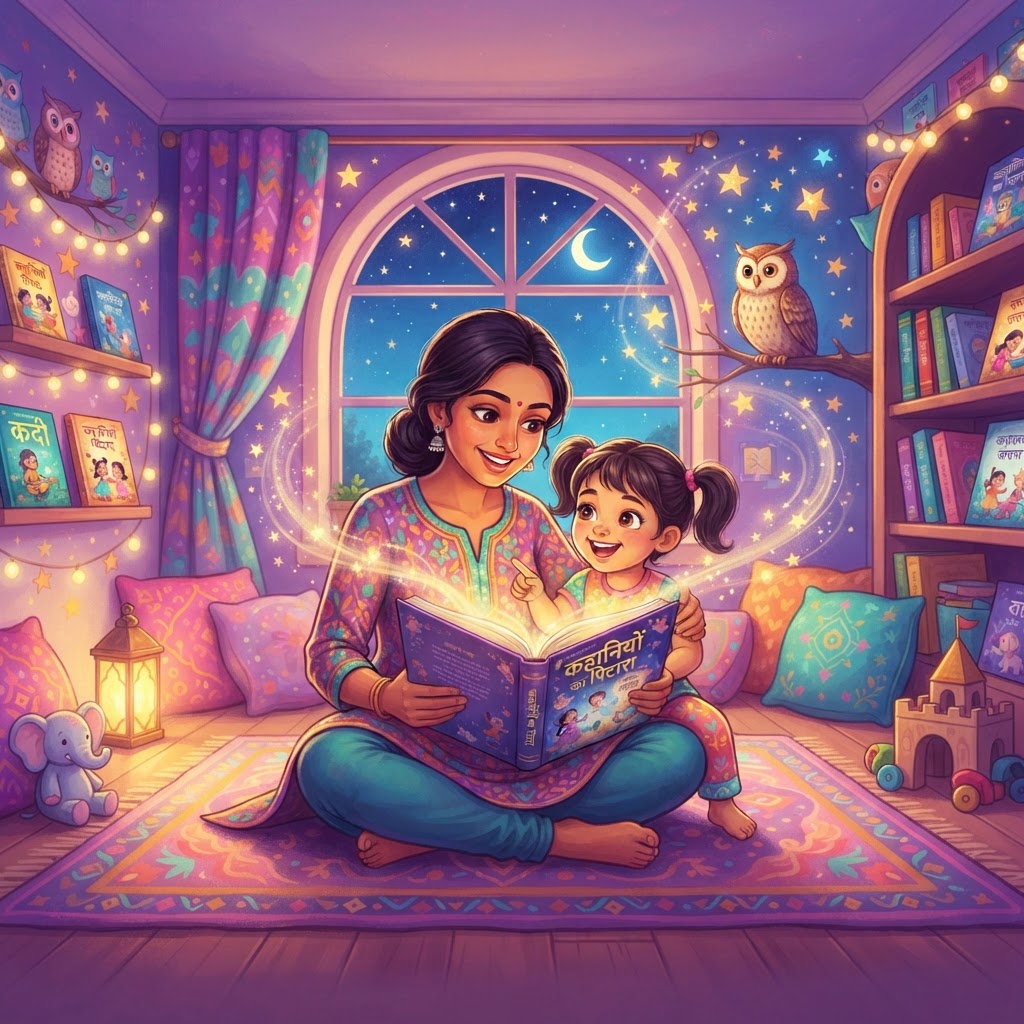
If you are looking for Hindi stories for kids, you are doing more than choosing a fun bedtime activity. You are giving your child a rich mix of language, connection, imagination, and identity. For bilingual families, language learners, and parents who want to keep Hindi alive at home, stories in Hindi can turn everyday reading into a meaningful ritual that supports both learning and belonging.
Hindi story time does not need to be formal or perfect. A short picture book, a made-up bedtime tale, or a personalized story with your child’s name can all work beautifully. What matters most is hearing warm, expressive Hindi in a joyful context, again and again.
Why are Hindi stories for kids worth sharing every day?
Hindi stories for kids are valuable because they build language, relationships, and routine at the same time. Even a few minutes of shared reading in Hindi each day can strengthen vocabulary, listening skills, and emotional connection.
Young children learn language best through repeated, meaningful interaction. When parents or grandparents read Hindi children stories, children hear sentence patterns, common verbs, descriptive words, and family expressions in context. That is far more memorable than isolated vocabulary drills.
Stories also make Hindi feel emotionally safe and enjoyable. A child who hears Hindi during cuddly bedtime moments is more likely to see the language as part of comfort, love, and family identity.
Daily Hindi story time can support:
- Listening comprehension through repeated phrases and predictable plots
- Vocabulary growth through words tied to actions, feelings, and images
- Family bonding through one-on-one reading routines
- Confidence for children who understand more Hindi than they speak
- Heritage language preservation in bilingual or multilingual homes
This is especially helpful for families where English is dominant outside the home. A steady routine of Hindi bedtime stories gives children regular, low-pressure exposure that adds up over time.
How do stories in Hindi support language learning and brain development?
Stories in Hindi support language learning by giving children repeated, meaningful exposure to sounds, grammar, and vocabulary. They may also support broader cognitive skills linked to bilingual development, such as attention control and mental flexibility.
The National Institute on Deafness and Other Communication Disorders explains that children can successfully learn more than one language at the same time. Mixing languages at first is normal, and it is not a sign of confusion. For many children, hearing both Hindi and English simply reflects how bilingual brains organize language in real life.
Research summarized by the American Psychological Association highlights work by scholars such as Ellen Bialystok, whose studies have connected bilingual experience with benefits in executive function and metalinguistic awareness. In simple terms, children who use two languages often become good at noticing how language works.
Stories are especially powerful because they combine several learning supports at once:
- Repetition helps children remember new Hindi words
- Narrative structure teaches sequencing: first, next, then, finally
- Emotion and imagery make language easier to retain
- Conversation after reading builds expressive language
Shared reading also supports healthy development beyond language. Zero to Three emphasizes that responsive back-and-forth interactions help children learn to communicate. When you pause during a story and ask, “Phir kya hua?” or “Tum kya karte?”, you are building thinking and language together.
For practical home use, it helps to keep Hindi reading interactive:
- Point to pictures and name objects in Hindi
- Repeat key phrases in the story
- Ask simple prediction questions
- Let your child retell part of the plot in any language they can manage
Why do Hindi children stories strengthen cultural connection?
Hindi children stories strengthen cultural connection because they carry family values, humor, traditions, and ways of speaking that children may not hear elsewhere. They help children feel that Hindi is not just a “subject,” but a living part of who they are.
A story in Hindi can introduce everyday cultural details naturally: nani’s kitchen, monsoon rain, mango season, festival lights, train journeys, or respectful ways of addressing elders. These details matter. They help children recognize themselves, their relatives, and their wider community in the stories they hear.
For children growing up outside India, stories in Hindi can be one of the most accessible ways to maintain a heritage language. They create bridges across generations, especially when grandparents tell family-style tales or use familiar idioms and lullaby rhythms.
Cultural connection through Hindi stories often includes:
- Family relationships like dadi, nana, bhaiya, didi
- Festivals and traditions in age-appropriate ways
- Moral reflection without sounding preachy
- Regional flavor through food, weather, and daily life
- Identity pride for children navigating multiple cultures
This is also why personalized stories work so well. When a child hears their own name inside a Hindi adventure, the language feels immediate and personal rather than distant.
What are five simple Hindi story ideas children love?
The best Hindi stories for kids are simple, rhythmic, and emotionally clear. Young children do not need complicated plots; they need memorable characters, gentle repetition, and a satisfying ending.
Here are five strong story ideas you can use at home or adapt into personalized tales:
-
चाँद से बात करता खरगोश — The Rabbit Who Talks to the Moon
A curious rabbit asks the moon why it follows him home every night. This works well for toddlers and preschoolers because it uses bedtime imagery, repetition, and wonder. -
जादुई आम का पेड़ — The Magical Mango Tree
A child plants a seed, and each day the tree gives a new surprise: shade, birds, blossoms, and finally sweet mangoes to share. This is great for teaching patience, seasons, and generosity. -
नन्ही तारा और बारिश की पहली बूँद — Little Tara and the First Raindrop
Tara waits for the first monsoon rain and sets off to help tiny animals find shelter. This story is ideal for vocabulary about weather, kindness, and nature. -
बहादुर कबूतर और खोया हुआ रास्ता — The Brave Pigeon and the Lost Path
A pigeon helps forest friends find their way home before dark. It supports themes of problem-solving, courage, and community. -
दादी की रात वाली रेलगाड़ी — Grandma’s Night Train Story
During a train journey, Dadi tells a tale about stars, chai, and a sleepy village station. This story connects beautifully with intergenerational bonding and Indian travel memories.
To make these ideas even more engaging, include:
- Your child’s name
- A familiar place, like home or school
- A favorite animal or toy
- A repeated Hindi phrase they can join in with
- A gentle ending that suits bedtime
If your family is exploring more than one heritage or home language, you may also enjoy guides on Spanish stories for kids and other multilingual reading ideas on the InstaTales blog.
How can parents and teachers use Hindi bedtime stories with InstaTales?
InstaTales makes it easier to create Hindi bedtime stories that feel personal, age-appropriate, and consistent. That can be especially useful for busy parents, mixed-language households, and educators who want more tailored reading material.
A simple way to begin is to create your own personalized bedtime story using your child’s name, age, interests, and preferred themes. You can choose a calm bedtime tone, a playful adventure, or a values-based story, then shape it for Hindi exposure at the level your child understands best.
Here are practical ways to use InstaTales well:
- Start with short, simple Hindi stories for younger children
- Use familiar topics like animals, bedtime, family, or festivals
- Try bilingual support if your child is still building Hindi confidence
- Repeat favorite stories across several nights for deeper learning
- Save the best ones in your story library for easy rereading
If you are not sure where to start, browse story templates for quick ideas that can be adapted into Hindi children stories. Teachers and homeschoolers can also use InstaTales for teachers to build classroom reading prompts, cultural literacy activities, or heritage language assignments.
A few educator tips matter here. Keep the language slightly below frustration level, reread often, and invite children to respond in either Hindi or English. The goal is not perfect performance. The goal is meaningful exposure, comprehension, and confidence.
How can you make Hindi story time feel easy and natural at home?
Hindi story time works best when it feels warm, flexible, and repeatable. You do not need native-level fluency or a long reading session to make it effective.
Try attaching Hindi stories to routines you already have, such as bedtime, after bath time, or weekend mornings. Five to ten minutes is enough for young children when the experience is interactive and consistent.
Helpful strategies include:
- Read the same Hindi bedtime stories for several days in a row
- Act out characters with different voices
- Translate only when needed, not every line
- Let grandparents record favorite stories if they live far away
- Ask one simple follow-up question after reading
If your Hindi feels rusty, be honest and relaxed about it. Children do not need polished performance; they need regular exposure and emotional connection. A warm voice, familiar words, and a shared laugh often matter more than perfect grammar.
Frequently Asked Questions
At what age should I start Hindi stories for kids?
You can start from infancy. Babies benefit from hearing the rhythm and sounds of Hindi, and toddlers quickly begin connecting repeated words with meaning.
Do children get confused by hearing Hindi and English together?
No, this is usually normal bilingual development. Children may mix languages at first, but that often shows flexible learning rather than confusion.
How long should Hindi bedtime stories be?
For toddlers, 3-5 minutes may be enough. Preschool and early elementary children often enjoy 5-10 minute stories, especially if the plot is familiar and interactive.
What if my Hindi pronunciation is not perfect?
That is okay. Consistent, warm exposure still helps, and your confidence will grow with practice. You can keep sentences simple and repeat key words clearly.
Can Hindi children stories help in school settings?
Yes. They can support vocabulary, cultural literacy, listening comprehension, and identity development, especially in bilingual classrooms or heritage language programs. Personalized stories can also increase engagement for reluctant readers.
Ready to Create a Personalized Bedtime Story?
Use our free AI bedtime story generator to create a personalized illustrated story for your child in 30 seconds — no credit card needed.
Popular story types:
Maya Rodriguez
Lead Content Editor & Early Literacy Specialist
Maya is a former early childhood educator and literacy specialist with over a decade of experience helping children develop a love of reading. She leads content at InstaTales, where she writes about the science of storytelling, child development, and how families can use personalized AI stories to build literacy and emotional resilience.
instatales.ai