Multilingual AI Stories for Bilingual Kids
Raising bilingual kids? AI story generators can create stories in 40+ languages. Here's how to use them for language learning and heritage preservation.
✦ Key Takeaways
- •AI can generate stories in multiple languages by using language models trained on large amounts of text across different languages.
- •They are helpful because they increase meaningful language exposure in a format children already love.
- •Research is clear: learning two languages does not confuse children.
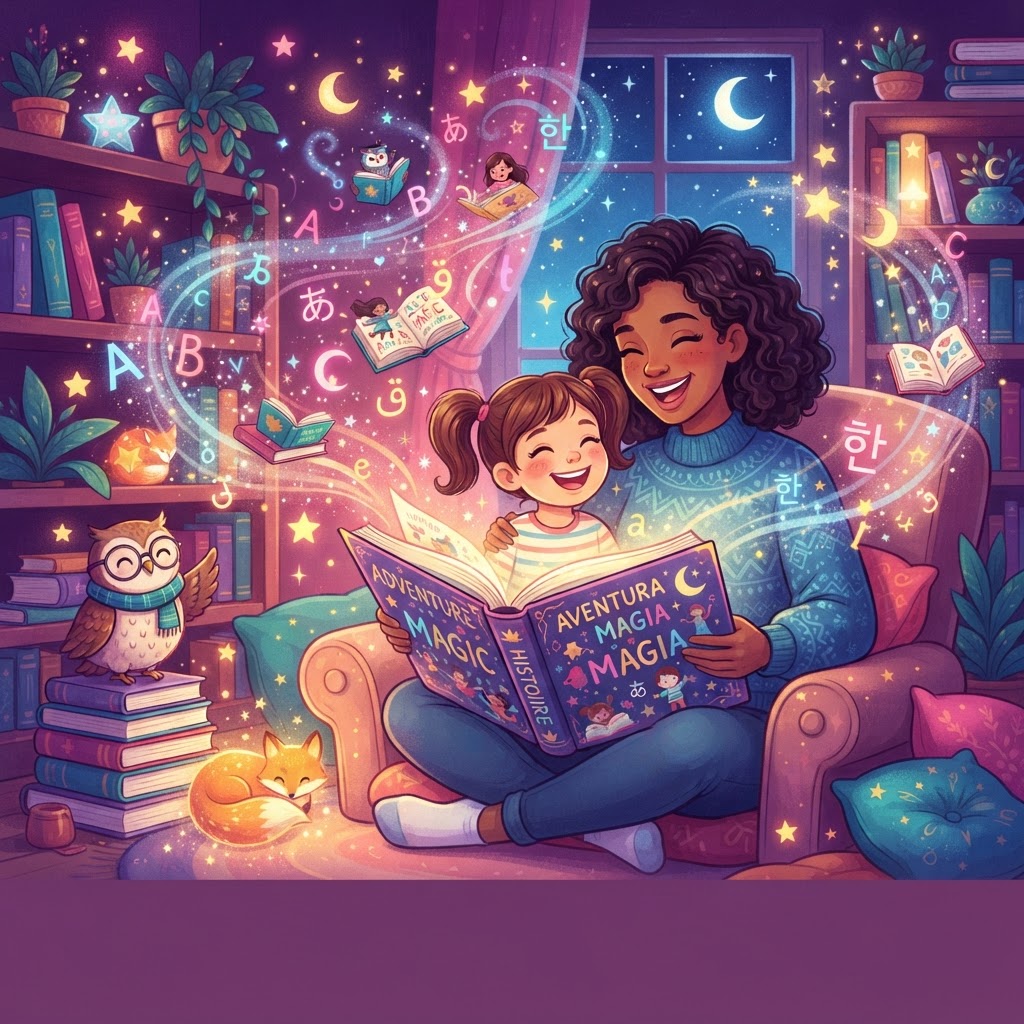
For multilingual families, bedtime can be one of the easiest moments to grow two languages at once. Multilingual AI stories make that easier by turning a child’s interests, family names, and favorite themes into personalized tales in dozens of languages.
That matters because children learn language best through warm, repeated interaction—not through drills alone. When stories feel familiar and joyful, kids are more likely to listen, join in, and remember new words. If you are new to this technology, this guide on how AI story generators work for parents is a helpful place to start.
How can AI generate stories in multiple languages?
AI can generate stories in multiple languages by using language models trained on large amounts of text across different languages. When a parent enters a prompt, the tool predicts natural-sounding sentences in the chosen language and can often adapt the same story for a second language too.
In practice, that means a bilingual story generator can create:
- a story fully in one language
- the same story rewritten in another language
- a dual-language version with alternating paragraphs or repeated lines
- customized vocabulary around family life, school, holidays, or cultural traditions
This is especially useful for families who want AI stories in multiple languages without having to translate every sentence themselves. A parent might ask for “a calming bedtime story in English and Portuguese about a child visiting Grandma’s garden,” and the system can build the plot around that request.
The best results come from clear prompts and quick parent review. AI is powerful, but it can still miss nuance, regional expressions, or age-appropriate phrasing—so it works best as a support tool, not a replacement for your judgment.
Why are multilingual AI stories so helpful for bilingual kids?
They are helpful because they increase meaningful language exposure in a format children already love. A good story gives children vocabulary, sentence patterns, and emotional context all at once.
For many bilingual families, one language naturally gets more daily exposure than the other. That often means the community language grows quickly while the home or heritage language needs extra support. Personalized bedtime stories help balance that gap in a gentle way.
Here is why they work so well:
- Repetition feels natural. Children happily hear favorite stories again and again.
- Personalization boosts attention. Kids listen longer when the story includes their name, pet, or favorite dinosaur.
- Language stays connected to relationships. A story about Abuelo, Po Po, or Nana carries more emotional meaning than a random worksheet.
- Parents save time. A bilingual story generator reduces the work of finding or translating suitable books.
This is also why many families use AI stories as part of a broader reading routine, not as a novelty. If you want to compare digital storytelling with traditional books, this article on AI bedtime stories versus books gives a balanced look.
What does research say about raising children with two languages?
Research is clear: learning two languages does not confuse children. In fact, strong support for the home language can help communication, identity, and long-term learning.
The American Speech-Language-Hearing Association explains that children can successfully learn more than one language at the same time. The Head Start Early Childhood Learning & Knowledge Center also encourages families to keep using their home language, because it supports relationships, belonging, and language development.
A few important takeaways from bilingual education research and practice:
- More exposure matters. Children need regular, meaningful input in each language.
- Code-mixing is normal. Many bilingual children mix languages as part of development.
- Conversation beats passive listening. The Harvard Center on the Developing Child highlights the power of responsive back-and-forth interaction for language growth.
- Identity matters too. Heritage language maintenance helps children stay connected to family stories, values, and culture.
In other words, a story in two languages is not just educational. It can also support emotional security and family connection.
How can parents use dual-language stories at bedtime?
The most effective approach is to keep dual-language stories simple, predictable, and interactive. Children learn more when the story format lowers pressure and invites participation.
A practical bedtime routine might look like this:
- Read the story mostly in the stronger language first.
- Repeat key lines, character names, or emotional words in the second language.
- Pause and let your child answer in either language.
- Re-read favorite stories over several nights.
For different ages, try different formats:
- Ages 1-3: Very short stories with repeated phrases, animal sounds, or bedtime routines.
- Ages 4-6: Simple dual-language pages with repeated sentence patterns.
- Ages 7-10: Longer stories with dialogue, mystery, or adventure, plus follow-up questions.
You can also use a “same story, new language” method. Read the plot in one language on night one, then use a second-language version on night two. Because the child already knows the storyline, they can focus more on new words.
Once you find favorites, save them in your story library so your child can revisit the same characters and language patterns. Re-reading is one of the easiest ways to strengthen comprehension.
How can AI stories help preserve a heritage language?
AI stories can help preserve a heritage language by making that language present in everyday family life. Consistent, enjoyable use matters far more than occasional formal lessons.
Many parents want their child to understand a grandparent, celebrate a cultural holiday, or know family words that do not appear in school books. That is where personalized storytelling shines. You can create stories about:
- family traditions
- hometowns and migration stories
- foods, songs, and celebrations
- grandparents and extended family
- cultural values like hospitality, courage, or respect
This helps children hear the heritage language in meaningful contexts, not just as vocabulary lists. A story about making tamales with Abuela or visiting a village in Punjab is more memorable than isolated word practice.
It is still wise to review the output for tone, spelling, and cultural accuracy. If a language has regional differences, ask a family member to help refine important phrases. AI can open the door, but family voices give the language its heart.
How can multilingual families use InstaTales’ 40+ language support effectively?
The best way to use InstaTales’ 40+ language support is to start with one clear goal and build a repeatable routine around it. That turns story time into consistent language practice instead of a one-time experiment.
A simple system works well:
- Pick one language focus for the week.
- Create your own personalized bedtime story using your child’s name, age, interests, and target language.
- If you want a faster start, use the ready-made story templates.
- Ask for a dual-language format if your child needs support in both languages.
- Save the strongest stories for repeat reading in your story library.
Here is a sample prompt:
“Write a gentle 5-minute bedtime story in English and Arabic for a 5-year-old. Include a moonlit garden, Grandma, and repeated phrases for beginner Arabic learners.”
This kind of prompt gives the AI enough structure to produce language-rich, age-appropriate content. Families can then adjust difficulty, shorten sentences, or ask for more repetition.
In classrooms, tutoring, or homeschool settings, multilingual storytelling can also support dual-language learners and cross-cultural activities. Teachers who want structured classroom ideas can explore InstaTales for teachers.
Frequently Asked Questions
Are AI stories in multiple languages accurate enough for children?
Usually, yes—for everyday reading support. But parents should still review wording, especially for heritage languages, idioms, or beginner readers.
Will hearing two languages in one story confuse my child?
No. For most children, hearing two languages in a familiar story is normal and manageable, especially when the plot is simple and the parent is responsive.
What is the best format for a bilingual story generator?
The best format depends on age. Younger children often do well with short repeated phrases in both languages, while older children can handle side-by-side or alternating paragraphs.
How often should we read in the heritage language?
A little consistency goes a long way. Even 10 minutes a day or a few nights each week can make a difference when the stories are engaging and repeated.
Can multilingual AI stories replace printed bilingual books?
No—they work best alongside books, conversation, songs, and family storytelling. AI adds flexibility and personalization, while printed books offer trusted language models and shared reading rituals.
Ready to Create a Personalized Bedtime Story?
Use our free AI bedtime story generator to create a personalized illustrated story for your child in 30 seconds — no credit card needed.
Popular story types:
Maya Rodriguez
Lead Content Editor & Early Literacy Specialist
Maya is a former early childhood educator and literacy specialist with over a decade of experience helping children develop a love of reading. She leads content at InstaTales, where she writes about the science of storytelling, child development, and how families can use personalized AI stories to build literacy and emotional resilience.
instatales.ai