Polish Stories for Kids: Benefits, Ideas & Tips
Delightful Polish stories for kids — perfect for bilingual families, language learners, and heritage language preservation.
✦ Key Takeaways
- •Polish stories for kids are valuable because they build language, identity, and connection at the same time.
- •Stories in Polish support bilingual development by giving children repeated, meaningful exposure to the language in a low-pressure way.
- •The best Polish children stories match a child’s age, attention span, and language level.
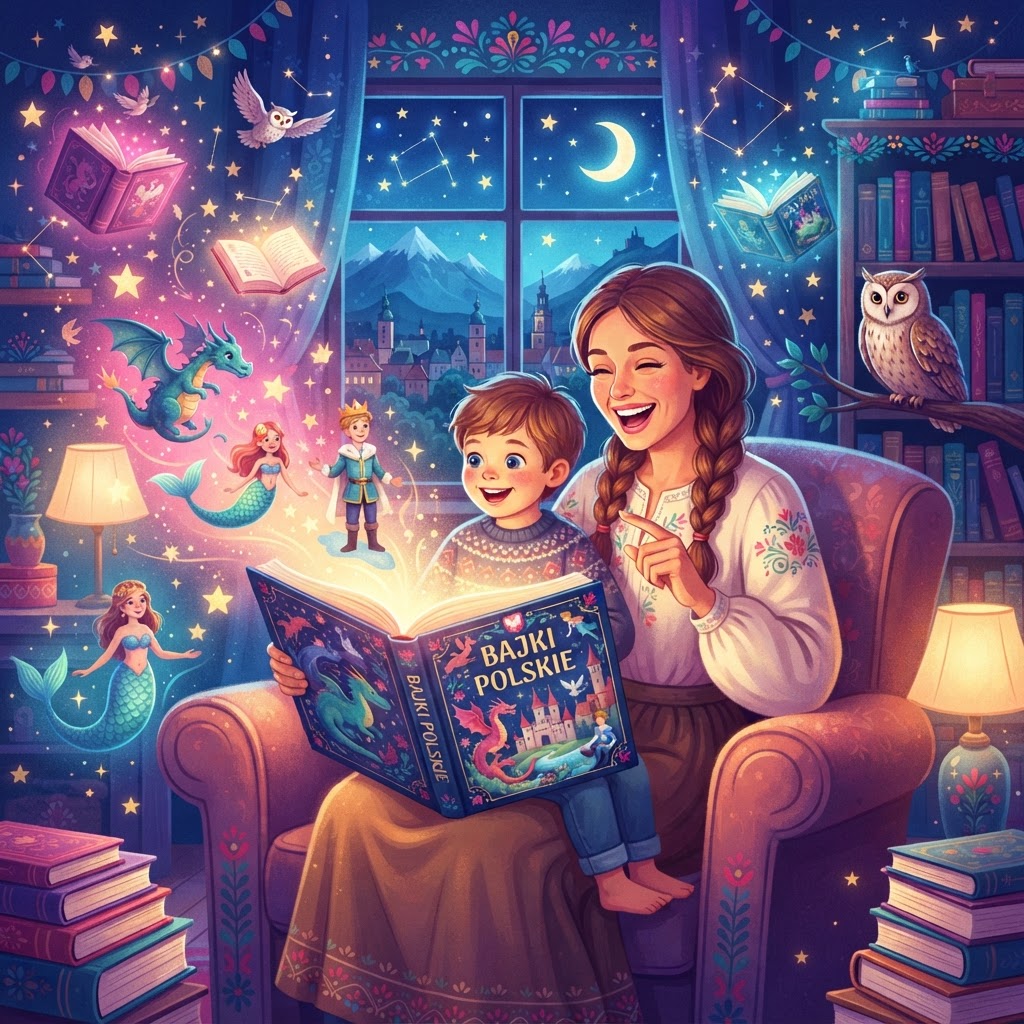
For many families, Polish stories for kids are about more than entertainment. They are a simple, comforting way to pass on language, family traditions, and the feeling of belonging.
If you are raising a bilingual child, supporting a new language learner, or keeping a heritage language alive, story time is one of the best places to start. Children learn language through warm, repeated, meaningful interaction, and a good story creates exactly that.
Why are Polish stories for kids so valuable?
Polish stories for kids are valuable because they build language, identity, and connection at the same time. A child who hears stories in Polish is not just learning words. They are hearing rhythm, humor, family expressions, and cultural references that make the language feel alive.
Shared reading supports early literacy, attention, and emotional bonding. The American Academy of Pediatrics has long encouraged reading aloud from infancy because it strengthens language development and parent-child relationships.
For Polish-speaking families, that value goes even deeper. Polish children stories can help children:
- hear natural grammar and sentence patterns
- learn everyday vocabulary in context
- connect with grandparents and relatives
- understand Polish traditions, places, foods, and folklore
- feel proud of their heritage
Even short Polish bedtime stories can become powerful memory anchors. A familiar phrase, a silly character, or a repeated line often stays with children for years.
How do stories in Polish support bilingual development?
Stories in Polish support bilingual development by giving children repeated, meaningful exposure to the language in a low-pressure way. They help children hear vocabulary, pronunciation, and sentence structure while staying emotionally engaged.
This matters because children do not learn language best from drills alone. They learn through interaction, repetition, and context. A story offers all three. When an adult pauses, points to pictures, asks simple questions, or repeats favorite lines, the child is actively building comprehension.
Research supports this approach. The American Speech-Language-Hearing Association notes that learning more than one language does not confuse children. In fact, strong home-language support can help overall communication and learning.
Reading together also supports brain development. The Harvard Center on the Developing Child describes how “serve and return” interactions, such as back-and-forth conversation during reading, help build strong brain architecture.
Bilingual education research is also encouraging. Studies led by psychologist Ellen Bialystok have linked bilingual experience with strengths in areas like attention control and cognitive flexibility. That does not mean every bilingual child will show the same advantage in the same way, but it does reinforce the idea that using two languages is a healthy and meaningful part of development.
In practical terms, stories in Polish help children:
- map sound to meaning
- notice repeated language patterns
- build listening stamina
- switch between languages more comfortably
- associate Polish with comfort, fun, and closeness
What kinds of Polish children stories work best at different ages?
The best Polish children stories match a child’s age, attention span, and language level. Younger children usually need repetition and simple actions, while older children can enjoy richer plots, humor, and gentle suspense.
A useful rule is to choose stories that feel slightly easy, not difficult. If a child understands most of the story, they can relax and absorb the new parts naturally.
Here is a simple age guide:
- Ages 1-3: very short stories, rhyme, repetition, animal sounds, bedtime routines
- Ages 3-5: simple adventures, family stories, everyday themes, clear emotions
- Ages 5-7: folk-tale elements, problem-solving, magical helpers, longer dialogue
- Ages 7-10: chapter-style stories, history-inspired tales, mystery, humor, and richer vocabulary
For bedtime, keep the tone calm and reassuring. For daytime reading, you can be more playful and adventurous. Many families find it helpful to mix classic tales, everyday family stories, and personalized stories where the child becomes the main character.
What are five Polish story ideas children will ask for again?
The best story ideas are simple, warm, and easy to personalize. Children often love stories with animals, food, family, gentle magic, and places they can picture clearly.
Here are five engaging ideas for Polish stories for kids:
-
Mały Jeż i Wielki Las
A little hedgehog gets separated from his berry basket and meets helpful forest friends. This story works well for young children because it repeats place words, animal names, and simple problem-solving. -
Smok z Krakowa, Który Nie Lubił Ryku
A friendly dragon from Kraków does not want to be scary. Instead, he wants to learn music, bake bread, or help children cross the market square. This is a fun way to introduce Polish folklore with a gentle twist. -
Zosia i Mówiące Pierogi
Zosia helps in the kitchen when the pierogi start giving silly advice. Food-based stories are wonderful for heritage language learning because they connect words to family routines and sensory memories. -
Bocian, Który Szukał Wiosny
A stork returns to Poland too early and goes on a journey to find signs of spring. This idea brings in seasons, weather, nature vocabulary, and the familiar symbol of the bocian. -
Księżyc nad Bałtykiem
A child on holiday by the Baltic Sea talks to the moon each night and learns small lessons about courage, patience, and home. This makes a lovely choice for calmer Polish bedtime stories.
These themes also work beautifully if you want to create your own personalized bedtime story. You can adapt the child’s name, hometown, favorite animal, or family tradition so the story feels instantly meaningful.
If your family enjoys multilingual reading, you can also explore similar heritage-language ideas, such as these Hebrew story ideas, and compare what themes your child responds to best.
How can families use stories in Polish at home every day?
Families can use stories in Polish every day by keeping the routine short, warm, and predictable. Ten minutes of regular story time usually helps more than one long session once a week.
You do not need to create a perfect language lesson. Instead, aim for frequent, enjoyable exposure. Children learn more when Polish feels emotionally safe and familiar.
Try these practical strategies:
- read one short story in Polish before bed
- repeat favorite books or stories often
- pause to name pictures and objects
- act out key words with gestures
- let children answer in Polish, English, or both
- reuse story phrases during the day
For example, if a story includes the moon, forest, or pierogi, mention those words again later. This kind of natural repetition strengthens memory.
It also helps to keep favorite stories organized. Saving re-readable stories in your story library makes it easier for children to revisit familiar language patterns, which is especially helpful for bilingual development.
If you are a teacher, tutor, or heritage-language program leader, story-based routines can also support vocabulary themes, speaking practice, and writing prompts. InstaTales for teachers can be useful for classroom reading, small-group activities, or take-home family literacy tasks.
How can you use InstaTales to create personalized Polish stories?
InstaTales makes it easier to create personalized stories in Polish that match your child’s age, interests, and language level. This is especially helpful when it is hard to find the exact mix of simple language, cultural relevance, and bedtime-friendly tone.
With InstaTales, you can start with child-friendly prompts and build a story around details your child already loves. That might include:
- their name or nickname
- a favorite animal
- grandparents in Poland
- a city like Warszawa, Gdańsk, or Kraków
- familiar foods like pierogi or makowiec
- a calm bedtime setting
- a bilingual format if needed
If you want a faster start, browse ready-made story templates and adapt them into stories in Polish. This can save time while still giving you room to personalize the plot and vocabulary.
A practical way to use InstaTales is to begin with simple Polish, then gradually add richer phrases as your child grows. For younger children, choose repetition and predictable structure. For older children, ask for longer plots, folk-tale themes, or school-related adventures.
Personalized stories are also helpful for children who resist reading in the heritage language. When the hero has their name, their pet, or their favorite place, motivation often rises quickly. That makes Polish stories for kids feel less like practice and more like play.
Frequently Asked Questions
At what age can children start listening to Polish stories?
Children can start from infancy. Even babies benefit from hearing the sound and rhythm of Polish through short, soothing stories and songs.
Do parents need to be fluent to read stories in Polish?
No. A warm, consistent attempt still helps, especially if you use simple text, audio support, or repeated phrases. Confidence matters less than regular exposure and shared enjoyment.
Should I translate every word during Polish story time?
Not usually. It is better to keep the story flowing and explain only key words when needed. Too much translating can interrupt attention and reduce enjoyment.
Are Polish bedtime stories good for bilingual families?
Yes. Polish bedtime stories are excellent for bilingual families because bedtime is calm, predictable, and emotionally warm. That makes children more open to hearing and remembering language.
Can teachers use stories in Polish in the classroom?
Yes, especially in bilingual, heritage-language, or world-language settings. Short personalized stories can support vocabulary, comprehension, speaking practice, and family engagement.
How often should we read stories in Polish?
Daily is ideal, but consistency matters more than length. Even 5-10 minutes a day can make a real difference over time.
Ready to Create a Personalized Bedtime Story?
Use our free AI bedtime story generator to create a personalized illustrated story for your child in 30 seconds — no credit card needed.
Popular story types:
Maya Rodriguez
Lead Content Editor & Early Literacy Specialist
Maya is a former early childhood educator and literacy specialist with over a decade of experience helping children develop a love of reading. She leads content at InstaTales, where she writes about the science of storytelling, child development, and how families can use personalized AI stories to build literacy and emotional resilience.
instatales.ai