Preparing Kids for the First Day of School With Stories
Prepare your child for the first day of school with stories that demystify the experience and build confidence. Tips, story ideas, and reading strategies.
✦ Key Takeaways
- •Stories help because they turn an unknown experience into a predictable sequence.
- •Before the first day, talk about what school will look like, what feelings may come up, and what your child can do when they feel unsure.
- •At drop-off, children need calm confidence more than long explanations.
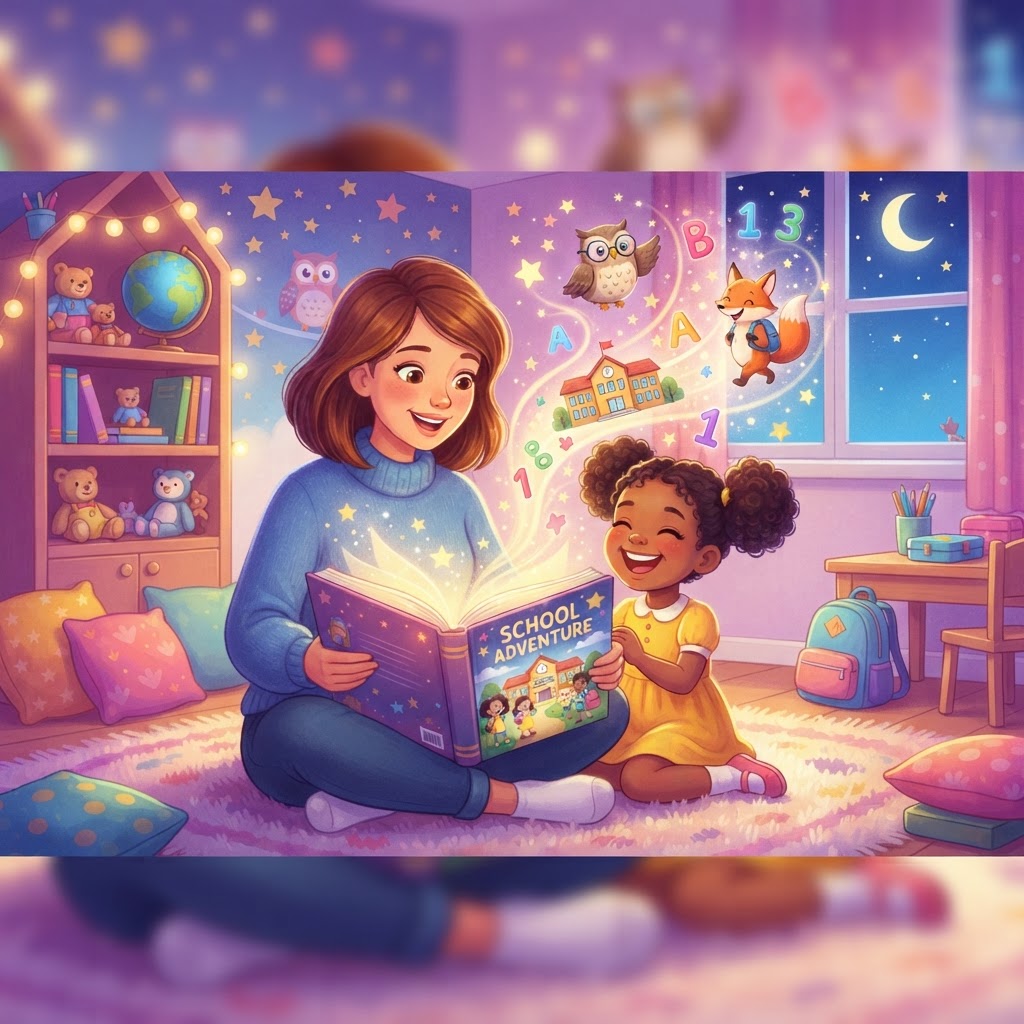
The first day of school can feel big, exciting, and a little scary for children and parents alike. One of the simplest ways to make it feel manageable is through stories. A good story helps children picture what will happen, name their feelings, and practice coping before the real moment arrives.
For families preparing kids for the first day of school, stories work like emotional rehearsal. They make the unfamiliar feel familiar. Whether you read classic first day of school children books, tell your own family stories, or create a personalized adventure, the goal is the same: help your child feel safe, capable, and understood.
Why do stories help children prepare for the first day of school?
Stories help because they turn an unknown experience into a predictable sequence. When children know what might happen next, their brains and bodies often feel calmer.
Young children learn through repetition, imagination, and play. Reading the first day of school preparation stories gives them a chance to “try on” the experience before living it. A character who worries about drop-off, misses home, or makes one new friend shows children that big feelings are normal and manageable.
This matters because transitions can be stressful, especially for children ages 3-7. Organizations like the American Academy of Pediatrics, the CDC, and the Harvard Center on the Developing Child all emphasize the value of routines, supportive relationships, and emotional coaching during new experiences.
Stories also help parents find the right language. Instead of saying, “Don’t be scared,” a story lets you say, “This character felt nervous too. What helped them?”
If you want more age-specific ideas, our guide to starting school through stories offers helpful next steps.
What should you talk about before the first day of school?
Before the first day, talk about what school will look like, what feelings may come up, and what your child can do when they feel unsure. Keep it simple, concrete, and reassuring.
Children usually do better when they know the basic plan. A few days before school starts, talk through the day in order:
- waking up and getting dressed
- eating breakfast
- traveling to school
- meeting the teacher
- putting belongings away
- story time, play, lunch, and rest
- pick-up and coming home
Use story language to make this feel approachable. You might say, “In our first day of school story, your backpack hangs on a hook, you meet your teacher, and I come back after school.”
It also helps to name feelings ahead of time:
- “You might feel excited.”
- “You might feel shy.”
- “You might feel happy and nervous at the same time.”
That last sentence is especially powerful. According to the National Association for the Education of Young Children, validating mixed emotions supports healthy adjustment during transitions.
A few practical conversation starters:
- “What do you think school will look like?”
- “What part sounds fun?”
- “What part feels tricky?”
- “Who can help you at school if you need something?”
Alongside your own storytelling, you can read classic the first day of school children books and compare them to your child’s real school. That helps separate fantasy from reality while still using imagination as support.
What can you say during the first day of school drop-off?
At drop-off, children need calm confidence more than long explanations. The best message is: “You are safe, your teacher will help you, and I will come back.”
Many parents understandably overtalk when a child looks worried. But a short, predictable script works better than repeated reassurance. Choose one goodbye routine and repeat it:
- hug
- one short phrase
- goodbye wave
- leave confidently
Try language like this:
- “You are safe. Your teacher will take care of you.”
- “After snack, play, and story time, I’ll be back.”
- “It’s okay to feel nervous. You can hold your teacher’s hand.”
This is where the first day of school story becomes useful in real time. If you have already read a story about a character managing drop-off, remind your child of it: “Remember how Maya took three deep breaths and waved? Let’s do that too.”
If your child cries, that does not mean you handled it badly. It means they are having a hard transition. Stay warm, stay brief, and trust the routine.
What should you talk about after the school day ends?
After school, focus on connection before questions. Children are often tired, hungry, and still processing the day.
Instead of asking, “How was school?” try more specific prompts that are easier to answer:
- “What was one thing you did first?”
- “Who sat near you?”
- “What made you smile?”
- “Was anything hard today?”
- “What should we put in tomorrow’s story?”
This after-school conversation matters because it helps children organize their memories. It also gives you clues about what needs support next. If your child says lunchtime felt lonely or the bathroom felt confusing, that becomes the theme of tomorrow night’s story.
Keep your response balanced. Celebrate wins, but don’t rush past hard parts. You can say, “That sounds tricky. I’m glad you told me. Let’s make a story where your school self figures it out.”
If your child needs extra help with school nerves, our collection of first-day-of-school story ideas can give you more examples to build on.
Which five story ideas help children cope with the first day of school?
The best story ideas model a specific challenge and a specific coping tool. That combination helps children move from vague worry to practical confidence.
1. The shy child who makes one connection
A child feels quiet at school but notices another child building with blocks. The story shows that friendship can start with one small comment, not a big social leap.
2. The child who worries at drop-off
A parent and child create a goodbye ritual: hug, wave, and a “see you after story time” phrase. The child still feels sad, but the routine helps them settle.
3. The child who gets lost in the routine
A child forgets where to put their backpack or when to line up. A kind teacher helps, and the story shows that school is a place to learn routines, not a place where children must already know everything.
4. The child who misses home
A child carries a small “heart reminder” from home, like a drawn heart in their pocket. They learn that missing home and enjoying school can happen at the same time.
5. The child who discovers one brave moment
A child feels nervous all morning but raises their hand once, tries the playground slide, or asks for help. The story ends by showing that bravery often looks small and quiet.
These themes work well whether you read published books or make your own. If you want a personalized version, you can create your own personalized bedtime story with your child’s name, school details, favorite comfort object, and the exact challenge they are facing.
How can stories become conversation starters instead of just bedtime reading?
Stories become conversation starters when you pause, personalize, and connect the character’s experience to your child’s life. Reading alone is helpful; reading and talking is even better.
Try this simple pattern:
- Before reading: “What do you think this story will be about?”
- During reading: “How do you think the character feels here?”
- After reading: “What would you do if that happened at your school?”
You can also invite play after reading. Ask your child to act out the classroom, line up stuffed animals for circle time, or practice saying hello to a teacher. This kind of pretend play strengthens comprehension and emotional readiness.
A few strong conversation prompts:
- “What was the hardest part for the character?”
- “Who helped them?”
- “What could they say if they felt scared?”
- “What do you want your own school story to include?”
For families who like building routines around reading, saving favorite stories in your story library makes it easy to revisit the same coping themes night after night.
How can you create a personalized first-day-of-school story with InstaTales?
A personalized story works best when it reflects your child’s real worries, real strengths, and real school day. That is exactly where InstaTales can be especially useful.
Start with a simple setup:
- your child’s name and age
- the name of their school or teacher
- what excites them
- what worries them
- one coping strategy you want to model
For example, you might create a story about a child who worries at drop-off but feels better after taking three breaths, finding the reading corner, and seeing that pick-up happens right on time. Personal details make the story feel believable, which increases its comfort value.
InstaTales can also help you adapt the story over several nights:
- Night 1: what school will look like
- Night 2: how to handle goodbye
- Night 3: how to ask a teacher for help
- Night 4: how to remember one good part of the day
If you want a faster starting point, explore the ready-made story templates. And if you want more family reading support, you can browse the InstaTales blog for additional transition topics and story-based parenting tips.
The most effective personalized stories are not perfect-fantasy stories where nothing feels hard. They are honest, hopeful stories where something feels hard and the child learns they can handle it.
Frequently Asked Questions
When should I start reading first day of school stories?
Start about one to two weeks before school begins. That gives your child enough repetition to build familiarity without making the event feel overly intense.
What if my child still cries at drop-off after reading stories?
Stories help, but they do not remove all big feelings. If your child cries, stay calm, keep your goodbye routine brief, and trust that consistency usually helps children settle over time.
Are personalized stories better than regular school books?
Both can be helpful. Published books offer strong models and language, while personalized stories feel especially relevant because they reflect your child’s exact school, worries, and strengths.
How often should we reread the same first day of school story?
As often as your child wants. Repetition is comforting for young children because it makes the emotional and practical steps feel familiar and predictable.
What should I do if my child says they are scared of school?
Acknowledge the feeling first, then get specific. Ask what part feels scary, read a story that matches that concern, and practice one coping tool your child can use at school.
Ready to Create a Personalized Bedtime Story?
Use our free AI bedtime story generator to create a personalized illustrated story for your child in 30 seconds — no credit card needed.
Popular story types:
Maya Rodriguez
Lead Content Editor & Early Literacy Specialist
Maya is a former early childhood educator and literacy specialist with over a decade of experience helping children develop a love of reading. She leads content at InstaTales, where she writes about the science of storytelling, child development, and how families can use personalized AI stories to build literacy and emotional resilience.
instatales.ai