The First Day of School Stories for Kids: A Parent Guide
Going through the first day of school? Stories can help your child process the transition. Here's how to use storytelling to support your child.
✦ Key Takeaways
- •The first day of school is hard because children are being asked to handle separation, new routines, new people, and sensory overload all at once.
- •Stories help by giving children a safe way to rehearse, understand, and emotionally process what school might feel like.
- •The most effective stories are specific, reassuring, and personalized.
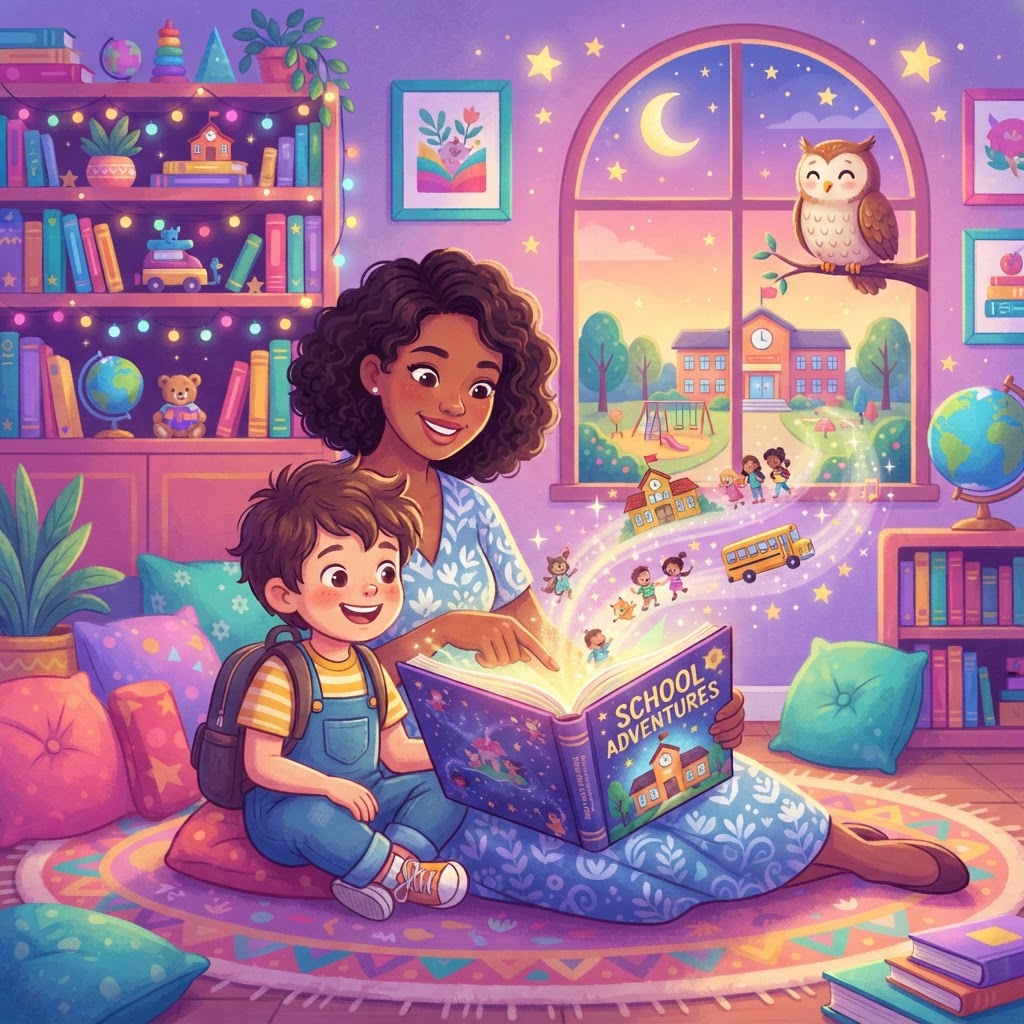
The first day of school can bring excitement, worry, clinginess, tears, or all four at once. That is why the first day of school stories for kids can be so powerful: they make an unfamiliar experience feel more predictable, safe, and manageable.
Whether your child is starting preschool, kindergarten, or a new classroom, stories about the first day of school help them picture what is coming before they have to live it. For families who want a bigger transition plan, our guide on how to prepare for starting school through stories can help too.
Why is the first day of school such a big transition for children?
The first day of school is hard because children are being asked to handle separation, new routines, new people, and sensory overload all at once. Even children who are excited may still feel stressed, because their brain and body are adjusting to change.
Young children rely on predictability. When the usual morning, caregiver, and home environment suddenly shift, they may show that stress through tears, tummy aches, silence, irritability, or extra clinginess. The Center on the Developing Child at Harvard University explains that stable, responsive relationships help buffer stress in early childhood, which is why your calm presence matters so much during this transition.
Developmentally, this makes sense. Attachment research from John Bowlby and Mary Ainsworth showed that children cope better with novelty when they feel securely connected to a trusted adult. On the first day of school, that connection is still there, but your child may need help remembering it.
A few common reasons school transitions feel big are:
- Separation anxiety: “What if you don’t come back?”
- Uncertainty: “What will happen next?”
- Social pressure: “Will anyone play with me?”
- Sensory change: noise, bright rooms, busy schedules
- New expectations: sitting, listening, lining up, sharing
If you are helping kids with the first day of school, it helps to remember that nerves are not a sign of failure. They are a normal response to a major developmental step.
How can stories help kids with the first day of school?
Stories help by giving children a safe way to rehearse, understand, and emotionally process what school might feel like. A good story does not remove all anxiety, but it can make the experience feel familiar enough to face.
This is one reason educators and therapists often use bibliotherapy and social stories. Carol Gray’s Social Stories approach, for example, is well known for helping children prepare for new situations by making expectations more concrete.
For school transitions, stories do three especially helpful things:
-
They normalize feelings.
A child who hears, “Maya felt nervous when she saw the classroom door,” learns that worry is not strange or shameful. -
They model coping skills.
Stories can show a character taking a deep breath, holding a comfort object, asking the teacher for help, or remembering that a parent always comes back. -
They help children process after the fact.
Reading a story after the school day lets children compare the character’s experience with their own and talk about what felt easy or hard.
This is why stories about the first day of school work best when they are emotionally honest. Children do not need a perfect “no one was ever scared” story. They need a believable one where feelings are big, support is available, and things get easier.
If you want more school-transition ideas, you may also like these starting school story ideas for parents.
What makes first day of school stories for kids especially effective?
The most effective stories are specific, reassuring, and personalized. Children connect better when the story sounds like their world, not a generic lesson.
A strong first day story usually includes:
- your child’s name or a similar character
- the real setting: preschool, kindergarten, new class, new teacher
- one clear worry, such as saying goodbye or making friends
- one or two practical coping tools
- a calm, hopeful ending that feels realistic
Personalization matters because it turns the story into a rehearsal. When a child hears about a classroom cubby, a lunchbox, a teacher greeting them, and a parent returning at pickup, their brain gets a preview of the day. That preview reduces uncertainty.
Repetition matters too. Reading the same story for several nights is not “too much.” According to Zero to Three, repeated, responsive interactions help young children build understanding and regulation. Familiar stories create that same kind of comfort.
If you want to create your own personalized bedtime story for this exact moment, or start with ready-made story templates, keep it simple and child-specific.
Which stories about the first day of school work best?
The best the first day of school stories for kids match the child’s biggest worry. You do not need dozens of stories; you need the right kind of story for the feeling your child is carrying.
1. The goodbye-and-return story
This story is best for children who fear separation. The plot centers on a loving goodbye, a small ritual like a wave at the window, and a clear reunion at pickup time.
The emotional message is: “Grown-ups leave, and they come back.” For many children, that is the most important first-day lesson.
2. The classroom preview story
This story walks through the day step by step: arriving, hanging up a bag, meeting the teacher, circle time, snack, play, and home time. It is ideal for children who get anxious when they do not know what comes next.
The message is: “School has a rhythm, and I can learn it.” Predictability lowers stress.
3. The brave-but-nervous hero story
This story works well for children who think being scared means they cannot be brave. The character feels shaky, misses home for a moment, and still does the next small thing.
The message is: “Brave does not mean fearless.” It means coping, one step at a time.
4. The friend-finding story
This story is helpful for children worried about social connection. The character does not instantly make a best friend; instead, they start with one simple interaction such as sharing crayons, sitting near someone, or asking, “Can I play too?”
The message is: “Friendship often starts small.” That feels more realistic and less pressuring.
5. The after-school retelling story
This is a powerful option after day one. The story mirrors what really happened, including the hard parts, and gently reframes the child as capable.
The message is: “You did something new, and your story is worth telling.” This kind of retelling helps children integrate the experience instead of carrying it around as a blur of stress.
How can you prompt InstaTales for stories about the first day of school?
The best prompt is specific about your child’s age, worries, school setting, and the emotional outcome you want. In other words, the more the story sounds like your child’s real world, the more useful it becomes.
A simple prompt formula is:
- Child’s name and age
- Type of school or class
- Big feeling or worry
- Preferred comfort strategy
- Tone and length
- Ending you want
Here are a few examples you can use or adapt:
- “Write a gentle bedtime story for a 4-year-old named Leo about his first day of preschool. He is worried about saying goodbye to Dad. Include a kind teacher, snack time, one new friend, and a happy reunion at pickup.”
- “Create a reassuring first day of kindergarten story for a 5-year-old who feels shy in noisy rooms. Use simple language, show deep breaths and asking the teacher for help, and end with the child feeling proud.”
- “Write a story about a 7-year-old starting a new school after moving house. Focus on feeling nervous, finding the classroom, and making one small connection with a classmate.”
Once you make a story, save favorites in your story library so you can reread them during the first week. Repetition is often where the comfort really builds.
How should parents read together during the school transition?
The most helpful way to read is calmly, repeatedly, and interactively. Your goal is not to talk your child out of their feelings; it is to help them feel understood and prepared.
Try these practical tips:
-
Start a few days before school begins.
Do not wait until the night before if you can help it. -
Read the same story more than once.
Familiarity is soothing, especially for younger children. -
Pause and name emotions.
Say, “I notice the character felt wobbly at drop-off. Have you ever felt like that?” -
Practice one coping phrase.
Examples: “My grown-up comes back,” “I can ask for help,” or “I can be brave and nervous.” -
Keep the story realistic.
Avoid promising a perfect day. Instead, show that hard moments can pass. -
Use stories after the first day too.
A child may process the transition more deeply after it actually happens.
The American Academy of Pediatrics’ HealthyChildren.org also recommends consistent routines and calm goodbyes for school transitions. Brief, confident drop-offs usually work better than long, uncertain ones.
One final note: if your child is facing several big changes at once, school may not be the only stressor. Stories can also support children through transitions like welcoming a new sibling or moving to a new home.
Frequently Asked Questions
When should I start reading first day of school stories to my child?
Ideally, start 3 to 7 days before school begins. That gives your child time to absorb the routine and revisit the story without feeling rushed.
What if my child gets more upset when we read stories about school?
That can still be helpful, because the story may be bringing hidden worries to the surface. Keep the tone calm, validate the feeling, and choose shorter, gentler stories with a reassuring ending.
Are personalized stories better than general school stories?
Often, yes. Personalized stories feel more relevant because they include your child’s real concerns, which makes the coping practice more concrete and memorable.
Can stories help older children on the first day of school too?
Yes. Older children may not want very simple reassurance, but they still benefit from stories that normalize nerves, model confidence, and help them imagine success in a new setting.
How long should a first day of school story be?
For toddlers and preschoolers, aim for 3 to 5 minutes. For children in early elementary school, 5 to 10 minutes is usually enough to stay focused without overwhelming them.
What if my child’s first day does not go well?
Use that experience as material for the next story. A gentle retelling can help your child process what happened, notice what they managed, and feel more ready for tomorrow.
Ready to Create a Personalized Bedtime Story?
Use our free AI bedtime story generator to create a personalized illustrated story for your child in 30 seconds — no credit card needed.
Popular story types:
Maya Rodriguez
Lead Content Editor & Early Literacy Specialist
Maya is a former early childhood educator and literacy specialist with over a decade of experience helping children develop a love of reading. She leads content at InstaTales, where she writes about the science of storytelling, child development, and how families can use personalized AI stories to build literacy and emotional resilience.
instatales.ai