Welcoming a New Sibling Stories for Kids
Going through welcoming a new sibling? Stories can help your child process the transition. Here's how to use storytelling to support your child.
✦ Key Takeaways
- •Welcoming a new sibling can feel hard because children thrive on routine, attention, and knowing their place in the family.
- •Stories help by normalizing emotions, modeling coping skills, and giving children a safe place to process change.
- •The best stories are specific, reassuring, and emotionally honest.
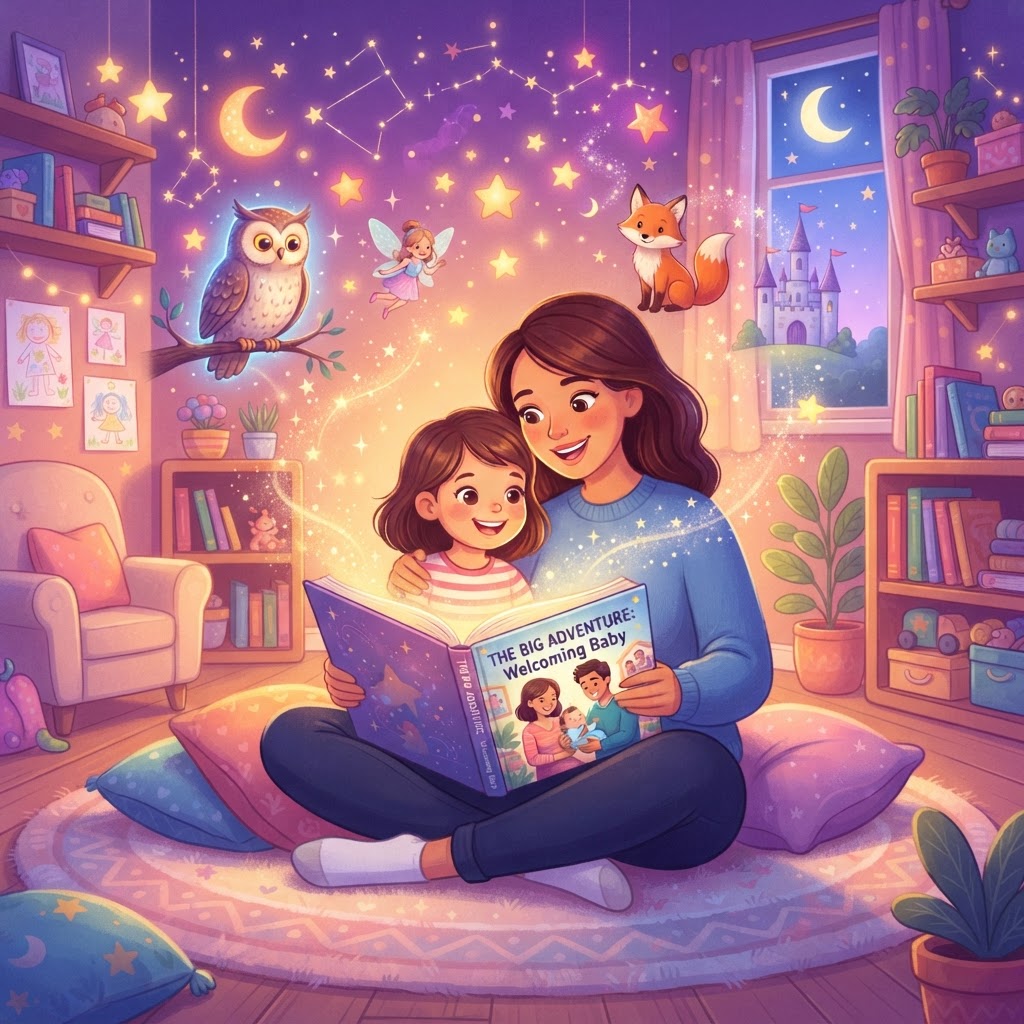
A new baby often brings excitement, but for a young child it can also bring worry, jealousy, and big questions. That is why welcoming a new sibling stories for kids can be so helpful: stories give children a safe way to explore change before, during, and after the baby arrives. When used thoughtfully, they can support emotional security, build empathy, and make the transition feel more predictable.
Parents often look for practical ways of helping kids with welcoming a new sibling, and storytelling is one of the gentlest tools available. Like starting school stories or a moving house story guide, sibling stories help children rehearse a life change in manageable pieces.
Why can welcoming a new sibling feel hard for children?
Welcoming a new sibling can feel hard because children thrive on routine, attention, and knowing their place in the family. A new baby changes all three at once, even in loving homes.
Young children are still developing emotional regulation. They may not have the words to say, “I’m worried you’ll love the baby more,” so those feelings come out as clinginess, tantrums, sleep changes, or sudden “babyish” behavior. This is normal. The American Academy of Pediatrics notes that preparation, reassurance, and one-on-one time can ease the adjustment.
Development matters too. Toddlers think concretely, so “the baby is coming in a few months” means very little. Preschoolers can imagine more, but they often fill in gaps with fears. School-age children may understand more facts, yet still worry about fairness, responsibility, or losing special time with parents.
Children also read adults closely. If the home feels busy, tired, or tense, kids notice. According to the CDC’s guidance on child development, predictable routines and responsive relationships are key supports during change. Stories work well because they protect both: they create a calm ritual and open a safe conversation.
How do stories help children with welcoming a new sibling?
Stories help by normalizing emotions, modeling coping skills, and giving children a safe place to process change. In other words, stories about welcoming a new sibling let children “practice” the transition before they fully live it.
First, stories normalize mixed feelings. A child who hears about a character feeling excited one moment and cross the next learns, “I’m not bad. I’m human.” This is especially useful for children who feel shame about jealousy.
Second, stories model what to do. A good sibling story shows concrete behaviors: asking for a cuddle, helping fetch a nappy, taking a break when the baby cries, or using words like “I miss my mummy time.” Children learn best from repeated examples, especially in calm moments.
Third, stories help children process events through play and narrative. Child development experts at ZERO TO THREE emphasize that relationships and back-and-forth interaction help children make sense of big feelings. Shared reading creates exactly that kind of interaction. When you pause to ask, “How do you think Max feels here?” your child gets to sort feelings with your support.
This is why stories about welcoming a new sibling are often more effective than lectures. Stories lower defensiveness. Instead of telling a child how to feel, they invite reflection, empathy, and questions.
What welcoming a new sibling stories for kids work best?
The best stories are specific, reassuring, and emotionally honest. They should show change clearly, include the child’s likely worries, and end with connection rather than perfection.
Here are five story ideas tailored to welcoming a new sibling children can truly relate to:
-
The Big Helper Who Still Gets Hugs
A child is excited to help with the baby but worries that helpers do not get cuddles. The story shows that being “big” does not mean losing comfort, and parents still make space for snuggles, play, and reassurance. -
The Noisy Baby and the Quiet Fort
A sensitive child feels overwhelmed by crying and chaos. The story introduces a cozy quiet spot, headphones, books, or special calm-time rituals to show that families can meet everyone’s needs. -
The Day I Felt Cross With the Baby
This story openly names jealousy. The child character feels angry when the baby gets lots of attention, then learns safe ways to express those feelings and reconnect with a parent. -
The Super Important Sibling Job
A child gets a meaningful, age-appropriate role such as singing the bedtime song, choosing the baby’s socks, or being the “chief giggle maker.” This works best when the role is light and optional, not a burden. -
The Family That Grew, Not Replaced
A child worries there will not be enough love to go around. The story uses simple images children understand: hearts that stretch, circles that grow, and love that multiplies rather than divides.
These ideas work especially well when personalized. If your child is worried about sleep, noise, feeding time, or who will do nursery drop-off, include that exact detail. Specific stories feel safer because they reflect the child’s real world.
How can you read together during the transition?
Read together in short, calm, repeatable moments. The goal is not to “teach a lesson” once, but to build emotional safety over time.
A few practical tips make a big difference:
- Start before the baby arrives. Begin reading sibling stories during pregnancy so the idea becomes familiar.
- Re-read favorites. Repetition is soothing and helps children absorb the message gradually.
- Pause for simple questions. Try: “What is happening?” “How does she feel?” “What could help?”
- Accept all reactions. If your child says, “I don’t want the baby,” stay calm. The feeling can be welcomed even if the behavior needs limits.
- Connect story moments to real life. “Just like in the story, the baby cries loudly sometimes. What could we do then?”
- Protect one-on-one reading time. Even five minutes signals, “You still belong with me.”
Keep expectations realistic. A story will not erase jealousy overnight. What it can do is give your child language, predictability, and repeated reassurance. That steady rhythm matters more than getting the “perfect” response.
If your family already uses stories for other transitions, you may find similar patterns helpful. Many parents who use story support for school changes also benefit from guides on preparing children through stories.
How can you prompt InstaTales for stories about welcoming a new sibling?
The best InstaTales prompts are clear, personal, and emotionally specific. Include your child’s age, the family situation, the feeling you want to support, and the tone you want the story to have.
If you want to create your own personalized bedtime story, try using this simple prompt structure:
- Child’s age and name
- New sibling situation
- Main emotion or challenge
- Gentle lesson or coping skill
- Favorite characters, animals, or themes
- Preferred tone and length
Here are a few example prompts:
- “Write a bedtime story for my 3-year-old, Lily, about welcoming a new baby brother. She feels jealous when Mum feeds the baby. Make it warm, reassuring, and end with special mummy-and-Lily cuddle time.”
- “Create a story for my 5-year-old about becoming a big sister and feeling unsure about the baby crying at night. Include a quiet corner, a brave bunny character, and simple coping ideas.”
- “Write a gentle story for a 7-year-old who is excited but worried there will be less time for him after the baby arrives. Show that families grow love, not replace it.”
You can also use story templates for a quick start, then save favorites in your story library for easy re-reading during the newborn weeks. The most effective prompts name the exact struggle, because personalized stories feel more relevant than generic advice.
Frequently Asked Questions
When should I start reading stories about a new sibling?
Start a few weeks or months before the baby arrives if possible. Early exposure gives your child time to ask questions and revisit the idea without pressure.
What if my child says they do not want the baby?
That reaction is more common than many parents expect. Stay calm, reflect the feeling, and use stories to show that love and anger can exist together safely.
Are personalized stories better than general sibling books?
Often, yes. Personalized stories can include your child’s actual worries, routines, and family details, which makes the emotional message feel more real and useful.
How often should we read welcoming a new sibling stories for kids?
Short, repeated reading works best. Reading the same story several times a week is often more effective than introducing a new story every night.
What if my child seems uninterested in the story?
Do not force it. Try again later, shorten the story, or use your child’s favorite interests such as dinosaurs, trucks, fairies, or animals to make the story feel inviting.
Can stories really help with difficult behavior after the baby arrives?
Stories are not a magic fix, but they can help reduce anxiety and improve emotional language. Combined with routines, one-on-one connection, and realistic expectations, they are a powerful support for families adjusting to a new baby.
Ready to Create a Personalized Bedtime Story?
Use our free AI bedtime story generator to create a personalized illustrated story for your child in 30 seconds — no credit card needed.
Popular story types:
Maya Rodriguez
Lead Content Editor & Early Literacy Specialist
Maya is a former early childhood educator and literacy specialist with over a decade of experience helping children develop a love of reading. She leads content at InstaTales, where she writes about the science of storytelling, child development, and how families can use personalized AI stories to build literacy and emotional resilience.
instatales.ai