Airplane Stories for Kids: Quick Flight Fun
Flying with kids? These quick stories are perfect for keeping them entertained on the plane.
✦ Key Takeaways
- •Quick stories are useful on planes because they match how young children handle waiting, change, and sensory overload.
- •The easiest way to use stories on airplanes is to tie them to natural travel moments.
- •A good airplane story is short, calm, and easy to follow.
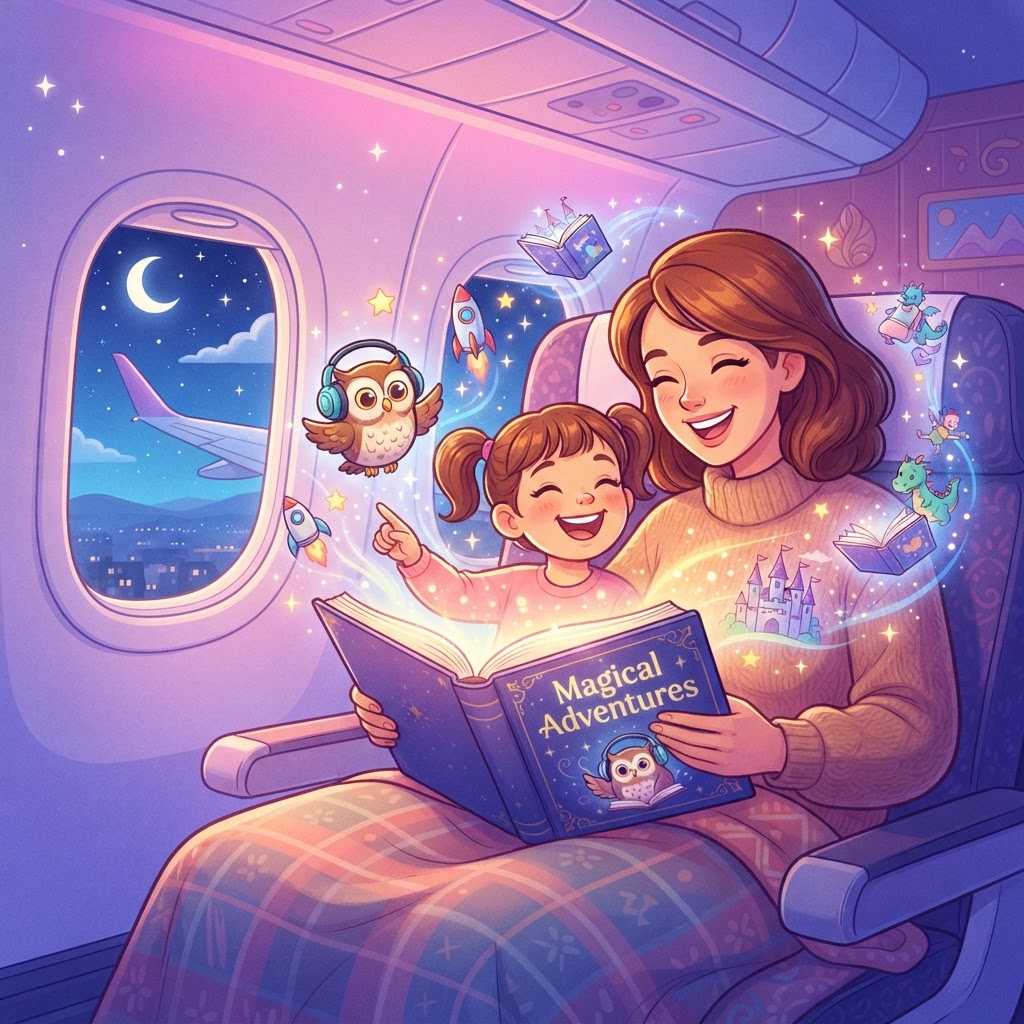
When you need airplane stories for kids, shorter is usually better. A five-minute story can calm pre-boarding nerves, fill the wait during taxiing, and turn a long flight into a series of manageable little moments. For parents, that is the real magic of quick flight stories and travel stories for planes: they give children comfort, structure, and connection without needing a lot of space, noise, or setup.
Stories also work well because they travel light. You do not need a big toy bag or a charged tablet for every minute of the trip. A few simple story prompts, a familiar character, and a personalized read from InstaTales can carry you through delays, snack breaks, and that tricky stretch when everyone is asked to stay seated.
Why are quick stories so useful on airplane rides?
Quick stories are useful on planes because they match how young children handle waiting, change, and sensory overload. They are short enough to hold attention, but rich enough to create calm and connection.
Flights ask a lot from children. They must wait in lines, sit still, hear loud sounds, and follow unfamiliar rules. A short story gives their brain a simple, predictable sequence: beginning, middle, and end. That structure can feel grounding.
This fits what child development experts have long observed. The American Academy of Pediatrics recommends shared reading from infancy because it supports language, attention, and parent-child bonding. Even on a travel day, a brief read-aloud can be a small routine that helps a child feel secure. You can read more from the AAP at HealthyChildren.org.
Short stories also make transitions easier. Instead of saying, “Sit still for 20 more minutes,” you can say, “Let’s do one more cloud story until the seat belt sign changes.” That feels concrete to a child.
How can parents use stories on airplanes without adding stress?
The easiest way to use stories on airplanes is to tie them to natural travel moments. Think of stories as flexible tools, not one long activity.
Try using stories in these simple windows:
- At the gate: Tell a “what happens next” story about the plane, the pilot, or the destination.
- During boarding: Use a familiar character and a very short plot while everyone gets settled.
- During takeoff: Offer a soothing story with repetition, especially if your child is uneasy.
- In cruising time: Try a longer interactive story with choices, sound effects, or a mini mystery.
- During delays: Pull out a funny or personalized story to reset the mood.
- Before landing: Choose a calm ending story that helps your child prepare for the next transition.
Preparation matters too. The Transportation Security Administration has practical guidance for traveling with children, and one of the best parent strategies is simply reducing surprises. Have a few stories ready before you board, along with snacks, water, and one comfort item.
If your child likes short reads in everyday errands, the same rhythm often works well in the air. Families who already use stories for grocery trips will recognize how powerful a fast, portable story can be.
What makes a good airplane story for kids?
A good airplane story is short, calm, and easy to follow. The best ones feel familiar enough to soothe, but playful enough to hold interest.
Look for these features:
- Simple plot: One small problem and one clear solution
- Gentle emotional tone: Exciting, but not too intense for a busy travel day
- Repetition: Repeated phrases help younger children join in
- Interactive moments: “What do you think is behind the cloud?” keeps kids engaged
- Relevant themes: Planes, suitcases, maps, clouds, and destinations feel meaningful in the moment
- Flexible length: A story should be easy to stop and restart
For toddlers, focus on rhythm, repetition, and naming objects: plane, seat, window, clouds, teddy. For preschoolers, add a tiny adventure. For ages 6-10, a mystery, mission, or funny travel mishap often works well.
Research on early language development, including the “serve and return” work highlighted by the Harvard Center on the Developing Child, shows that back-and-forth interaction builds attention and communication skills. That is one reason interactive storytelling works so well in small spaces like airplanes.
What are five airplane story ideas to try on the plane?
The best airplane story ideas are easy to tell, easy to personalize, and short enough to fit real flight moments. These five can work as read-alouds, made-up stories, or prompts inside InstaTales.
1. The Window Seat Cloud Parade
A child looks out the window and spots cloud animals floating beside the plane. Each cloud becomes a new friend for one minute: a rabbit, a whale, a dragon, and a sleepy sheep who helps everyone relax.
This is perfect for takeoff or quiet cruising time. It is one of the easiest airplane stories for kids because you can build it from whatever your child sees outside.
2. Teddy at Gate 12
A small teddy bear worries it will miss the flight, but kind helpers guide it from the ticket counter to the plane. In the end, Teddy learns that travel feels easier when you know the steps.
This idea works especially well for anxious travelers. It turns airport routines into a gentle story and gives children a script for what happens next.
3. The Tiny Suitcase That Packed the Wrong Things
A little suitcase accidentally packs silly items like bananas, rain boots, and a pirate hat instead of pajamas. The child hero must choose which items are actually useful before landing.
This is a fun, interactive option for preschool and early elementary ages. It also invites problem-solving and laughter, which can help during delays.
4. Captain Luna’s Smooth-Sky Plan
Captain Luna explains that bumps in the air are just the plane moving through different layers of wind, like a boat on waves. She teaches the passengers a calming routine: wiggle fingers, take a breath, think of one happy place.
This makes a strong personalized story if your child dislikes turbulence. According to the CDC’s travel guidance for children, planning ahead for your child’s needs can make travel safer and less stressful, and emotional preparation is part of that.
5. The Map to Grandma’s House
A child follows a pretend map in the seat pocket: over the clouds, past the snack cart, around the sleepy mountain, and straight to Grandma’s hug. Every step gets the child closer to the destination.
This is one of the most comforting quick flight stories because it gives children a clear sense of progress. It is especially helpful on longer flights when “Are we there yet?” starts early.
How can InstaTales help with travel entertainment on planes?
InstaTales can make plane travel easier by helping you create personalized stories before the trip. Personalized stories often hold attention longer because the child already cares about the characters, setting, and problem.
Before your flight, you can create your own personalized bedtime story using your child’s name, age, favorite toy, and destination. A story about “Mia, Bunny, and the brave trip to Chicago” feels much more engaging than a generic tale.
A few practical ways to use InstaTales for travel:
- Create one story for boarding nerves
- Create one for mid-flight boredom
- Create one for landing and arrival
- Use story templates when you want a fast starting point
- Save your favorites in your story library so they are easy to find again
This works well because you can match the story to the exact moment. You might make a silly airport adventure for the gate, then a sleepy cloud story for later in the flight.
It also helps to think beyond one trip. If your child responds well to short, situation-based stories, you can build a small collection for other unpredictable days too, like rainy day reads.
What travel-with-kids tips make story time work even better?
Story time works best on planes when it is part of a bigger, realistic travel plan. A great story helps most when the child’s basic needs are already supported.
Here are the travel-with-kids tips I recommend most often:
- Time stories around energy dips. Bring one out before restlessness becomes a meltdown.
- Pair stories with a snack or cuddle item. This adds comfort and routine.
- Keep your voice low and calm. Whisper-reading often feels special on a plane.
- Let children participate. Ask them to choose the next animal, destination, or ending.
- Rotate activities. Use stories alongside coloring, window watching, and quiet toys.
- Expect short attention spans. It is okay if a story lasts three minutes and not ten.
- Prepare for no Wi-Fi. Open stories before boarding or save easy access to them in advance.
You can also borrow a good strategy from bedtime: repeat favorite lines. Repetition lowers effort for tired children and helps them feel in control. That is why many of the best travel stories for planes sound simple on purpose.
For families who like to keep reading habits steady during travel, short story routines can help maintain a familiar literacy rhythm even away from home. That kind of consistency matters, especially for younger children.
Frequently Asked Questions
How long should an airplane story be?
For most children, 3 to 7 minutes is ideal on a plane. Short stories are easier to pause, repeat, or restart during announcements and seat changes.
Are stories better than screens on flights?
Stories are not always “better,” but they offer something screens often do not: direct connection with a parent or caregiver. Shared storytelling can calm children, support language, and give their eyes a break.
What if my child feels nervous about flying?
Use a story that explains the travel steps in simple, friendly language. Personalized stories about brave characters, kind pilots, and safe arrivals can make the experience feel more predictable.
Can toddlers enjoy airplane stories too?
Yes, toddlers often do very well with airplane stories if they are short and repetitive. Focus on familiar words, sounds, gestures, and objects the child can see around them.
Should I prepare stories before the flight?
Yes, that helps a lot. Have two or three stories ready before boarding so you are not creating everything in the moment when your child is already tired or overstimulated.
Can personalized stories work for older kids on planes?
Absolutely. Children ages 6 to 10 often enjoy personalized mystery, adventure, or mission-based stories, especially if the destination or travel challenge is built into the plot.
Ready to Create a Personalized Bedtime Story?
Use our free AI bedtime story generator to create a personalized illustrated story for your child in 30 seconds — no credit card needed.
Popular story types:
Maya Rodriguez
Lead Content Editor & Early Literacy Specialist
Maya is a former early childhood educator and literacy specialist with over a decade of experience helping children develop a love of reading. She leads content at InstaTales, where she writes about the science of storytelling, child development, and how families can use personalized AI stories to build literacy and emotional resilience.
instatales.ai