Bedtime Stalling Stories for Faster Sleep
Does your child stall at bedtime? These quick stories can satisfy the 'one more story' request without extending bedtime too much.
✦ Key Takeaways
- •Children usually stall at bedtime because they need more connection, more control, or more help shifting from busy day mode to quiet night mode.
- •The most effective response is calm, brief, and consistent.
- •Research shows that consistent bedtime routines help children fall asleep more easily and sleep better.
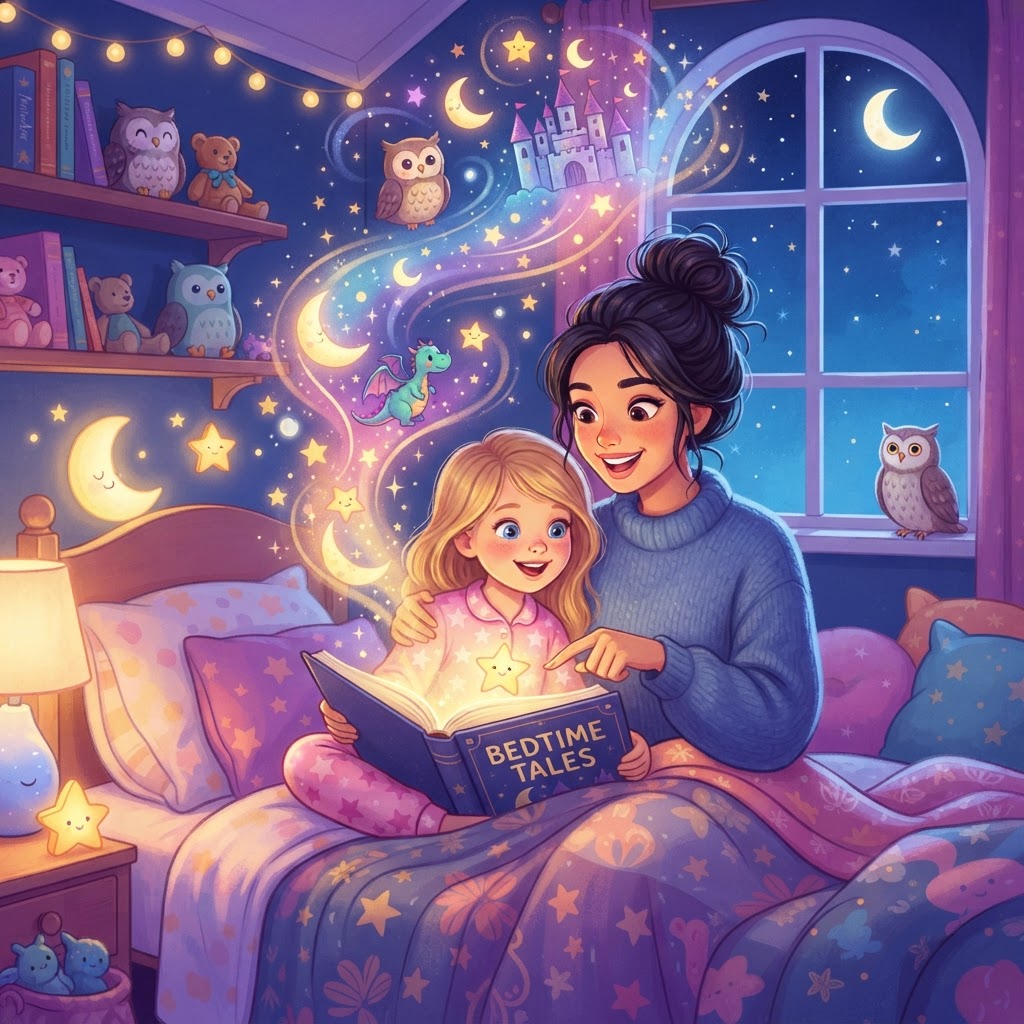
When your child asks for “one more story” after pajamas, water, hugs, and lights-out, you are not alone. Bedtime stalling stories can be a smart middle ground: they meet a child’s need for connection without letting bedtime drift later and later. This guide covers why children stall, how to respond without a battle, five short story ideas that work, and how InstaTales can help you create calm, on-demand stories in minutes.
Why do children stall at bedtime?
Children usually stall at bedtime because they need more connection, more control, or more help shifting from busy day mode to quiet night mode. In other words, stalling is often a transition problem, not a behavior problem.
Common reasons include:
- Separation anxiety: Bedtime means saying goodbye to parents for the night.
- Overtiredness: Tired kids do not always look sleepy. They may get silly, wired, or clingy.
- Inconsistent routines: If bedtime changes from night to night, children keep testing for “what happens next?”
- A need for control: Asking for another book, song, or drink can be a child’s way of feeling some power.
- Big feelings from the day: Worries often show up when the room gets quiet.
This is why quick stories for kids who stall can help. A short, predictable story gives connection and calm, but it does not create a new 20-minute event.
How can parents handle bedtime stalling without a power struggle?
The most effective response is calm, brief, and consistent. Children settle faster when parents stay warm and firm instead of negotiating each new request.
Try this simple approach:
- Validate first: “You wish bedtime could last longer. I get it.”
- State the limit clearly: “We have time for one short last story.”
- Offer a small choice: “Do you want the bunny story or the moon story?”
- Keep your voice low and your pace slow: Your tone helps regulate your child.
- Follow through: When the story ends, bedtime ends.
A helpful script is: “Tonight we’re doing one 5-minute story, then cuddles, then sleep.” That works better than “Okay, just one more,” said three times.
What you want is a routine your child can predict. If the “last story” becomes different every night, stalling often grows. If the last story is always short, soothing, and final, many children stop pushing as hard.
What does research say about bedtime routines?
Research shows that consistent bedtime routines help children fall asleep more easily and sleep better. Predictable steps lower stress because children know what comes next.
The American Academy of Pediatrics recommends regular sleep routines, and the CDC outlines how much sleep children need by age. When children are not getting enough sleep, bedtime resistance often gets worse.
Sleep researchers, including Jodi Mindell and colleagues, have found that consistent bedtime routines are linked with better sleep onset and fewer night waking issues in young children. That matches what many parents see at home: when bedtime is steady, children argue less.
Routine also supports self-regulation. The Harvard Center on the Developing Child often emphasizes how predictable experiences help children feel secure and manage transitions more smoothly.
In practice, that means 5 minute bedtime stories for stallers work best when they are one part of a repeated bedtime pattern, not a new reward added after lots of delays.
Which quick stories work best for kids who stall?
The best short bedtime stories are simple, soothing, and gently repetitive. They should help your child slow down, not restart their imagination at full speed.
Here are five story ideas that work well for bedtime stallers:
-
The Yawn Parade
A sleepy mouse starts yawning, then a bunny, then a bear, then your child’s favorite stuffed animal. Each one goes home, snuggles in, and closes their eyes.
Why it works: repetition is calming, and the ending is obvious. -
The Moonlight Delivery
A tiny owl delivers blankets, dreams, and goodnight wishes to forest friends one by one. Your child is the final stop.
Why it works: it creates a clear path toward sleep and puts your child safely at the end. -
The Three Deep Breaths Dragon
A little dragon learns to make “quiet fire” by breathing slowly instead of roaring. By the end, the dragon curls up and sleeps.
Why it works: it builds breathing into the story without making it feel like a lesson. -
The Lost Yawn
A child or animal cannot find their yawn, so they visit a cozy cat, a sleepy duck, and a warm star. At the final stop, the yawn arrives and bedtime begins.
Why it works: it gives a tiny plot without excitement or suspense. -
The Dream Train
The train makes three calm stops: bath station, pajama station, cuddle station. Then it arrives at Dreamland.
Why it works: it mirrors the bedtime routine and reinforces what happens next.
These are ideal bedtime stalling stories because they have:
- one main idea
- very few characters
- a calm emotional tone
- a quick ending
- no cliffhanger
Avoid stories with chase scenes, jokes that build energy, or new plot twists at the end. Those are fun at other times, but not when you need sleep.
How can InstaTales help when your child asks for one more story?
InstaTales can make the “one more story” request easier to manage by giving you a short, customized story on demand. The trick is to use it with clear boundaries.
You can create your own personalized bedtime story in a calm, low-stimulation format by keeping your prompt simple. Ask for one character, one tiny problem, and one sleepy ending. If you want a faster start, use the ready-made story templates and choose a bedtime-friendly pattern you can repeat each night.
A useful prompt might be:
- “Write a 5-minute bedtime story for a 5-year-old who is stalling at bedtime. Use a gentle tone, one animal character, repetition, and end with the character falling asleep.”
That gives you 5 minute bedtime stories for stallers without improvising when you are already tired.
A few best practices help:
- Keep stories under five minutes.
- Use familiar characters or your child’s name for connection.
- Ask for a calm ending every time.
- Skip villains, cliffhangers, and loud adventure themes.
- Save the ones that work in your story library so bedtime stays predictable.
If your child responds well to short calming stories in other tricky moments, the same idea can help beyond bedtime too. You can borrow techniques from these guides on quick haircut stories and 5-minute calm stories for vaccinations, where brief storytelling is used to ease stress during transitions.
What should a simple anti-stalling bedtime routine look like?
A good anti-stalling routine is short, repeatable, and clear. Children usually do best when bedtime follows the same order every night.
Here is a simple 20-minute example:
- 5 minutes: bathroom, wash, pajamas
- 3 minutes: water and one final practical need
- 5 minutes: one short story
- 2 minutes: cuddle, goodnight phrase
- Lights out: same final words each night
A routine like this works because it closes the door on repeated extras. Practical needs happen before the story, not after it.
You can also use a “bedtime pass” for some children ages 4+. That means they get one allowed extra request after lights-out, such as a hug or quick bathroom trip. Once the pass is used, bedtime is done.
If stalling stays intense even with a good routine, look a little deeper. Frequent snoring, long struggles to fall asleep, regular night waking, or strong anxiety may be signs to talk with your pediatrician. Sometimes “stalling” is really poor sleep quality, fear, or an unmet emotional need.
The goal is not to remove warmth from bedtime. It is to make warmth predictable, short, and safe enough for sleep.
Frequently Asked Questions
Are bedtime stalling stories a bad habit?
No, not if they are short and predictable. A brief final story can reduce bedtime conflict as long as it stays within clear limits.
How long should a last bedtime story be?
For most stallers, aim for 3-5 minutes. That is long enough to offer connection but short enough to protect bedtime.
What if my child cries for another story after the short one ends?
Stay calm and repeat the limit kindly. Consistency matters more than perfection, and most children adjust when the pattern stays the same for several nights.
Do quick stories work for toddlers as well as older kids?
Yes, but toddlers need even simpler stories. For ages 1-3, use repetition, soothing sounds, and very short plots with familiar objects or animals.
Can AI bedtime stories overstimulate children?
They can if the prompts create action-heavy or funny, high-energy stories. Keep AI stories slow, gentle, and repetitive, with a calm ending every time.
When should I worry that bedtime stalling is something more?
If your child snores, seems very anxious, takes a long time to fall asleep most nights, or is exhausted during the day, talk with your pediatrician. Persistent sleep struggles sometimes need more than a routine tweak.
Ready to Create a Personalized Bedtime Story?
Use our free AI bedtime story generator to create a personalized illustrated story for your child in 30 seconds — no credit card needed.
Popular story types:
Maya Rodriguez
Lead Content Editor & Early Literacy Specialist
Maya is a former early childhood educator and literacy specialist with over a decade of experience helping children develop a love of reading. She leads content at InstaTales, where she writes about the science of storytelling, child development, and how families can use personalized AI stories to build literacy and emotional resilience.
instatales.ai