Getting Dressed Stories: 5 Quick Morning Wins
Getting dressed can be a battle. These quick stories can make it fun and keep kids moving.
✦ Key Takeaways
- •Getting dressed stories work because they give children structure, play, and a clear next step.
- •Use stories as a script for each step of dressing, not as a separate activity.
- •The best dressing stories for kids are simple, visual, and easy to repeat.
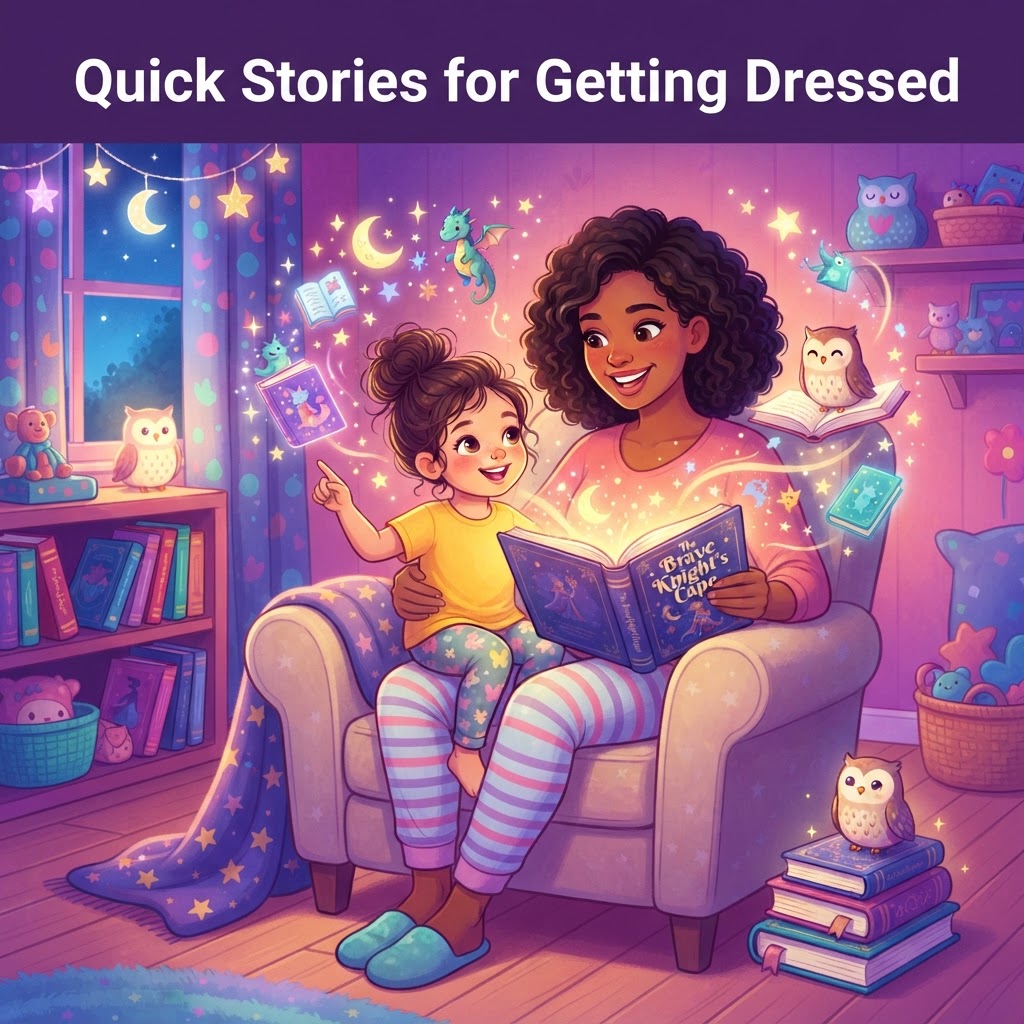
Mornings can fall apart over one sock, one shirt, or one child who suddenly forgets how pants work. Getting dressed stories can help because they turn a stressful task into a playful, predictable routine. If you need quick morning routine stories or simple dressing stories for kids, this guide will show you how to use them, what kinds of stories work best, and how to create fresh ones fast.
Why do getting dressed stories work so well?
Getting dressed stories work because they give children structure, play, and a clear next step. Instead of hearing repeated instructions, kids hear a mini adventure with a beginning, middle, and end.
Young children are still building executive function skills like sequencing, attention shifting, and task completion. The Center on the Developing Child at Harvard University explains that these skills develop over time and need practice in everyday routines. A short story can act like a bridge between “play mode” and “time to get dressed.”
Stories also lower tension. When a parent says, “Let’s help Captain Cozy find his shirt,” it often feels easier than, “Get dressed now.” That small shift matters, especially for ages 2-7, when imagination is a powerful learning tool.
Predictable routines help too. The CDC’s Positive Parenting guidance and the American Academy of Pediatrics through HealthyChildren.org both emphasize that children do better with simple, consistent patterns. A repeated dressing story can become part of that pattern.
If your mornings already feel rushed, pairing stories with a short read like these 5-minute morning stories can make the whole start of the day smoother.
How can you use stories during the getting-dressed routine?
Use stories as a script for each step of dressing, not as a separate activity. The best quick morning routine stories are short, active, and tied directly to the clothes in your child’s hands.
Think of the story as narration for the routine. You are not stopping to perform a full tale. You are turning each clothing step into one tiny scene.
Here is a simple way to do it:
- Start before resistance begins. Begin the story as soon as your child wakes or enters the dressing area.
- Give each item a role. Socks can be sleepy caterpillars. A shirt can be a superhero cape. Boots can be moon shoes.
- Use one goal per step. “First we rescue the socks, then we find the shirt.”
- Keep it under 2-4 minutes. Long stories slow the routine. Short stories move it along.
- Let your child add one detail. Ask, “Should the dinosaur shirt stomp or sneak today?”
- End with a clear finish line. “Once your shoes are on, the rocket is ready for breakfast.”
This works especially well when children know what comes next. Many parents find that routines improve when the same pattern carries through the day, which is why transition tools like after-school stories for calm transitions can be helpful too.
A few practical tips from the classroom and home:
- Put out clothes in order.
- Offer two outfit choices, not five.
- Use the same opening line each morning.
- Match the story tone to your child. Some like silly. Others like calm and cozy.
What are five quick getting-dressed story ideas?
The best dressing stories for kids are simple, visual, and easy to repeat. These five ideas take one to three minutes and can be adapted for toddlers, preschoolers, and early elementary children.
1. The Sock Rescue Mission
Two tiny socks are lost in the blanket cave and need a brave helper. Your child finds one sock, then the other, and guides each onto the right foot before the “cold floor monster” arrives.
This is great for children who resist the first step of dressing. It creates momentum fast.
2. The Super Suit Switch
Pajamas did their nighttime job and now it is time for the day suit. The shirt gives energy, the pants add power, and the shoes unlock “ready to go” mode.
This story works well for children who love heroes, builders, athletes, or princesses. You can change the character daily without changing the structure.
3. The Color Parade
Each clothing item joins a parade. Red socks march first, the blue shirt waves next, and the yellow raincoat leads the grand finale out the door.
This is especially useful for toddlers and preschoolers learning colors and categories. It also adds an easy language boost during a routine that might otherwise feel rushed.
4. The Weather Detective
A clever detective checks the sky and chooses the right outfit for the case. Is it a sunny-hat day, a rain-boots day, or a sweater-and-wind day?
This story helps children connect clothing choices to real-life reasoning. It builds independence because the child begins noticing, “Oh, it is cold, so I need long sleeves.”
5. The Rocket Launch Countdown
Every clothing item gets the child closer to blastoff. “T-shirt on: T-minus 4. Pants on: T-minus 3. Socks on: T-minus 2.”
This one is excellent for children who respond to pace and clear endings. It can prevent stalling because the countdown naturally moves the routine forward.
To make any of these work better, remember three things:
- Repeat the same format for several days.
- Keep the language simple.
- Stop while the child is still engaged.
Children often love repetition more than adults do. In early childhood, repetition supports memory, sequencing, and confidence. What sounds “the same” to you may feel reassuring and skill-building to your child.
What should you do if your child still resists getting dressed?
If stories are not enough, the problem may be sensory, emotional, or practical rather than behavioral. In that case, simplify the routine first and use the story as support, not as pressure.
Some children dislike tags, tight waistbands, certain fabrics, or the feeling of changing temperature after pajamas come off. Others resist because mornings are simply too fast and they need more connection before demands.
Try these adjustments:
- Offer soft, easy-on clothes.
- Warm clothes briefly if your home is cold.
- Use visual order: underwear, shirt, pants, socks.
- Give two choices: “Blue shirt or green shirt?”
- Build in one minute of cuddling or play before dressing.
- Praise effort, not speed.
If dressing struggles are intense, frequent, and tied to strong sensory reactions, it may help to talk with your pediatrician or an occupational therapist. In practice, many “behavior battles” improve when the clothing itself becomes more comfortable and the routine more predictable.
How can InstaTales create quick morning routine stories?
InstaTales can turn your child’s interests into personalized routine stories in seconds. That matters on busy mornings, when you want something fresh without having to invent it on the spot.
You can create your own personalized bedtime story and adapt it for dressing by adding a few simple details:
- your child’s name
- favorite character or animal
- today’s outfit colors
- the goal: get dressed before breakfast or school
For example, you might prompt:
- “Write a 2-minute getting dressed story for a 4-year-old who loves dinosaurs.”
- “Create a calm morning story about putting on socks, shirt, pants, and shoes.”
- “Make a silly story about a child becoming a weather detective while getting dressed.”
If you want speed, start with ready-made story templates and tweak only the character, setting, and routine. That keeps the story short and usable.
A helpful trick is to save the ones that work best in your story library. Then you can reuse the same favorite on busy days and rotate new ones when your child wants novelty.
For families building routines beyond dressing, the InstaTales blog also has ideas for other daily transitions.
Frequently Asked Questions
What age are getting dressed stories best for?
Getting dressed stories are most useful for children ages 2-8, though some 1-year-olds enjoy the rhythm and repetition too. The sweet spot is when children understand pretend play but still need help with transitions.
How long should a quick morning routine story be?
Keep it very short: about 1-4 minutes. If the story lasts longer than the task, it can become a distraction instead of a support.
Can dressing stories for kids help with independence?
Yes, especially when the story follows the same order each day. Children start to remember the sequence and may begin doing steps with less prompting.
What if my child wants a new story every morning?
Use the same structure and change just one element, such as the character, color, or mission. That keeps the routine predictable while still feeling fresh.
Are personalized AI stories safe to use in a morning routine?
They can be, as long as the content is age-appropriate, brief, and parent-guided. Think of AI as a tool to support connection, not replace it.
Should I use stories instead of direct instructions?
Usually, a mix works best. Use a story to lower resistance and keep things playful, then add simple, clear instructions when needed.
Ready to Create a Personalized Bedtime Story?
Use our free AI bedtime story generator to create a personalized illustrated story for your child in 30 seconds — no credit card needed.
Popular story types:
Maya Rodriguez
Lead Content Editor & Early Literacy Specialist
Maya is a former early childhood educator and literacy specialist with over a decade of experience helping children develop a love of reading. She leads content at InstaTales, where she writes about the science of storytelling, child development, and how families can use personalized AI stories to build literacy and emotional resilience.
instatales.ai