10-Minute After School Stories for Calm Transitions
After school is a great time for stories. These 10-minute stories help kids decompress and transition home.
✦ Key Takeaways
- •After school stories help because they create a predictable pause between the demands of school and the pace of home.
- •A good after-school story is simple, soothing, and easy to follow.
- •The best after-school story ideas are calm, relatable, and quick to finish.
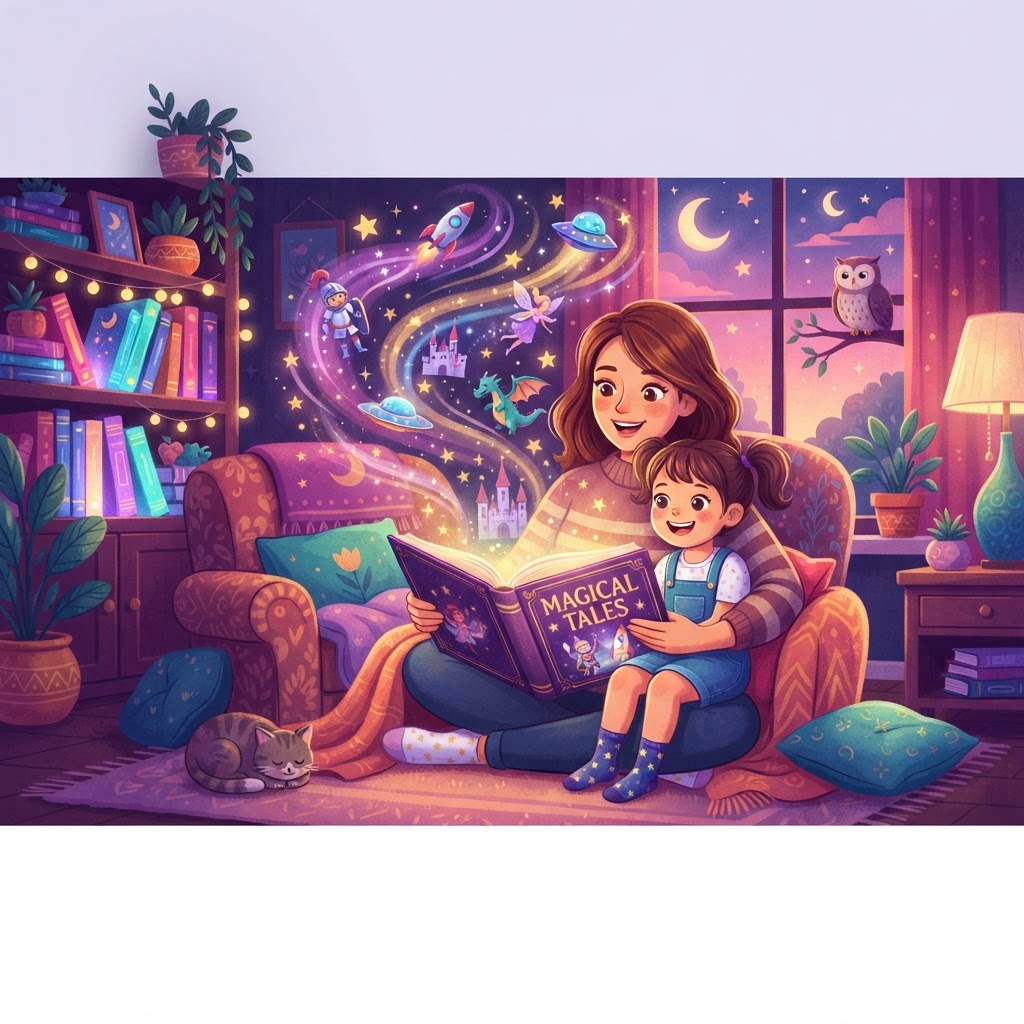
After school can be one of the busiest emotional moments in a child’s day. Kids are often hungry, tired, overstimulated, and still carrying the feelings of the classroom. That is why after school stories can work so well: they give children a soft landing between school and home. In just a few minutes, a calm read-aloud can help your child reconnect, reset, and move into the rest of the afternoon with less friction. If you are looking for 10 minute after school reading ideas or gentle decompression stories, this guide will help you choose what to read and how to make it a simple daily habit.
Why do after school stories help with the school-to-home transition?
After school stories help because they create a predictable pause between the demands of school and the pace of home. A short story gives children time to settle their bodies, process their day, and reconnect with a trusted adult.
Many children hold it together all day in a structured environment, then release big feelings once they get home. Child development experts often call this restraint collapse or after-school restraint collapse. A calming routine can help. The Harvard Center on the Developing Child explains that supportive relationships and predictable routines help children regulate stress and build emotional resilience.
Shared reading also supports more than feelings. The American Academy of Pediatrics has long recommended reading aloud because it strengthens language, attention, and parent-child connection. For younger children especially, the soothing rhythm of a familiar story can lower the intensity of the after-school hour.
In practice, 10 minute after school reading works well because it is short enough for busy families and long enough to change the mood. You do not need a perfect routine. Even one calm story on the couch, in the car, or at the kitchen table can help a child shift from “school mode” to “home mode.”
What makes a good 10-minute after-school story?
A good after-school story is simple, soothing, and easy to follow. The best choices are not the most exciting ones. They are the ones that help your child feel safe, seen, and relaxed.
Look for stories with these features:
- Low conflict: Small problems are better than intense danger or fast action.
- Warm emotional tone: Kindness, humor, comfort, and reassurance work well.
- Clear structure: Beginning, middle, and end in a short span helps tired brains.
- Familiar themes: Home, pets, nature, friendship, and gentle adventure are ideal.
- Room for conversation: A good story gives you an easy way to ask, “Did that remind you of your day?”
For toddlers and preschoolers, repetition and rhythm matter most. For ages 5-7, light adventure and school-related themes can help them process the day. For older children, a short chapter-style story or reflective character story often works best. If your child wants something longer, you might like these 15-minute reads for older kids.
If you are choosing between educational and calming, choose calming first. After school is usually not the best time to push extra learning. The emotional reset comes first, and the learning still happens through listening, vocabulary, and discussion.
What are 10 simple story ideas for after school?
The best after-school story ideas are calm, relatable, and quick to finish. You want stories that help your child unwind, not rev up.
Here are 10 easy ideas for decompression stories you can use again and again:
-
The quiet walk home
A child notices five peaceful things on the way home: a bird, a puddle, a flower, a dog, and the wind. This works especially well for younger children. -
The backpack that needed a rest
A tired backpack tells the story of everything it carried that day. It gives children a playful way to talk about their own load. -
The snack-time picnic
A character comes home hungry and shares a simple snack with a stuffed animal, sibling, or pet. The gentle routine feels familiar and reassuring. -
The cloud that changed shapes
A child lies down and imagines clouds turning into favorite animals and places. This is ideal when your child needs help slowing their body. -
The brave little mistake
A character worries about a small school mistake, then learns that mistakes can be fixed. This can open a helpful conversation after a hard day. -
The hidden garden after school
A child discovers a tiny secret garden where every plant has a feeling-word. It is a lovely way to name emotions without pressure. -
The sleepy superhero
A superhero’s real power is knowing when to rest, drink water, and take deep breaths. Great for energetic kids who still need permission to slow down. -
The friendly bus ride home
A bus, train, or scooter “narrates” the trip from school to home. This story works well for children who commute or feel tired during the ride. -
The tiny home adventure
A child becomes an explorer in their own living room, finding cozy “safe spots” like the couch, blanket fort, or reading corner. It helps home feel calm and welcoming. -
The tomorrow box
A child places today’s worries in an imaginary box and saves them for tomorrow. The message is simple: you do not have to solve everything right now.
These ideas also work well as personalized prompts. If your child loves dinosaurs, soccer, fairies, or outer space, you can keep the same calm structure and swap in their favorite interest.
How can families make 10 minute after school reading easy and consistent?
The easiest way to make after-school reading stick is to attach it to something you already do every day. Pair the story with snack time, the ride home, or the first five minutes after shoes come off.
A simple routine might look like this:
- Wash hands
- Have a snack or drink of water
- Read one short story
- Ask one gentle question about the day
- Move on to play, homework, or dinner
Keep expectations low. If your child is wiggly, let them color, cuddle a stuffed animal, or build with blocks while listening. Many children listen better when their hands are busy.
You can also match story length to the time of day. Some families enjoy short morning stories before school and calm 10-minute reads after school. For weekends or slower evenings, you can stretch into longer family read-alouds later on.
If a child resists at first, stay flexible. Try reading in the car, outdoors, or in a blanket fort. The goal is not perfect behavior. The goal is a calmer transition.
How can you use InstaTales for after-school reading?
InstaTales can make after-school reading easier by helping you create short, personalized stories in minutes. This is especially helpful when your child wants a story that feels familiar, comforting, and tailored to their day.
A practical way to use InstaTales after school is to build stories around what your child already knows. You might create your own personalized bedtime story about:
- A child who feels tired after art class
- A puppy learning to rest after a busy day
- A gentle dragon who needs a snack and a stretch
- A favorite toy helping with big feelings after school
To save time, start with story templates and keep a few calm prompts ready for the week. If your child finds a story they love, save it in your story library so you can re-read it on harder afternoons. Repetition is comforting, and familiar stories often work better than new ones when children are dysregulated.
For safety and quality, review AI-generated stories before reading, especially for younger children. Keep prompts specific: “gentle,” “calm,” “no scary parts,” and “about coming home from school.” Personalized stories should support children, not overwhelm them.
If you want more ideas for quick reading moments throughout the day, explore the wider InstaTales blog for age-based and situation-based story guides.
Frequently Asked Questions
What age is best for after school stories?
After school stories can help children from toddlers through age 10. Younger children often prefer rhythm and repetition, while older children may enjoy short chapter-style or reflective stories.
How long should after-school reading be?
For most families, 5 to 10 minutes is enough. The goal is not a long lesson but a short, calming transition that fits real life.
What if my child is too tired or restless to sit still?
That is completely normal. Let your child listen while eating a snack, drawing, stretching, or cuddling a toy instead of expecting stillness.
Should after school stories be educational or relaxing?
Relaxing is usually the better priority right after school. Children still gain language, comprehension, and emotional learning from calming stories without feeling like they are doing more schoolwork.
Can personalized AI stories be part of a healthy reading routine?
Yes, when they are used thoughtfully. Personalized stories can boost engagement and emotional connection, especially if you review the story first and keep the tone gentle and age-appropriate.
Ready to Create a Personalized Bedtime Story?
Use our free AI bedtime story generator to create a personalized illustrated story for your child in 30 seconds — no credit card needed.
Popular story types:
Maya Rodriguez
Lead Content Editor & Early Literacy Specialist
Maya is a former early childhood educator and literacy specialist with over a decade of experience helping children develop a love of reading. She leads content at InstaTales, where she writes about the science of storytelling, child development, and how families can use personalized AI stories to build literacy and emotional resilience.
instatales.ai