Snow Day Stories for Kids: Quick Winter Reads
Snow day? These quick stories are perfect for cozy indoor reading when school is cancelled.
✦ Key Takeaways
- •Snow day stories for kids are helpful because they bring calm, structure, and connection to a day that can feel exciting but also a little unsteady.
- •You can make a snow day feel special by turning story time into a simple family ritual.
- •The best quick snow stories are simple, playful, and easy for a child to picture.
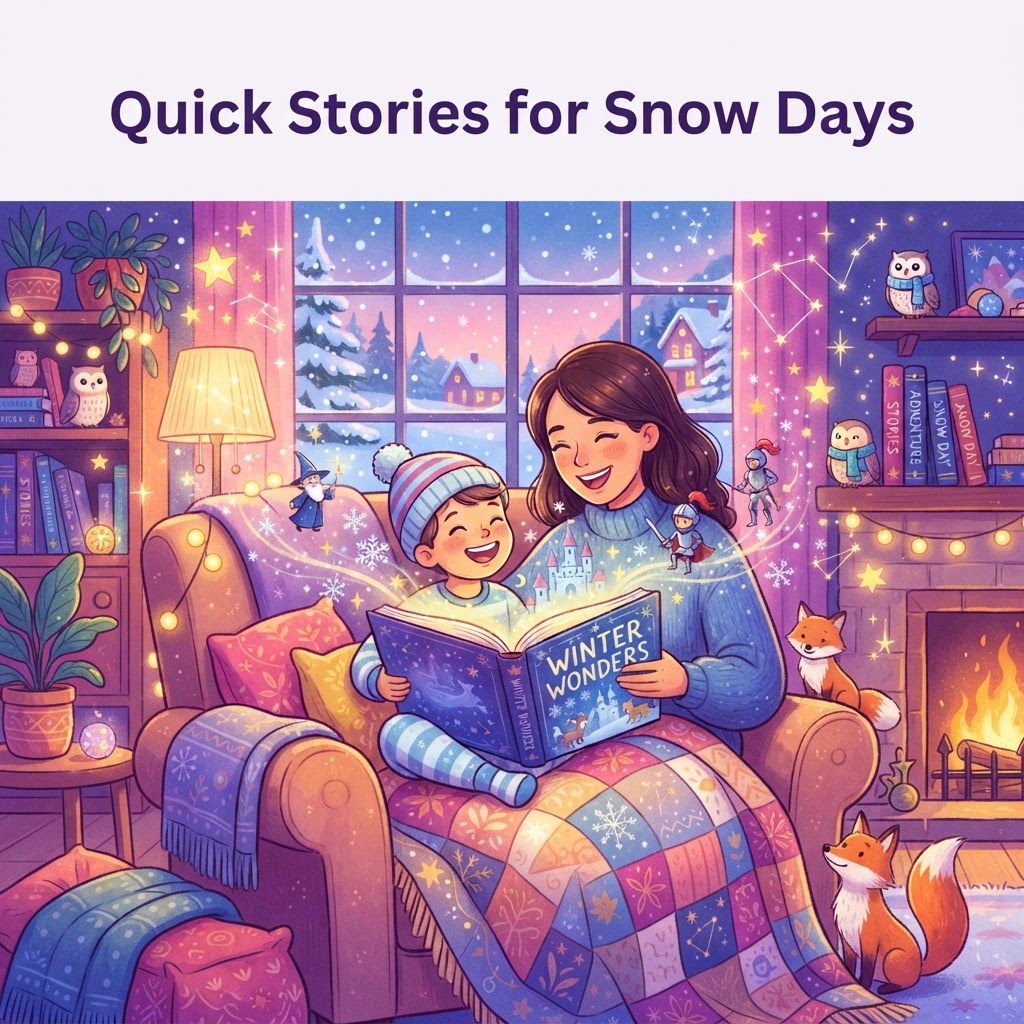
When school is cancelled and the world outside turns white and quiet, a good story can make the whole day feel warmer. Snow day stories for kids are more than a way to pass time—they help children settle, imagine, laugh, and reconnect with family during an unexpected change in routine. If you are looking for winter stories or quick snow stories that fit into a cozy morning, a post-lunch reset, or bedtime, this guide will help you make the most of your next snow day.
Why are snow day stories for kids so helpful when school is cancelled?
Snow day stories for kids are helpful because they bring calm, structure, and connection to a day that can feel exciting but also a little unsteady. A short story gives children a predictable moment when the schedule has suddenly changed.
Young children do best when novelty is balanced with routine. The Center on the Developing Child at Harvard University has long highlighted how responsive, predictable interactions help children feel safe and ready to learn. A snow day story does exactly that: it creates a small anchor in the day.
Reading together also supports language growth and emotional bonding. The American Academy of Pediatrics recommends shared reading from early childhood because it builds vocabulary, attention, and parent-child connection.
In practice, I often suggest families think of stories as a “reset button.” After outdoor play, screen time, or sibling squabbles, a five- to ten-minute story can help children regulate and refocus.
How can you make a snow day feel special with stories?
You can make a snow day feel special by turning story time into a simple family ritual. It does not need to be elaborate; a few cozy details and a little child choice go a long way.
Try these easy ideas:
- Create a “snow day reading nest” with blankets, pillows, and one favorite stuffed animal.
- Pair story time with a small ritual, like warm milk, cocoa, or a cinnamon snack.
- Let your child choose one story ingredient: the hero, the animal helper, or the snowy setting.
- Use short stories at transition points, such as after breakfast, after snow play, or before quiet time.
- Follow the story with one tiny extension activity, like drawing the snow castle or acting out the ending.
This matters because children remember the feeling around reading, not just the plot. When stories are linked with warmth and attention, they become something children actively look forward to.
If your family enjoys weather-themed reading all year, these rainy-day story ideas offer a similar cozy rhythm. And if cabin fever hits later in the afternoon, quick stories for homework breaks can help children shift gears without overstimulation.
What are five quick snow stories to try today?
The best quick snow stories are simple, playful, and easy for a child to picture. These five ideas work well for preschoolers and early elementary children, and each can be told in just a few minutes.
1. The Missing Mitten Rescue
A child builds a snow friend, then notices one mitten has disappeared. The search leads to a shy rabbit who borrowed it to keep her baby bunnies warm. The child shares the mitten, and the rabbit family leaves a sparkly “thank you” trail in the snow.
This story works well for ages 2-6 because it mixes a familiar winter problem with kindness and a happy ending.
2. The Snowflake Delivery Mission
Every snowflake in the sky has a destination, but one tiny snowflake gets lost. A child and a cardinal help guide it to the right rooftop, where it completes the first perfect snowfall of the season.
This is one of my favorite winter stories for children who like gentle adventure. It also opens the door to talking about patterns, weather, and teamwork.
3. The Blanket Fort Blizzard
The weather outside is wild, so siblings build a blanket fort and pretend it is a mountain rescue station. Inside, they welcome chilly toy animals, share snacks, and solve a “blizzard mystery” before the storm clears.
This is ideal when kids cannot get outside much. It turns indoor restlessness into imaginative play and makes an excellent quick snow story after lunch.
4. The Animal Tracks Mystery
A child spots tracks in the snow and becomes a detective. Each clue points to a different animal until the final answer appears: a sleepy fox who was gathering berries for her grandmother.
This story encourages observation and prediction. Children love guessing what comes next, which is a great early comprehension skill.
5. The Snow Day Kindness Chain
When a neighborhood loses power for an hour, one child starts a kindness chain: sharing flashlights, checking on a neighbor, and delivering a drawing to a friend who feels lonely. By evening, the whole block is glowing with candlelight and gratitude.
This story is especially useful if your child feels disappointed about cancelled plans. It gently shifts the mood from frustration to purpose.
How can InstaTales help you create winter stories in minutes?
InstaTales helps by turning your child’s real interests into personalized winter stories quickly and easily. On a snow day, that means you can create something fresh without spending a lot of time planning or writing from scratch.
For example, you can create your own personalized bedtime story using your child’s name, age, favorite animal, or even the exact snow boots they wore that morning. Personalized details make stories feel more engaging, especially for younger children who learn best when new ideas connect to familiar experiences.
A few practical ways to use InstaTales on a snow day:
- Make your child the hero of a snowy rescue, sled race, or winter wonderland adventure.
- Choose a short format for morning reading, then a longer version for bedtime.
- Start with ready-made story templates when you want a fast prompt.
- Save favorite snow stories in your story library so children can revisit them all season.
This personalized approach can also support emotional needs. If your child feels disappointed about missing school, worried about the storm, or overexcited from being indoors, you can shape the story around reassurance, flexibility, and calm problem-solving.
How can winter stories support learning as well as comfort?
Winter stories support learning by building vocabulary, sequencing, emotional awareness, and conversation skills. Even a five-minute story can do meaningful educational work when an adult reads interactively.
Research on dialogic reading shows that children learn more when adults pause, ask simple questions, and connect the story to the child’s own life. Reading Rockets offers a helpful summary of this approach.
While reading snow day stories for kids, try prompts like these:
- “What do you think will happen next?”
- “Why was the bunny hiding?”
- “Can you remember the three clues in the snow?”
- “How would you help if you were in this story?”
- “Can you retell the ending in your own words?”
These small questions build comprehension without making story time feel like a lesson. For children ages 1-4, keep it very simple: point, name, repeat, and let them chime in with favorite words like “snow,” “sled,” or “whoosh.” For ages 5-10, invite prediction, retelling, and a new ending.
That is why quick snow stories work so well on unexpected home days: they comfort children in the moment while quietly strengthening literacy skills.
Frequently Asked Questions
What makes a good snow day story for kids?
A good snow day story is short, comforting, and easy to imagine. The best ones include familiar winter details, a simple problem, and a warm ending.
How long should quick snow stories be?
For most children, 5-10 minutes is ideal. That is usually long enough to hold attention but short enough to fit between meals, play, and rest.
Are winter stories helpful for toddlers?
Yes, toddlers often love winter stories because they include strong visuals, repeated words, and familiar routines like bundling up or watching snow fall. Keep the language simple and the plot very gentle.
Can personalized stories help reluctant readers?
Yes, personalization often increases interest because children see themselves in the adventure. A story that includes their name, pet, or favorite winter activity can feel more meaningful and easier to stick with.
How can I use stories on a busy or chaotic snow day?
Use stories at natural transition times, such as after coming inside, before quiet time, or before bed. Even one short reading moment can bring the day back into balance.
Is it okay to use AI to create winter stories for children?
Yes, as long as adults guide the experience thoughtfully. The best approach is to review the story first, keep it age-appropriate, and use the generated story as a shared reading moment rather than passive screen time.
Ready to Create a Personalized Bedtime Story?
Use our free AI bedtime story generator to create a personalized illustrated story for your child in 30 seconds — no credit card needed.
Popular story types:
Maya Rodriguez
Lead Content Editor & Early Literacy Specialist
Maya is a former early childhood educator and literacy specialist with over a decade of experience helping children develop a love of reading. She leads content at InstaTales, where she writes about the science of storytelling, child development, and how families can use personalized AI stories to build literacy and emotional resilience.
instatales.ai