Roman Stories for Kids: Gods, Heroes & Fun
Exciting Roman stories for kids — gods, heroes, monsters, and adventures from Roman mythology, retold for young readers.
✦ Key Takeaways
- •Roman stories for kids are simplified retellings of myths, legends, and hero tales from ancient Rome.
- •The best Roman mythology for children starts with a small, easy-to-remember cast.
- •The best themes in Roman tales for children are bravery, loyalty, clever choices, friendship, and perseverance.
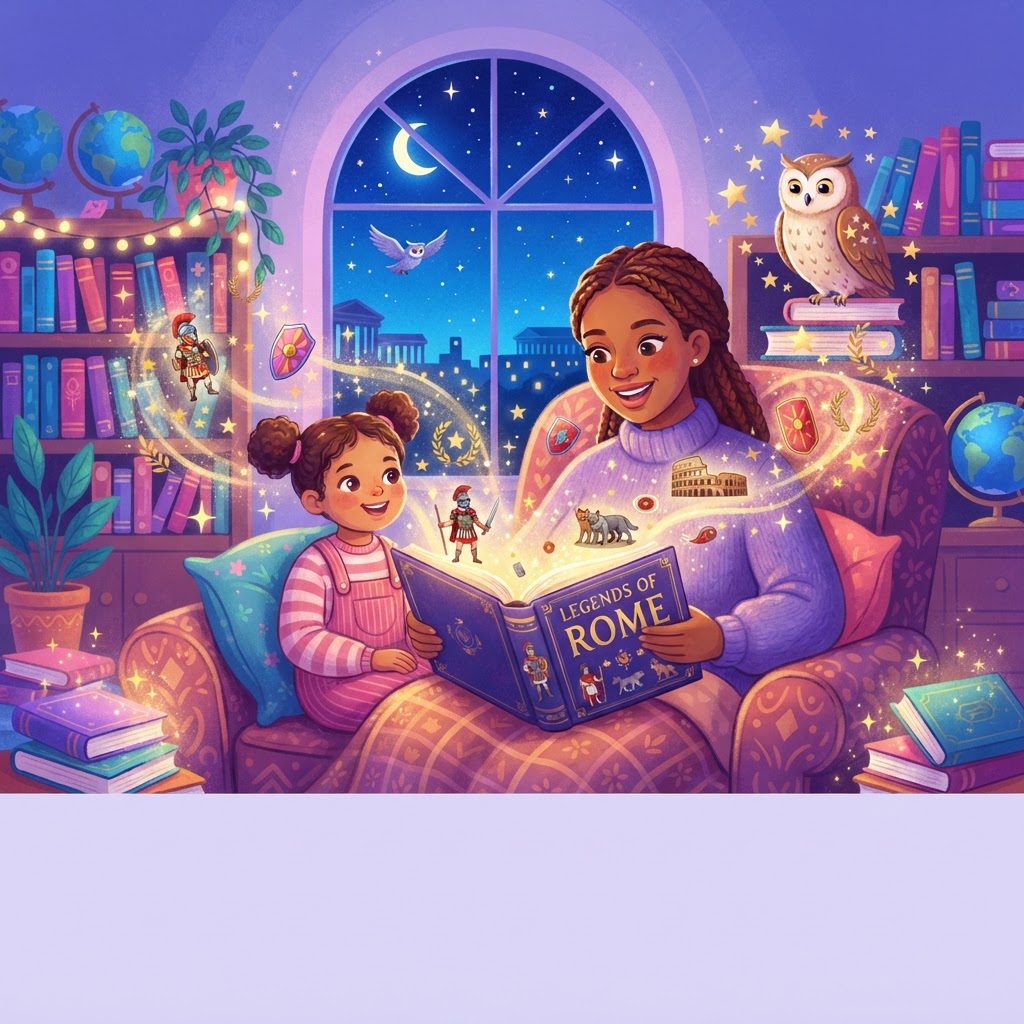
If your child loves brave heroes, magical creatures, and big adventures, Roman stories for kids can be a wonderful place to start. These classic tales introduce children to gods, heroes, and ancient ideas about courage, family, and clever problem-solving—without needing to feel too scary or complicated.
The key is choosing or adapting Roman tales in a way that fits a child’s age. For children ages 5-8, the best stories focus on wonder, character, and action, while softening the darker parts of traditional mythology. Below, you’ll find a simple guide to the main figures in Roman mythology, child-friendly themes, age-appropriate story ideas, and practical ways to create your own personalized Roman-inspired bedtime stories.
What are Roman stories for kids, and why do they work so well?
Roman stories for kids are simplified retellings of myths, legends, and hero tales from ancient Rome. They work well because they mix strong characters, clear conflicts, and memorable magical elements that children can easily follow.
Many Roman myths overlap with Greek mythology, but the names are different. For example, Jupiter is the Roman king of the gods, much like Zeus in Greek myth, and Neptune rules the sea, like Poseidon. If your child already enjoys Greek myths for children, Roman mythology will feel familiar while still offering something new.
These stories also support learning. Shared reading helps build language, memory, and emotional understanding. The Harvard Center on the Developing Child highlights how back-and-forth conversation around stories supports children’s thinking and communication skills. That makes bedtime myths more than fun—they can also become rich learning moments.
Who are the main Roman gods, heroes, and creatures children should know?
The best Roman mythology for children starts with a small, easy-to-remember cast. A few key gods and heroes are enough to spark curiosity without overwhelming young readers.
Here are some of the most useful figures to introduce first:
- Jupiter – king of the gods, linked with thunder and leadership
- Juno – queen of the gods, often connected with family and protection
- Minerva – goddess of wisdom, learning, and clever thinking
- Neptune – god of the sea, storms, and horses
- Mars – god of war, but for children he is better framed around bravery and strength
- Venus – goddess of beauty and love
- Mercury – swift messenger god, playful and quick
- Diana – goddess of the moon, wild places, and animals
- Cupid – a winged figure children often find funny and memorable
- Hercules – a strong hero known for great tasks and persistence
- Romulus and Remus – legendary twin brothers linked to the founding of Rome
Roman mythology also includes magical beings like nymphs, giants, and monsters. When using kids Roman stories, it helps to keep creatures mysterious rather than frightening. If you want to explore original classical materials, the Perseus Digital Library at Tufts University is an excellent academic source.
Which themes from Roman tales are best for children?
The best themes in Roman tales for children are bravery, loyalty, clever choices, friendship, and perseverance. These ideas are easy for young children to understand and connect well to everyday life.
For ages 5-8, focus on themes like:
- being brave when something feels new
- helping family or friends
- using wisdom instead of force
- keeping promises
- learning from mistakes
- respecting nature, animals, and home
These themes matter because children learn through narrative. Research by Raymond Mar and colleagues has shown that stories can support social understanding and empathy. The American Academy of Pediatrics also emphasizes the value of shared reading for language growth and connection.
That is why Roman mythology children enjoy most is usually not the most dramatic version from the original myths. It is the version where a child can say, “I know how that hero felt,” or “I would have helped too.”
Which Roman stories for kids aged 5-8 make the best starting point?
The best Roman stories for kids aged 5-8 are short, adventurous, and emotionally clear. They should have one main problem, one or two memorable characters, and a satisfying ending.
Here are 7 age-appropriate story ideas:
1. Hercules and the Golden Apples
Instead of focusing on all the labors, tell one quest. Hercules must travel far, ask for help, and use patience as well as strength.
2. Mercury’s Lost Message
Mercury races across the sky to deliver an important message but keeps getting distracted. This makes a fun, light story about responsibility and focus.
3. Diana and the Moonlit Deer
Diana helps a frightened deer find its way home through a dark forest. This version highlights kindness, nature, and calm courage.
4. Neptune and the Stormy Boat
A child sailor or young fisher is caught in rough waves, and Neptune teaches respect for the sea. Keep the storm tense but safe, with a comforting ending.
5. Minerva’s Wisdom Contest
Minerva solves a problem that strength alone cannot fix. Children love stories where thinking carefully becomes the real superpower.
6. Romulus and Remus as Young Twins
Use the sibling bond and wilderness setting, but soften the later conflict. For young children, make it a tale of teamwork, survival, and building a new home.
7. Cupid’s Mixed-Up Arrows
Cupid accidentally causes silly mix-ups at a feast or in a garden. This works best as a playful comedy rather than a romance story.
These kinds of stories fit especially well if your child already enjoys action-packed bedtime reading. You may also like our guide to why kids love adventure stories, since adventure structure often makes mythology easier for young listeners to follow.
What should adults adapt when retelling Roman mythology for children?
Adults should adapt violence, revenge, romance, and harsh punishments when retelling Roman mythology for children. The goal is to keep the magic and meaning while making the story feel emotionally safe.
Here is what to change:
- Reduce violent scenes into brief, non-graphic conflict
- Replace revenge plots with lessons about choices and consequences
- Skip mature romance and use friendship, caring, or teamwork instead
- Soften frightening monsters by lowering the threat level
- Simplify family conflict so children can follow the emotional core
- Shorten complex backstory to keep attention strong
This matters because children in the 5-8 range are still developing emotional regulation and the ability to separate fantasy from fear. In practice, the best Roman mythology for children keeps the wonder, trims the darkness, and ends with reassurance.
A good test is simple: after the story, does your child feel curious and calm—or worried and confused? If needed, rewrite freely.
How can you create personalized Roman-inspired stories with InstaTales?
You can use InstaTales to turn Roman mythology into gentle, personalized bedtime adventures. This is especially helpful when you want a story that matches your child’s age, interests, and comfort level.
A simple prompt might be:
- “Write a bedtime story about my 6-year-old child meeting Minerva in a moonlit library.”
- “Create a gentle Roman adventure where Mercury helps my child return a lost star.”
- “Tell a funny story where Jupiter forgets where he left the thunder clouds.”
To get started, you can create your own personalized bedtime story and shape the tone, age level, and favorite characters. If you want a faster starting point, try the ready-made story templates and adjust details like setting, hero, and lesson. Once you have a story your child loves, save it in your story library for easy rereading later.
This approach works well because personalization increases engagement. Children often listen more closely when they hear their own name, favorite animal, or familiar bedtime routine woven into the tale.
How can parents and teachers use Roman tales to build learning?
Parents and teachers can use Roman tales to build vocabulary, cultural knowledge, and listening skills. These stories also create natural openings for art, drama, history, and discussion.
Try these simple follow-up activities:
- ask, “Which character was wise? Which was brave?”
- draw Jupiter’s sky palace or Neptune’s sea kingdom
- compare Roman and Greek god names
- retell the story with a different ending
- act out a scene with simple props
- make a “hero choices” chart: strong choice, kind choice, clever choice
For teachers, Roman stories can connect to ancient history units, map work, or early writing prompts. For home reading, they fit beautifully into a wider mythology shelf alongside Egyptian and Norse tales. If you want more themed ideas, browse the InstaTales blog for myth, adventure, and bedtime reading inspiration.
Frequently Asked Questions
Are Roman stories for kids the same as Greek myths?
Not exactly. Many Roman myths are closely related to Greek myths, but the gods often have different Roman names and slightly different cultural meanings. For children, the storytelling style can feel very similar.
What age is best for Roman mythology children can understand?
Most children can enjoy simplified Roman myths around ages 5-8. Younger children usually do best with very short stories, gentle stakes, and familiar emotional themes like helping, bravery, and friendship.
Which Roman god is easiest to introduce first?
Minerva, Mercury, and Diana are often easiest for young children. Their stories can focus on wisdom, speed, animals, and adventure rather than heavier themes.
How do I make kids Roman stories less scary?
Shorten dangerous scenes, remove graphic detail, and give the story a calm ending. It also helps to focus on problem-solving, kindness, and magical wonder instead of punishment or revenge.
Can Roman tales be educational as well as fun?
Yes. Roman tales can support vocabulary, listening comprehension, cultural awareness, and discussion about choices and emotions. When adults read and talk about stories together, children gain both knowledge and connection.
Can I create original Roman stories instead of retelling old myths?
Absolutely. In fact, original stories are often the best way to make Roman mythology for children feel age-appropriate. You can borrow the setting, gods, and themes while creating a fresh, gentle adventure around your child’s interests.
Explore More Stories
Ready for more? - free AI bedtime story generator
Get a new bedtime story every week
Free, personalized, and delivered to your inbox. No spam, ever.
Ready to Create a Personalized Bedtime Story?
Use our free AI bedtime story generator to create a personalized illustrated story for your child in 30 seconds — no credit card needed.
Popular story types:
Maya Rodriguez
Lead Content Editor & Early Literacy Specialist
Maya is a former early childhood educator and literacy specialist with over a decade of experience helping children develop a love of reading. She leads content at InstaTales, where she writes about the science of storytelling, child development, and how families can use personalized AI stories to build literacy and emotional resilience.
instatales.ai