Stories from Australia for Children
Travel to Australia through these enchanting stories for children — tales of adventure, wisdom, and wonder from around the world.
✦ Key Takeaways
- •Stories from Australia are special because they connect children to place, nature, and culture in vivid ways.
- •Australia children stories support learning by building language, memory, empathy, and curiosity.
- •The best Australia tales for kids are simple, sensory, and grounded in real places or animals.
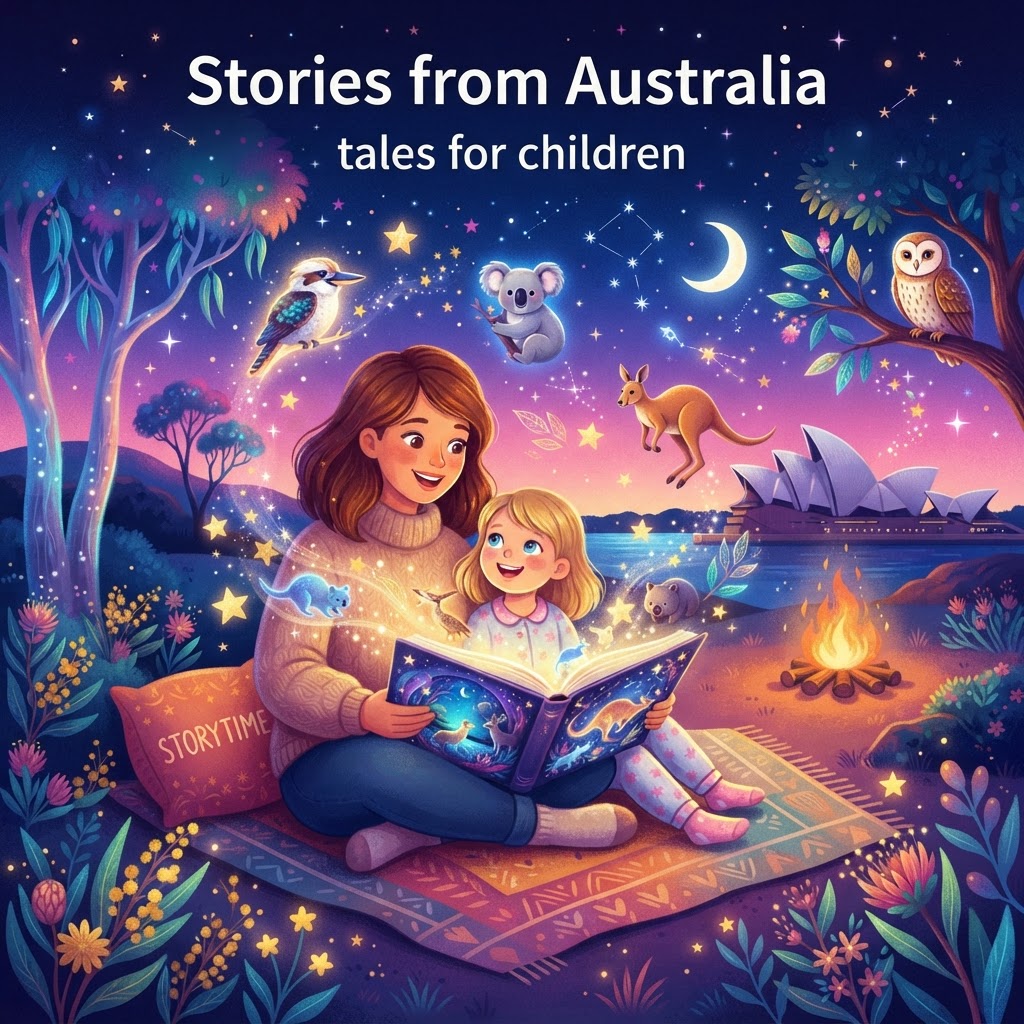
Stories from Australia can take children from red deserts to bright coral reefs, from sleepy eucalyptus forests to busy coastal cities. For families who want fresh bedtime ideas, Australia children stories offer wonder, humor, gentle life lessons, and a strong sense of place.
They also open the door to meaningful conversations. Australia has the world’s oldest continuous living cultures, and its storytelling traditions include deep connections to land, animals, seasons, and community. That makes Australia tales for kids both magical and rich in learning.
What makes stories from Australia so special?
Stories from Australia are special because they connect children to place, nature, and culture in vivid ways. Many Australian stories are shaped by striking landscapes, unique animals, and a long tradition of oral storytelling that helps children remember values and knowledge.
A key part of Australia storytelling is the heritage of Aboriginal and Torres Strait Islander peoples. Story has long been used to share history, identity, kinship, and knowledge about Country. If you want to understand this context, AIATSIS and the National Museum of Australia are excellent starting points.
It is important to be respectful here. Some First Nations stories are sacred, community-specific, or shared only in certain contexts. For bedtime reading, it is best to choose books by Aboriginal and Torres Strait Islander creators or use stories that are inspired by Australian settings rather than retelling traditional narratives without permission. If you’d like more ideas, this guide to Australian folktales for kids is a helpful next read.
How do Australia children stories support learning and development?
Australia children stories support learning by building language, memory, empathy, and curiosity. When adults read aloud and talk about a story together, children strengthen attention, vocabulary, and emotional understanding.
Research supports this. The Center on the Developing Child at Harvard University explains that back-and-forth interaction helps build strong brain architecture through “serve and return” exchanges. Shared reading gives children exactly that kind of responsive interaction, especially when you pause for questions or let them predict what happens next. You can explore more at Harvard’s Center on the Developing Child.
Storytelling also works well because it uses repetition, rhythm, and imagery. Studies on dialogic reading, including work by Grover Whitehurst and colleagues, show that children learn more when adults invite them to join in. That means a simple Australian bedtime story can become a rich language activity when you ask:
- “What animal do you think appears next?”
- “How would the child help the lost joey?”
- “What sounds would you hear in the bush at dawn?”
Which Australia tales for kids can you tell tonight?
The best Australia tales for kids are simple, sensory, and grounded in real places or animals. Below are five story ideas inspired by Australian culture and geography, each with child-friendly themes and respectful cultural context.
1. The Bilby Who Mapped the Moonlit Desert
A young bilby is afraid to leave its burrow at night, but a patient grandparent teaches it how to read the stars, the wind, and the tracks in the sand. By dawn, the bilby has helped another animal find water and learned that courage can be quiet.
Cultural context: The bilby is native to Australia’s arid interior and is a wonderful guide to desert life. This story can gently introduce children to the idea that people have long learned from the land and sky. To stay respectful, keep the focus on observation, family wisdom, and habitat care rather than borrowing sacred star stories.
2. The Reef Keeper and the Singing Corals
A child visiting the Great Barrier Reef imagines that the coral sings when the sea is healthy. With the help of a sea turtle, they clean drifting rubbish, listen for fish calls, and learn that tiny actions can protect a huge ecosystem.
Cultural context: The Great Barrier Reef is part of many First Nations communities’ Sea Country, where ocean places hold deep cultural meaning. This is a good chance to talk about stewardship, marine life, and why reefs matter. It also pairs well with simple science learning about coral, tides, and conservation.
3. The Little Kookaburra Who Lost the Morning Laugh
A young kookaburra wakes up one morning and cannot make its famous laugh. As it travels through the bush, other animals help it find confidence again by sharing their own special sounds.
Cultural context: Kookaburras are a familiar part of Australian bush life, and their call is often linked with daybreak. This story celebrates local wildlife and emotional growth. For younger children, it works beautifully as a repetitive sound story with chances to copy bird calls and join in.
4. The Joey and the City Tram
A child in a busy Australian city imagines a lost joey hopping onto a tram at sunset. Together, they travel through neighborhoods filled with different languages, foods, and families before finding the joey’s wildlife rescue center.
Cultural context: Not all stories from Australia need to happen in the outback. Modern Australia is urban and multicultural, and many children live in cities near beaches, parks, ferries, or trams. This idea helps kids see Australia as both ancient and contemporary, with room for Indigenous place names and multicultural everyday life.
5. The Rainmaker of the Wet Season
In northern Australia, a child waits impatiently for rain. An elder teaches them to notice changing clouds, frog songs, and the smell of the air, and the child learns that seasons announce themselves before they arrive.
Cultural context: Many First Nations communities use seasonal calendars that are more detailed than the simple four-season model. In the tropical north, the wet season shapes plants, animals, and daily life. This story can help children appreciate patterns in nature and the value of patient watching.
If your child enjoys global story journeys, you can also explore stories from Asia, stories from Africa, or stories from Europe for more bedtime inspiration.
How can you create personalized stories from Australia with InstaTales?
You can create personalized stories from Australia by combining a child’s interests with a specific Australian setting, animal, or adventure theme. This makes bedtime stories feel familiar, exciting, and easier for children to remember.
A simple way to begin is to create your own personalized bedtime story using a clear prompt. Include:
- your child’s name and age
- the setting: reef, bush, desert, city, or rainforest
- a gentle bedtime goal: bravery, sharing, calm, or kindness
- a favorite animal: koala, wombat, bilby, kangaroo, turtle, or kookaburra
- a note about respectful inspiration from Australian landscapes and everyday life
You can also use story templates if you want a quicker start. After you make a few favorites, save them in your story library so children can revisit the same characters again and again.
For classrooms, Australia-themed stories can support geography, literacy, and creative writing. Teachers can adapt stories for group discussion, map work, or compare-and-contrast activities through InstaTales for teachers.
Why does cultural respect matter when sharing Australia storytelling with children?
Cultural respect matters because stories are not just entertainment; they carry identity, history, and community knowledge. When adults choose stories carefully, children learn curiosity without absorbing stereotypes or misinformation.
The safest approach is simple:
- use authentic books by Aboriginal and Torres Strait Islander authors when sharing traditional stories
- describe your own story as “inspired by Australia” rather than “a Dreaming story” unless it comes from a trusted source
- avoid mixing sacred traditions with random fantasy elements
- teach children that many stories belong to specific peoples and places
This approach builds both empathy and accuracy. It also shows children that good storytelling includes listening, learning, and giving credit.
Frequently Asked Questions
What age are stories from Australia best for?
Stories from Australia can work for ages 1-10 when the language and plot match the child’s stage. Toddlers usually enjoy animal sounds and repetition, while older children can follow richer adventures with geography, culture, and problem-solving.
Can I use Australian animals in a made-up bedtime story?
Yes, absolutely. Using animals like kangaroos, wombats, or kookaburras is a fun way to create Australia tales for kids, especially when you include accurate details about where they live and how they behave.
Is it okay to retell Aboriginal stories at home?
It is best to use versions shared by Aboriginal and Torres Strait Islander authors, publishers, or cultural institutions. Some stories are sacred or community-specific, so respectful sourcing matters.
How do I make Australia children stories educational?
Add one clear learning goal. You might focus on habitats, seasons, maps, animal behavior, or new vocabulary while keeping the story warm and imaginative.
Can teachers use Australia storytelling in class?
Yes. Australia storytelling works well for literacy lessons, geography units, and speaking activities, especially when paired with maps, nature study, or art. Personalized stories can also help reluctant readers feel more involved.
What should I include in an InstaTales prompt for an Australian story?
Start with a child’s name, age, and favorite theme, then add an Australian setting and a gentle lesson. For example: “Create a calm bedtime story for Maya, age 6, set near the Great Barrier Reef, with a sea turtle and a lesson about helping others.”
Ready to Create a Personalized Bedtime Story?
Use our free AI bedtime story generator to create a personalized illustrated story for your child in 30 seconds — no credit card needed.
Popular story types:
Maya Rodriguez
Lead Content Editor & Early Literacy Specialist
Maya is a former early childhood educator and literacy specialist with over a decade of experience helping children develop a love of reading. She leads content at InstaTales, where she writes about the science of storytelling, child development, and how families can use personalized AI stories to build literacy and emotional resilience.
instatales.ai