Stories from Egypt for Children: 5 Tale Ideas
Travel to Egypt through these enchanting stories for children — tales of adventure, wisdom, and wonder from around the world.
✦ Key Takeaways
- •Stories from Egypt feel magical because the setting is full of vivid, child-friendly images.
- •Egypt storytelling is rich because it comes from many layers of history and everyday life.
- •The best Egypt tales for kids connect real features of Egyptian culture and geography with simple emotional lessons.
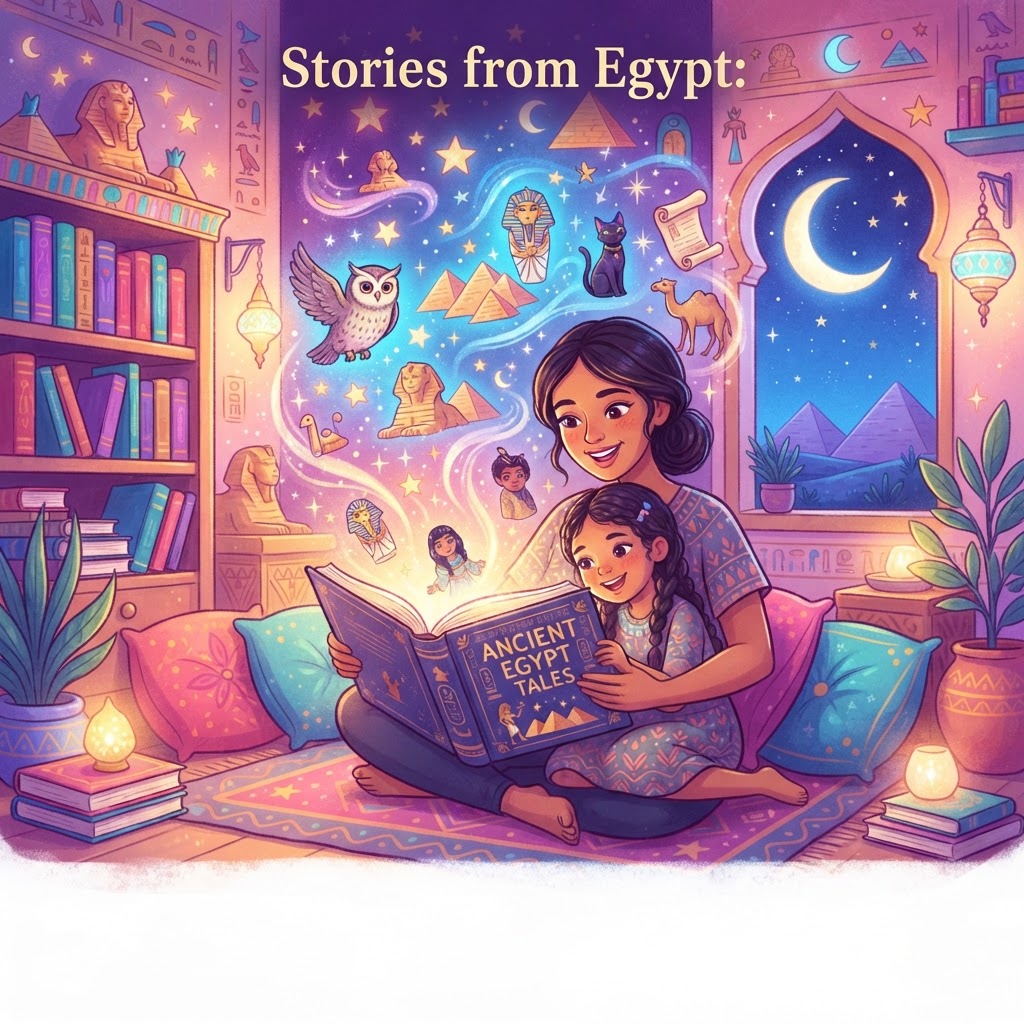
Egypt is a wonderful setting for bedtime stories because it blends river life, golden deserts, busy cities, ancient wonders, and timeless lessons. The best stories from Egypt help children imagine a new place while still connecting to familiar themes like friendship, courage, kindness, and curiosity.
For parents and teachers, Egypt children stories can also open the door to geography, history, and cultural understanding. Below, you’ll find a simple guide to Egypt storytelling, five original Egypt tales for kids inspired by real cultural and natural features, and easy ways to create your own personalized Egypt-themed stories with InstaTales.
Why are stories from Egypt so magical for children?
Stories from Egypt feel magical because the setting is full of vivid, child-friendly images. Children can picture the Nile at sunset, desert stars, bustling markets, and hidden treasures, which makes listening easier and more exciting.
Egypt also offers a strong balance of wonder and structure. Young children love repeated patterns in stories, and Egypt-themed tales naturally include meaningful journeys: sailing down a river, crossing the sand, visiting a village, or solving a mystery in an old library.
From a child development perspective, rich story settings support language growth and memory. Shared reading and storytelling also build vocabulary, emotional connection, and background knowledge, especially when adults pause to ask questions and invite prediction. Organizations like the Harvard Center on the Developing Child have long emphasized the power of warm, responsive back-and-forth language interactions in early learning.
What makes Egypt storytelling traditions so rich?
Egypt storytelling is rich because it comes from many layers of history and everyday life. Ancient myths, folktales, family stories, proverbs, and oral traditions have all shaped the way stories are told in and about Egypt.
The Nile has always been central to life, so many story ideas naturally grow from water, farming, travel, and animals. Desert landscapes add a different mood: patience, distance, stars, and survival. Egyptian stories can also draw on the energy of cities like Cairo and Alexandria, where trade, learning, crafts, and community create strong story worlds.
It helps to remember that Egypt is not only “the land of pyramids.” It is a living country with deep Arab, African, Mediterranean, and ancient historical roots. When adults share Egypt children stories, it is best to include both the famous landmarks and the everyday human details: bread baking, river boats, family gardens, music, and neighborhood life.
For families who want reliable background, the Metropolitan Museum of Art’s overview of ancient Egypt offers helpful historical context, while UNESCO’s resources on intangible cultural heritage are a good reminder that storytelling is also a living cultural practice passed from person to person.
Which Egypt tale ideas work especially well for kids?
The best Egypt tales for kids connect real features of Egyptian culture and geography with simple emotional lessons. Here are five original story starters you can adapt for toddlers, preschoolers, and primary-age children.
1. The Little Boat on the Nile
A child helps a tiny painted boat travel down the Nile to deliver a message of friendship from one village to another. Along the way, the boat meets fishermen, reeds, ibis birds, and a helpful hippo carved from wood.
Cultural context: The Nile has shaped Egyptian life for thousands of years. A Nile-based story introduces children to the importance of rivers, farming, transport, and community without becoming too complex.
2. The Date Palm That Learned to Share
In a warm oasis, a young date palm wants to keep all its sweet fruit. After a sandstorm, it learns that sharing with birds, travelers, and neighbors helps the whole oasis thrive.
Cultural context: Date palms are important across Egypt and the wider region for food, shade, and daily life. This story idea works beautifully for younger children because it connects generosity to the environment in a clear, gentle way.
3. The Cat Who Loved Alexandria
A clever street cat wanders into a modern library in Alexandria and becomes the unexpected helper of a child searching for a lost story scroll. Together, they discover that wisdom can come from old books and new friends.
Cultural context: Alexandria is famous as a historical center of learning and exchange. You do not need to recreate the ancient Library of Alexandria exactly; instead, you can use the city’s identity as a place of books, ideas, and curiosity.
4. The Desert Star Map
A child joining a family caravan becomes frightened by the huge desert at night. With the help of an elder, they learn to read the stars, trust the camel’s steady steps, and find courage in quiet places.
Cultural context: Egypt’s deserts are a major part of its geography. This kind of story can introduce children to travel, resilience, and observation, while showing the desert as beautiful and alive rather than empty.
5. The Crocodile Who Guarded the Reeds
Near a peaceful bend in the river, animals argue over who owns the best patch of reeds. A wise crocodile helps them see that the river belongs to everyone who cares for it.
Cultural context: The Nile ecosystem is home to many plants and animals, and crocodiles have long held symbolic importance in Egyptian history. For children, animal stories are a safe and engaging way to explore fairness, stewardship, and cooperation.
If your child enjoys global folktale settings, you can pair these with stories from Asia or compare river, desert, and mountain settings in stories from Europe.
How can parents and teachers make Egypt children stories more meaningful?
Parents and teachers can make Egypt children stories more meaningful by adding simple context before, during, and after reading. A quick map, one new word, or one thoughtful question is often enough to deepen learning without interrupting the magic.
Try these easy strategies:
- Show Egypt on a globe or map before the story starts.
- Teach one setting word, such as Nile, oasis, desert, or market.
- Ask prediction questions like, “What do you think the child will find by the river?”
- Connect the story to the child’s own life: “Have you ever helped carry a message?”
- Invite drawing after reading to build recall and comprehension.
This approach supports what literacy experts often call active or dialogic reading. Children understand more when adults make space for conversation, repetition, and imagination. That matters especially in multicultural storytelling, where children are building both empathy and knowledge.
How can you create personalized stories from Egypt with InstaTales?
You can create personalized stories from Egypt by choosing a child’s age, interests, and emotional theme, then placing the adventure in an Egyptian setting. Personalization helps children feel part of the story, which increases attention and enjoyment.
Here is a simple formula that works well:
- Choose the setting: Nile village, Cairo neighborhood, desert camp, oasis, or Alexandria library.
- Pick the child’s role: helper, explorer, animal friend, sibling, or problem-solver.
- Add one gentle challenge: getting lost, learning patience, finding a message, sharing food, or helping a friend.
- End with a clear emotional win: confidence, kindness, bravery, teamwork, or curiosity.
With InstaTales, you can create your own personalized bedtime story in minutes. If you want a faster start, browse story templates and customize the names, age level, and setting details. Afterward, save favorite Egypt adventures in your story library so children can revisit beloved characters again and again.
For classroom use, Egypt-themed stories also work well for cross-curricular lessons on geography, habitats, and world cultures. Teachers can adapt them for read-aloud time, writing prompts, or map activities.
How can families keep Egypt storytelling respectful and age-appropriate?
Respectful Egypt storytelling starts with accuracy, warmth, and balance. Children do not need heavy detail, but they do benefit when stories show Egypt as a real place with real people, not just a backdrop of treasure and tombs.
A few good guidelines help:
- Include everyday life, not only ancient monuments.
- Avoid turning all Egyptian characters into stereotypes or “mysterious” figures.
- Use age-appropriate wonder instead of fear-heavy curses or punishments.
- Check a few trusted references when adding historical details.
- Focus on universal childhood experiences within a distinct local setting.
This matters because children absorb patterns quickly. Stories shape how they think about places and people. When stories from Egypt combine imagination with care, they become a strong tool for empathy, literacy, and global awareness.
Frequently Asked Questions
What age are Egypt tales for kids best for?
Egypt-themed stories can work well from ages 1-10 when the language and plot match the child’s stage. Toddlers usually enjoy simple animal or rhythm-based tales, while older children can follow longer adventures with historical or geographic detail.
Are stories from Egypt only about ancient pyramids?
No. While pyramids and pharaohs are familiar entry points, the best Egypt children stories also include the Nile, deserts, cities, gardens, animals, and everyday family life. This gives children a fuller and more respectful picture of Egypt.
How do I make Egypt storytelling less overwhelming for young children?
Keep the focus narrow. Choose one setting, one problem, and one emotional lesson, such as sharing at an oasis or being brave on a river trip. A few vivid details are more effective than a long history lesson.
Can personalized Egypt stories support learning?
Yes. Personalized stories can strengthen attention, vocabulary, and recall because children are more engaged when they hear their own name, interests, and feelings reflected in the story. They also make geography and culture feel more accessible.
What should I include in a custom story set in Egypt?
Start with a clear setting, such as the Nile or a desert village, then add one age-appropriate challenge and one positive resolution. Sensory details like reeds, stars, date palms, boats, and market sounds make the story feel vivid without becoming complicated.
Where can I find more world story inspiration?
A great next step is exploring other regional collections on the InstaTales blog. Families who enjoy comparing settings may also like stories inspired by the Arctic, Australia, or South America.
Ready to Create a Personalized Bedtime Story?
Use our free AI bedtime story generator to create a personalized illustrated story for your child in 30 seconds — no credit card needed.
Popular story types:
Maya Rodriguez
Lead Content Editor & Early Literacy Specialist
Maya is a former early childhood educator and literacy specialist with over a decade of experience helping children develop a love of reading. She leads content at InstaTales, where she writes about the science of storytelling, child development, and how families can use personalized AI stories to build literacy and emotional resilience.
instatales.ai