Stories from India for Children: 5 Tale Ideas
Travel to India through these enchanting stories for children — tales of adventure, wisdom, and wonder from around the world.
✦ Key Takeaways
- •Stories from India are captivating because they blend wisdom, imagination, and strong rhythms that children can easily follow.
- •The best India tales for kids are rooted in real places, familiar emotions, and a gentle challenge that ends with hope.
- •India children stories support learning by building vocabulary, background knowledge, memory, and emotional understanding.
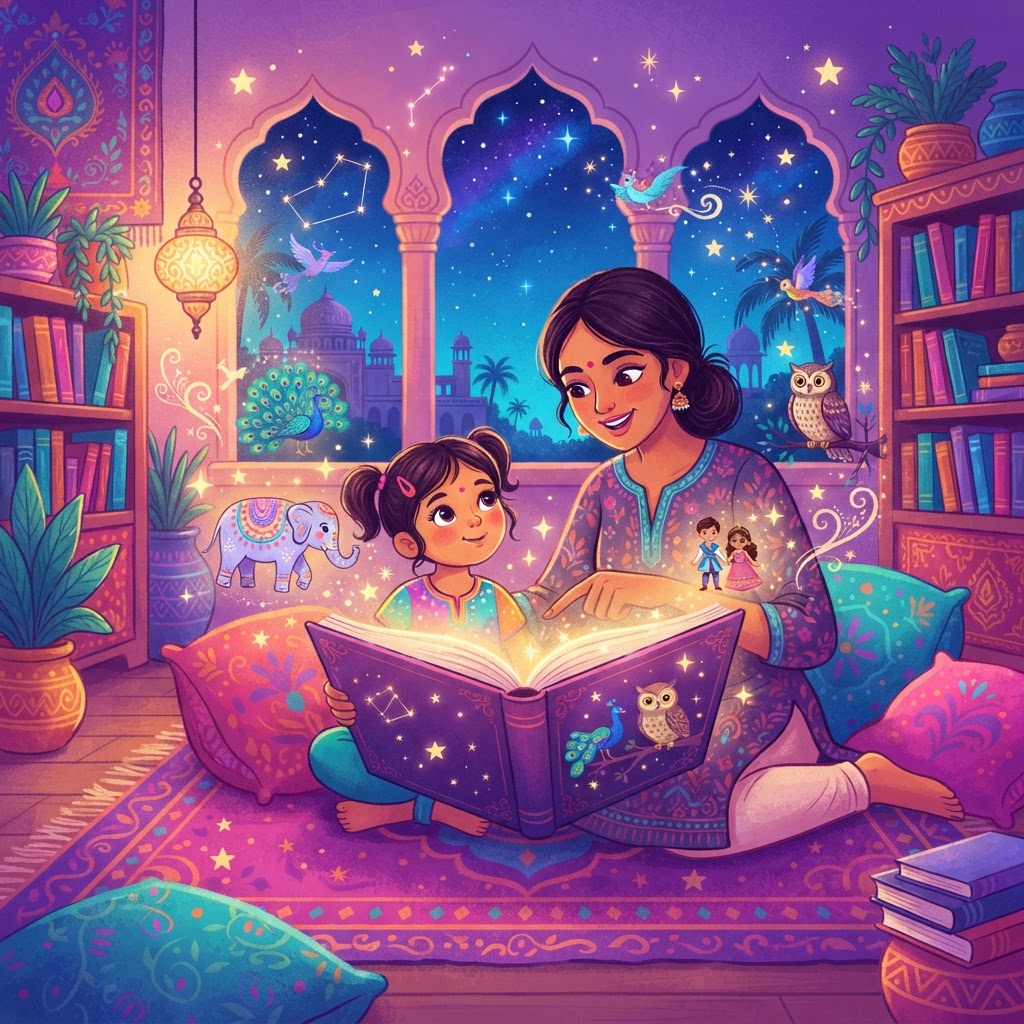
If you want to take children on a gentle journey at bedtime, stories from India are a wonderful place to begin. India’s story world is full of clever animals, snowy mountains, busy cities, mango groves, deserts, rivers, and festivals of light and color. For young listeners, these tales offer adventure and comfort at the same time.
They also give children something more lasting: world knowledge, empathy, and language growth. The American Academy of Pediatrics highlights the value of shared reading from the earliest years, and the Harvard Center on the Developing Child explains how warm back-and-forth conversations build language and thinking. That makes India children stories especially powerful when adults pause, wonder aloud, and invite children to join in.
What makes stories from India so captivating for children?
Stories from India are captivating because they blend wisdom, imagination, and strong rhythms that children can easily follow. Many Indian tales use repeating patterns, animal characters, and clear moral choices, which help young children stay engaged and make meaning.
India has one of the world’s richest storytelling traditions. Families have long passed stories down through oral storytelling, songs, puppet shows, temple art, village performances, and bedtime conversations. These traditions vary across regions, languages, and communities, so India storytelling is not just one style—it is a whole living library.
A few traditions often shape children’s stories from India:
- The Panchatantra, a classic collection of animal tales about wisdom, friendship, and problem-solving
- Jataka tales, stories that often highlight kindness, patience, and good choices
- Epic retellings from the Ramayana and Mahabharata, adapted gently for children
- Regional folk tales from places like Rajasthan, Bengal, Kerala, Gujarat, and the Himalayas
- Performance traditions such as puppetry, dance, and musical storytelling
These tales matter because they connect children to place. A story set beside the Ganges feels different from one set in the Thar Desert or the Kerala backwaters. If you want more classic inspiration, our guide to Indian folktales for kids is a helpful next read.
India’s storytelling heritage is also part of a broader global respect for traditional cultural expression, reflected in UNESCO’s work on intangible cultural heritage. For children, that means listening to these tales is not just entertaining—it is a way of meeting a culture through its voice.
Which India tales for kids make wonderful bedtime adventures?
The best India tales for kids are rooted in real places, familiar emotions, and a gentle challenge that ends with hope. These five story ideas are inspired by Indian geography and culture, and each can be adapted for toddlers, preschoolers, or older children.
1. The Moonlit Boat of Kerala
A child travels through Kerala’s quiet backwaters on a houseboat and helps a lost baby otter find its family before the monsoon rain arrives. Along the way, the child sees coconut palms, fishing nets, and glowing lamps reflected in the water.
Cultural context: Kerala is known for its lush waterways, boats, tropical greenery, and strong traditions of hospitality. This setting works beautifully for calm bedtime stories because the water creates a soothing pace.
2. The Singing Sand Dunes of Rajasthan
In the Thar Desert, a young hero hears music carried by the wind and follows it to a hidden puppet caravan. To help the performers reach a village festival, the child must guide a camel under the stars and protect a precious lantern from the desert breeze.
Cultural context: Rajasthan is famous for desert landscapes, forts, textiles, folk music, and kathputli puppetry. A story here can introduce children to oral performance traditions in a playful, age-appropriate way.
3. The Snow Bell in the Himalayas
A child in a mountain village finds a silver bell buried in the snow and learns it belongs to a herd returning home before nightfall. With the help of a wise grandmother and a sturdy yak, the child climbs icy paths and listens carefully to the sounds of the hills.
Cultural context: India’s northern mountain regions include the Himalayas, where village life is shaped by altitude, weather, and close ties to animals and community. This type of tale encourages patience, courage, and respect for nature.
4. The Mangrove Secret of the Sundarbans
A curious child paddles through the Sundarbans and discovers tiny glowing seeds that can help restore a storm-damaged mangrove island. A watchful tiger is nearby, but the real challenge is learning how to care for the forest safely and gently.
Cultural context: The Sundarbans, in eastern India, are one of the world’s most famous mangrove ecosystems and home to the Bengal tiger. This setting is ideal for environmental themes and for helping children understand that people and wild places are deeply connected.
5. The Festival Kite of Gujarat
On a bright festival morning in Ahmedabad, a child’s handmade kite lifts into the sky carrying a message of friendship. When the kite drifts across rooftops, the child teams up with neighbors to bring it back before sunset.
Cultural context: Gujarat is well known for Uttarayan, the kite festival that fills the sky with color. This makes a joyful backdrop for stories about community, celebration, and trying again when plans change.
These ideas also help families build a wider world-literature habit. After India, children may enjoy exploring stories from Japan or comparing landscapes in tales from other regions.
How do India children stories support learning and empathy?
India children stories support learning by building vocabulary, background knowledge, memory, and emotional understanding. They are especially useful because they combine strong imagery with meaningful choices, which helps children remember what they hear.
Shared storytelling supports development in practical ways:
- Language growth: New words like monsoon, mangrove, camel caravan, or houseboat expand vocabulary naturally.
- Listening skills: Children learn to follow a sequence, predict what might happen next, and retell events in order.
- Empathy: When a character helps an animal, misses home, or feels brave and nervous at once, children practice perspective-taking.
- Cultural understanding: Stories invite children to notice how families live, celebrate, travel, and solve problems in different places.
Research-backed organizations consistently point to these benefits. The American Academy of Pediatrics recommends reading aloud because it supports language, relationships, and early literacy. Educators also know that background knowledge matters: children understand texts better when they know more about the world.
To make India storytelling even more effective, try a few simple habits:
- Pause to explain one new word at a time
- Ask, “What do you think the child should do next?”
- Compare the setting to your child’s own environment
- Invite drawing, pretend play, or map-looking after the story
This kind of gentle interaction turns bedtime into a rich learning moment without making it feel like a lesson.
How can you create personalized stories set in India with InstaTales?
You can create a personalized India story by choosing one real setting, one age-appropriate challenge, and one comforting ending. The goal is not to recreate every detail of Indian culture, but to build a respectful, child-friendly adventure inspired by place.
A simple prompt structure works well:
- Choose a setting: Kerala backwaters, Rajasthan desert, Himalayan village, Mumbai train station, or Sundarbans mangroves
- Choose a main character: your child, siblings, a favorite stuffed animal, or a brave friend
- Choose a theme: kindness, courage, sharing, curiosity, or caring for nature
- Choose a story tone: soothing, funny, magical, or adventurous
- Add one cultural detail: a kite festival, puppet show, mango market, monsoon rain, or lantern boat
For example, you might ask InstaTales to create a story about your child helping a lost peacock before a village celebration in Rajasthan, or finding a floating message in Kerala during the monsoon. You can create your own personalized bedtime story from scratch or start faster with themed story templates.
A few best-practice tips help keep stories respectful and engaging:
- Use specific places rather than vague “exotic” descriptions
- Focus on daily life and landscape, not stereotypes
- Keep pronunciation-friendly names if your child is very young
- Add a small glossary if you are using new cultural words
- Save favorite versions in your story library for easy re-reading
For teachers, personalized country-based storytelling can also support geography, reading, and social studies units. That is one reason many educators use InstaTales for teachers to build themed reading experiences around places, traditions, and compare-and-contrast activities.
Frequently Asked Questions
What age are stories from India best for?
Stories from India can work for ages 1-10 when the language and length match the child. Toddlers do best with simple animal tales and repetition, while older children can enjoy longer adventures with geography and cultural details.
Are traditional Indian stories suitable for bedtime?
Yes, many are well suited to bedtime when gently adapted. Choose calmer plots, soften scary moments, and end with safety, belonging, or a solved problem.
How can I tell India children stories respectfully?
Start with real places, everyday details, and a learning mindset. Avoid stereotypes, check unfamiliar facts, and present India as diverse rather than as one single culture or experience.
What should I include in a personalized India story prompt?
Include the setting, the child’s name, a simple challenge, and one cultural detail. For example: “Write a gentle bedtime story about Maya in Kerala helping a baby elephant during warm monsoon rain.”
Can India tales for kids be used in the classroom?
Absolutely. They work well for literacy, geography, art, and social-emotional learning, especially when paired with maps, discussion, and drawing activities.
Where can I find more world story inspiration for children?
A good next step is to explore story collections from different regions and compare themes. Looking at tales from India alongside stories from other countries helps children notice both shared values and beautiful cultural differences.
Get a new bedtime story every week
Free, personalized, and delivered to your inbox. No spam, ever.
Ready to Create a Personalized Bedtime Story?
Use our free AI bedtime story generator to create a personalized illustrated story for your child in 30 seconds — no credit card needed.
Popular story types:
Maya Rodriguez
Lead Content Editor & Early Literacy Specialist
Maya is a former early childhood educator and literacy specialist with over a decade of experience helping children develop a love of reading. She leads content at InstaTales, where she writes about the science of storytelling, child development, and how families can use personalized AI stories to build literacy and emotional resilience.
instatales.ai