Stories from Mexico: 5 Tales for Children
Travel to Mexico through these enchanting stories for children — tales of adventure, wisdom, and wonder from around the world.
✦ Key Takeaways
- •Stories from Mexico are special because they blend wonder, wisdom, and everyday life in ways children easily understand.
- •Mexico storytelling reflects the country’s cultural depth and natural diversity.
- •The best Mexico-inspired story ideas use real cultural details while staying gentle, age-appropriate, and imaginative.
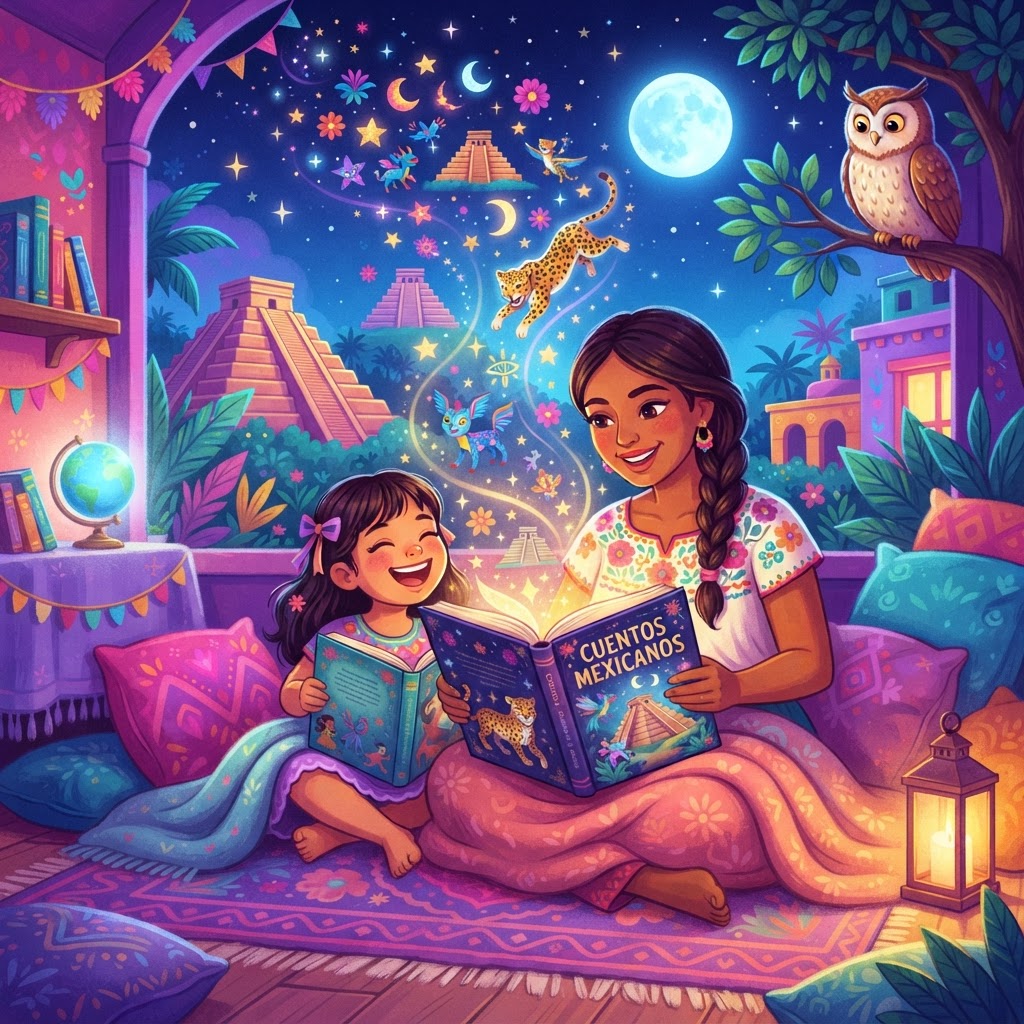
Mexico is a wonderful place to explore through story. From desert cactus fields to colorful markets, ancient pyramids, jungle cenotes, and floating gardens, stories from Mexico give children a rich mix of adventure, beauty, humor, and heart.
For parents and teachers, Mexico children stories are also a gentle way to build cultural awareness. Below, you’ll find a simple guide to Mexico storytelling traditions, five original Mexico tales for kids inspired by real places and customs, and practical tips for creating your own personalized story set in Mexico.
What makes stories from Mexico so special for children?
Stories from Mexico are special because they blend wonder, wisdom, and everyday life in ways children easily understand. Many Mexican tales include animals, family bonds, brave children, natural landscapes, and moments of clever problem-solving.
That mix matters for young readers. Shared storytelling helps children build vocabulary, background knowledge, and emotional understanding. The American Academy of Pediatrics recommends reading aloud from infancy because it supports language development and close caregiver connection, and Reading Rockets also notes that read-alouds strengthen comprehension and listening skills.
Mexican storytelling often feels especially vivid because it is deeply rooted in place. A story might begin in a village plaza, on a mountainside, near a volcano, or beside a field of marigolds. That makes these tales memorable for children, who learn best when stories include concrete images, rhythm, and familiar emotions.
If your family enjoys global bedtime tales, you can also explore more world-inspired ideas on the InstaTales blog.
How does Mexico storytelling reflect the country’s culture and geography?
Mexico storytelling reflects the country’s cultural depth and natural diversity. The best stories are shaped by Mexico’s many landscapes, languages, communities, and artistic traditions.
Mexico includes deserts in the north, tropical forests in the south, coastlines on two oceans, high mountains, volcanoes, and major cities full of layered history. These settings naturally inspire stories about journeys, rain, animals, farming, celebration, and community life.
It is also important to remember that Mexico is not one single tradition. Storytelling has roots in many Indigenous cultures, including Maya, Mexica, Zapotec, and Mixtec communities, as well as later Spanish influences and local regional customs. The Smithsonian Latino Center offers helpful cultural resources that show how broad and varied Mexican heritage really is.
For children, this means Mexico tales for kids can introduce:
- respect for nature
- strong family and community ties
- creative folk art
- legends linked to mountains, stars, and water
- celebrations that honor memory, courage, and kindness
This is also why it helps to be specific. Instead of saying “a child in Mexico,” you can say “a child in Oaxaca,” “a family in Yucatán,” or “a boat ride in Xochimilco.” Specific details make the story feel richer and more respectful.
Which Mexico tales for kids can inspire your next bedtime story?
The best Mexico-inspired story ideas use real cultural details while staying gentle, age-appropriate, and imaginative. These five examples are designed for bedtime, classroom read-alouds, or personalized story creation.
The Hummingbird and the Agave Field
A small hummingbird thinks it is too tiny to help a family whose agave plants are drying in the heat. After listening carefully to the wind, the bird helps lead clouds toward the field and reminds everyone that even small helpers matter.
Cultural context: Agave is strongly associated with many parts of Mexico, especially the central-western regions. Hummingbirds also appear in Mesoamerican symbolism and are a natural fit for stories about energy, courage, and persistence. This story works well for themes of self-belief and environmental care.
The Secret of the Singing Cenote
A curious child visiting the Yucatán Peninsula hears music coming from a cenote and discovers that the water “sings” when people treat it with respect. To keep the song alive, the child teaches friends how to protect the water and the creatures nearby.
Cultural context: Cenotes are natural sinkholes found especially in Yucatán and held deep significance in Maya history and worldview. This story can introduce children to water conservation, local ecology, and the idea that natural places deserve care, not just admiration.
The Little Alebrije Who Lost Its Colors
A young alebrije wakes up one morning with faded wings and no bright patterns at all. On a journey through workshops and markets, it learns that color returns when it stops copying others and discovers its own design.
Cultural context: Alebrijes are beloved Mexican folk art figures known for imaginative animal forms and bold colors. They originated in Mexico City and are also closely linked with Oaxacan carving traditions today. For children, this makes a lovely story about creativity, identity, and artistic expression.
The Volcano Sisters and the Night Messenger
Two volcano sisters watch over the valley, but one night the stars go missing behind heavy clouds. A brave child climbs the hillside with a lantern, carrying songs from the village to remind the mountains that people still remember their stories.
Cultural context: Mexico’s volcanic landscape has inspired legends for generations, especially around Popocatépetl and Iztaccíhuatl near central Mexico. You can gently adapt that atmosphere for young children without retelling tragic versions. The result is a calming story about memory, courage, and belonging.
The Lantern Boat of Xochimilco
A child takes an evening ride through Xochimilco and worries after losing a handmade lantern in the canal. Along the way, gardeners, birds, and neighbors help search for it, showing that a community can carry light together.
Cultural context: Xochimilco in Mexico City is famous for its canals and chinampa farming system. This setting helps children imagine a living, historical place where food, water, music, and community meet. If your child liked rainforest adventures, you might also enjoy these nature-rich stories from the Amazon.
How can adults share Mexico children stories respectfully?
Adults can share Mexico children stories respectfully by choosing specific, accurate details and avoiding stereotypes. The goal is not to make Mexico feel “exotic,” but to present it as a real, diverse place full of families, traditions, landscapes, and everyday life.
A few simple practices help:
- name real regions, foods, animals, or art forms correctly
- avoid mixing unrelated traditions into one story
- use a few Spanish words only when they support understanding
- show children in active roles, not as passive “tour guides”
- focus on universal feelings like bravery, curiosity, and kindness
This approach also supports learning. The American Academy of Pediatrics explains that interactive reading helps children connect stories to real life, especially when adults pause, explain, and invite questions through conversation on HealthyChildren.org.
One practical tip: if you use a cultural detail, let it matter in the plot. A cenote should not just be a pretty backdrop; it can shape the story’s mystery. A market should not just look colorful; it can become the place where a problem is solved through community.
How can you create personalized stories set in Mexico with InstaTales?
You can create personalized stories set in Mexico by starting with one real place, one child-friendly theme, and a few meaningful details. This keeps the story magical while still grounded in culture and geography.
A simple formula works well:
- choose a setting, such as Oaxaca, Yucatán, or Xochimilco
- make your child the helper, explorer, artist, or problem-solver
- add one cultural anchor, like an alebrije, cenote, volcano, or market
- pick a gentle lesson, such as courage, patience, or caring for nature
- keep the ending warm and reassuring for bedtime
With InstaTales, you can create your own personalized bedtime story using these ingredients in minutes. If you want a quicker start, browse story templates and adapt the setting, characters, or lesson to fit your child’s age and interests.
Afterward, save favorite stories in your story library so children can revisit them. Re-reading matters: repeated stories help young children notice patterns, remember language, and build confidence.
For teachers, these story prompts can also support geography, literacy, and art activities. A class might compare Mexico storytelling with another region, illustrate a scene, or map the story setting after reading.
Why are stories from Mexico such a strong choice for bedtime and learning?
Stories from Mexico work beautifully for both bedtime and learning because they combine soothing imagery with meaningful cultural depth. Children get the comfort of a clear narrative and the benefit of discovering a real part of the world.
That balance is ideal for ages 1-10. Younger children can enjoy the rhythm, animals, and repetition, while older children can connect with legends, geography, and artistic traditions. The best stories from Mexico do not lecture; they invite curiosity.
Whether you tell a tale about a hummingbird in an agave field or a lantern boat in Xochimilco, you are doing more than filling bedtime. You are helping a child imagine another landscape, hear another tradition, and see that stories can open the world in kind, memorable ways.
Frequently Asked Questions
What are common themes in stories from Mexico?
Many Mexico children stories focus on family, nature, bravery, cleverness, and community. You’ll also often find strong ties to place, such as volcanoes, markets, forests, or water.
Are Mexico tales for kids suitable for very young children?
Yes, if they are adapted thoughtfully. For younger children, choose gentle plots, simple language, and comforting endings while keeping one or two cultural details clear and meaningful.
How can I make a personalized Mexico bedtime story feel authentic?
Start with one real Mexican setting and build around it. Add accurate details like local animals, art, or geography, and avoid mixing many traditions together just for decoration.
Can teachers use Mexico storytelling in the classroom?
Absolutely. Mexico storytelling can support literacy, geography, art, and social-emotional learning, especially when paired with discussion, map work, or drawing activities.
What details work best in stories from Mexico for children?
Children respond well to vivid but simple details, such as hummingbirds, marigolds, cenotes, lanterns, volcanoes, and handmade crafts. The best details connect to the story’s problem and solution, not just the setting.
Ready to Create a Personalized Bedtime Story?
Use our free AI bedtime story generator to create a personalized illustrated story for your child in 30 seconds — no credit card needed.
Popular story types:
Maya Rodriguez
Lead Content Editor & Early Literacy Specialist
Maya is a former early childhood educator and literacy specialist with over a decade of experience helping children develop a love of reading. She leads content at InstaTales, where she writes about the science of storytelling, child development, and how families can use personalized AI stories to build literacy and emotional resilience.
instatales.ai