Stories from the Amazon for Curious Kids
Travel to the Amazon through these enchanting stories for children — tales of adventure, wisdom, and wonder from around the world.
✦ Key Takeaways
- •Stories from the Amazon are powerful because they combine vivid nature, strong emotions, and memorable life lessons.
- •Families should know that Amazon storytelling is diverse, living, and deeply connected to place.
- •The best Amazon-inspired story ideas mix wonder with cultural care.
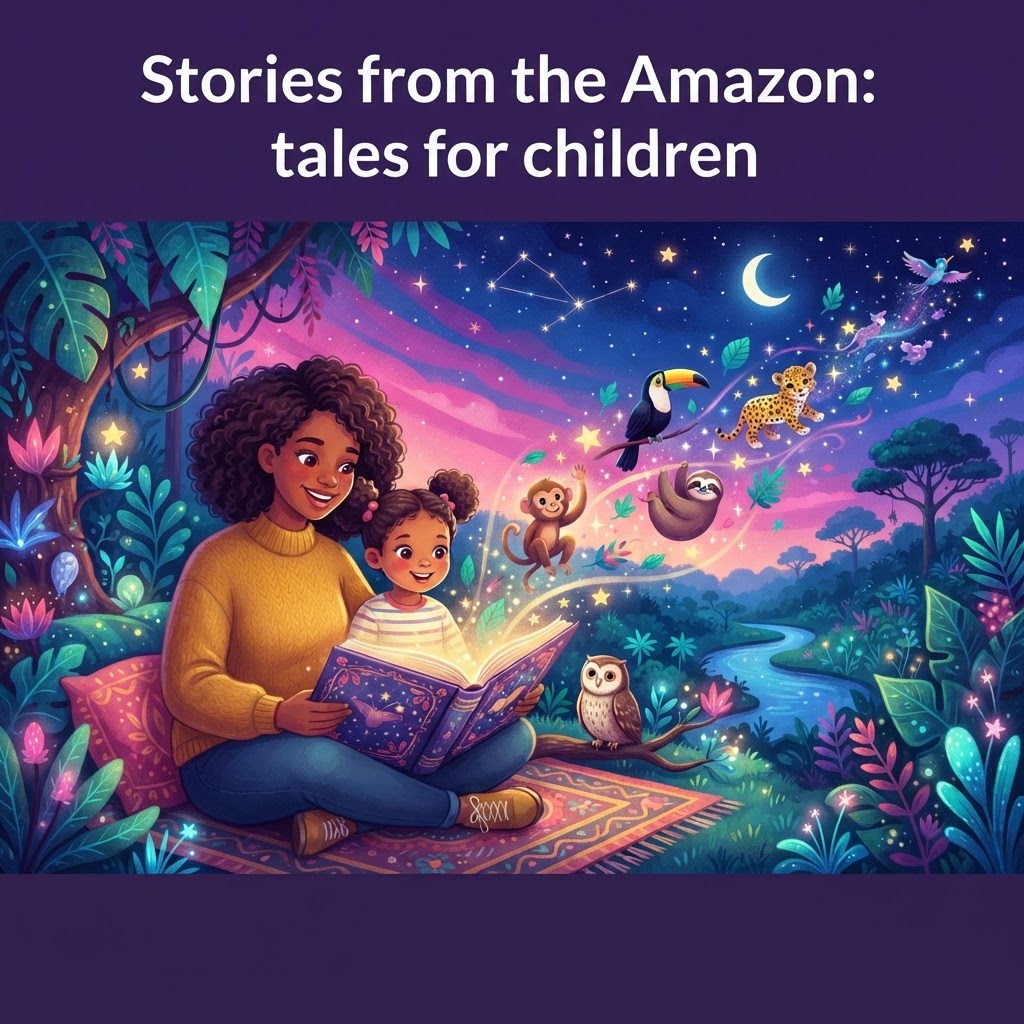
The best stories from the Amazon do more than entertain. They help children imagine river journeys, listen to rainforest sounds, and explore big ideas like courage, kindness, and respect for nature.
For families, teachers, and caregivers, the Amazon children stories can also open the door to geography, ecology, and cultural curiosity. Below, you’ll find a simple guide to Amazon storytelling traditions, five original story ideas inspired by the region, and practical ways to make your own personalized Amazon adventure with InstaTales.
Why are stories from the Amazon so powerful for children?
Stories from the Amazon are powerful because they combine vivid nature, strong emotions, and memorable life lessons. Children are naturally drawn to animals, journeys, mystery, and patterns in language, all of which appear beautifully in the Amazon setting.
The Amazon is full of story-rich details: pink river dolphins, towering trees, moonlit water, noisy frogs, and sudden rainstorms. These sensory images help young listeners build mental pictures, which supports language growth and comprehension.
Research also supports the value of shared storytelling. The Harvard Center on the Developing Child explains that warm, responsive conversation helps build early brain architecture. Likewise, Reading Rockets highlights read-alouds and oral storytelling as key tools for vocabulary, listening skills, and love of reading.
That is why the Amazon tales for kids work so well at bedtime and in the classroom: they feel magical, but they also build real literacy skills.
What should families know about Amazon storytelling traditions?
Families should know that Amazon storytelling is diverse, living, and deeply connected to place. There is no single “Amazon story tradition.” The Amazon Basin stretches across several countries and includes many Indigenous peoples, languages, and local customs.
In many communities, stories are tied to rivers, animals, stars, plants, weather, and daily life. Oral storytelling often carries practical knowledge too, such as when to travel, what to notice in the forest, or how people and nature depend on each other. The World Wildlife Fund’s Amazon overview is a helpful reminder that the region is both ecologically rich and culturally complex.
When sharing the Amazon storytelling with children, it helps to keep two ideas in mind:
- Be specific when you can. Say a story is “inspired by Amazon folklore” rather than claiming it represents every culture in the region.
- Avoid stereotypes. The Amazon is not just a “wild jungle.” It is home to real families, communities, languages, and knowledge systems.
If your child enjoys world story collections, you might also explore stories from South America or these gentle Amazon folktales for kids for more context and inspiration.
Which Amazon tales for kids can inspire your next story time?
The best Amazon-inspired story ideas mix wonder with cultural care. Below are five child-friendly ideas rooted in the geography, animals, and storytelling atmosphere of the Amazon, with a note about the cultural context behind each one.
1. The Child Who Followed the Pink River Dolphin
A curious child sees a pink dolphin at sunset and paddles into a sparkling side river, where the dolphin leads them to a hidden village celebration.
Cultural context: The pink river dolphin, or boto, appears in folklore from parts of the Brazilian Amazon. Different versions exist, and many present the boto as a mysterious river-being. For young children, this works best as a gentle tale about curiosity, river wisdom, and returning home safely.
2. Why the Moon Planted a Giant Water Lily
A child who loves the night sky makes a wish to touch the moon. By morning, a giant lily has opened on the river, reflecting moonlight like a silver mirror.
Cultural context: Stories connected to the giant Amazon water lily appear in several retellings from Brazil, often linking moonlight, beauty, and transformation. Since versions vary, it is wise to frame this as a story “inspired by Amazon legend” rather than a single fixed traditional tale.
3. The Brazil Nut Tree That Remembered Every Gift
When a village child shares fruit with birds, monkeys, and neighbors, a towering Brazil nut tree seems to “remember” each act of kindness and helps the whole community during a lean season.
Cultural context: Across the Amazon, forest knowledge includes careful observation of plants, food cycles, and respectful harvesting. This story idea reflects reciprocity with nature, a theme common in many oral traditions, without pretending to quote one specific culture.
4. The Lost Macaw in the Flooded Forest
During the rainy season, a young macaw loses its flock in a flooded forest. A child travels by canoe through mirrored trees, learning how fish, birds, and people adapt when the waters rise.
Cultural context: Seasonal flooding shapes life in many Amazon river communities. This makes a strong story setting for children because it connects adventure with real geography and teaches that people live with the rhythms of water, not against them.
5. The Night the Forest Sang Back
A child who feels too shy to speak hears the nighttime forest calling: frogs click, insects hum, and monkeys howl. By listening closely, the child learns that every voice has a place.
Cultural context: Sound is central to the Amazon storytelling experience. Nighttime listening, animal calls, and close attention to place are meaningful ways to build respectful stories that feel rooted in the forest rather than just decorated with exotic details.
For even more regional inspiration, you can compare storytelling styles in stories from the Arctic or stories from Australia.
How can parents and teachers share the Amazon children stories respectfully?
Parents and teachers can share Amazon-inspired stories respectfully by combining wonder with accuracy. The goal is not to remove magic, but to avoid flattening many cultures into one vague rainforest fantasy.
A few practical guidelines help:
- Say “inspired by the Amazon” if the story is original.
- Include real details, such as canoes, river seasons, forest layers, or animals native to the region.
- Avoid phrases like “jungle tribe” or “primitive people.”
- Show children that the Amazon includes present-day families, schools, languages, and communities.
- Use stories to invite questions, not make sweeping claims.
This approach is good teaching practice too. The American Academy of Pediatrics has long supported shared reading as a relationship-building routine, and educators know children learn best when stories feel both emotionally safe and intellectually honest. For classroom activities, InstaTales for teachers can help turn geography, literacy, and creative writing into one engaging lesson.
How can you create personalized stories from the Amazon with InstaTales?
You can create rich, personalized Amazon stories by starting with a few grounded details and one clear emotional theme. A child’s name, age, favorite animal, and bedtime need are often enough to shape a memorable story.
Here is a simple way to begin:
- Visit create your own personalized bedtime story.
- Choose a gentle theme: bravery, patience, sharing, or listening.
- Add Amazon details: a river canoe, a friendly capybara, glowing fireflies, or a moonlit treehouse.
- Decide on the tone: sleepy, adventurous, funny, or soothing.
- Save favorites in your story library so children can revisit beloved tales.
If you want a faster start, try the ready-made story templates. You can also explore more ideas on the InstaTales blog.
A useful prompt might look like this:
“Create a calming bedtime story set in the Amazon for a 6-year-old named Maya. Include a pink river dolphin, soft rain, a canoe ride, and a lesson about listening carefully to nature. Keep the tone warm and reassuring.”
That kind of prompt gives structure without overloading the story. It also helps keep stories from the Amazon specific, respectful, and easy for children to follow.
Frequently Asked Questions
Are stories from the Amazon good for preschoolers?
Yes, many stories from the Amazon work beautifully for preschoolers when the plot is simple and the tone is gentle. Focus on repeating sounds, friendly animals, and one clear lesson.
How do I avoid stereotypes in the Amazon children stories?
Use accurate details and say when a story is original or “inspired by” the Amazon. It also helps to remember that the region includes many cultures, not one single way of life.
What themes work best in the Amazon tales for kids?
The strongest themes are respect for nature, bravery, cooperation, curiosity, and listening. These ideas fit the Amazon setting naturally and are easy for children to understand.
Can Amazon storytelling support learning in school?
Yes. The Amazon storytelling can support literacy, geography, science, and social-emotional learning all at once. A good story can lead into lessons on habitats, rivers, weather, and cultural diversity.
What age is best for personalized Amazon stories?
Children ages 1-10 can enjoy personalized stories, but the structure should match their stage. Younger children do best with short, rhythmic tales, while older children often enjoy quests, mysteries, and richer cultural context.
How long should a bedtime story set in the Amazon be?
For bedtime, shorter is usually better. Aim for 3-5 minutes for toddlers and preschoolers, and 5-10 minutes for early elementary readers unless the child wants a longer chapter-style adventure.
Get a new bedtime story every week
Free, personalized, and delivered to your inbox. No spam, ever.
Ready to Create a Personalized Bedtime Story?
Use our free AI bedtime story generator to create a personalized illustrated story for your child in 30 seconds — no credit card needed.
Popular story types:
Maya Rodriguez
Lead Content Editor & Early Literacy Specialist
Maya is a former early childhood educator and literacy specialist with over a decade of experience helping children develop a love of reading. She leads content at InstaTales, where she writes about the science of storytelling, child development, and how families can use personalized AI stories to build literacy and emotional resilience.
instatales.ai