Stories from Nordic Lands for Curious Kids
Travel to Nordic lands through these enchanting stories for children — tales of adventure, wisdom, and wonder from around the world.
✦ Key Takeaways
- •Stories from Nordic lands are special because they combine nature, wonder, and emotional warmth.
- •Nordic storytelling traditions work well at bedtime because they are rhythmic, sensory, and emotionally grounding.
- •The best Nordic lands tales for kids are rooted in real places, traditions, and values.
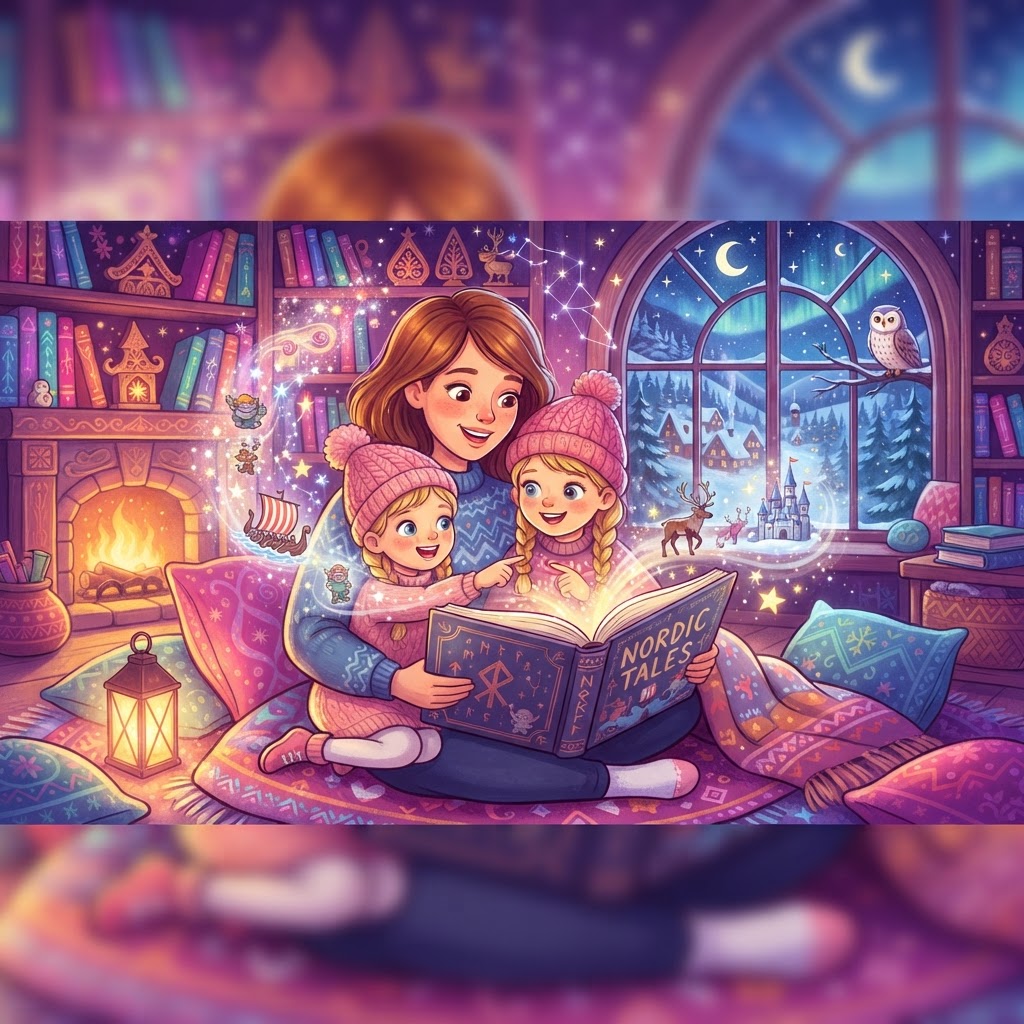
Snowy forests, glowing skies, deep fjords, and cozy firesides make stories from Nordic lands especially magical for children. These tales often feel calm and adventurous at the same time, which is why they work so well for bedtime.
For parents and teachers, Nordic-inspired stories also offer something deeper: they help children imagine life in other places, notice nature, and think about courage, kindness, and resilience. Below, you’ll find a simple guide to Nordic storytelling traditions, five original Nordic lands tales for kids, and practical ways to create your own personalized story with InstaTales.
What makes stories from Nordic lands so special for children?
Stories from Nordic lands are special because they combine nature, wonder, and emotional warmth. They often place children close to forests, water, snow, animals, and changing seasons, which gives even simple plots a sense of quiet magic.
The Nordic lands usually include Denmark, Finland, Iceland, Norway, and Sweden. Storytelling across this region has been shaped by long winters, seafaring life, rural traditions, and close attention to weather and light. In many tales, the landscape is not just a backdrop. It acts almost like another character.
That is one reason Nordic lands children stories feel so memorable. A mountain may test a child’s courage. A frozen lake may teach patience. A summer sky that never fully darkens may invite curiosity rather than fear.
Traditional Nordic tales also include:
- Trolls, giants, and hidden beings
- Talking animals and wise helpers
- Journeys across sea, snow, or forest
- Lessons about fairness, humility, and clever thinking
This reflects a wider oral tradition found in many cultures. As UNESCO explains, storytelling is a form of living cultural heritage that carries values, memory, and identity from one generation to the next.
Why do Nordic storytelling traditions work so well at bedtime?
Nordic storytelling traditions work well at bedtime because they are rhythmic, sensory, and emotionally grounding. Even when adventure appears, the tone often stays steady and reassuring.
From a child development perspective, that matters. The American Academy of Pediatrics recommends reading aloud from infancy because it supports language growth, attachment, and early literacy. Bedtime stories are especially helpful when they combine routine, closeness, and conversation.
Nordic-inspired tales are a strong fit because they often include:
- Repetition children can predict
- Nature details that slow the pace
- Gentle problem-solving instead of constant danger
- Clear emotional themes like bravery, belonging, or patience
The Harvard Center on the Developing Child also highlights how warm back-and-forth interactions build early brain architecture. When you pause during a story to ask, “What do you think the fox will do next?” or “How would you feel in the snowstorm?” you turn reading into a rich learning moment.
In short, Nordic lands storytelling supports both imagination and regulation. It gives children a safe way to explore uncertainty while staying connected to a trusted adult.
Which Nordic lands tales for kids can inspire your next bedtime story?
The best Nordic lands tales for kids are rooted in real places, traditions, and values. These five original story ideas are inspired by Nordic culture and geography, while staying gentle enough for bedtime.
1. The Lantern Boat on the Fjord
A child in western Norway must carry a tiny lantern across a moonlit fjord to help a grandparent find the way home through the mist. Along the journey, the child listens to echoes, follows seabirds, and learns that being calm can be its own kind of bravery.
Cultural context: Norway’s fjords shaped travel, fishing, and local life for centuries. Norwegian folktales often use mountains, water, and hidden creatures to test courage and practical wisdom.
2. The Birch Forest Wish
In Finland, a child gets lost near a lake at dusk and meets a quiet forest bird who teaches them to stop, listen, and notice the path marked by birch leaves. The child returns home with a new respect for silence and the living world around them.
Cultural context: Finland is known for its forests and lakes, and Finnish folklore often treats nature as powerful and deeply worthy of respect. The Kalevala, Finland’s national epic, grew from older oral poetry traditions, showing how song, rhythm, and repetition are central to storytelling.
3. The Puffin and the Lava Cave
On an Icelandic coast, a curious child follows a puffin to a glowing cave made from old lava. Inside, they discover that the earth remembers fire, storms, and stories, and that even wild places can feel welcoming when treated with care.
Cultural context: Iceland’s volcanic landscapes, black sand beaches, and fast-changing weather strongly shape its folklore. Tales of hidden people and mysterious landforms often reflect wonder toward a rugged environment that feels ancient and alive.
4. The Windmill That Shared the Breeze
A Danish child worries that the village wind has “run out,” until a friendly old windmill helps everyone work together to guide the breeze toward fishing boats, laundry lines, and garden seeds. The story ends with a warm family supper and a sense of shared community.
Cultural context: Denmark’s islands, coasts, farmland, and maritime traditions have long influenced its stories. Danish tales often feel grounded, gentle, and family-centered, which makes them perfect for younger children.
5. The Reindeer Trail Under the Northern Lights
A child traveling in the far north helps return a lost bell to a reindeer herd by following the colors of the winter sky. The real lesson is not speed, but listening carefully to elders, animals, and the land.
Cultural context: The Sámi are Indigenous peoples living across northern parts of Norway, Sweden, Finland, and Russia. Their storytelling traditions are rich and diverse, and respectful inspiration should avoid stereotypes, note that not all Sámi communities are the same, and focus on relationships with land, memory, and community.
If your child enjoys global folklore, you can pair these stories with other cultural collections, like our tales from Greece for children, to build a wider understanding of world traditions.
How can adults share Nordic lands storytelling with cultural respect?
Adults can share Nordic lands storytelling respectfully by being accurate, curious, and clear about what is traditional versus what is inspired by tradition. Children do not need a perfect history lesson, but they do benefit from honest context.
A few simple practices help:
- Name the country or region when possible
- Avoid treating all Nordic cultures as identical
- Explain when a story is “inspired by” rather than retold from folklore
- Be especially thoughtful with Indigenous traditions, including Sámi stories
- Use maps, photos, or nature images to ground the setting in reality
This approach supports cultural learning without turning bedtime into schoolwork. It also helps children see that stories come from real people and places.
For classroom use, this can lead to wonderful cross-curricular work in geography, literacy, and social studies. Teachers can adapt these ideas through InstaTales for teachers for writing prompts, compare-and-contrast lessons, or global storytelling units.
How can InstaTales help you create personalized stories set in Nordic lands?
InstaTales makes it easy to create personalized Nordic adventures by combining a child’s interests with real place-based inspiration. You can start with one image, one emotion, or one setting and build from there.
A good Nordic story prompt usually includes:
- A place: fjord, snowy forest, island village, lava field, northern sky
- A child hero: your child, a sibling pair, or a classroom character
- A goal: find a lost lantern, help an animal, solve a weather puzzle
- A feeling: courage, homesickness, wonder, patience
- A tone: cozy, adventurous, gentle, funny
For example, you might type:
“Create a bedtime story set in Iceland about Maya, age 6, who feels nervous in new places and meets a puffin who helps her explore a lava cave safely.”
To make the process easier, you can:
- create your own personalized bedtime story from a simple prompt
- Start faster with ready-made story templates
- Save favorite Nordic adventures in your story library for re-reading
This works well for families who want a story that feels both fresh and familiar. It also helps educators tailor stories to age, reading level, and learning goals while keeping the magic of place.
Frequently Asked Questions
What age are stories from Nordic lands best for?
These stories can work well for ages 1-10 when the tone matches the child’s stage. Younger children usually enjoy simple nature plots and repetition, while older children often like quests, folklore, and cultural details.
Are trolls and giants too scary for bedtime?
Not necessarily. In bedtime versions, trolls and giants can be silly, lonely, or more surprising than frightening. The key is to keep the emotional safety high and the ending reassuring.
Are the Nordic lands the same as Scandinavia?
Not exactly. Scandinavia usually refers to Norway, Sweden, and Denmark, while the Nordic region also includes Finland and Iceland. In children’s storytelling, it helps to use the most accurate term for the setting.
How can I personalize Nordic lands children stories for my child?
Use your child’s name, age, favorite animal, and a real-life feeling they are working through, such as shyness or frustration. Then place that child in a Nordic-inspired setting like a forest trail, village harbor, or snowy hill.
Can teachers use Nordic lands tales for kids in class?
Yes. These stories work well in lessons about weather, geography, folktales, and comparing cultures. They can also support creative writing, map work, and read-aloud discussions in early years and primary classrooms.
Ready to Create a Personalized Bedtime Story?
Use our free AI bedtime story generator to create a personalized illustrated story for your child in 30 seconds — no credit card needed.
Popular story types:
Maya Rodriguez
Lead Content Editor & Early Literacy Specialist
Maya is a former early childhood educator and literacy specialist with over a decade of experience helping children develop a love of reading. She leads content at InstaTales, where she writes about the science of storytelling, child development, and how families can use personalized AI stories to build literacy and emotional resilience.
instatales.ai