Stories from Greece for Children
Travel to Greece through these enchanting stories for children — tales of adventure, wisdom, and wonder from around the world.
✦ Key Takeaways
- •Stories from Greece stand out because they combine vivid places with timeless themes.
- •Greece storytelling for children grows from a long oral tradition that includes myths, fables, folk tales, songs, and family storytelling.
- •The best Greek-inspired stories for children use real cultural details in age-appropriate, magical ways.
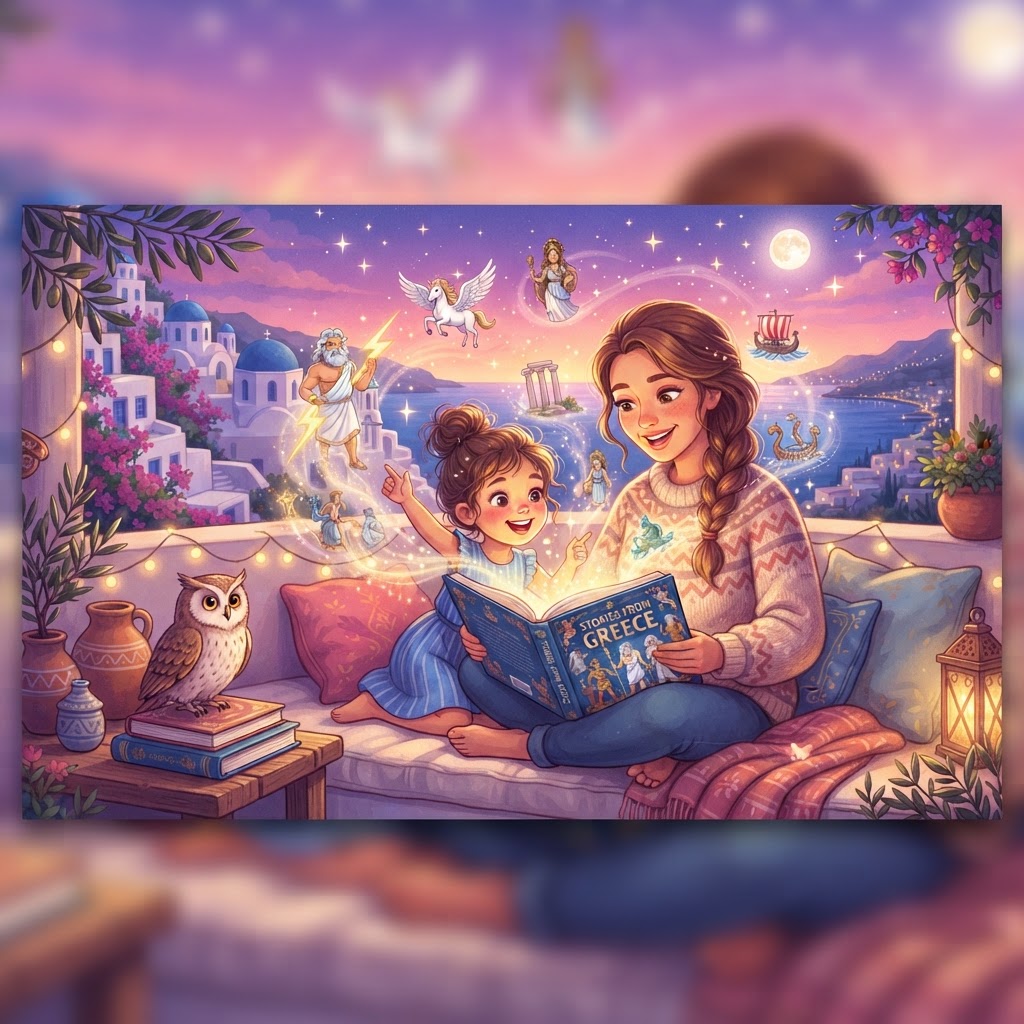
If you want bedtime tales that feel bright, adventurous, and full of wisdom, stories from Greece are a wonderful place to begin. Greece offers children shimmering islands, mountain villages, olive groves, ancient cities, and a storytelling tradition shaped by myths, fables, family life, and the sea. For parents and teachers, these tales are especially useful because they mix wonder with clear values: courage, kindness, curiosity, patience, and hospitality.
Greek-inspired stories also work beautifully for ages 1-10 because they can be made simple or layered. A toddler may enjoy a friendly boat crossing blue water, while an older child may love a clever maze, a talking owl, or a village mystery. Below, you’ll find the roots of Greece children stories, five original story ideas with cultural context, and practical ways to turn them into personalized adventures with InstaTales.
What makes stories from Greece so memorable for children?
Stories from Greece stand out because they combine vivid places with timeless themes. Children quickly connect with sparkling seas, winding paths, hidden ruins, and brave young helpers, while the stories gently explore choices, problem-solving, and belonging.
Many Greek tales are shaped by contrasts children find exciting: sea and mountain, city and island, old and new, human and mythical. That gives Greece tales for kids a natural sense of movement and discovery. Even when a story is quiet, the setting feels alive.
Greek storytelling also has strong emotional anchors. Families gather for meals, villages celebrate together, grandparents pass down sayings, and heroes often succeed through cleverness rather than strength alone. That makes these stories warm, not just epic.
For adults reading aloud, this matters. The American Academy of Pediatrics recommends shared reading from the earliest years because it supports language, bonding, and later literacy. Stories with rich imagery and repeated patterns are especially effective for young listeners.
Which traditions shape Greece storytelling for children?
Greece storytelling for children grows from a long oral tradition that includes myths, fables, folk tales, songs, and family storytelling. You do not need to retell complex ancient myths exactly; child-friendly Greek stories often borrow the setting, symbols, and values instead.
A few traditions are especially helpful when creating or choosing Greek-inspired stories:
- Myths bring memorable symbols like owls, laurel leaves, seashells, and labyrinths.
- Aesop’s fables, often linked to ancient Greece, offer short moral tales with animals and simple lessons.
- Island and seafaring stories reflect ferry travel, fishing life, and respect for the weather.
- Village folktales focus on family, hospitality, festivals, and local wisdom.
- Shadow theater and comic folk characters, such as Karagiozis, add playful mischief and clever problem-solving.
From a child development perspective, these traditions work well because they are naturally repetitive, visual, and conversational. The Center on the Developing Child at Harvard University explains that back-and-forth interaction helps build language and thinking skills. When you pause during a Greek story to ask, “What do you think is inside the maze?” or “Why did the owl help?” you are supporting that learning.
What are five Greece tales for kids you can tell tonight?
The best Greek-inspired stories for children use real cultural details in age-appropriate, magical ways. These five ideas can be told as bedtime stories, classroom prompts, or personalized InstaTales adventures.
1. The Little Boat of the Cyclades
A child travels between tiny white-and-blue islands on a cheerful boat that gets nervous when the wind changes. Together, the child and boat learn to listen to the waves, ask fishermen for advice, and deliver a basket of figs to a festival before sunset.
Cultural context: Greece has thousands of islands, and island life is central to many stories from Greece. This setting introduces children to ferry travel, harbors, fishing villages, and the rhythm of the Aegean Sea. It also teaches flexibility, since island journeys depend on weather and patience.
2. Ariadne’s Red Thread in Crete
In this gentler retelling inspired by the labyrinth legend, a child visiting Crete finds a red thread that glows when someone feels lost. The child uses it to help a shy kitten, a forgetful baker, and finally a nervous friend make their way through a maze-like palace garden.
Cultural context: Crete is linked to the ancient story of the labyrinth and the palace of Knossos. For children, the maze can become a symbol of confusion rather than danger. This is a great way to introduce Greek history through emotion: everyone feels lost sometimes, and kindness can lead the way.
3. The Owl Above Athens
A curious child stays awake just long enough to meet a silver-eyed owl perched high above Athens. The owl leads them on a moonlit journey past market stalls, marble steps, and the glowing hill of the Acropolis, asking riddles about wisdom, fairness, and listening.
Cultural context: The owl is a traditional symbol of Athena, associated with wisdom. Athens also gives children a doorway into ancient and modern Greece at once. If you want to explore the real landmark behind the tale, UNESCO’s World Heritage listing for the Acropolis offers helpful background.
4. The Olive Tree’s Promise
A child helping a grandparent in an olive grove becomes frustrated because the work feels slow. Then the oldest tree begins to whisper stories about rain, roots, and generations of families who cared for the land, helping the child see that patient work can feed many people.
Cultural context: Olive trees are deeply woven into Greek life, food, farming, and symbolism. This story idea is excellent for slower bedtime storytelling because it highlights family traditions, seasonal work, and gratitude. It also connects beautifully to the Greek idea that everyday life can hold quiet wisdom.
5. The Bell on the Mountain Path
In northern Greece, a child hears a lost sheep bell echoing through a mountain trail and sets off with a village dog to find it. Along the way, they cross stone bridges, meet a shepherd playing music, and discover that the bell belongs to a lamb helping everyone find the safe path home.
Cultural context: Greece is not only islands and ruins; much of the country is mountainous. Mainland villages, shepherding traditions, and mountain music add a different mood to Greece children stories—calm, earthy, and community-centered. This type of tale helps children picture the full geography of Greece.
How can you create personalized stories set in Greece with InstaTales?
The easiest way to make Greek-inspired stories meaningful is to connect the setting in Greece with your child’s real feelings, interests, or routines. Personalization turns a beautiful backdrop into a story that truly belongs to the child.
When you create your own personalized bedtime story, start with three choices:
- Pick a Greek setting: an island, Athens, Crete, an olive grove, or a mountain village
- Choose one emotional goal: making a friend, being brave, solving a mystery, missing home, or helping family
- Add one favorite detail: dolphins, bread, cats, stars, boats, music, or market stalls
Then shape the story for age:
- For ages 1-3, use repetition, soft rhythm, and simple actions
- For ages 4-6, add a clear problem and a cozy ending
- For ages 7-10, include riddles, maps, history clues, or layered choices
After generating a story, save it in your story library so children can revisit favorite settings and characters. Re-reading matters: familiar stories build comprehension, confidence, and emotional security.
Teachers can also use InstaTales for teachers to create short Greece-themed reading prompts tied to geography, ancient civilizations, or social-emotional learning. A class might compare Greece with another storytelling tradition, such as these tales from Japan for children or these child-friendly stories from Egypt, to notice how landscapes shape stories.
How can parents and teachers make Greece storytelling richer at home or in class?
A little context makes Greek stories more engaging, and it does not need to feel like a lesson. Children understand stories better when they can connect them to sights, sounds, food, maps, and feelings.
Try these simple supports:
- Show Greece on a map before reading
- Point out whether the story happens on an island, in a city, or in the mountains
- Introduce a few sensory details: salty air, warm bread, olive leaves, church bells, ferry horns
- Ask open questions like, “What would you pack for the island trip?”
- Let children draw the owl, maze, boat, or olive tree after the story
This kind of interactive reading helps children build vocabulary and background knowledge. It also encourages the talk-and-response pattern that supports language growth, memory, and empathy. In practice, that is what makes Greece storytelling so powerful: it invites children not just to listen, but to participate.
Frequently Asked Questions
Are Greek myths suitable for young children?
Yes, if they are adapted thoughtfully. For young children, focus on wonder, kindness, and problem-solving rather than scary battles or punishments.
What age group enjoys stories from Greece most?
Children ages 3-10 often connect strongly with Greek-inspired stories, but even toddlers can enjoy simple island, boat, or animal tales. The key is matching the complexity of the plot to the child’s age.
How can I make Greece children stories feel personal?
Use your child’s name, favorite animal, and a familiar feeling like shyness, excitement, or missing home. Personalized details help the child step into the setting more easily.
Do stories from Greece always need gods and heroes?
Not at all. Many of the best Greek-inspired stories for children are about ordinary family life, village traditions, sea journeys, food, music, and local legends.
Can teachers use Greece tales for kids in the classroom?
Yes. Greek story prompts work well for geography, history, literacy, and social-emotional learning, especially when paired with map work, art, or compare-and-contrast activities.
What makes InstaTales useful for Greek-themed bedtime stories?
InstaTales lets you quickly combine a Greek setting with your child’s interests and developmental stage. That makes each story feel culturally inspired, age-appropriate, and emotionally relevant.
Ready to Create a Personalized Bedtime Story?
Use our free AI bedtime story generator to create a personalized illustrated story for your child in 30 seconds — no credit card needed.
Popular story types:
Maya Rodriguez
Lead Content Editor & Early Literacy Specialist
Maya is a former early childhood educator and literacy specialist with over a decade of experience helping children develop a love of reading. She leads content at InstaTales, where she writes about the science of storytelling, child development, and how families can use personalized AI stories to build literacy and emotional resilience.
instatales.ai