Animals Stories for Kids That Teach Science
Make science fun with stories that teach kids about animals — imagination meets real science in these engaging tales.
✦ Key Takeaways
- •Animal stories work because they make abstract facts concrete and memorable.
- •The best animals story ideas pair one strong plot with one clear science takeaway.
- •Age-appropriate animal stories keep the science true but adjust the language, length, and complexity.
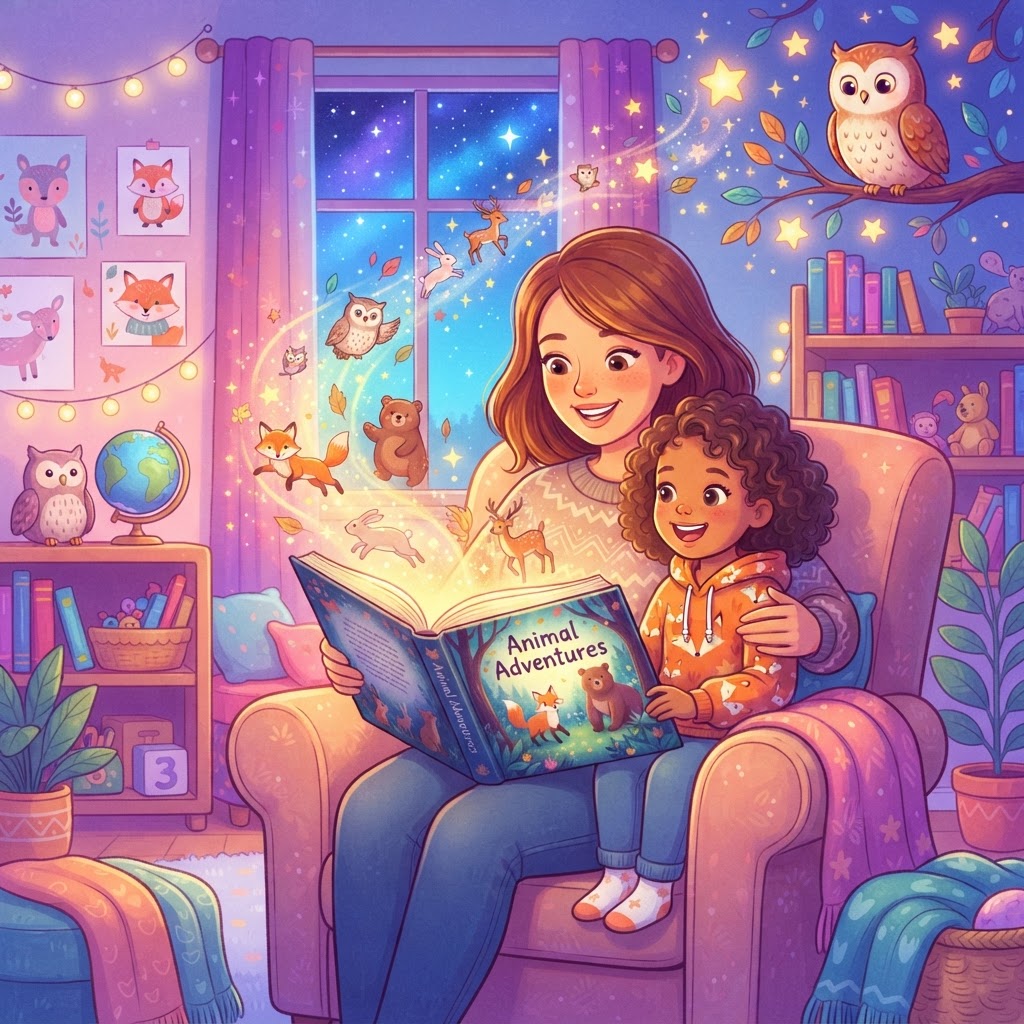
If you’re looking for animals stories for kids that do more than entertain, the best ones blend wonder with accurate, age-friendly science. A good animal tale can help children remember facts about habitats, body features, behavior, and life cycles because the learning is tied to emotion, rhythm, and imagination.
That matters. Early childhood experts such as the American Academy of Pediatrics and NAEYC have long emphasized that young children learn best through warm interaction, language-rich experiences, and repeated exposure to meaningful ideas. For parents and teachers, teaching animals to children becomes easier when a child cares about the character first. If your child already loves science-themed reading, you can also explore related stories about plants or weather-themed science tales for more cross-topic learning.
Why are animal stories such a powerful way to teach science?
Animal stories work because they make abstract facts concrete and memorable. When a child follows a turtle, bat, fox, or octopus through a plot, the science stops feeling like a list and starts feeling like discovery.
Research on dialogic reading shows that children learn more when adults talk with them during a story rather than simply reading at them. That makes story-based science especially effective. You can pause to ask, “Why do you think the penguin huddled with the group?” or “What helped the bat find food in the dark?” Those questions build vocabulary, observation, and reasoning.
Stories also support emotional learning. A child who feels worried for a lost bee or proud of a migrating whale is more likely to remember the science behind pollination or migration. That is why kids animals stories can support both literacy and early STEM learning at the same time.
Which animal story ideas can turn facts into adventure?
The best animals story ideas pair one strong plot with one clear science takeaway. Below are six story starters that combine imagination with real facts children can understand and remember.
The sea turtle who followed the moon
- Story concept: A baby sea turtle hatches at night and must cross the beach to the ocean, learning how moonlight and waves help guide the way.
- Real science facts: Sea turtle hatchlings often move toward the brightest natural horizon, which is usually over the ocean. Many sea turtles also migrate long distances and can use Earth’s magnetic field to help navigate, as explained by NOAA Fisheries.
- Try this AI prompt: “Write a gentle bedtime story for a 5-year-old about a brave baby sea turtle who follows the moon to the ocean and learns one true fact about sea turtle migration.”
The bat who painted the night sky with sound
- Story concept: A small bat is afraid of the dark until it discovers that sound can help it “see” the world.
- Real science facts: Many bats use echolocation, sending out sounds and listening for echoes to find insects and avoid obstacles. Some bats also help pollinate plants and spread seeds, according to the U.S. Forest Service.
- Try this AI prompt: “Create an educational animal story for ages 4-7 about a bat who learns to trust echolocation, with simple explanations of how bats find food at night.”
The emperor penguin who shared warmth
- Story concept: On a freezing Antarctic day, a young penguin wants to be the strongest alone, but learns that survival depends on staying close to the group.
- Real science facts: Emperor penguins huddle together to conserve heat in extreme cold. The adults take turns moving through the huddle so more birds can stay warm.
- Try this AI prompt: “Write a cozy story for a 6-year-old about an emperor penguin chick who learns why penguins huddle together in Antarctica.”
The octopus with a thousand clever disguises
- Story concept: An octopus explorer enters a colorful reef contest and changes shape, color, and texture to solve problems along the way.
- Real science facts: Octopuses are highly intelligent and can use camouflage to hide from predators or sneak up on prey. The Smithsonian has engaging resources on cephalopod intelligence and ocean life at Smithsonian Ocean.
- Try this AI prompt: “Tell a funny educational story for ages 5-8 about an octopus who uses camouflage to help reef friends, including true facts about how octopuses change color.”
The honeybee who remembered every flower
- Story concept: A worker bee must lead her hive to the season’s best flowers and uses a special dance to share directions.
- Real science facts: Honeybees pollinate many flowering plants. They also use the waggle dance to communicate the direction and distance of food sources to other bees.
- Try this AI prompt: “Write a bright spring story for a 5-year-old about a honeybee who teaches her sisters the waggle dance, using real facts about pollination.”
The fox who changed coats with the seasons
- Story concept: A young Arctic fox is confused when the world keeps changing, but learns that changing with it is a strength.
- Real science facts: Arctic foxes have thick fur that helps them stay warm in cold climates. Their coat color can help them blend into snowy or rocky surroundings depending on the season and location.
- Try this AI prompt: “Create a calm educational bedtime story for ages 4-6 about an Arctic fox whose changing coat helps it survive through the seasons.”
These examples show why animals story ideas are so useful: each one gives children a character to love and a science fact to hold onto.
How can you make animal learning age-appropriate for toddlers, preschoolers, and older kids?
Age-appropriate animal stories keep the science true but adjust the language, length, and complexity. The same topic can work for a 2-year-old or an 8-year-old if you change how the information is delivered.
For ages 1-3, keep stories short and sensory:
- Focus on sounds, colors, movements, and repetition
- Use one main fact, such as “Penguins huddle to stay warm”
- Repeat key words like “flap,” “swim,” or “buzz”
For ages 4-6, add simple cause and effect:
- “The turtle moved toward the bright ocean horizon”
- “The bee danced to show where the flowers were”
- Ask one or two prediction questions during reading
For ages 7-10, expand into real science thinking:
- Compare habitats
- Introduce vocabulary like “migration,” “camouflage,” or “echolocation”
- Invite children to separate story details from true facts
This approach is especially useful when teaching animals to children with different interests or reading levels. A child who loves fantasy may enjoy an octopus mystery, while a fact-loving child may prefer a migration quest.
How can parents and teachers use InstaTales' educational story type?
InstaTales’ educational story type makes it easy to turn real science topics into personalized reading experiences. Instead of starting from a blank page, you can guide the story toward an age range, an animal topic, and a learning goal.
A simple way to use it is:
- Choose the educational story type
- Pick one animal and one science idea, such as camouflage or habitats
- Add your child’s name, favorite setting, or preferred tone
- Ask for 1-3 true facts to be woven naturally into the plot
- Keep the ending calm if you want a bedtime feel
For example, you could create your own personalized bedtime story about “Maya and the moonlit sea turtle” or use ready-made story templates to speed things up. Afterward, save your favorites in your story library so children can revisit beloved characters and reinforce the science through repetition.
Teachers can use the same structure for centers, writing prompts, and discussion starters. A useful classroom pattern is:
- Read the story aloud
- Ask children to identify the true animal facts
- Draw the habitat
- Compare the fictional elements with real-world science
If you want to build a broader science-reading routine, pair animal tales with units on plants, weather, or space over the course of a month. That kind of theme-based reading helps children connect knowledge across subjects without making story time feel like a lesson.
Frequently Asked Questions
What are the best animals stories for kids to start with?
Start with animals children already recognize, such as bees, turtles, penguins, or foxes. Familiar animals make it easier for kids to connect new science facts to what they already know.
How many science facts should one children’s story include?
One to three facts is usually enough for a short educational story. Too many facts can interrupt the plot and reduce comprehension, especially for younger children.
Can fictional animal stories still teach real science?
Yes, as long as the core facts are accurate. A talking penguin can still teach true information about huddling, habitat, and survival in the cold.
How do I know if a story is age-appropriate?
Look at sentence length, vocabulary, and how many ideas appear in one story. Younger children do best with one clear concept, while older children can handle more detailed explanations and comparisons.
How can I use animal stories in a classroom or homeschool setting?
Use them as a read-aloud, then add a simple follow-up like drawing, sorting animals by habitat, or retelling the facts in the child’s own words. This supports both literacy and science recall.
Are personalized AI stories good for science learning?
They can be very effective when adults guide the prompt and check the facts. Personalized stories increase engagement, and engaged children are often more likely to remember what they read.
Ready to Create a Personalized Bedtime Story?
Use our free AI bedtime story generator to create a personalized illustrated story for your child in 30 seconds — no credit card needed.
Popular story types:
Maya Rodriguez
Lead Content Editor & Early Literacy Specialist
Maya is a former early childhood educator and literacy specialist with over a decade of experience helping children develop a love of reading. She leads content at InstaTales, where she writes about the science of storytelling, child development, and how families can use personalized AI stories to build literacy and emotional resilience.
instatales.ai