Weather Stories for Kids That Teach Science
Make science fun with stories that teach kids about weather — imagination meets real science in these engaging tales.
✦ Key Takeaways
- •Stories help children understand science by turning invisible processes into memorable experiences.
- •InstaTales’ educational story type makes it easy to turn a weather topic into a personalized learning experience.
- •The best weather story ideas combine a clear science topic with a simple emotional journey.
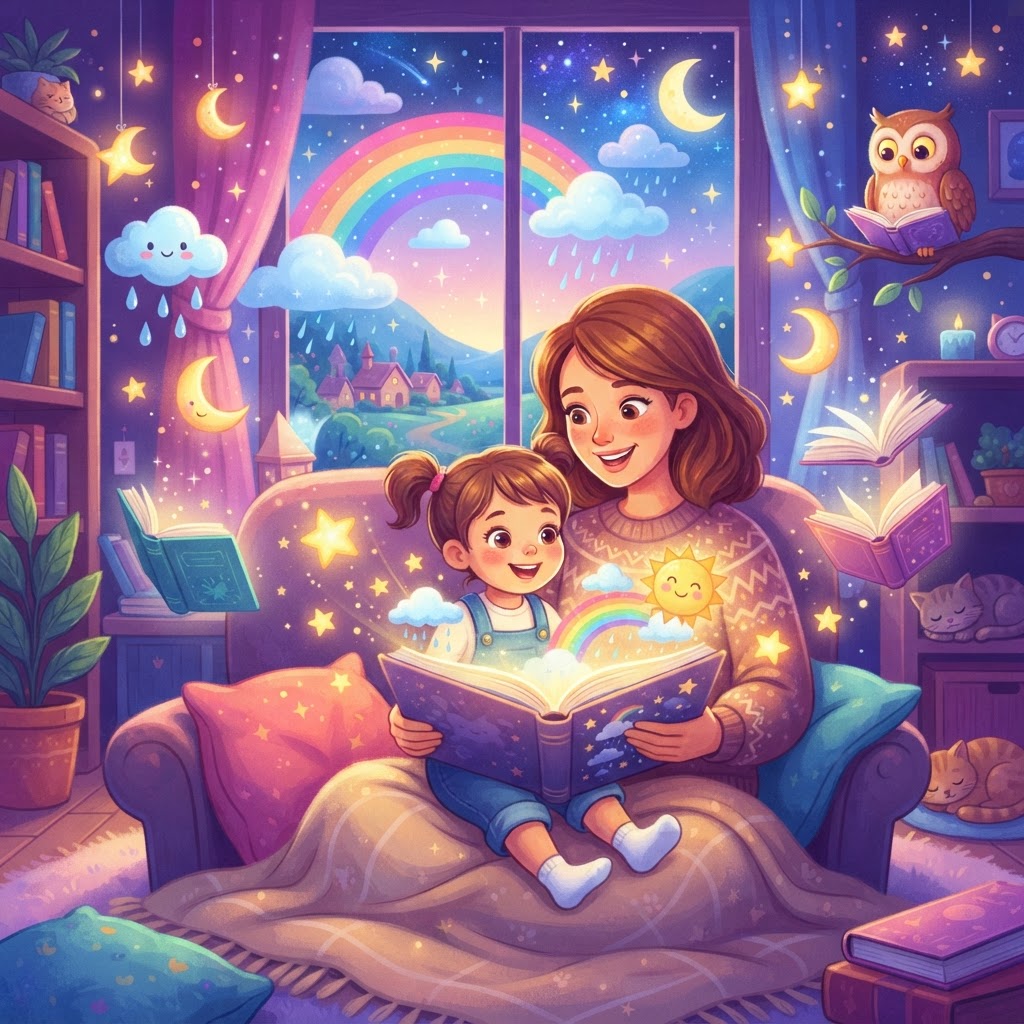
Weather stories for kids can do something worksheets often cannot: make science feel personal, visual, and easy to remember. When a cloud has feelings, a raindrop goes on a journey, or thunder becomes a noisy sky drummer, children connect abstract ideas to characters and plot.
That matters because young children learn best through relationships, repetition, and meaningful language. The American Academy of Pediatrics recommends shared reading from the earliest years, and dialogic reading research by Grover Whitehurst and colleagues shows that back-and-forth storytelling supports vocabulary, comprehension, and curiosity. When you combine that with real facts from trusted sources like NASA Climate Kids and NOAA JetStream, teaching weather to children becomes both playful and accurate.
Why are weather stories for kids such a powerful way to teach science?
Stories help children understand science by turning invisible processes into memorable experiences. For ages 1-10, weather can feel mysterious, but narrative gives it shape: wind “pushes,” clouds “gather,” and sunlight “warms.”
This approach fits how children develop. Early learners grasp ideas better when they can imagine cause and effect, repeat new words, and ask simple “why” questions. A story about a shy snowflake or a brave kite in the wind gives children a reason to care about concepts like evaporation, temperature, and storms.
Stories also reduce fear. Many kids weather stories can gently explain thunder, lightning, or heavy rain so children feel informed rather than overwhelmed. The key is to pair wonder with truth: use imagination for the characters, but keep the science facts correct.
How can parents and teachers use InstaTales’ educational story type for weather lessons?
InstaTales’ educational story type makes it easy to turn a weather topic into a personalized learning experience. You can choose the science idea, add a child’s name or interests, and generate a story that feels tailored instead of generic.
A simple way to start is to create your own personalized bedtime story with one clear weather theme: rain, wind, snow, sunshine, or storms. If you want a faster setup, browse the story templates and adapt one with your child’s age, favorite character, and local season.
Here is a practical formula that works well:
- Pick one weather concept at a time.
- Add one curious character such as a raindrop, cloud, or kite.
- Include 1-2 true science facts in plain language.
- End with one reflection question, like “Where do you think the puddle goes after the sun comes out?”
- Save strong stories in your story library for re-reading, because repetition helps learning stick.
For classrooms, InstaTales for teachers can support weather units, writing prompts, and science centers. If your child enjoys fact-rich fiction, the InstaTales blog also shares related reads like space-themed science stories and butterfly tales with facts.
What weather story ideas can turn everyday forecasts into memorable learning?
The best weather story ideas combine a clear science topic with a simple emotional journey. Below are six engaging weather story ideas you can use at home, at bedtime, or in the classroom.
1. The Little Cloud Who Had to Let Go
- Story concept: A fluffy cloud wants to keep every drop of water, but it grows too heavy and learns that letting rain fall helps flowers, rivers, and animals.
- Real science facts: Warm water evaporates into the air, and when water vapor cools, it can form clouds. When droplets in clouds become heavy enough, they fall as rain.
- AI prompt: “Write a gentle educational bedtime story for a 4-year-old about a small cloud named Puffy who learns why rain falls. Include the child’s name, simple water-cycle language, and a calm, happy ending.”
2. The Wind Detective and the Missing Kite
- Story concept: A child and a clever robin follow clues to find a lost kite, discovering how moving air pushes leaves, flags, and wings along the way.
- Real science facts: Wind is moving air. Air moves from places with higher pressure to lower pressure, which is one reason wind forms.
- AI prompt: “Create a playful story for a 6-year-old about a child wind detective searching for a lost kite. Explain that wind is moving air and show how it can push objects.”
3. Sunny and Shade’s Big Playground Race
- Story concept: Two best friends, Sunny and Shade, notice that the slide feels hotter in the sun than under the tree and set out to learn why.
- Real science facts: The Sun warms Earth’s surface. Darker materials and direct sunlight can make playground equipment feel much hotter than shaded areas.
- AI prompt: “Write an educational story for ages 5-7 about two friends comparing sunny and shady places at the playground. Include a simple explanation of how sunlight warms surfaces.”
4. Snowflake School in the Sky
- Story concept: Tiny ice crystals attend “snowflake school” inside a winter cloud, where each one grows into a unique shape before drifting down to Earth.
- Real science facts: Snow forms when water vapor freezes into ice crystals in cold clouds. Snowflakes can have different patterns, but they all begin as frozen water.
- AI prompt: “Tell a magical but scientifically accurate story for a 7-year-old about how snowflakes form in cold clouds. Make the tone cozy and wintery, with two simple facts about frozen water.”
5. Thunder Puppy and the Flashy Sky
- Story concept: A nervous puppy hears thunder during a storm and learns from an older dog that lightning happens first, while thunder is the sound that follows.
- Real science facts: Lightning is a giant electrical spark in the atmosphere. Thunder is the sound caused when lightning quickly heats the air, making it expand.
- AI prompt: “Write a reassuring weather story for a 5-year-old about a puppy afraid of thunderstorms. Explain lightning and thunder simply, and include one storm safety tip.”
6. The Rainbow After the Rain
- Story concept: After a shower, a child spots a rainbow and imagines it as a colorful bridge painted by sunlight and raindrops.
- Real science facts: Rainbows appear when sunlight passes through raindrops and bends, or refracts, into different colors. You usually need both sunlight and water in the air to see one.
- AI prompt: “Create a wonder-filled story for ages 6-8 about a child finding a rainbow after rain. Include a simple explanation of how sunlight and raindrops make rainbow colors.”
If you want to expand beyond these, the Smithsonian Science Education Center offers strong examples of science learning built around observation and questioning. That same approach works beautifully with weather stories for kids.
How can you keep teaching weather to children after the story ends?
The most effective weather learning happens when stories lead to conversation, observation, and play. A great story is not the finish line; it is the invitation to notice the real sky.
Try one follow-up activity after reading:
- Look outside and name the weather with your child.
- Ask, “What in the story did we see in real life today?”
- Draw the cloud, rainbow, or storm character together.
- Keep a simple weather journal with symbols like sun, cloud, rain, and wind.
- Re-read favorite stories to reinforce vocabulary such as forecast, temperature, storm, and water vapor.
For younger children, keep it concrete: “The wind is moving the tree.” For older children, add one extra fact: “The ground got warm, and that helps water evaporate.” This gradual layering is especially useful in early childhood education, where the National Association for the Education of Young Children emphasizes hands-on, language-rich learning.
The goal is not to turn every bedtime into a science lesson. It is to make science feel natural, safe, and full of wonder. That is why teaching weather to children through story can be so effective: it builds knowledge and connection at the same time.
Frequently Asked Questions
What age are weather stories best for?
Weather stories work well for children ages 1-10 when the language matches their stage. Toddlers do best with simple patterns like sun, rain, and wind, while older children can handle ideas like the water cycle or lightning.
Can weather stories really help with science learning?
Yes, they can support science learning by making concepts easier to picture and remember. When adults pause to ask questions and connect the story to real weather, children build vocabulary and understanding more quickly.
How long should a weather story be?
For toddlers, 2-5 minutes is often enough. For ages 5-10, a 5-10 minute story with one clear science idea usually works best.
Should I avoid thunderstorm stories if my child is scared?
Not necessarily. Gentle stories can reduce fear by explaining what thunder and lightning are in calm, simple language and by including safety routines.
Can teachers use InstaTales for a weather unit?
Yes. Teachers can use it for read-alouds, writing prompts, science centers, and differentiated lessons, especially when students need the same topic presented at different reading levels.
What makes a good AI prompt for kids weather stories?
A strong prompt includes the child’s age, the weather topic, the tone, and 1-2 science facts to include. It also helps to ask for a short ending question so adults can extend the learning after the story.
Ready to Create a Personalized Bedtime Story?
Use our free AI bedtime story generator to create a personalized illustrated story for your child in 30 seconds — no credit card needed.
Popular story types:
Maya Rodriguez
Lead Content Editor & Early Literacy Specialist
Maya is a former early childhood educator and literacy specialist with over a decade of experience helping children develop a love of reading. She leads content at InstaTales, where she writes about the science of storytelling, child development, and how families can use personalized AI stories to build literacy and emotional resilience.
instatales.ai