Empathy Stories for Kids: A Parent's Guide
If your child struggles with empathy, stories can help. Here's how to use storytelling to support your child's emotional development.
✦ Key Takeaways
- •Empathy matters because it helps children build healthy relationships, solve conflicts, and act with kindness.
- •Children often struggle to show empathy because stress, immaturity, or strong feelings can block perspective-taking in the moment.
- •Stories help children build empathy by creating narrative distance, offering models of kind behavior, and expanding emotion vocabulary.
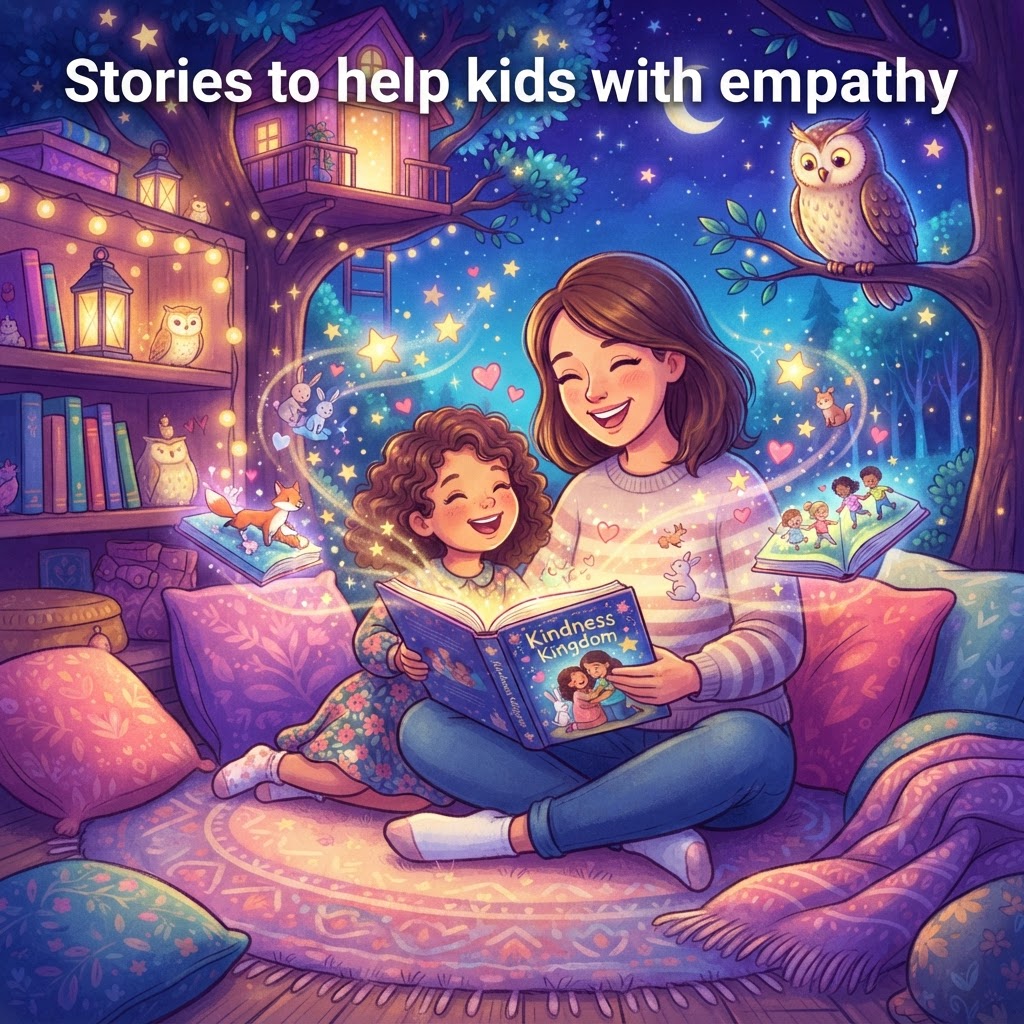
If your child seems dismissive, quick to blame, or unsure how others feel, that does not mean they are unkind. Empathy is a developing skill, not a fixed trait, and one of the safest ways to build it is through story. Thoughtful empathy stories for kids give children language for feelings, practice in perspective-taking, and a gentle way to think about mistakes without shame.
For parents, carers, and teachers, stories about empathy for children can become a quiet but powerful tool. A well-told story helps a child step into someone else’s world, notice emotional cues, and imagine what repair might look like. That is why bedtime stories, classroom read-alouds, and personalized tales can all play a meaningful role in helping kids with empathy.
Why does empathy matter so much for children?
Empathy matters because it helps children build healthy relationships, solve conflicts, and act with kindness. It supports social success, emotional regulation, and later mental wellbeing.
Developmental psychologist Martin Hoffman described empathy as something that grows over time: babies may react to another baby’s cry, toddlers begin noticing distress in others, and older children become more able to imagine another person’s point of view. In other words, empathy and children are closely linked, but the skill unfolds in stages.
That is why a child may care deeply and still say something hurtful. They may be missing one of the building blocks of empathy:
- noticing another person’s feelings
- naming the feeling accurately
- understanding why the feeling happened
- managing their own big emotion long enough to respond kindly
- knowing how to repair after a mistake
The CDC’s developmental guidance and early childhood experts at ZERO TO THREE both emphasize that social-emotional skills develop through repeated, responsive interactions. Stories become one of those interactions.
Why do some children struggle to show empathy?
Children often struggle to show empathy because stress, immaturity, or strong feelings can block perspective-taking in the moment. A child who looks uncaring may actually be overwhelmed, impulsive, or unsure what to do.
This is especially common in toddlers, preschoolers, and early primary years. Young children are still learning that other people can feel something different from what they feel. If they are hungry, embarrassed, jealous, tired, or anxious, their own experience can crowd out awareness of someone else’s.
A few common reasons empathy may look delayed include:
- limited emotional vocabulary
- slow language processing
- temperament differences
- neurodevelopmental differences
- sibling rivalry or social stress
- feeling ashamed and becoming defensive
This is where stories help. They slow the moment down. Instead of asking a child to reflect while upset, you invite them to think about a character when they feel calm and safe.
How do stories help children build empathy?
Stories help children build empathy by creating narrative distance, offering models of kind behavior, and expanding emotion vocabulary. These three tools make empathy easier to learn and safer to practise.
Narrative distance makes hard feelings safer
When the problem belongs to a fox, a robot, or a child named Mia, your child can explore it without feeling accused. That distance matters. A child who resists “You hurt your brother’s feelings” may engage with “Why did the bear cub leave his friend out?”
Because the story is one step removed, children can stay curious. They are more likely to think, “How did that character feel?” instead of “I’m in trouble.”
Stories model what empathy looks like in action
Children need more than a moral. They need examples. Good stories about empathy for children show characters noticing cues, pausing, asking questions, making room for feelings, and repairing after mistakes.
Research from the Harvard Center on the Developing Child highlights how relationships shape emotional skills. Stories extend that learning by giving children repeated social examples in a simple, memorable form.
Stories build the vocabulary children need
Many children cannot show empathy well because they do not yet have enough feeling words. Story language helps them move beyond “sad” and “mad” to words like disappointed, left out, worried, embarrassed, relieved, and proud.
That emotional vocabulary matters. Studies on shared reading and emotion coaching consistently show that when adults talk with children about characters’ feelings and motives, children’s emotion understanding grows. Even a brief pause to ask, “What do you think she felt when that happened?” can make a difference.
What kinds of story themes best support empathy?
The best story themes for empathy are everyday, relatable, and emotionally clear. Children learn empathy best from situations they recognize from real life.
Useful themes include:
- Being left out: a child notices what exclusion feels like
- Misunderstandings: two characters interpret the same event differently
- Accidental hurt: a character causes harm without meaning to, then repairs it
- New situations: a new student, new sibling, or first day somewhere unfamiliar
- Caring roles: looking after a pet, plant, toy, or younger child
- Differences: characters have different abilities, preferences, or fears
These themes work because they help children practise perspective-taking without overwhelming them. They also connect well with related emotions. If your child is working on understanding social feelings more broadly, these guides on shyness, disappointment, and grief can support deeper conversations.
What should parents avoid when using empathy stories?
Parents should avoid shame, heavy-handed lessons, and stories that turn one child into the “bad” character. Empathy grows best in a calm, respectful environment.
Try not to use a story as a disguised lecture right after a conflict. If a child feels targeted, they will focus on defending themselves instead of reflecting. Also avoid stories where one character is cruel, another is perfect, and the ending is instant forgiveness. Real empathy includes mixed feelings, hesitation, and repair.
It also helps to avoid:
- stories that are too intense for your child’s age
- repeated pressure to apologize before the child understands the impact
- vague endings with no repair or reconnection
- asking too many test-like questions
- comparing siblings or classmates through story
A better approach is gentle curiosity. Read the story, pause, and ask one or two simple questions: “What happened?” “How do you think he felt?” “What could help now?”
How can you use InstaTales’ kind tone to support empathy?
A kind, non-shaming tone helps children stay open to learning. With empathy, that matters more than a perfect lesson.
When you create your own personalized bedtime story, you can shape the story so your child sees both sides of a situation. Instead of making them the “problem,” you can make them the helper, observer, or character who learns through a gentle mistake. That keeps dignity intact while still teaching empathy.
A helpful formula is:
- start with a familiar social problem
- name each character’s feelings clearly
- include a pause for noticing
- show a small act of repair
- end with warmth, relief, or reconnection
For example, if your child grabbed a toy that day, the story might not say, “Sam was selfish.” It might say, “Sam was excited and forgot to look at Leo’s face. When Sam noticed Leo’s teary eyes, he understood the toy mattered to Leo too.” That is the kind of language that supports reflection.
You can also save effective stories in your story library and reread them during calm moments. Repetition helps children absorb emotional patterns over time. In group settings, InstaTales for teachers can also be useful for circle time, social-emotional lessons, and classroom discussion.
What are five empathy story ideas you can try tonight?
These story ideas are simple, relatable, and easy to personalize. Each one helps children practise noticing feelings and making repair.
-
The child who forgot to invite a friend
A birthday helper realizes one classmate was missed. The story focuses on the friend’s feeling of being left out and the child’s chance to make things right. -
The dragon whose loud roar scared everyone
A playful dragon thinks everyone is having fun, then notices others are covering their ears and hiding. This is great for children who struggle to read social cues. -
The lost teddy who traveled through many hands
Different characters care for a lost toy before it returns home. This story builds empathy by showing many points of view in one gentle plot. -
The shy new child at the playground
A confident child notices someone standing alone and wonders what would help. If your child needs support with both empathy and social confidence, you may also like these resources on stories for shy children. -
The sibling who broke the tower by accident
One child feels proud, another feels devastated, and both feelings are valid. The story models how to notice impact, say sorry meaningfully, and rebuild together.
If you want a quick starting point, browse the story templates and adapt the setting, characters, and emotional challenge to your child’s age and day-to-day life.
How can adults make empathy stories work better in real life?
Empathy stories work best when adults read them interactively, keep the tone calm, and connect the lesson to daily life in small ways. The goal is not a perfect response at bedtime; it is steady growth over time.
A few practical tips:
- read when your child is calm, not right after a meltdown
- ask open questions, but keep them brief
- reflect feelings before discussing behavior
- praise empathy when you notice it in real life
- revisit favorite stories often
You might say, “That reminds me of the rabbit in our story. He looked at his friend’s face and noticed she felt left out.” This kind of gentle bridge between fiction and life is often more effective than a direct correction.
And if your child is especially sensitive to emotional topics, explore more age-specific ideas on the InstaTales blog, where related themes are handled with the same calm, child-centered approach.
Frequently Asked Questions
At what age can children start learning empathy through stories?
Children can start learning empathy through stories in the toddler years. Very young children may not grasp complex motives yet, but they can still notice simple feelings like sad, happy, scared, and left out.
How often should I read empathy stories for kids?
A few times a week is enough to be helpful. What matters most is consistency, short conversations, and revisiting themes over time.
What if my child laughs when a character is upset?
That does not always mean they are uncaring. Some children laugh when they feel unsure, uncomfortable, or overstimulated, so stay calm and gently name the feeling in the story.
Are personalized AI stories effective for helping kids with empathy?
They can be very effective when the tone is warm and the message is gentle. Personalized stories feel relevant, which makes children more likely to engage and remember the social lesson.
Should empathy stories always end with an apology?
Not always. A strong ending may include noticing, listening, helping, giving space, or repairing in another way, because empathy is bigger than saying sorry.
Can teachers use stories about empathy for children in the classroom?
Yes. Shared stories are useful for class discussion, role-play, and social-emotional learning because they give students a safe, shared example to talk about without singling anyone out.
Ready to Create a Personalized Bedtime Story?
Use our free AI bedtime story generator to create a personalized illustrated story for your child in 30 seconds — no credit card needed.
Popular story types:
Maya Rodriguez
Lead Content Editor & Early Literacy Specialist
Maya is a former early childhood educator and literacy specialist with over a decade of experience helping children develop a love of reading. She leads content at InstaTales, where she writes about the science of storytelling, child development, and how families can use personalized AI stories to build literacy and emotional resilience.
instatales.ai