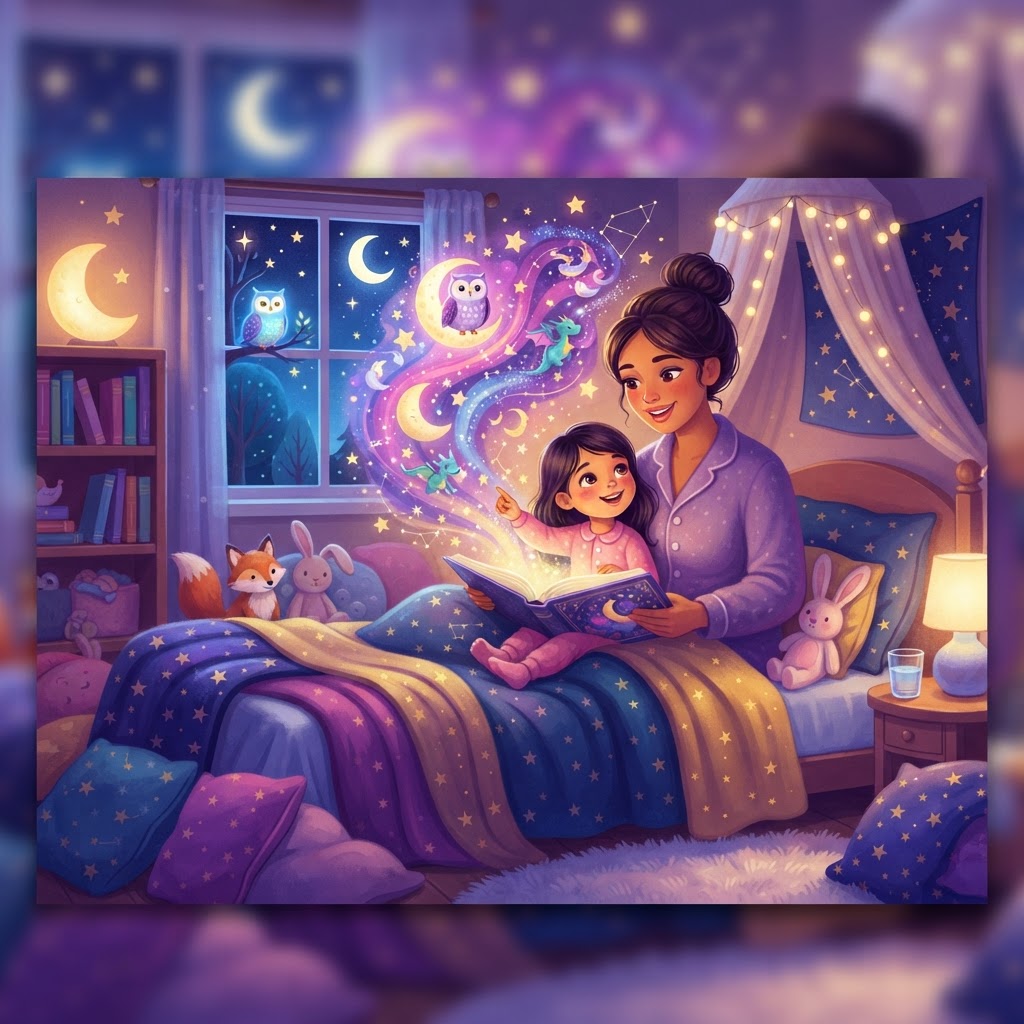
First Sleepover Stories for Kids: Parent Guide
Going through the first sleepover? Stories can help your child process the transition. Here's how to use storytelling to support your child.
✦ Key Takeaways
- •The first sleepover is a big transition because it combines separation, unfamiliar routines, and social uncertainty all at once.
- •Stories help because they normalize feelings, model coping, and give children a safe way to process what might happen.
- •A helpful first sleepover story should feel realistic, emotionally honest, and reassuring without pretending everything is perfect.
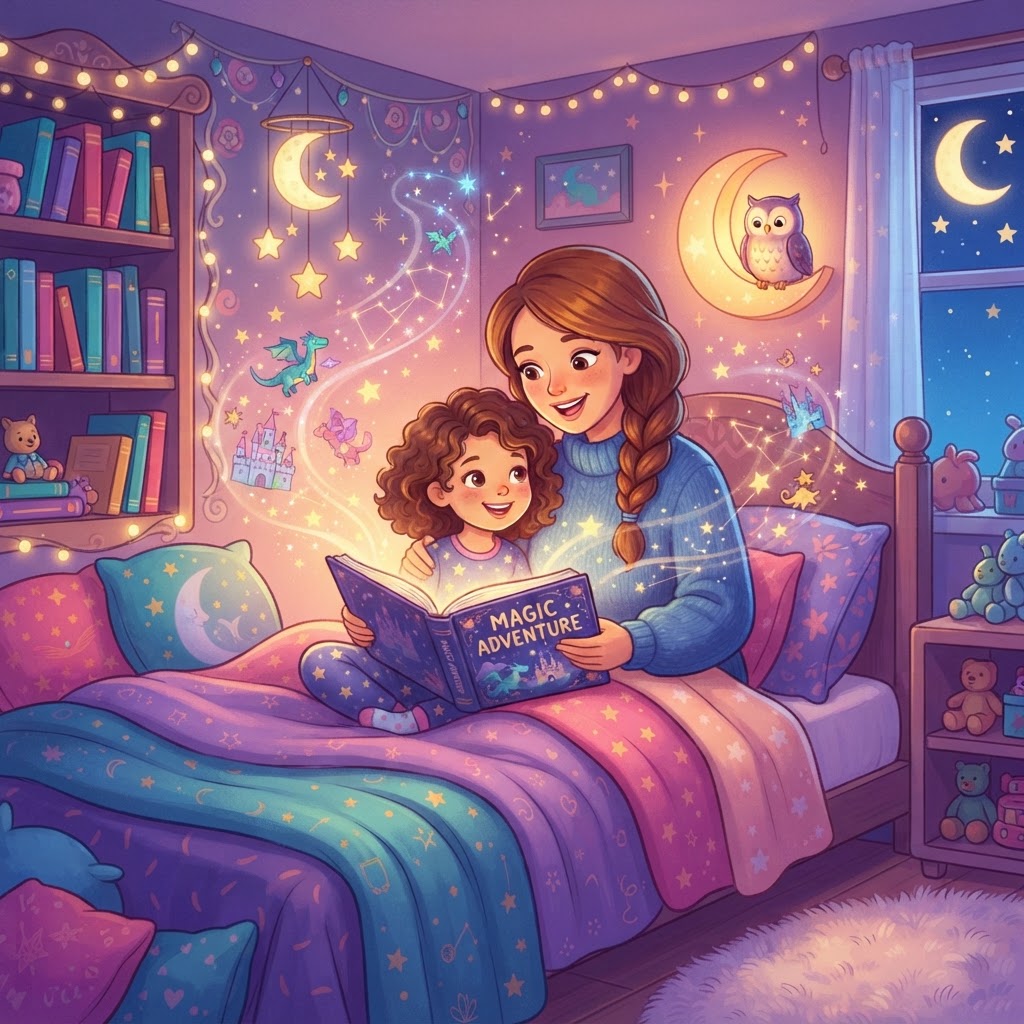
A first sleepover can feel exciting and huge at the same time. For many children, it is their first real practice at being away from home overnight, managing bedtime in a different place, and trusting that they can feel safe without their usual routine.
That is why first sleepover stories for kids can be so helpful. The right story gives children a low-pressure way to imagine what might happen, name their worries, and picture themselves coping well. If you are helping kids with the first sleepover, storytelling can turn a stressful milestone into something more familiar, manageable, and even fun.
Why is the first sleepover such a big transition for children?
The first sleepover is a big transition because it combines separation, unfamiliar routines, and social uncertainty all at once. Even confident children may feel wobbly when bedtime happens somewhere else.
For young children, nighttime is when emotions often feel strongest. Home smells different. The lights sound different. The rules may be slightly different too. A child who seems completely ready at 4 p.m. may feel unsure at 8 p.m. when pajamas, darkness, and missing home all show up together.
Child development experts note that children build resilience through supportive relationships and predictable routines. The Center on the Developing Child at Harvard University explains that children manage stress better when adults help them feel safe and understood. The CDC’s developmental guidance also reminds us that social and emotional milestones develop gradually, not all at once.
So if your child is nervous, that does not mean they are immature or “not ready enough.” It usually means they are facing a new experience that asks a lot of them at once. In that sense, the first sleepover children experience is less about sleeping elsewhere and more about practicing confidence in a new setting.
How do stories help kids with the first sleepover?
Stories help because they normalize feelings, model coping, and give children a safe way to process what might happen. A story lets a child rehearse the event before it is real.
This matters because children often understand big feelings better through narrative than through direct advice. Instead of hearing, “You’ll be fine,” they meet a character who is excited, worried, prepared, and supported. That feels believable.
Stories about the first sleepover can help in three especially useful ways:
- Normalizing: Your child hears that feeling nervous, shy, or homesick is common.
- Modeling: The character shows what to do—ask for help, hug a comfort item, call home if needed, or follow a bedtime plan.
- Processing: Your child can talk about the character’s feelings first, which is often easier than talking about their own.
The American Academy of Pediatrics through HealthyChildren.org regularly emphasizes the value of routines, emotional coaching, and gradual preparation for new experiences. Stories support all three. They are especially effective when read more than once, because repetition helps children feel mastery.
If your child has also struggled with other transitions, you may notice similarities with first-day-of-school stories or making new friends stories. The same emotional skills show up again: bravery, flexibility, and trust.
What should a helpful first sleepover story include?
A helpful first sleepover story should feel realistic, emotionally honest, and reassuring without pretending everything is perfect. Children respond best when a story sounds like something that could truly happen.
Look for these elements:
- A main character close to your child’s age
- A familiar sleepover setting, like a grandparent’s house or a friend’s home
- Clear feeling words such as excited, nervous, shy, homesick, or proud
- Concrete coping tools, like bringing a stuffed animal or knowing when to call home
- A supportive adult who listens without pressure
- A positive ending that does not have to mean “stayed all night successfully”
That last point is important. Some of the best stories about the first sleepover include flexibility. Maybe the child stays the whole night and feels proud. Maybe they try for a while and then go home. Both outcomes can be framed as learning and growth.
A useful story is not a sales pitch for bravery. It is a gentle practice space.
What are five effective first sleepover stories for kids?
The best story ideas are simple, specific, and close to your child’s real life. Here are five that work especially well for the first sleepover stories for kids.
1. The practice sleepover at Grandma’s house
This story works well for children who need a softer first step. The child sleeps at Grandma’s house, brings their favorite blanket, follows a familiar bedtime routine, and discovers that missing home and having fun can happen at the same time.
2. The sleepover where the stuffed animal gets forgotten
In this story, the child arrives at a friend’s house and realizes their comfort toy is missing. Instead of spiraling, they use backup comfort ideas: a parent call, a bedtime song, or borrowing a cozy pillow. This helps children see that problems can be solved.
3. The brave child who feels homesick at lights-out
This story is especially good for emotionally sensitive children. The main character is cheerful all evening but feels suddenly sad at bedtime. They whisper their feelings to an adult, take deep breaths, and remember the family plan. The key lesson is that homesickness is normal, not shameful.
4. The cousin sleepover with too much noise
Some children are less worried about separation and more worried about chaos. This story focuses on a child who likes sleepovers in theory but feels overwhelmed by loud games, new food, or lots of cousins. The child learns to ask for a quiet break and still enjoys the night.
5. The child who decides to try again another time
This may be the most important story of all. The character gets ready, goes to the sleepover, and realizes they are not ready to stay overnight yet. A caring adult helps them go home without embarrassment. The ending shows courage as trying, learning, and trying again later.
If your child responds well to personalized stories, you can create your own personalized bedtime story that uses their name, favorite comfort object, and real sleepover setting.
How can parents read together before and after a first sleepover?
Parents can use story time as preparation, connection, and reflection. Reading together works best when it is calm, interactive, and repeated over several days.
Before the sleepover, try these simple steps:
- Read the same story 3-5 times in the week before the event.
- Pause and ask, “What do you think the character is feeling here?”
- Make a short sleepover plan together: who is there, what to pack, what happens if your child wants help.
- Let your child add details, like a flashlight, favorite pajamas, or a goodnight phrase.
During the transition, keep your tone matter-of-fact. You do not need to oversell the sleepover or over-reassure. Confidence sounds like, “You have a plan, and grown-ups will help you.”
After the sleepover, read again and compare the story with real life. Ask:
- What felt the same?
- What felt different?
- What was the hardest part?
- What helped most?
This kind of reflection builds emotional insight. If your child likes revisiting favorite stories, save them in your story library so you can reread, tweak, and reuse them for future milestones.
How can you prompt InstaTales for stories about the first sleepover?
The best prompts are specific, warm, and practical. Include your child’s age, the sleepover setting, their likely worry, and the kind of ending you want.
A strong prompt formula looks like this:
- Child’s name and age
- Who they are sleeping over with
- Their main feeling or challenge
- A comfort tool or coping strategy
- Tone and ending style
Here are a few prompt examples you can use with InstaTales:
- “Write a gentle bedtime story for a 5-year-old named Maya about her first sleepover at Grandma’s house. She feels excited but worried about missing home. Include her bunny toy, a calm bedtime routine, and a reassuring ending.”
- “Create a story for a 7-year-old having a sleepover with a best friend for the first time. He feels fine until lights-out, then gets homesick. Show him asking for help and feeling proud of trying.”
- “Write a realistic story about a child who goes to a first sleepover, feels overwhelmed by the noise, and learns it is okay to take a quiet break.”
If you want a faster starting point, browse the story templates and adapt one for sleepover nerves. You can also use storytelling alongside other transition resources on the InstaTales blog, especially if your child tends to worry about multiple new experiences.
A good sleepover story does not need dramatic plot twists. It just needs to help your child think, “That sounds like me—and I could handle that.”
Frequently Asked Questions
What age is best for a first sleepover?
There is no perfect age. Many children try a first sleepover between ages 5 and 9, but readiness depends more on temperament, separation comfort, and prior experience staying with trusted adults.
What if my child gets homesick during the sleepover?
Homesickness is very common, especially at bedtime. Prepare a simple plan in advance, such as calling home, hugging a comfort item, or asking the host adult for help.
Should first sleepover stories always have a happy ending?
Yes, but “happy” does not have to mean staying all night. A reassuring ending can also show a child learning from the experience and trying again later without shame.
How many times should we read a sleepover story?
Repetition helps. Reading the same story several times in the days before the sleepover gives children more chances to absorb the emotional message and remember coping tools.
Can personalized AI stories really help with transitions?
They can, especially when the story reflects your child’s real worries and routines. Personalized stories often feel more relevant, which makes it easier for children to imagine themselves coping successfully.
Ready to Create a Personalized Bedtime Story?
Use our free AI bedtime story generator to create a personalized illustrated story for your child in 30 seconds — no credit card needed.
Popular story types:
Maya Rodriguez
Lead Content Editor & Early Literacy Specialist
Maya is a former early childhood educator and literacy specialist with over a decade of experience helping children develop a love of reading. She leads content at InstaTales, where she writes about the science of storytelling, child development, and how families can use personalized AI stories to build literacy and emotional resilience.
instatales.ai