Worry Stories for Kids That Calm Big Feelings
If your child struggles with worry, stories can help. Here's how to use storytelling to support your child's emotional development.
✦ Key Takeaways
- •Children experience worry because their brains are still developing, their world often feels unpredictable, and their imagination is much bigger than their ability to assess risk.
- •Stories help because they create narrative distance, model coping, and give children words for feelings.
- •The best story themes for worried children are gentle, relatable, and hopeful without being unrealistic.
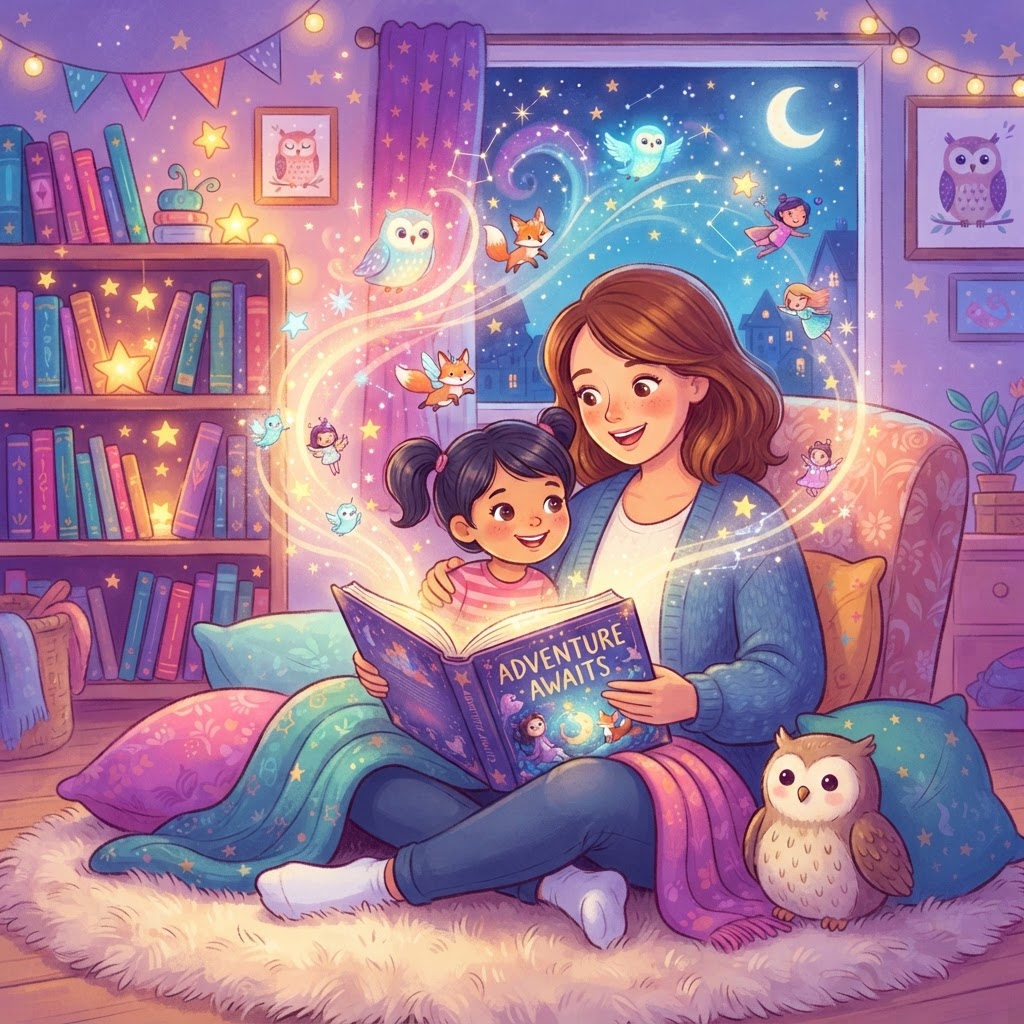
If your child struggles with worry, stories can be a gentle and powerful place to start. The right story helps a child feel seen, safe, and less alone with big feelings they may not yet know how to explain.
For many families, worry stories for kids work because they do two things at once: they soothe in the moment and build emotional skills over time. When a child hears about a character who worries, copes, and finds support, they begin to learn that worry is manageable—not something to fear or hide.
Why do children experience worry?
Children experience worry because their brains are still developing, their world often feels unpredictable, and their imagination is much bigger than their ability to assess risk. In most cases, worry is a normal part of development.
Young children commonly worry about separation, bedtime, loud noises, making mistakes, or new experiences. Older children may also worry about friendships, school performance, health, and family changes. According to the American Academy of Child & Adolescent Psychiatry, some anxiety is expected in childhood, especially during transitions and unfamiliar situations.
A few factors make worry and children a common combination:
- Developmental stage: Young children do not yet think as logically as adults.
- Temperament: Some children are naturally more sensitive or cautious.
- Life changes: Starting school, moving home, or family stress can increase worry.
- Imagination: A rich imagination can turn a small concern into a very big feeling.
The good news is that children can learn to understand and manage worry. Supportive relationships, predictable routines, and emotionally intelligent storytelling all help.
How do stories help children with worry?
Stories help because they create narrative distance, model coping, and give children words for feelings. A child can explore worry safely through a character before talking about their own experience.
This matters because worried children often resist direct questions like “Why are you anxious?” But if you ask, “Why do you think the rabbit felt nervous at school?” many children will answer freely. In child psychology, this kind of indirect approach reduces pressure and supports emotional expression.
Stories are especially helpful in three ways:
- Narrative distance: The worry belongs to the character first, which makes it feel safer to examine.
- Modeling: Children see what calm breathing, asking for help, or trying again can look like.
- Vocabulary: Stories give names to body sensations and emotions: “butterflies,” “tight chest,” “busy thoughts,” “nervous,” “relieved.”
Research on child development consistently shows that children build emotional regulation through warm, responsive relationships and language-rich interactions. The Center on the Developing Child at Harvard University has long emphasized that back-and-forth interactions help children develop self-regulation. Storytime can be one of those powerful moments of connection.
There is also encouraging evidence for bibliotherapy—using books and stories to support emotional wellbeing. Stories do not replace treatment when anxiety is severe, but they can be an effective everyday tool for helping kids with worry.
What story themes work best for helping kids with worry?
The best story themes for worried children are gentle, relatable, and hopeful without being unrealistic. Stories about everyday worries usually work better than dramatic plots.
Look for or create stories about worry for children that include:
- A familiar worry: bedtime, school drop-off, darkness, new activities, or making mistakes
- A likable main character: someone sensitive, curious, or cautious—not “bad” or “weak”
- A supportive adult or friend: a parent, teacher, sibling, or kind animal guide
- A simple coping tool: breathing, a comfort phrase, drawing, asking for help, or a routine
- A calm resolution: the feeling softens, even if the problem is not magically erased
Children also benefit from stories that connect worry with other emotions. A child who worries may also feel lonely, jealous, or overstimulated. If that sounds familiar, our guides to stories about loneliness and jealousy stories for children can help you build a wider emotional toolkit.
A strong story theme says, in effect: “Worry happens. You are not the only one. There are safe ways through it.”
What should parents avoid in stories about worry for children?
Parents should avoid stories that intensify fear, shame emotions, or offer a too-neat solution. The goal is comfort and skill-building, not emotional overload.
When choosing or creating worry stories for kids, steer clear of:
- Scary details that stick: vivid monsters, disasters, or threatening imagery can backfire
- Shaming language: avoid “silly,” “babyish,” or “there’s nothing to worry about”
- Instant fixes: children need believable coping, not magical emotional shortcuts
- Adult-sized problems: stories about financial stress, illness fears, or major conflict may be too heavy for bedtime
- A fixed identity: don’t make worry the child’s whole personality
It also helps to avoid turning storytime into a lesson disguised as a lecture. Children usually respond best when the adult stays curious and warm. The CDC’s guidance on children’s mental health also reminds caregivers to watch for persistent distress that affects sleep, school, or daily functioning.
A good rule: validate first, guide second.
What are five worry story ideas you can try tonight?
You do not need a perfect plot to make stories soothing. Simple, repetitive, emotionally safe ideas are often the most effective.
Here are five story ideas that work well for helping kids with worry:
-
The backpack full of “what ifs”
A child going to school imagines carrying a backpack filled with worry stones. With each kind interaction, one stone turns lighter until the backpack feels manageable. -
The bedtime star that listens
A child whispers nighttime worries to a star, which teaches a slow breathing pattern: in for four, out for four. By the end, the worries are still there, but they are quieter. -
The first-day fox
A small fox worries about joining a new group. A gentle teacher notices, gives the fox one helper job, and the day becomes predictable enough to feel safe. -
The storm in the tummy
A character feels worry as weather inside their body. With naming, stretching, and cuddling, the storm changes to rain, then mist, then calm. -
The crumpled drawing
A child makes a mistake and wants to give up. A caring adult models self-talk—“Mistakes mean I’m learning”—and the child tries one small next step.
If you want a quick starting point, InstaTales makes it easy to create your own personalized bedtime story using your child’s age, interests, and specific worry. You can also use story templates if you want structure without starting from scratch.
How can you use InstaTales’ kind tone to support worried children?
A kind tone helps worried children feel emotionally safe. The most effective stories speak softly to a child’s nervous system: they validate, slow down, and reassure without dismissing the feeling.
When creating a story, aim for these tone choices:
- Name the feeling gently: “Mila felt a fluttery worry in her tummy.”
- Normalize it: “Lots of children feel this way before something new.”
- Add co-regulation: include a calm adult, cozy setting, or steady routine
- Keep the pace unhurried: worried children need emotional breathing room
- End with relief, not perfection: “The worry got smaller” is enough
This is where personalized storytelling shines. A child who loves diggers, dolphins, or dragonflies may engage more deeply when the comforting character feels familiar. After you make a soothing story, save it in your story library so you can reread it during the moments your child needs it most.
If you are building a broader feelings toolkit, the InstaTales blog can help you explore related emotions and bedtime strategies.
When should stories be paired with extra support?
Stories are supportive, but they are not a substitute for professional help when worry becomes persistent, intense, or disruptive. If a child’s worries are affecting sleep, school, eating, or daily life, it is wise to speak with a pediatrician or child mental health professional.
Consider extra support if your child:
- has frequent physical complaints linked to worry
- avoids normal activities again and again
- has panic-like symptoms or severe bedtime distress
- seems stuck in fear despite gentle support
The Child Mind Institute offers helpful guidance for families, and your pediatrician can advise on next steps. Stories remain valuable even then—they can still provide comfort, language, and connection alongside other care.
Frequently Asked Questions
What are the best worry stories for kids?
The best worry stories for kids are gentle, relatable, and realistic. Look for stories about common childhood worries, supportive adults, and simple coping tools like breathing or asking for help.
Can stories really help anxious children?
Yes, stories can help many anxious children by creating emotional distance and showing coping in action. They are especially useful when paired with a calm adult who talks about the story afterward.
How often should I read stories about worry for children?
A few times a week is often enough, and repetition can be very soothing. Many children benefit from rereading the same calming story during stressful periods.
Should worry stories always have a happy ending?
They should have a reassuring ending, but not necessarily a perfect one. It is more helpful to show that worry can soften and be managed than to pretend it disappears instantly.
Can I create personalized worry stories for my child?
Yes, personalized stories can be especially effective because they reflect your child’s age, interests, and specific concerns. Familiar details often make the message feel safer and more believable.
Ready to Create a Personalized Bedtime Story?
Use our free AI bedtime story generator to create a personalized illustrated story for your child in 30 seconds — no credit card needed.
Popular story types:
Maya Rodriguez
Lead Content Editor & Early Literacy Specialist
Maya is a former early childhood educator and literacy specialist with over a decade of experience helping children develop a love of reading. She leads content at InstaTales, where she writes about the science of storytelling, child development, and how families can use personalized AI stories to build literacy and emotional resilience.
instatales.ai