Story-Based Art Projects for Kids to Try Today
Combine storytelling with art projects — fun, educational activities that extend the story experience and build skills.
✦ Key Takeaways
- •Story-based art projects help children build comprehension, language, and creativity at the same time.
- •The simplest method is to choose one scene, one character, or one problem from the story and build the project around it.
- •A character collage helps children notice details about appearance, personality, and feelings.
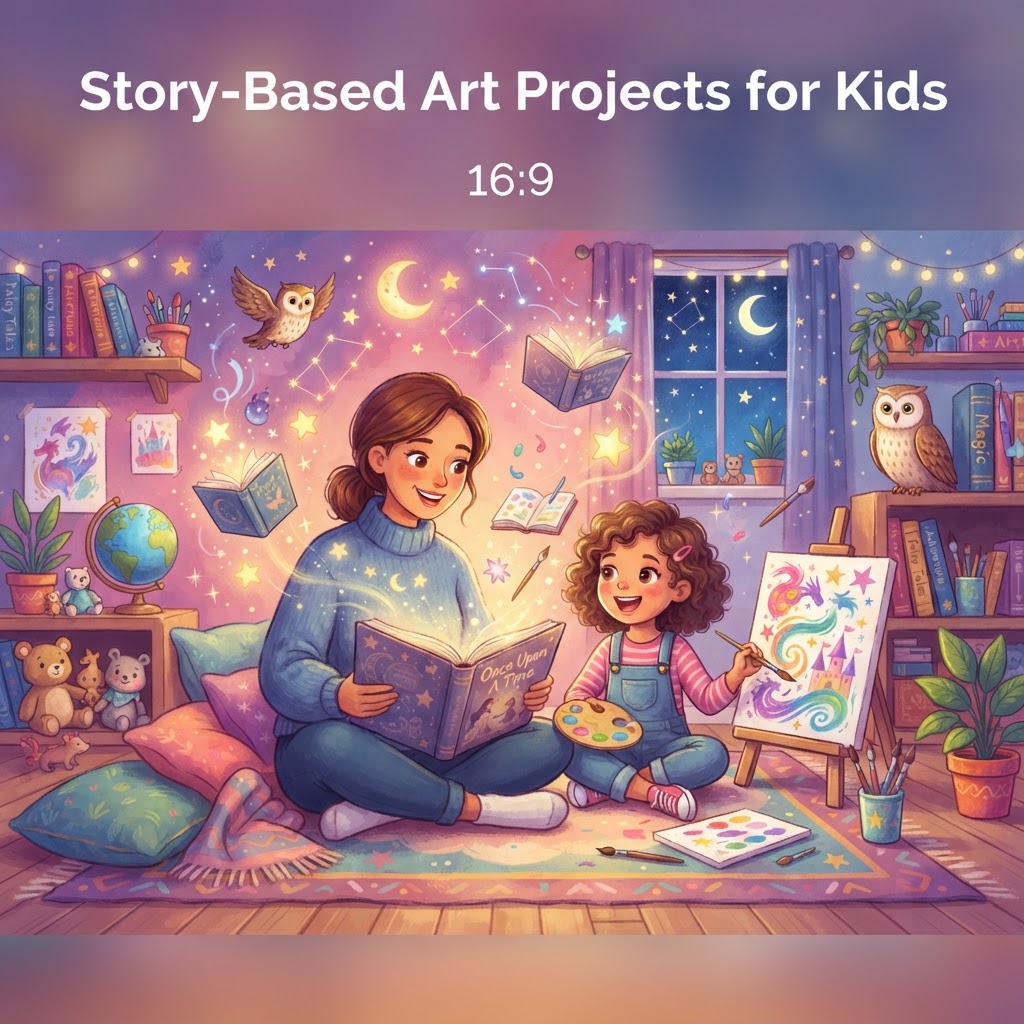
When children turn a story into something they can paint, build, or glue together, the story lasts longer and means more. Story-based art projects help kids retell events, picture characters, practice fine motor skills, and make creative choices—all while having fun.
For parents and teachers, this is one of the easiest ways to extend reading time into meaningful play. You can create your own personalized bedtime story on InstaTales, use one favorite scene as the starting point, and turn it into one of the art projects for kids below.
Why do story-based art projects help children learn?
Story-based art projects help children build comprehension, language, and creativity at the same time. When a child draws or constructs part of a story, they are practicing sequencing, recalling details, and expressing ideas in a new form.
This kind of learning is backed by child development research. The Harvard Center on the Developing Child emphasizes that rich, interactive experiences help build strong learning foundations, and the National Association for the Education of Young Children has long supported open-ended art as a valuable way for children to communicate thinking. For younger children, these art project activities for children also strengthen hand muscles needed for writing and self-care tasks.
How can you turn an InstaTales story into an art activity?
The simplest method is to choose one scene, one character, or one problem from the story and build the project around it. You do not need a long lesson plan—just a clear story moment and basic materials.
Try this simple setup:
- Generate a personalized story with your child’s name, favorite animal, or current interest.
- Keep the story short for ages 1-4 and slightly more detailed for ages 5-10.
- Ask one guiding question: “What part should we make?”
- Save favorites in your story library so children can revisit and create again later.
If you want a quicker start, use ready-made story templates. In classrooms, InstaTales for teachers can make it easier to use one shared story across centers, small groups, or writing extensions.
How can kids make a character collage from a story?
A character collage helps children notice details about appearance, personality, and feelings. It is especially good for preschool and early elementary ages because it is flexible and low-pressure.
Story prompt
Use an InstaTales story with a vivid main character, such as a shy dragon, a brave rabbit, or a child explorer. Ask: “What does our character look like, and what clues show who they are?”
Materials needed
- Construction paper
- Old magazines or printed textures
- Child-safe scissors
- Glue stick
- Markers
- Yarn, buttons, or fabric scraps
Instructions
- Re-read the part of the story that introduces the character.
- Talk about 3-5 traits: color, size, favorite object, emotion, special power.
- Cut or tear paper and collage materials to build the character.
- Add labels or speech bubbles for older children.
- Invite your child to retell the character’s part of the story.
For more visual extensions, pair this with these story-based drawing activities.
How can children create a story setting shoebox scene?
A shoebox scene turns the setting into a small 3D world children can step back into again and again. This is one of the most effective story-based art projects for building recall and descriptive language.
Story prompt
Choose a strong setting from an InstaTales story: a moonlit forest, underwater castle, jungle treehouse, or snowy village. Ask: “Where did the story happen, and what was important there?”
Materials needed
- Shoebox or small box
- Colored paper
- Glue or tape
- Crayons or paint
- Small toys, clay, or cut-out figures
- Cotton balls, sticks, foil, or tissue paper
Instructions
- Line the inside of the shoebox to match the setting.
- Add a background: sky, trees, waves, stars, or buildings.
- Make simple characters and place them inside.
- Add one important problem or event from the story.
- Have your child explain what is happening in the scene.
Teachers can use this as a retelling center. Younger children may point and name objects; older children can present the setting using complete sentences.
How can kids design a story map with paths and landmarks?
A story map helps children understand sequence, movement, and cause-and-effect. It works especially well for adventure stories where a character travels from one place to another.
Story prompt
Pick an InstaTales journey story. Maybe the hero crosses a bridge, finds a cave, visits a mountain, and returns home. Ask: “Where did the character go first, next, and last?”
Materials needed
- Large paper or poster board
- Markers or crayons
- Stickers
- Construction paper
- Glue
- Optional toy figures
Instructions
- Draw the beginning, middle, and end locations.
- Connect them with a road, river, or path.
- Add landmarks from the story.
- Use arrows or numbers to show the order of events.
- Let your child “walk” a toy figure through the map and retell the plot.
This activity blends art with early literacy and planning. It also connects nicely to oral storytelling and even simple writing for older children.
How can children make a feelings mask for a story character?
A feelings mask helps children explore emotions in a concrete, playful way. It is especially useful after stories about conflict, bravery, kindness, or friendship.
Story prompt
Choose an InstaTales story where the main character’s feelings change. Ask: “How did the character feel at the start, in the middle, and at the end?”
Materials needed
- Paper plate or cardstock
- Markers or paint
- Craft sticks or elastic
- Scissors
- Glue
- Feathers, paper strips, or stickers
Instructions
- Pick one key emotion from the story: worried, excited, proud, calm.
- Create a face that shows that feeling.
- Attach a stick handle or elastic.
- Re-read the matching story scene.
- Invite your child to act out that emotion and explain why the character felt it.
The CDC’s developmental guidance highlights the importance of social-emotional growth, and activities like this give children a simple way to name and discuss feelings.
How can kids build a “magic object” sculpture from the story?
A magic object sculpture encourages problem-solving, invention, and symbolic thinking. Children love making the special key, wand, map, crown, boat, or treasure that moved the story forward.
Story prompt
Use an InstaTales story that includes one important object. Ask: “What item helped solve the problem?”
Materials needed
- Recyclables like tubes, boxes, lids, and foil
- Tape or glue
- Paint or markers
- String
- Stickers or gems
- Air-dry clay, optional
Instructions
- Identify the object and what it does in the story.
- Sketch it quickly or describe it aloud.
- Build it from recycled materials.
- Decorate it with colors and symbols from the story.
- Ask your child to explain how the object helps the character.
This is one of the best art projects activities children can do with mixed ages because each child can invent at their own level.
How can children create a story quilt square on paper?
A paper quilt square helps children focus on one meaningful moment while practicing pattern and design. It works beautifully for family stories, bedtime stories, and classroom community themes.
Story prompt
Choose one scene from an InstaTales story that feels important: a celebration, a rescue, a bedtime hug, or a shared meal. Ask: “What one picture belongs in the story quilt?”
Materials needed
- Square paper pieces
- Crayons, markers, or paint
- Glue
- Border strips or patterned paper
- Optional fabric scraps
Instructions
- Give each child one square.
- Have them illustrate one scene or symbol from the story.
- Add a border around the square.
- Join the squares together on a wall or poster board.
- Read the story again and point to each square in order.
In a classroom, this creates a collaborative display. At home, it becomes a sweet keepsake from a personalized story.
How can you make story-based art projects easier for different ages?
You can adapt the same project by changing the amount of cutting, drawing, and retelling you expect. The goal is participation, not perfection.
Use these age-friendly adjustments:
- Ages 1-3: Tear paper, finger paint, stick pre-cut shapes, name colors and characters.
- Ages 4-6: Cut simple shapes, follow 2-3 steps, retell one part of the story.
- Ages 7-10: Plan details, add labels, write captions, compare characters or endings.
If your child wants to keep going after art time, move into a writing extension, discussion, or another creative response. A simple next step is to use story scenes as prompts for journal work or these story-based writing ideas.
Frequently Asked Questions
What makes story-based art projects different from regular crafts?
Story-based art projects begin with a book or story rather than a finished sample to copy. That means children are using memory, imagination, and comprehension—not just following directions.
How do I choose the best InstaTales story for an art activity?
Pick a story with one strong character, setting, or problem. Simple plots usually work best because children can remember key details and turn them into art more easily.
Are these art projects for kids suitable for classrooms?
Yes. Most of these activities work well in centers, whole-group lessons, or take-home family assignments. Teachers can also reuse saved stories and adapt the projects for mixed ages and abilities.
What if my child does not like drawing?
That is completely fine. Choose collage, sculpture, or shoebox scene projects instead, since many children prefer building and arranging over drawing.
How often should we do story-based art projects?
Once or twice a week is enough to make a real impact. The key is consistency and re-reading, not doing a large craft every day.
Can these activities support reading skills?
Yes. Children practice sequencing, vocabulary, retelling, character understanding, and expressive language during the project. Those are all important early literacy skills that support later reading success.
Ready to Create a Personalized Bedtime Story?
Use our free AI bedtime story generator to create a personalized illustrated story for your child in 30 seconds — no credit card needed.
Popular story types:
Maya Rodriguez
Lead Content Editor & Early Literacy Specialist
Maya is a former early childhood educator and literacy specialist with over a decade of experience helping children develop a love of reading. She leads content at InstaTales, where she writes about the science of storytelling, child development, and how families can use personalized AI stories to build literacy and emotional resilience.
instatales.ai