6 Story-Based Building Activities for Kids
Combine storytelling with building activities — fun, educational activities that extend the story experience and build skills.
✦ Key Takeaways
- •Story-based building activities work because they combine language, imagination, and spatial play in one experience.
- •The easiest way to use an InstaTales story is to choose one scene, one challenge, and one structure.
- •These six ideas are practical, flexible, and easy to adapt.
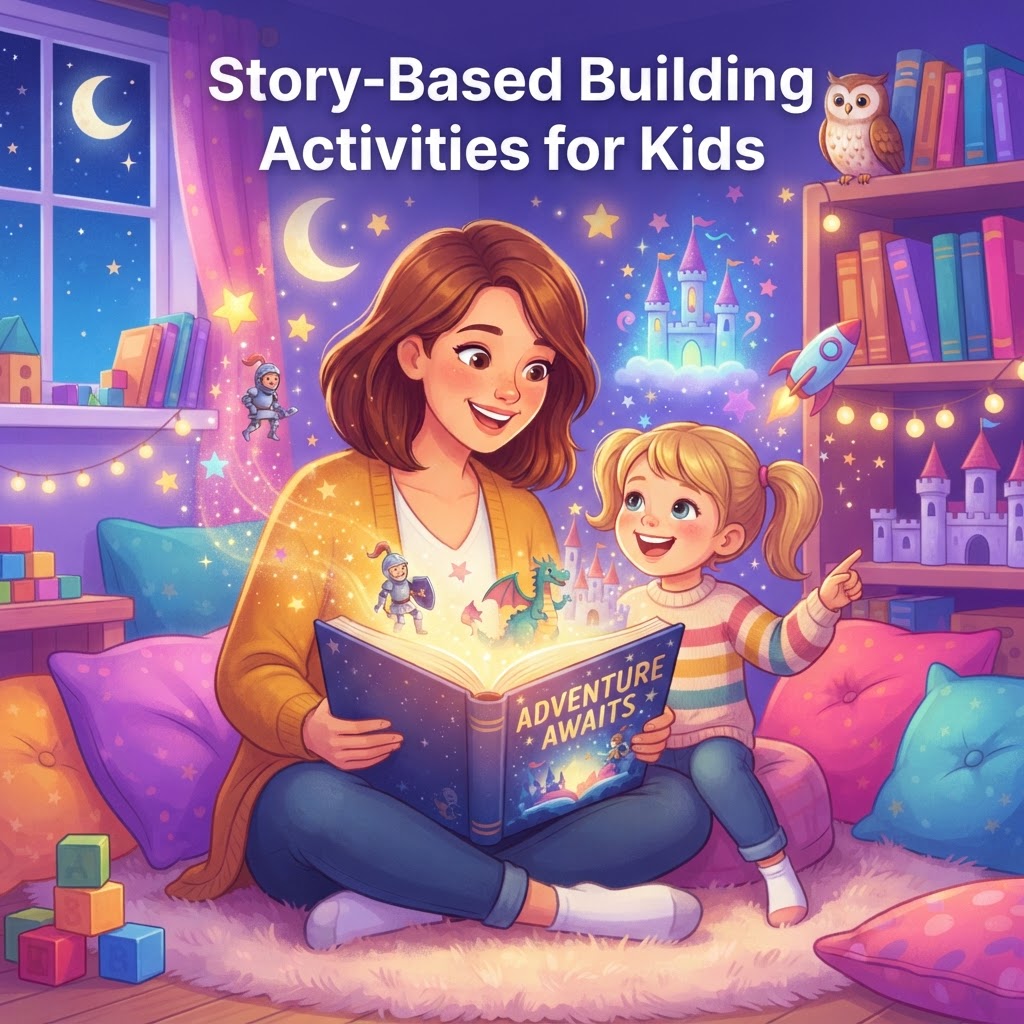
Stories give children a reason to build. When a child makes a bridge for a fox, a castle for a princess, or a habitat for a baby turtle, the project feels meaningful, not random. That is why building activities for kids work especially well when they grow out of a favorite tale. If you want story-based building-activities that are easy to use at home or in class, this guide will help. Parents often search for “building-activities activities children” can do after reading; what they usually need is a simple, low-prep plan that turns imagination into hands-on learning.
A great place to start is to create a personalized bedtime story that features your child’s favorite character, animal, or theme. Then you can revisit that same story later, build from it, and save it in your story library for future play.
Why do story-based building activities work so well?
Story-based building activities work because they combine language, imagination, and spatial play in one experience. Children are not just stacking blocks; they are solving a problem from the story, retelling events, and practicing flexible thinking.
This matters for development. The National Association for the Education of Young Children notes that block play supports math, vocabulary, and social skills. Research by Wolfgang, Stannard, and Jones also found a connection between early block play and later math learning. When adults talk with children during play, those back-and-forth exchanges support brain development too, as explained by the Harvard Center on the Developing Child. The CDC’s play and development guidance also reminds us that playful interaction helps children learn across ages.
In short, story plus building is not just fun. It builds comprehension, problem-solving, fine motor skills, and confidence.
How can you turn an InstaTales story into a building plan?
The easiest way to use an InstaTales story is to choose one scene, one challenge, and one structure. That keeps the activity focused and doable for young children.
Try this simple process:
- Read the story once for enjoyment.
- Read it again and pause at a key moment. Ask, “What needs to be built here?”
- Pick one buildable idea. A house, bridge, boat, tower, cave, road, or animal home all work well.
- Set a clear goal. For example: “Can we build a shelter that keeps the bunny dry?” or “Can we make a path to grandma’s garden?”
If you want richer follow-up, pair the activity with discussion starters for families or ask older children to add reflection with story-based journaling ideas. The story becomes the anchor, and the build becomes the response.
Which story-based building activities can kids try today?
These six ideas are practical, flexible, and easy to adapt. For each one, use a recent InstaTales story as the foundation so the build feels personal and connected.
1. Can children build the main character’s home?
This is one of the best starting points because every story has a setting. Children can build a cozy den, castle, treehouse, farm, or underwater home based on the main character’s world.
- Story prompt: “In your InstaTales story, where does the character sleep, eat, or feel safe?”
- Materials needed: Blocks, cardboard boxes, paper tubes, tape, fabric scraps, crayons
- Instructions:
- Re-read the part of the story that describes the home.
- Ask your child to name three things the home needs.
- Build the structure together, then add details like a door, bed, or pet space.
- Invite your child to retell the story inside the finished home.
2. Can kids design a bridge for a story problem?
A bridge challenge gives children a clear engineering goal. It works especially well when the character needs to cross a river, lava path, puddle, or snowy gap.
- Story prompt: “The character cannot get across. What kind of bridge will help?”
- Materials needed: Craft sticks, blocks, LEGO, tape, string, small toy figures
- Instructions:
- Use the InstaTales story to identify what the character is crossing and why it matters.
- Ask children to predict: wide bridge, tall bridge, or strong bridge?
- Build and test the bridge with a toy character.
- If it falls, treat it as part of the story: “What can we change so the hero succeeds?”
3. Can children build a map of the story world?
A story map build helps children understand sequence, setting, and movement. It is excellent for children who love cars, figures, or small-world play.
- Story prompt: “What places did the character visit first, next, and last?”
- Materials needed: Blocks, paper, markers, tape, recycled containers, toy animals or figures
- Instructions:
- List 3-5 places from the InstaTales story.
- Build each place on the floor or table: forest, bakery, moon base, beach, school, or garden.
- Add paths or roads between them.
- Let your child move the character through the map while retelling the events in order.
4. Can kids create an animal habitat from the story?
Habitat building is perfect for children who love animals and nature stories. It also opens the door to simple science talk about what living things need.
- Story prompt: “What does the animal character need to stay safe, warm, fed, and comfortable?”
- Materials needed: Blocks, natural items like leaves or sticks, playdough, blue paper, small animal toys
- Instructions:
- Choose an InstaTales story featuring a bear, turtle, bird, fox, or made-up creature.
- Talk about the habitat: nest, cave, pond, burrow, or jungle shelter.
- Build the habitat and add food, water, and hiding spaces.
- Ask, “Would this habitat work in the story? Why or why not?”
5. Can children build a rescue vehicle or mission base?
This activity is ideal for high-energy children because it combines construction with action. Fire trucks, rocket ships, rescue boats, and veterinary clinics all fit easily into story play.
- Story prompt: “The character needs help. What should we build to solve the problem?”
- Materials needed: Magnetic tiles, boxes, wheels, tape, blocks, toy people
- Instructions:
- Use an InstaTales story where a character is lost, stuck, or needs to deliver something important.
- Decide whether the child will build a vehicle, a launch pad, or a rescue station.
- Add one tool the rescue team needs, such as a ramp, ladder, or carrying bed.
- After building, act out the rescue and narrate the solution.
6. Can kids rebuild the ending with a better shelter?
This activity strengthens creativity and critical thinking. Instead of copying the original ending, children redesign it.
- Story prompt: “What could the character build to make the ending even better?”
- Materials needed: Any open-ended building set, blankets, paper, tape, markers
- Instructions:
- Finish reading the InstaTales story and ask what problem still remains.
- Invite the child to invent a new structure: a storm shelter, celebration stage, lookout tower, or secret hideout.
- Build the new ending together.
- Ask the child to tell the revised last page of the story using the new build.
How can parents and teachers adapt these activities by age?
The key is to change the level of support, not the core idea. The same story-based building activity can work for ages 1-10 with small adjustments.
- Ages 1-3: Use soft blocks, large pieces, and very short stories. Focus on naming objects and building one simple part, like “bear’s bed” or “big bridge.”
- Ages 4-6: Add a challenge, such as making the structure tall, strong, or wide. Encourage retelling with beginning, middle, and end.
- Ages 7-10: Ask children to sketch a plan, measure, test, revise, and explain their design choices in detail.
For classrooms, these activities work well in literacy centers, STEM stations, or small groups. InstaTales for teachers can make it easier to create class stories that match a theme, social-emotional goal, or science unit.
How can parents and teachers make these activities easy to run?
Keep the setup simple and the language clear. One story scene and one building goal is usually enough for a successful session.
A few practical tips help:
- Limit materials at first. Too many choices can overwhelm children.
- Model language. Say, “I notice,” “I wonder,” and “What could we try next?”
- Take a photo of the build. Children love seeing their work documented.
- Revisit the same story later. A second build is often better than the first.
- Extend only if interest is high. You can add drawing, writing, or sensory play another day.
If your child enjoys cross-curricular follow-up, explore more ideas on the InstaTales blog, especially activities that blend stories with art, conversation, and creative play.
Frequently Asked Questions
What are story-based building activities for kids?
They are hands-on building tasks inspired by a story. Children use blocks, cardboard, or other materials to create something from the plot, setting, or problem.
What materials work best for building activities at home?
Open-ended materials are best: blocks, LEGO, cardboard boxes, tape, paper tubes, and fabric scraps. You do not need special supplies for meaningful play.
Can toddlers do story-based building activities?
Yes, with simpler goals and larger materials. Toddlers do well with short stories, one-step builds, and lots of adult language support.
How long should a story-based building activity last?
For younger children, 10-20 minutes is often enough. Older children may stay engaged for 30-45 minutes if the challenge feels meaningful.
How do teachers use InstaTales in the classroom?
Teachers can generate a story that matches a class theme, then turn one scene into a STEM or literacy center. The same story can support reading, discussion, and building in one lesson.
What should I do if my child does not want to copy the story exactly?
That is completely fine. Changing the story shows imagination, flexible thinking, and ownership, which are all valuable learning outcomes.
Ready to Create a Personalized Bedtime Story?
Use our free AI bedtime story generator to create a personalized illustrated story for your child in 30 seconds — no credit card needed.
Popular story types:
Maya Rodriguez
Lead Content Editor & Early Literacy Specialist
Maya is a former early childhood educator and literacy specialist with over a decade of experience helping children develop a love of reading. She leads content at InstaTales, where she writes about the science of storytelling, child development, and how families can use personalized AI stories to build literacy and emotional resilience.
instatales.ai