Story-Based Journaling for Kids: 6 Easy Activities
Combine storytelling with journaling — fun, educational activities that extend the story experience and build skills.
✦ Key Takeaways
- •Story-based journaling helps children connect language, imagination, and writing in a developmentally appropriate way.
- •The best way to start is with one short story, one notebook, and one repeatable routine.
- •A character diary teaches perspective-taking.
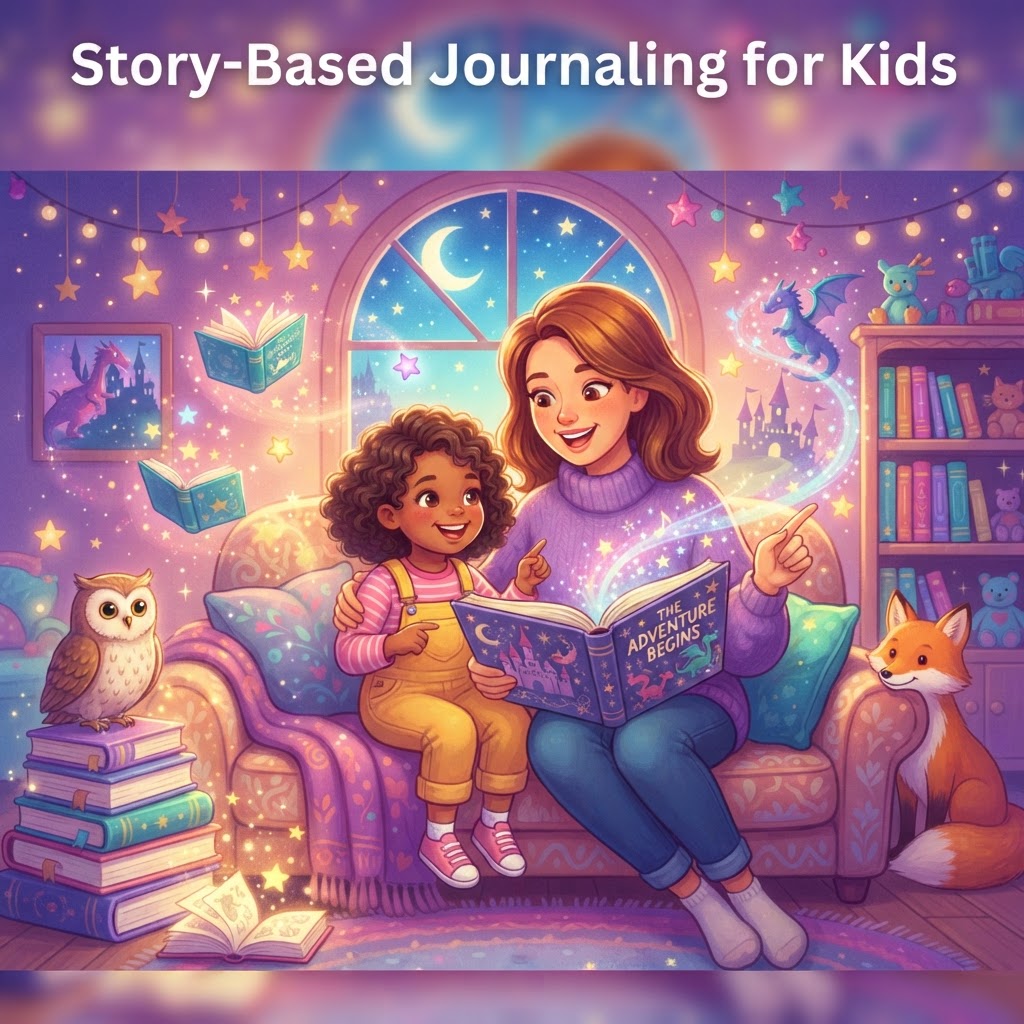
When children turn a story into a journal activity, they do more than “do writing.” They practice memory, sequencing, emotional language, creativity, and early literacy in a way that feels playful and personal.
That is why story-based journaling works so well for young children. A familiar story gives them a structure to lean on, while the journal gives them space to draw, dictate, label, or write at their own level. If you want practical, low-prep journaling for kids ideas, the activities below make it easy to use InstaTales stories at home or in the classroom.
Why is story-based journaling such a powerful tool for kids?
Story-based journaling helps children connect language, imagination, and writing in a developmentally appropriate way. It is especially effective because kids are responding to a story they already know, which lowers pressure and boosts confidence.
Child development research supports this approach. The National Association for the Education of Young Children emphasizes that early writing grows from meaningful experiences, talk, drawing, and play. Reading Rockets also notes that oral storytelling and retelling help children build later reading and writing skills. And the Harvard Center on the Developing Child highlights how activities involving memory, attention, and self-regulation support executive function.
For younger children, journaling may look like scribbles, stickers, or a dictated sentence. For older children, it may look like full paragraphs, captions, or comic panels. Both count.
How can parents and teachers set up journaling for kids with InstaTales stories?
The best way to start is with one short story, one notebook, and one repeatable routine. Using InstaTales as the base makes journaling easier because the child already feels connected to the characters and plot.
Start by helping your child create your own personalized bedtime story or choose a favorite from your story library. If you want a faster starting point, use ready-made story templates and let your child personalize a few details.
A simple routine works well:
- Read the story once for enjoyment.
- Read it a second time and pause to notice characters, feelings, and events.
- Choose one journaling activity.
- Let the child respond through drawing, dictation, labels, or writing.
For classrooms, these ideas also work in literacy centers, morning work, and writing workshop. Teachers can adapt them for whole-group or independent practice with InstaTales for teachers.
How can a character diary help children write from another point of view?
A character diary teaches perspective-taking. Children imagine what the character thought, felt, or noticed, which strengthens empathy and narrative thinking.
Story prompt
“What would your story’s main character write in their diary after today’s adventure?”
Materials needed
- The InstaTales story
- Journal or paper
- Crayons, pencils, or markers
- Optional: character sticker or printed picture
Instructions
- Re-read the story and ask: “What was the biggest thing that happened to the character?”
- Invite the child to pretend they are the character.
- Start with a sentence stem like:
- “Dear Diary, today I…”
- “My favorite part was…”
- “I felt… when…”
- Younger children can draw the moment and dictate one sentence.
- Older children can add 3-5 sentences and a small illustration.
This is one of the easiest journaling activities children can repeat with every new story. It also pairs well with family story discussion prompts if you want more conversation before writing.
What can kids learn by retelling the story in three journal pages?
A three-page retelling builds sequencing skills. Children learn how stories move from beginning to middle to end, which is a core early literacy skill.
Story prompt
“What happened first, next, and last in your InstaTales story?”
Materials needed
- Journal with three pages or one page divided into three boxes
- Writing tools
- Optional: stickers for “1, 2, 3”
Instructions
- Fold a paper into three sections or label pages: Beginning, Middle, End.
- Ask the child to draw one important event in each section.
- Under each picture, add a simple caption:
- “First…”
- “Then…”
- “Finally…”
- Encourage the child to use words from the story, such as the character’s name or the setting.
This activity works especially well after re-reading a saved favorite from your story library. Repetition helps children notice structure and remember details more accurately.
How do you turn one bedtime story into an alternate ending activity?
An alternate ending invites creative thinking while keeping the child anchored in a familiar story world. It helps children understand that authors make choices and that stories can change.
Story prompt
“What else could have happened at the end of the story?”
Materials needed
- The original InstaTales story
- Journal paper
- Crayons or pencils
- Optional: two colors, one for the original ending and one for the new ending
Instructions
- Re-read the final page of the story.
- Ask one guiding question:
- “What if the dragon stayed?”
- “What if the character found a different treasure?”
- “What if it started to rain?”
- Have the child draw the new ending first.
- Then help them add one sentence or a short paragraph explaining what changed.
This activity is ideal for children who love “what if” questions. If they want to keep extending the idea, follow up later with story-inspired craft projects based on the new ending.
How can a feelings journal build empathy and emotional vocabulary?
A feelings journal helps children name emotions and connect them to events. That strengthens both emotional literacy and reading comprehension.
Story prompt
“How did each character feel during the story, and why?”
Materials needed
- Storybook or digital story
- Journal page
- Markers
- Optional: emoji faces or a simple feelings chart
Instructions
- Choose 2-3 key moments from the story.
- For each moment, ask:
- “How did the character feel?”
- “What in the story makes you think that?”
- Let the child draw a face or use a color for each feeling.
- Add a sentence such as:
- “She felt nervous when…”
- “He felt proud because…”
For children ages 3-6, keep the choices simple: happy, sad, scared, excited, calm. Older children can use richer feeling words like disappointed, relieved, frustrated, or brave.
What happens when children journal about the story setting?
Setting journals teach observation and descriptive language. Children learn to notice where a story happens and how the setting shapes the adventure.
Story prompt
“What did the story world look, sound, and feel like?”
Materials needed
- The InstaTales story
- Journal page
- Colored pencils or crayons
- Optional: nature items, textured paper, or photos for inspiration
Instructions
- Re-read the part of the story that describes the setting.
- Ask the child to draw the place as fully as they can.
- Add sensory prompts:
- “What colors do you see?”
- “What sounds do you hear?”
- “Is it warm, windy, quiet, magical?”
- Help the child label details or write a short description.
This works beautifully after fantasy, nature, or travel-themed stories. If your child enjoys hands-on follow-up, you can extend the experience with story-based sensory activities.
How can a sequel page keep the story experience going?
A sequel page encourages independent idea generation. Children use the original story as a launching pad and begin creating their own next chapter.
Story prompt
“What happens the next day after the story ends?”
Materials needed
- Original story
- Journal or paper
- Pencils, markers, or crayons
Instructions
- Ask the child to choose one character who returns in the next chapter.
- Brainstorm three possibilities for what could happen next.
- Let the child pick one and create:
- a drawing and caption,
- a comic strip,
- or a short “Chapter 2” paragraph.
- If needed, offer sentence starters:
- “The next morning…”
- “Soon, they discovered…”
- “But then…”
This is one of the best journaling for kids activities for building confidence because it gently moves children from responding to stories to authoring their own. Many families make this a weekly habit after a new story night.
How can adults make story-based journaling feel successful instead of stressful?
Keep it short, flexible, and responsive to the child’s age. The goal is not perfect handwriting or long answers; the goal is meaningful engagement with the story.
A few practical tips:
- Aim for 5-15 minutes.
- Accept drawing, dictation, labels, and invented spelling.
- Re-read the same story more than once.
- Offer choices between two activities.
- Praise ideas and effort more than neatness.
For toddlers and preschoolers, sit beside them and scribe their words. For early elementary children, invite more independence but still offer sentence stems. For older children, encourage deeper responses such as motives, alternate plots, or personal connections.
Frequently Asked Questions
What age is best for story-based journaling?
Children as young as 2 or 3 can begin with drawing and dictation. Older children can add captions, sentences, and full reflections, so the activity scales well from preschool through age 10.
Do kids need to know how to write to start journaling?
No. Pre-writers can point, talk, draw, and dictate while an adult writes their words underneath. That still builds storytelling, vocabulary, and print awareness.
How often should children do journaling activities?
Two to three times a week is enough for most families. In classrooms, one short response after a shared story can be very effective.
What if my child says they do not like writing?
Start with drawing-based responses and keep the writing part tiny. A single labeled picture or one dictated sentence is a successful beginning.
Can teachers use InstaTales stories for journal assignments?
Yes. Personalized stories can make writing prompts more engaging because students feel connected to the characters and events. Teachers can use the same story for whole-group modeling or assign different prompts for small groups.
What makes story-based journaling different from regular journaling?
Regular journaling often asks children to generate ideas from scratch. Story-based journaling gives them a ready-made context, which makes writing easier, more playful, and more accessible.
Ready to Create a Personalized Bedtime Story?
Use our free AI bedtime story generator to create a personalized illustrated story for your child in 30 seconds — no credit card needed.
Popular story types:
Maya Rodriguez
Lead Content Editor & Early Literacy Specialist
Maya is a former early childhood educator and literacy specialist with over a decade of experience helping children develop a love of reading. She leads content at InstaTales, where she writes about the science of storytelling, child development, and how families can use personalized AI stories to build literacy and emotional resilience.
instatales.ai