7 Story-Based Craft Projects for Kids
Combine storytelling with craft projects — fun, educational activities that extend the story experience and build skills.
✦ Key Takeaways
- •Yes, story-based crafts support learning because they connect language, movement, memory, and creativity in one activity.
- •A puppet theater is one of the easiest story-based craft-projects for kids because it makes retelling fun and active.
- •A story map scroll helps children understand beginning, middle, and end.
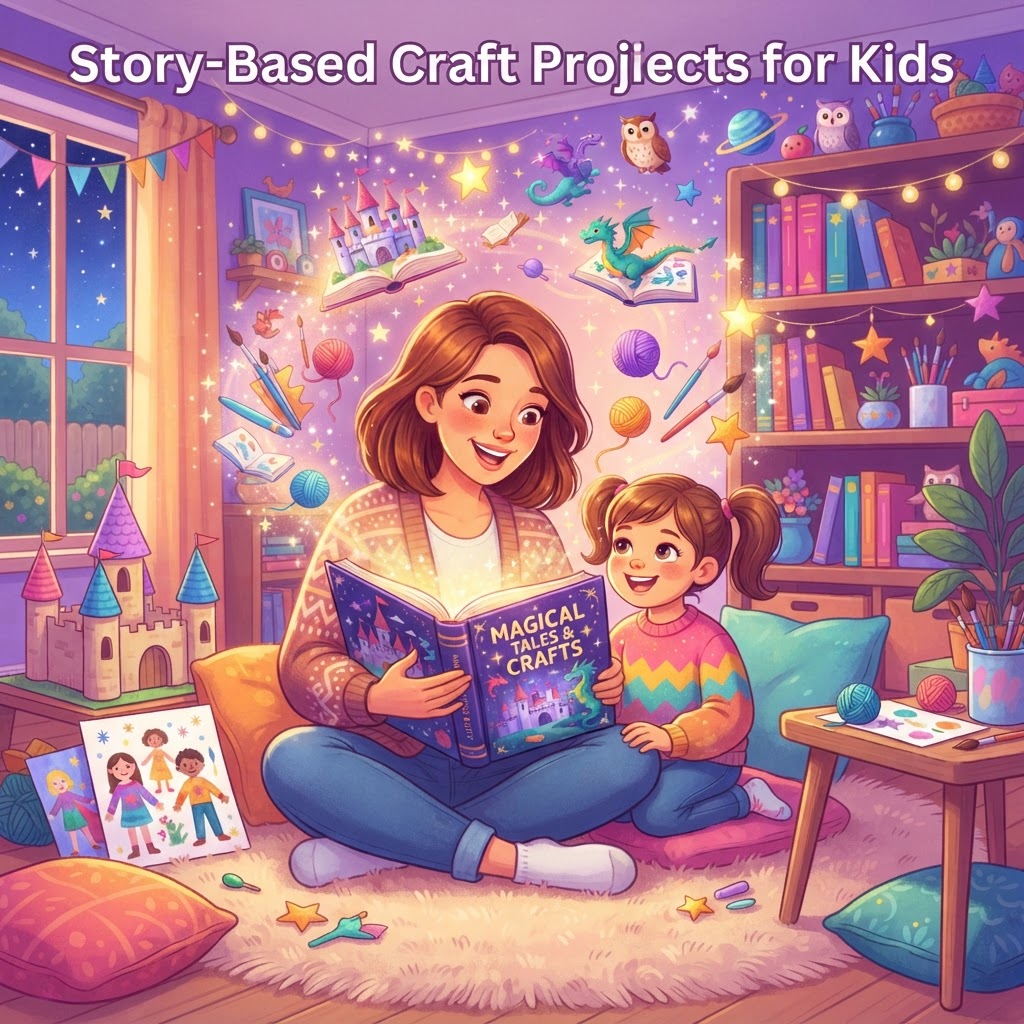
If you're looking for meaningful craft-projects for kids, start with a story. A simple tale gives children a reason to create, retell, imagine, and problem-solve, which is why story-based craft-projects often feel more engaging than standalone art time. With InstaTales, you can create your own personalized bedtime story in minutes, then turn that story into a hands-on activity that feels special because your child already knows the characters, setting, and plot.
These ideas work well at home, in classrooms, and in small groups. Each one includes a story prompt, materials list, and step-by-step instructions so parents and teachers can use story-led craft-projects activities children genuinely enjoy.
Why do story-based craft projects help children learn?
Yes, story-based crafts support learning because they connect language, movement, memory, and creativity in one activity. When children make something from a story, they practice retelling, sequencing, planning, and fine motor skills at the same time.
That combination matters. The Harvard Center on the Developing Child explains that children build executive function through activities that involve focus, working memory, and self-control. Crafting also supports hand strength and coordination, which align with early developmental skills highlighted by the CDC developmental milestones. And play-based, open-ended making is strongly supported by NAEYC as a foundation for early learning.
For best results, choose or generate a short InstaTales story with:
- A clear main character
- One memorable setting
- A simple problem to solve
- Repeated phrases or key objects
You can use story templates to get started quickly, then save favorites in your story library for re-reading and future craft time.
How can you turn a story into a character puppet theater?
A puppet theater is one of the easiest story-based craft-projects for kids because it makes retelling fun and active. Children naturally practice dialogue, sequencing, and emotional expression when they act out the story.
Story prompt
Create an InstaTales story about your child helping a shy dragon, lost bunny, or brave astronaut solve a problem before bedtime.
Materials
- Paper lunch bags or craft sticks
- Construction paper
- Markers or crayons
- Glue
- Child-safe scissors
- Yarn, stickers, or googly eyes
- A shoebox or table edge for a stage
Instructions
- Read the story once for enjoyment.
- Read it again and ask, “Who are the main characters?”
- Help your child make 2-4 simple puppets.
- Use one bag or stick for each character.
- Decorate faces, clothing, and one key story detail, like wings, a crown, or a backpack.
- Set up a small stage and invite your child to retell the story in order.
- If needed, prompt with: “What happened first? What did the dragon say? How did the story end?”
For younger children, you can narrate while they move the puppets. Older children can invent a new ending.
How can children make a story map scroll?
A story map scroll helps children understand beginning, middle, and end. It is especially useful for early readers who need a visual way to organize what happened in the story.
Story prompt
Generate a journey story in which your child travels through three places, such as an enchanted forest, crystal cave, and moonlit castle.
Materials
- Long paper or taped-together sheets
- Crayons or markers
- Stickers
- Glue
- Small printed pictures, if desired
- Ribbon or string to tie the finished scroll
Instructions
- Divide the paper into three sections: beginning, middle, and end.
- Ask your child to draw one important scene in each section.
- Add arrows, paths, or footprints to show the journey.
- Label each section with simple words or short sentences.
- Roll the paper into a scroll and tie it with ribbon.
This activity works beautifully after personalized stories because the child can map places they “visited” in the tale. If your child enjoys visual making, pair this with these story-inspired art projects for even more creative extension.
How can you build a shoebox diorama from a favorite story setting?
A shoebox diorama is ideal for children who love building worlds. It turns setting details into a 3D scene and strengthens observation, planning, and storytelling.
Story prompt
Use InstaTales to create a bedtime story set in a mermaid lagoon, dinosaur jungle, fairy garden, or snowy village.
Materials
- Empty shoebox
- Colored paper
- Glue or tape
- Markers
- Small toy figures or paper characters
- Natural items like twigs, leaves, or pebbles
- Cotton balls, foil, or fabric scraps for texture
Instructions
- Re-read the story and ask, “What did this place look like?”
- Cover the inside of the shoebox to match the setting.
- Add background details first, like sky, trees, water, or stars.
- Create simple paper characters or use small toys.
- Place one important object from the story inside, such as a treasure chest or lantern.
- Invite your child to retell the story using the diorama as a mini stage.
Teachers can use this as a partner project, with one child building the setting and another making characters. For class-ready story ideas and literacy extensions, explore InstaTales for teachers.
How can kids create a character crown, mask, or hero tool?
Character props help children step inside a story. That physical role-play supports confidence, language development, and imaginative play.
Story prompt
Generate a story where your child becomes a forest ranger, space explorer, underwater prince or princess, or magical helper with one special tool.
Materials
- Cardstock or paper plates
- Elastic string or tape
- Markers
- Stickers, gems, or foil
- Glue
- Safety scissors
- Recycled cardboard tubes or paper for tools
Instructions
- Ask your child which character they want to become.
- Make one wearable item, like a crown or mask, plus one prop, like a map, wand, telescope, or shield.
- Decorate the items to match details from the story.
- Practice one line the character says in the tale.
- Use the prop during story retelling or pretend play.
This is a good option for groups because each child can make a different character from the same InstaTales story. It also pairs well with sing-alongs and rhythm games if you want to extend play through story-based music activities.
How can you turn a story into an accordion book?
An accordion book is a simple way to help children sequence events and notice story structure. It gives them a finished “book” they can reread independently.
Story prompt
Create an InstaTales story with 4-6 clear events, such as a child searching for a missing star and meeting helpers along the way.
Materials
- One long strip of paper or several pages taped together
- Crayons or markers
- Stapler or tape
- Stickers
- Optional printed title label
Instructions
- Fold the paper back and forth into panels.
- Assign one event from the story to each panel.
- Help your child draw the events in order.
- Add one short sentence per panel if appropriate.
- Make a cover with the story title and child’s name.
Because InstaTales stories are personalized, children are often more motivated to revisit them. Save especially successful stories in your story library so children can turn favorites into books, crafts, and re-reading practice.
How can you make a “problem and solution” treasure box?
A problem-and-solution treasure box helps children think about emotions and coping skills. It works especially well for stories about worry, friendship, bravery, or kindness.
Story prompt
Ask InstaTales for a story in which your child feels nervous, loses something important, or helps a friend, then finds a solution.
Materials
- Small box or recycled container
- Paint, markers, or stickers
- Paper slips
- Glue
- Optional small objects like pom-poms, buttons, or tokens
Instructions
- Decorate the box to match the story theme.
- Ask, “What was the problem in the story?”
- Write or draw the problem on one slip of paper.
- Write or draw 3-5 possible solutions on separate slips.
- Place them in the box and let your child pull one out, explain it, and connect it to the story ending.
This project encourages reflection, not just making. It is especially helpful after a personalized story about social-emotional growth, because children can safely discuss feelings through the character first.
How can parents and teachers make story-based crafting easier and less messy?
The simplest approach is to keep the story short, the materials basic, and the goal focused on retelling rather than perfection. Children get the most value from talking, deciding, and creating, not from polished results.
A few practical tips:
- Choose one story element only: character, setting, or sequence
- Limit materials to 5-6 items
- Read the story twice before crafting
- Let children make creative changes
- Display the finished project and revisit the story later
For classroom or home-library planning, it helps to group activities by theme. You might keep animal stories for puppet work, adventure stories for maps, and friendship stories for treasure boxes. If you want more cross-curricular ideas, browse the InstaTales blog for related literacy, play, and enrichment activities.
Frequently Asked Questions
What age are story-based craft projects best for?
These activities work well for ages 3-10 with simple adjustments. Younger children do best with large materials and adult help, while older children can add writing, labeling, and more detailed design.
How long should a story-based craft activity take?
Most should take 15-30 minutes. If attention spans are short, read the story first and complete the craft in two smaller sessions.
Do I need special art supplies for these craft-projects for kids?
No. Paper, crayons, glue, tape, recycled boxes, and child-safe scissors are enough for most projects. Simple materials often lead to more creative thinking.
How do I use InstaTales stories for classroom activities?
Generate one shared story for the class or small-group stories by theme. Then assign different craft responses, such as puppets, maps, or dioramas, based on student age and learning goals.
What skills do story-based craft-projects build?
They support language development, sequencing, fine motor control, imagination, and executive function. They can also strengthen social-emotional skills when children reflect on a character’s feelings and choices.
What if my child does not want to do the full craft?
Keep the response smaller. A single puppet, one story panel, or one prop can still turn reading into a meaningful, creative extension.
Ready to Create a Personalized Bedtime Story?
Use our free AI bedtime story generator to create a personalized illustrated story for your child in 30 seconds — no credit card needed.
Popular story types:
Maya Rodriguez
Lead Content Editor & Early Literacy Specialist
Maya is a former early childhood educator and literacy specialist with over a decade of experience helping children develop a love of reading. She leads content at InstaTales, where she writes about the science of storytelling, child development, and how families can use personalized AI stories to build literacy and emotional resilience.
instatales.ai