Teaching kindness through bedtime stories
Bedtime stories are the perfect time to teach kindness. Here's how to weave moral lessons into your child's nightly reading routine.
✦ Key Takeaways
- •Bedtime is powerful because children are more emotionally open when the day slows down.
- •The best stories for kindness show kind actions clearly and realistically.
- •The best post-story conversations are short, warm, and curious.
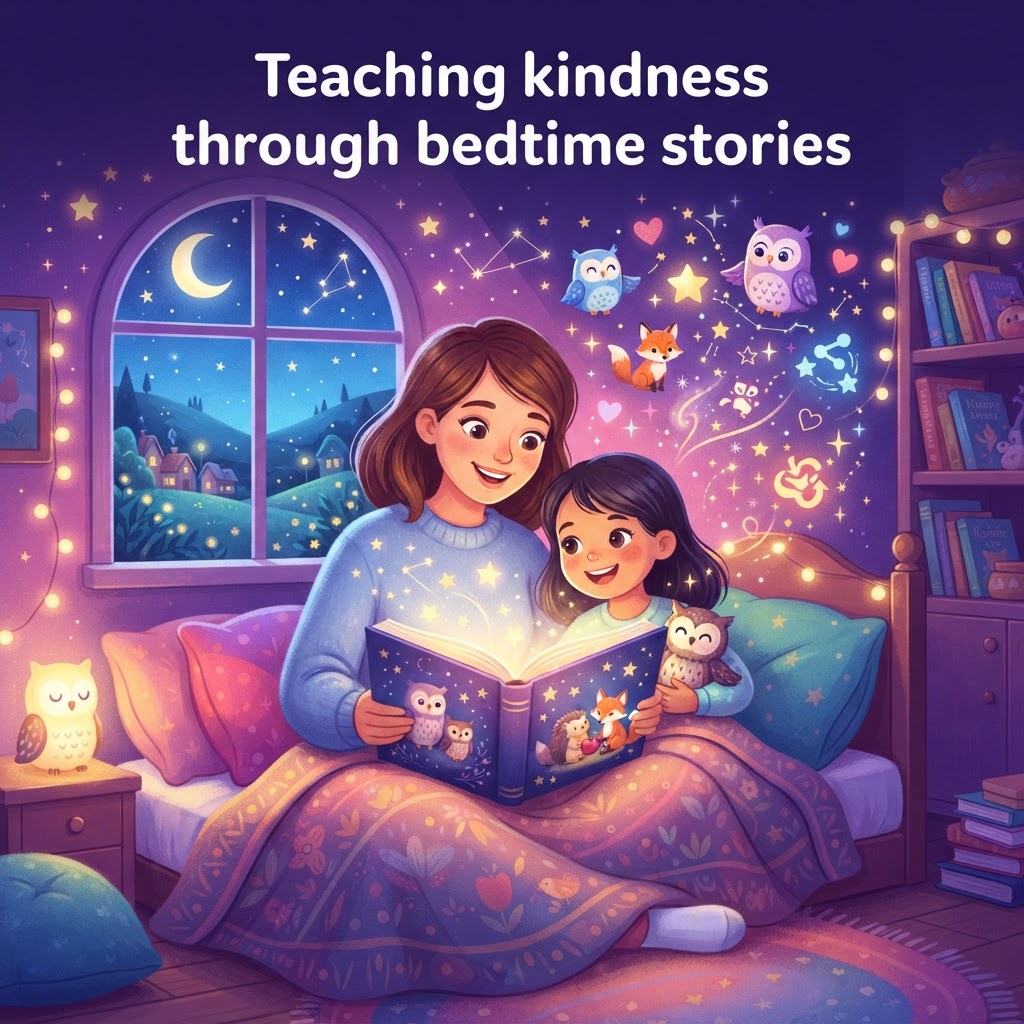
Bedtime is one of the easiest, gentlest times to teach kindness. When children are calm, close to you, and ready to listen, kindness bedtime stories can help them imagine what empathy, sharing, and forgiveness look like in real life. Instead of giving a lecture, you can use a short story to help your child notice feelings, think about choices, and carry those lessons into the next day.
For parents, that matters. Young children learn values best through warm relationships, repetition, and simple examples they can understand. A nightly reading routine gives you all three. If you want a practical way to make bedtime stories about kindness part of family life, here’s how to choose the right stories, talk about them naturally, and adapt your approach for different ages.
Why is bedtime such a powerful moment for teaching kindness?
Bedtime is powerful because children are more emotionally open when the day slows down. In that calm space, stories can feel safe, memorable, and personal.
Child development experts at the Harvard Center on the Developing Child emphasize that warm, responsive back-and-forth interactions help children build social and emotional skills. A bedtime story creates exactly that kind of interaction. Your child listens, watches your face, asks questions, and connects the story to their own world.
That matters for teaching kindness at bedtime because kindness is not learned from rules alone. Children need to see:
- how a kind character notices someone else’s feelings
- what happens when a mistake is repaired
- how helping can make both people feel better
- that being kind can be brave, not just “nice”
Bedtime also gives you repetition. When children hear similar themes again and again, they start to internalize them. A child who regularly hears moral stories for kids about sharing, patience, and empathy begins to expect those behaviors in everyday life.
How can parents choose bedtime stories about kindness that actually shape behavior?
The best stories for kindness show kind actions clearly and realistically. Choose stories where children can see empathy, repair, and helpful choices in action.
Not every “moral” story works well. Some are too preachy, too abstract, or too focused on punishment. Instead, look for stories with simple, believable moments of kindness. A strong story might show one child including another in play, a sibling apologizing after hurting feelings, or a character helping someone who feels left out.
When choosing bedtime stories about kindness, look for these features:
- Relatable characters your child can imagine being
- Clear emotions such as sadness, jealousy, fear, or gratitude
- A small conflict that gets solved through empathy or generosity
- Natural consequences, not shame-heavy lessons
- A hopeful ending that feels comforting before sleep
It also helps when the story shows that kind people still make mistakes. Children learn more from characters who forget, get upset, or act selfishly at first, then make a better choice.
If you want inspiration, these stories that teach kindness can help you find examples with strong social-emotional themes. You can also mix kindness-focused stories into your regular rotation of bedtime story ideas so the lesson feels natural rather than forced.
How do you talk about kindness after a story without turning it into a lecture?
The best post-story conversations are short, warm, and curious. Ask one or two simple questions, then let your child do the thinking.
Many parents worry they need to explain the “moral” clearly. Usually, less is more. The National Association for the Education of Young Children, or NAEYC, has long emphasized that young children learn social-emotional skills through guided conversation and modeled behavior. In other words, your tone matters as much as your words.
Try questions like:
- “How do you think the bunny felt when no one shared?”
- “What was the kindest part of the story?”
- “Have you ever felt like that?”
- “What could the character do tomorrow?”
A good rule is to notice, name, and connect:
- Notice the kind action: “She stopped to help.”
- Name the value: “That was thoughtful.”
- Connect it to real life: “We can do that at school too.”
Keep it brief. One minute is enough. If your child is sleepy, you can simply say, “I liked how he made things right.” That still reinforces the lesson.
Avoid turning the story into a test. Questions like “What should you learn from this?” or “Do you see why I always tell you to share?” often make children shut down. Bedtime should feel safe, not evaluative.
What does teaching kindness at bedtime look like at different ages?
Kindness lessons should match your child’s stage of development. The same value can be taught in simpler or deeper ways depending on age.
The CDC’s developmental guidance reminds us that children’s social understanding grows over time. A toddler may grasp “helping” and “gentle hands,” while an older child can think about fairness, exclusion, or intention.
Ages 1-3: Keep it concrete
For toddlers, focus on visible actions and simple words.
- “The bear shared his blanket.”
- “The puppy was gentle.”
- “She helped her friend.”
Use repetition, facial expressions, and short stories. At this age, moral stories for kids should feel cozy and easy to follow.
Ages 4-6: Focus on feelings and choices
Preschoolers and kindergarteners can start connecting actions to emotions.
- “How did the fox feel when he was left out?”
- “What could the girl do to make it better?”
- “Was that a kind choice?”
This is a great age for kindness bedtime stories because children are learning friendship skills quickly and often face real social moments during the day.
Ages 7-10: Explore perspective and repair
Older children can handle more nuance. They can think about motives, peer pressure, fairness, and second chances.
You might ask:
- “Why do you think he ignored her at first?”
- “Was saying sorry enough, or did he need to do more?”
- “What would kindness look like in that situation at school?”
For this age group, bedtime stories about kindness can include more layered dilemmas, especially around friendship and courage.
How can personalized stories make kindness lessons feel more real?
Personalized stories work well because children pay closer attention when they see themselves in the story. When your child becomes the helper, problem-solver, or friend-maker, the lesson feels immediate and personal.
That is one reason many families like to create your own personalized bedtime story. A custom story can include your child’s name, favorite setting, and a gentle social challenge they recognize from real life. Instead of hearing about “a random child,” they imagine what kindness would look like for them.
InstaTales is especially useful here because parents can choose a moral story style and guide the story with a kind tone. That combination helps keep the lesson soft and story-led rather than preachy. You can also use story templates for quick starts when you want a kindness theme without writing from scratch.
Personalized stories can be helpful for:
- preparing for a new classroom or sibling change
- practicing sharing, patience, or inclusion
- revisiting a hard moment from the day in a safe way
- re-reading favorite lessons from your story library
For educators or homeschoolers, kindness stories can also support class routines and SEL goals through InstaTales for teachers.
What are three story prompts that encourage kindness?
The best prompts are specific, emotional, and easy for a child to picture. A clear prompt gives the story a natural kindness lesson without making it feel heavy.
Here are three practical prompts you can use tonight:
1. The child who noticed the lonely dragon
“Create a bedtime story about a child who sees a shy little dragon sitting alone at moonlight snack time and finds a gentle way to include them.”
Why it works: It teaches noticing others, inclusion, and friendly courage.
2. The squirrel who made things right
“Write a cozy story about a squirrel who says something unkind by accident, feels sorry, and learns how to apologize and repair the friendship.”
Why it works: It shows that kindness includes fixing mistakes, not just avoiding them.
3. The magical blanket that grows when shared
“Tell a warm bedtime story about siblings who discover that their magic blanket gets bigger and softer every time they share it with someone else.”
Why it works: It makes generosity concrete and memorable for younger children.
If your child loves variety, you can pair these with more themed inspiration from 15 bedtime story ideas for kids. The key is to keep the conflict small, the emotions clear, and the ending reassuring.
How can parents build a simple nightly kindness routine that lasts?
A lasting kindness routine should be easy enough to repeat. Keep it short, predictable, and warm.
A simple rhythm might look like this:
- Choose one story with a kindness theme
- Read slowly and pause once or twice for emotion words
- Ask one gentle reflection question
- End with a real-life kindness idea for tomorrow
For example: “Tomorrow, let’s look for one person who might need help.”
That is enough. You do not need a full lesson plan. What children need most is repetition, closeness, and a parent who models the value being taught. Over time, teaching kindness at bedtime becomes less about the story alone and more about the family culture surrounding it.
Frequently Asked Questions
What age should I start using bedtime stories about kindness?
You can start in toddlerhood. Even very young children benefit from simple stories about helping, sharing, and being gentle, as long as the language is concrete and the story is short.
How long should a kindness bedtime story be?
For most children, 5 to 10 minutes is enough. Younger children usually do best with one clear kindness moment, while older children can follow a slightly longer story with a social problem and repair.
What if my child does not want to talk after the story?
That is completely fine. You can make one short comment like, “I liked how she helped,” and leave it there. The story still does its work through repetition and your calm presence.
Are personalized moral stories for kids better than traditional books?
They can be very effective because they feel relevant and engaging. Traditional books are valuable too, so many families use both: familiar published stories and personalized stories that match current needs.
Can bedtime stories really improve kindness in daily life?
Stories alone are not enough, but they are a strong support. When stories are paired with discussion, modeling, and daily practice, children are more likely to recognize kindness and try it themselves.
How often should I include kindness bedtime stories?
A few times a week is a great start. Regular exposure works better than one big lesson, especially when kindness is woven naturally into your child’s normal bedtime routine.
Ready to Create a Personalized Bedtime Story?
Use our free AI bedtime story generator to create a personalized illustrated story for your child in 30 seconds — no credit card needed.
Popular story types:
Maya Rodriguez
Lead Content Editor & Early Literacy Specialist
Maya is a former early childhood educator and literacy specialist with over a decade of experience helping children develop a love of reading. She leads content at InstaTales, where she writes about the science of storytelling, child development, and how families can use personalized AI stories to build literacy and emotional resilience.
instatales.ai