Teaching responsibility through bedtime stories
Bedtime stories are the perfect time to teach responsibility. Here's how to weave moral lessons into your child's nightly reading routine.
✦ Key Takeaways
- •Yes, bedtime is an excellent time to teach responsibility because children are calmer, more connected, and more open to reflection.
- •The best responsibility bedtime stories show responsibility in action, not just in speeches.
- •The best way to discuss responsibility is to stay curious, brief, and kind.
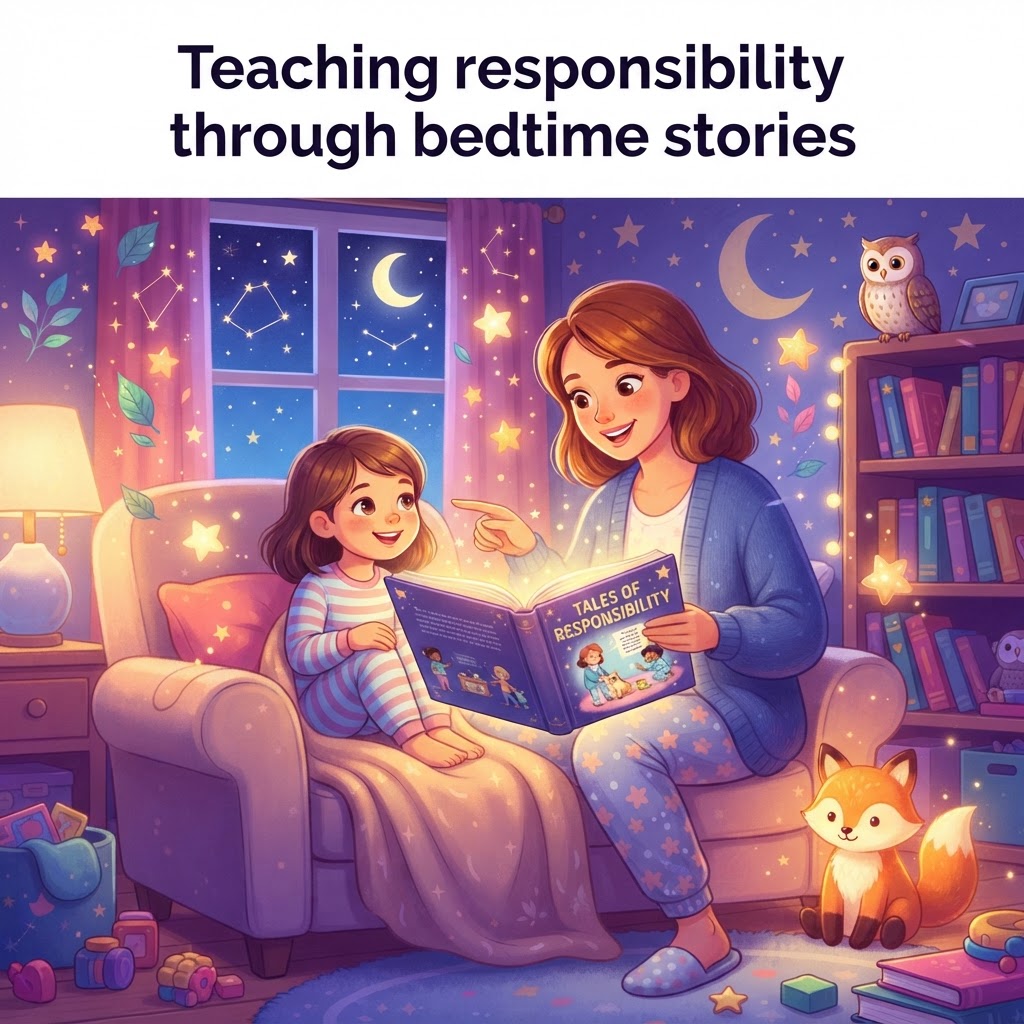
Bedtime is more than a wind-down routine. It is one of the easiest, warmest moments to help children understand responsibility in a way that feels safe, memorable, and personal.
For parents, teaching responsibility at bedtime works because stories turn an abstract value into a simple choice: putting toys away, telling the truth after a mistake, feeding a pet, or helping a sibling. Over time, bedtime stories about responsibility help children connect actions with consequences without feeling scolded. That makes story time a powerful place for building character, especially when the message is gentle, repetitive, and age-appropriate.
Why is bedtime such a good time to teach responsibility?
Yes, bedtime is an excellent time to teach responsibility because children are calmer, more connected, and more open to reflection. A short story at the end of the day helps a child process choices without pressure.
During the bedtime routine, children are usually close to a trusted adult, which supports emotional learning. The American Academy of Pediatrics notes that reading aloud strengthens language, relationships, and routine—all important foundations for learning values.
Responsibility also grows through repeated, supportive interactions. The Center on the Developing Child at Harvard University explains that responsive back-and-forth relationships build core life skills, including self-control and decision-making. In simple terms: when you read, pause, and talk together, you are teaching more than words.
That is why moral stories for kids can be so effective at night. A child is not just hearing what responsibility means. They are seeing it modeled, naming it, and linking it to their own world.
How do you choose bedtime stories that model responsibility well?
The best responsibility bedtime stories show responsibility in action, not just in speeches. Look for stories where a child or character makes a choice, faces a natural consequence, and then tries again.
Strong stories about responsibility often include:
- A clear, relatable task, like packing a school bag or caring for a plant
- A small mistake that feels safe, not scary
- A chance to repair the mistake
- A warm adult guide, rather than punishment or shame
- An ending that shows growth, not perfection
For young children, everyday situations work best. A story about returning a library book on time may teach more than a dramatic tale about saving a kingdom. Responsibility starts small.
It also helps to pair responsibility with other values. For example, a child who admits they forgot a chore is learning both responsibility and honesty. If you want to explore connected themes, these guides on teaching honesty through bedtime stories and teaching empathy through bedtime stories can help you expand the conversation naturally.
A simple test for choosing a story is this: Does the story invite ownership, effort, and repair? If yes, it is likely a good fit.
How can you talk about responsibility without turning story time into a lecture?
The best way to discuss responsibility is to stay curious, brief, and kind. Ask one or two simple questions instead of explaining the whole lesson.
Research on dialogic reading, including studies by Grover Whitehurst and colleagues, shows that children learn more when adults make reading interactive. That means your role is not to deliver a sermon. It is to help your child notice, think, and respond.
Try questions like:
- “What job did the character forget?”
- “How did they fix the problem?”
- “What would you do next?”
- “Have you ever helped take care of something?”
Keep the tone light. If a story hits close to home—maybe your child also forgets to clean up—avoid jumping straight into correction. Instead, say something like, “It can be hard to remember. What could help next time?”
This approach matters because shame blocks learning. A kind conversation supports problem-solving, which is far more useful than a lecture.
A good rhythm for teaching responsibility at bedtime is:
- Read the story
- Ask 1-2 open questions
- Name the value in one short sentence
- End with reassurance
For example: “I like how Mia told the truth and cleaned it up. That is what responsibility looks like.”
What does teaching responsibility at bedtime look like at different ages?
Responsibility should match a child’s developmental stage. What you ask a two-year-old to learn from a story is very different from what an eight-year-old can understand.
The CDC developmental milestones remind us that children build independence gradually. Bedtime stories should grow with them.
Ages 1-3
At this age, keep it concrete and repetitive. Focus on tiny acts of responsibility, like putting a cup in the sink or helping put pajamas in the hamper.
What works best:
- One main action
- Familiar routines
- Repeated phrases like “I help” or “I try again”
- Happy, predictable endings
Ages 4-6
Children in this stage can understand cause and effect more clearly. They can follow stories where a character forgets a job, notices the impact, and makes it right.
What works best:
- Everyday school and home situations
- Gentle consequences
- Simple reflection questions
- Praise for effort and repair
Ages 7-10
Older children can handle more nuance. They can think about promises, teamwork, time management, and taking responsibility even when no one is watching.
What works best:
- More layered choices
- Peer relationships and teamwork
- Stories about owning mistakes
- Discussion about fairness, trust, and follow-through
If your child loves personalized learning, you can create your own personalized bedtime story around the exact responsibility skill they are practicing, from brushing teeth to caring for a class pet.
What story prompts can help children practice responsibility?
The most useful prompts are specific, realistic, and emotionally safe. Good prompts give children a chance to see responsibility as something they can do, not just something adults demand.
Here are three bedtime story prompts you can use tonight:
1. The backpack that needed a helper
Prompt: “Create a gentle bedtime story about a child who keeps forgetting one important school item and learns a simple routine to pack their backpack each night.”
Why it works:
- Teaches planning and follow-through
- Fits ages 4-8
- Ends with a practical habit
Follow-up question: “What is one thing we could check before bed tomorrow?”
2. The garden that needed daily care
Prompt: “Write a cozy story about a child who promises to water a small plant, forgets one day, feels worried, and learns how to care for it every morning with help.”
Why it works:
- Teaches consistency and repair
- Fits ages 3-7
- Shows that mistakes can be fixed
Follow-up question: “What happens when we take care of something every day?”
3. The team project that worked better with honesty
Prompt: “Tell a bedtime story about a child who says they finished their part of a team project, then admits they need help and makes a new plan with friends.”
Why it works:
- Teaches ownership, honesty, and teamwork
- Fits ages 7-10
- Shows responsibility in social settings
Follow-up question: “Is it responsible to ask for help when you need it?”
If you want a faster starting point, using ready-made story templates can make it easier to build these ideas into your nightly routine.
How can InstaTales help parents create responsibility bedtime stories?
InstaTales can support responsibility learning by making stories personal, gentle, and easy to repeat. That matters because children learn values best when the lesson feels close to their real life.
The platform’s moral story type is especially useful for parents who want bedtime stories about responsibility without sounding preachy. You can guide the story toward a clear value—cleaning up, keeping promises, caring for others, admitting mistakes—while keeping the tone calm and encouraging.
The kind tone is important too. Responsibility should not sound like blame. When a story says, “You can try again,” children are more likely to build confidence and self-correction.
Parents often get the best results when they:
- Choose one responsibility theme for the week
- Re-read the same story a few times
- Save favorites in your story library
- Use the same follow-up question after each reading
If your child is working on related social skills, you may also enjoy guides on teaching gratitude through bedtime stories and teaching courage through bedtime-stories. Values often grow together.
In the end, moral stories for kids work best when they are warm, practical, and repeated often. Responsibility is not learned in one perfect moment. It is built night by night, story by story, choice by choice.
Frequently Asked Questions
What is the best age to start teaching responsibility through bedtime stories?
You can start very early, even around ages 1-2, by using simple stories about helping and routines. The key is to keep the lesson concrete and match it to your child’s stage.
How long should a responsibility bedtime story be?
Shorter is usually better, especially for younger children. Aim for 3-8 minutes so there is still time for one small question and a calm bedtime transition.
What if my child resists stories with a moral lesson?
Choose stories with humor, warmth, and relatable mistakes instead of obvious preaching. Children learn better when they feel entertained and understood, not corrected.
Should I connect the story to my child’s real behavior?
Yes, but gently. Make the link after the story with one simple comment or question, rather than using the story to call out a mistake.
Can personalized AI stories really help teach responsibility?
Yes, personalized stories can help because they reflect your child’s real routines, challenges, and interests. That makes the lesson easier to understand and remember.
How often should we read bedtime stories about responsibility?
Two or three times a week is enough to build consistency without making the theme feel heavy. Re-reading the same favorite story often works better than always introducing a new one.
Ready to Create a Personalized Bedtime Story?
Use our free AI bedtime story generator to create a personalized illustrated story for your child in 30 seconds — no credit card needed.
Popular story types:
Maya Rodriguez
Lead Content Editor & Early Literacy Specialist
Maya is a former early childhood educator and literacy specialist with over a decade of experience helping children develop a love of reading. She leads content at InstaTales, where she writes about the science of storytelling, child development, and how families can use personalized AI stories to build literacy and emotional resilience.
instatales.ai