Teaching courage through bedtime stories
Bedtime stories are the perfect time to teach courage. Here's how to weave moral lessons into your child's nightly reading routine.
✦ Key Takeaways
- •Bedtime works well because children are calmer, more connected, and more open to reflection.
- •Choose stories where courage looks realistic, kind, and achievable.
- •Keep the conversation short, curious, and child-led.
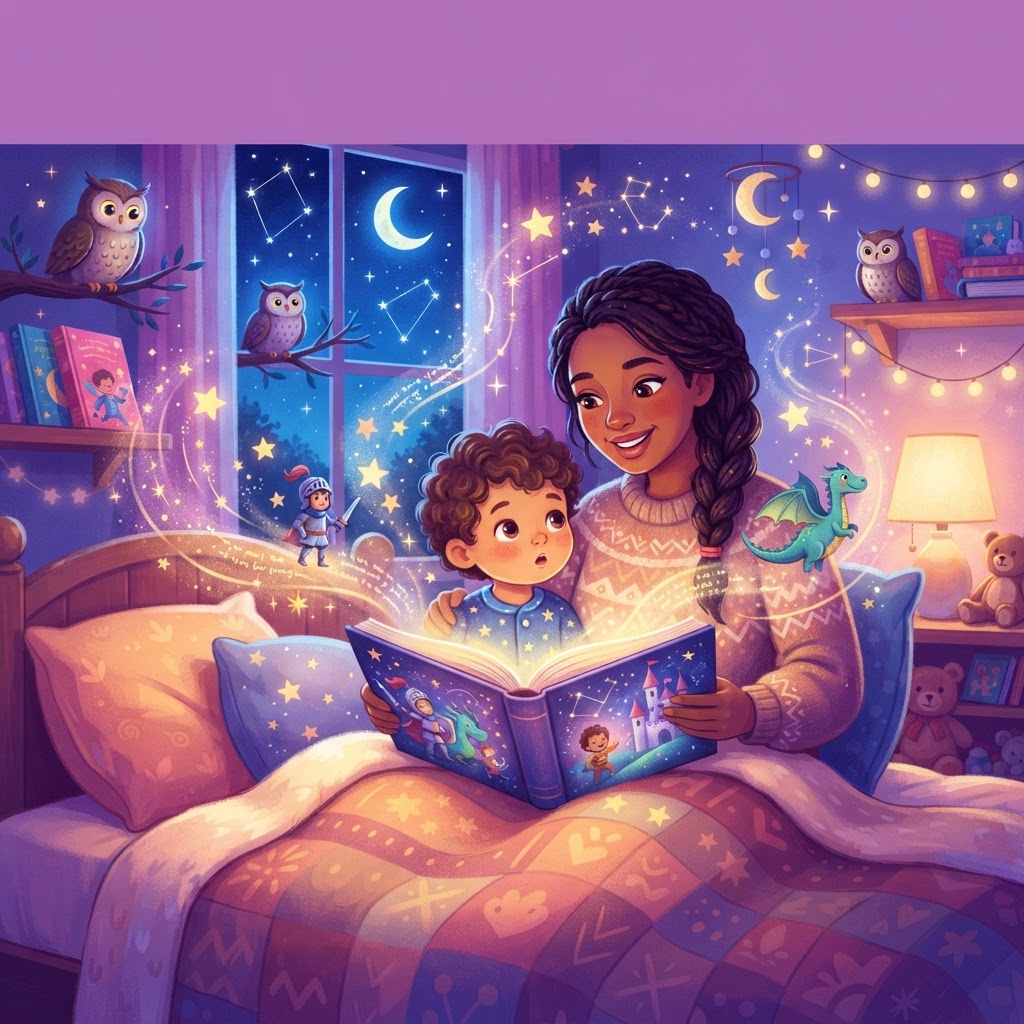
Bedtime is one of the gentlest moments in the day to build a child’s character. When the lights are low and your child feels safe beside you, teaching courage at bedtime can feel natural instead of forced. The right story helps children see that courage is not about being fearless; it is about doing the next right thing even when you feel unsure, shy, or scared.
Why is bedtime such a powerful time to teach courage?
Bedtime works well because children are calmer, more connected, and more open to reflection. In that quiet window, a story can help a child process fears, imagine brave choices, and rehearse them emotionally before sleep.
Child development research supports this. The American Academy of Pediatrics has long emphasized the value of shared reading for language, bonding, and emotional growth. And the Harvard Center on the Developing Child highlights how warm, responsive back-and-forth interactions help children build self-regulation and confidence.
Stories also work because children learn through models. Psychologist Albert Bandura’s social learning theory showed that children copy behaviors they see. In courage bedtime stories, the brave model does not need to be a superhero. It can be a bunny going to school, a child admitting a mistake, or a dragon asking for help.
At bedtime, that modeling feels safe. Your child gets to “try on” courage from the comfort of your lap.
How can parents choose bedtime stories that truly model courage?
Choose stories where courage looks realistic, kind, and achievable. The best bedtime stories about courage show a child or character feeling worried first, then taking one manageable brave step.
Look for these features when choosing moral stories for kids:
- A relatable fear or challenge, like darkness, making friends, trying something new, or telling the truth
- A character who feels nervous but still acts
- Small acts of bravery, not only dramatic rescues
- Supportive adults, friends, or guides
- A calm, reassuring ending that shows growth
Try to avoid stories that confuse courage with recklessness. True courage is not “ignore fear and charge ahead.” For children, it is closer to: “I felt scared, I took a breath, and I tried.”
This matters because younger children learn best from concrete examples. A story about speaking up when someone is left out may teach more than a fantasy battle. If you want ready-made examples, this round-up of stories that teach courage can help you find strong models quickly.
For older children, you can look for plots with social courage too: joining a group, standing up for fairness, or admitting a mistake. Those are often the moments that matter most in daily life.
How can you talk about courage without turning story time into a lecture?
Keep the conversation short, curious, and child-led. Children learn more from noticing and reflecting than from hearing “the moral of the story” explained at length.
Research on dialogic reading, especially the work of Grover Whitehurst, found that children benefit when adults ask simple open questions and invite them into the story. The goal is not a quiz. It is connection.
A simple three-step approach works well:
- Notice: “I saw that Leo felt scared to open the door.”
- Wonder: “What helped him do it anyway?”
- Connect: “Have you ever felt like that?”
You only need one or two questions. If your child answers with a shrug, that is fine. The story still did its work.
Helpful phrases include:
- “That was a brave choice.”
- “He was scared and still tried.”
- “Courage can be small.”
- “What would you do next?”
Try to avoid correcting or preaching. Instead of saying, “See, you should be brave like her,” say, “I wonder what made her feel ready.” That small shift protects the warm feeling of bedtime.
This style also supports social-emotional learning. Organizations like CASEL note that children build self-awareness and responsible decision-making when adults help them name feelings and choices in everyday moments.
What does courage look like at different ages?
Courage should match your child’s developmental stage. A toddler’s brave moment is very different from a 9-year-old’s, so the best stories meet children where they are.
For ages 1-3, keep stories short, repetitive, and comforting. Courage at this age often means:
- Sleeping in their own bed
- Trying a new food
- Waving goodbye at drop-off
- Listening to a loud sound without panic
Use simple lines like, “Milo felt nervous. Mama held his hand. Milo tried.” Repetition builds predictability, and predictability helps children feel safe enough to be brave.
For ages 4-6, children can handle clearer plots and emotional language. Good themes include:
- Speaking to a new friend
- Joining a game
- Going to the doctor
- Admitting they broke something
- Trying again after a mistake
At this stage, courage is often social and emotional. Children benefit from hearing that bravery and worry can happen at the same time.
For ages 7-10, children can think more deeply about motives, fairness, and consequences. Stories can explore:
- Standing up for someone
- Telling the truth when it is hard
- Performing or presenting
- Managing peer pressure
- Persisting after failure
Older children often enjoy more layered stories with a realistic inner conflict. If you want more tailored reading ideas, these guides to courage stories for 9-year-olds and courage stories for 10-year-olds can help.
How can InstaTales make teaching courage at bedtime easier?
InstaTales helps by turning courage into a personal, gentle story instead of a generic lesson. When a child hears a story that reflects their own world, the message usually lands more deeply.
This is where InstaTales’ moral story type is especially useful. You can build a story around courage, honesty, kindness, or another value without making it feel heavy-handed. The platform’s kind tone also matters. Gentle language keeps the story emotionally safe, which is important when a child is already working through fear or self-doubt.
A simple way to use it is:
- Choose the moral story type
- Set the lesson around courage
- Add a real challenge your child is facing, like swimming lessons or first-day nerves
- Keep the tone warm, reassuring, and hopeful
Because the story is personalized, your child can imagine success more easily. A shy child may listen longer to a story about them helping a lost firefly than to a random character doing something brave.
You can also create your own personalized bedtime story in minutes and save favorites in your story library for re-reading. That repetition is powerful. The same story, read over several nights, helps children internalize the script: I can feel nervous. I can still act bravely.
What story prompts can help you create bedtime stories about courage tonight?
The best prompts are specific, gentle, and tied to everyday bravery. These three ideas work well for children ages 3-10 and can be adapted to your child’s current challenge.
-
The Small Voice and the Big Classroom
“Write a kind bedtime story about a child who feels shy on the first day of school. A friendly animal guide teaches them that courage can sound quiet. Include one small brave moment, like saying hello or asking to join a game, and end with the child feeling proud.” -
The Lantern in the Storm
“Create a bedtime story about a child who hears thunder at night and feels scared. A glowing lantern shows them how to breathe slowly, stay cozy, and remember they are safe. Make the tone soothing and show that courage means staying calm even when something feels loud.” -
The Truth-Telling Robot
“Write a moral story for kids about a little robot who accidentally breaks a toy and worries about telling the truth. A wise friend helps the robot understand that honesty takes courage. End with forgiveness, problem-solving, and relief.”
These prompts work because they show courage as a process: feeling, pausing, choosing, and growing. That is far more useful for children than a story where the hero is simply fearless.
Frequently Asked Questions
What makes a good courage story for young children?
A good courage story gives children a small, relatable challenge and a safe ending. It should show that bravery can happen alongside fear, not only after fear disappears.
How often should I read bedtime stories about courage?
Two or three times a week is enough for most families. Re-reading the same story can be especially effective because children learn through repetition and familiarity.
What if my child finds courage stories too scary?
Choose gentler plots with everyday bravery, like meeting a new friend or trying something new. Avoid high-stakes danger and focus on reassurance, support, and calm endings.
Can personalized stories really help shy or anxious children?
Yes, personalized stories can help because they let children rehearse brave behavior in a safe way. When the challenge mirrors real life, children often connect the lesson more easily.
Should I explain the lesson after every story?
Not usually. One or two simple questions is enough, and sometimes no discussion is needed at all. The goal is reflection, not a lecture.
Is courage separate from other values like kindness and honesty?
Not really. Courage often supports other values, such as telling the truth, apologizing, including others, or asking for help. In real life, strong character traits tend to work together.
Ready to Create a Personalized Bedtime Story?
Use our free AI bedtime story generator to create a personalized illustrated story for your child in 30 seconds — no credit card needed.
Popular story types:
Maya Rodriguez
Lead Content Editor & Early Literacy Specialist
Maya is a former early childhood educator and literacy specialist with over a decade of experience helping children develop a love of reading. She leads content at InstaTales, where she writes about the science of storytelling, child development, and how families can use personalized AI stories to build literacy and emotional resilience.
instatales.ai